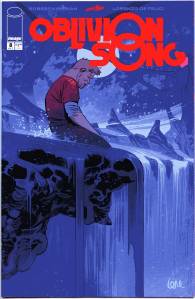
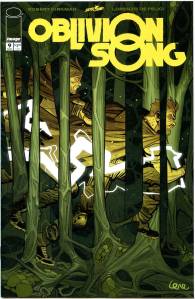
It is a supernaturalscience fiction story that chronicles Nathan Cole, a man who makes daily trips to try and rescue those still living in the apocalyptic hellscape of Oblivion, a part of Philadelphia lost a decade ago along with 300,000 of its citizens.
Oblivion Song #1 NM $29Oblivion Song #2 NM $6Oblivion Song #3 NM $6Oblivion Song #5 NM $6Oblivion Song #6 NM $6Oblivion Song #7 NM $6Oblivion Song #8 NM $5Oblivion Song #9 NM $5Oblivion Song #10 NM $5Oblivion Song #12 NM $5Oblivion Song #13 NM $5Oblivion Song #14 NM $5Oblivion Song #32 NM $4Oblivion Song #35 NM $5Oblivion Song #36 NM $6
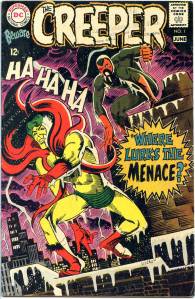
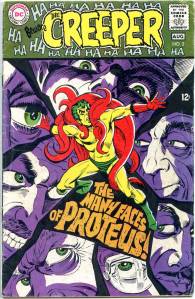
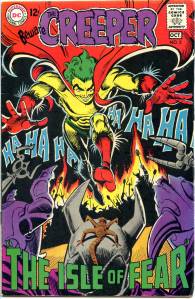
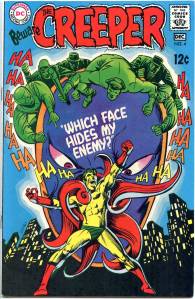
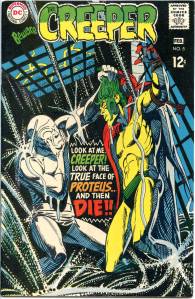
Following his debut in Showcase, the Creeper was given his own series Beware the Creeper, written by Dennis O’Neil; Steve Ditko plotted the first issue. It lasted six issues Most pitted him against a chameleonic villain called Proteus, whose true identity was revealed just before his violent death in the final issue.
Victor Von Doom – scientist, sorcerer, disfigured face, twisted soul – has been spending much of his time warning against a trillion-dollar global effort to create the first “artificial” black hole. Wrestling with visions of an entirely different life…a better future…DOCTOR DOOM finds himself at a crossroads. (what is he questioning?) A catastrophic act of terrorism kills thousands, and the prime suspect is… DOOM? Victor will have to push his unexplained thoughts aside and focus on remaining alive as the title of “Most Wanted Man” is thrust upon him….
Left with no homeland, no armies, no allies, indeed, nothing at all, will the reign of Doctor Doom come to an abrupt halt?
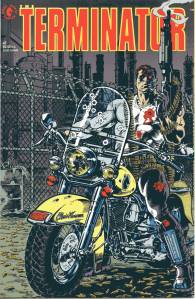
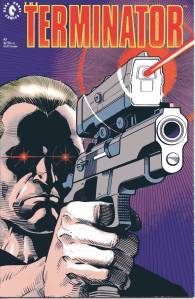
A nine-man Resistance cell led by Colonel Mary Randallassaults a fully functional Skynet network complex 6 months after John Connor destroyed the Master Control central node. Within this facility is an operational Time Displacement Chamber, greater in scope than the prototype discovered by John Connor. Their mission is to utilize the TDE to return to 1984 and eliminate Skynet by killing key individuals in the Cyberdyne Systems hierarchy.
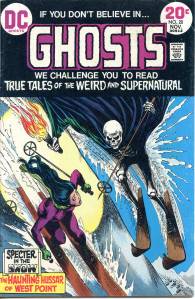
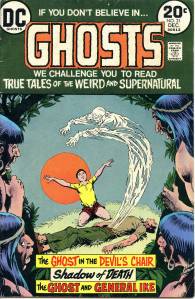
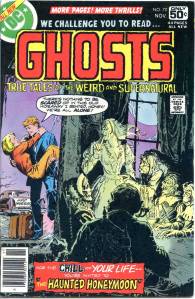
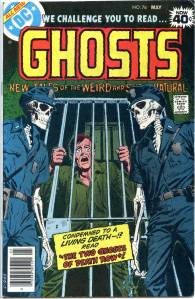
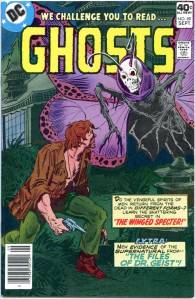
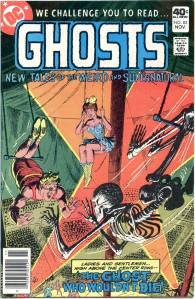
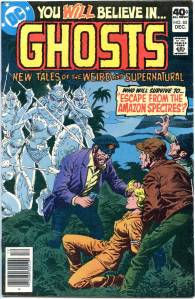
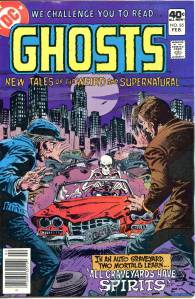
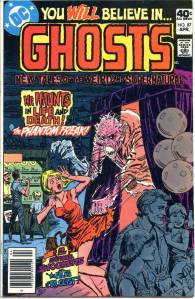
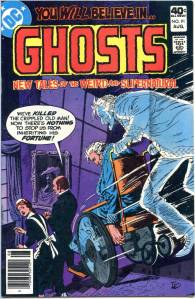
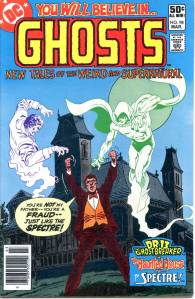
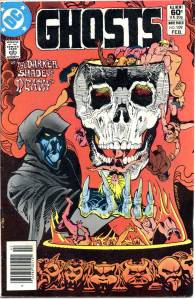
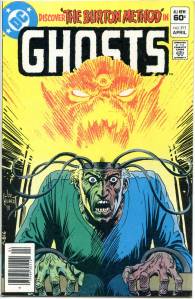
Each issue of Ghosts carried multiple stories of the supernatural. The stories were prefaced by a short description introducing the premise and ended with a summation of how a mysterious justice was dealt to the evildoers of the tale. The first issue of this series carried the singular title Ghost in its indicia, but everywhere else, including advance promotional house ads and even on its own cover, it was the plural Ghosts, as even the indicia would read from #2 on. Limited Collectors’ Edition #C–32 (Dec. 1974–Jan. 1975) reprinted stories from Ghosts #1, 3–6 and featured new material by Leo Dorfman and artists Gerry Talaoc, E. R. Cruz, and Frank Redondo.
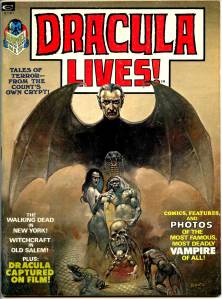
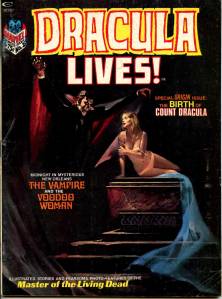
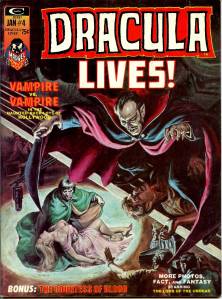
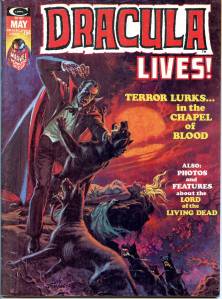
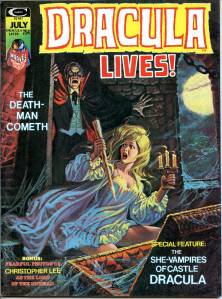
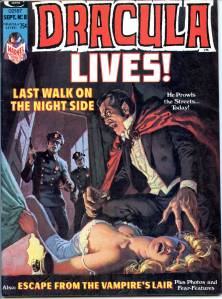
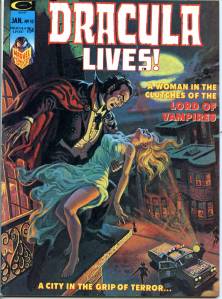
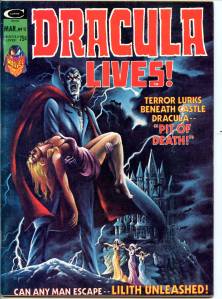
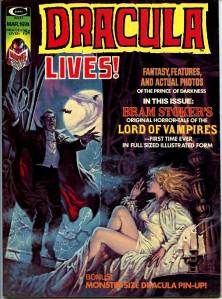
Running concurrently with the longer-running Marvel comic Tomb of Dracula, the continuities of the two titles occasionally overlapped, with storylines weaving between the two. Most of the time, however, the stories in Dracula Lives! were stand-alone tales by various creative teams. Later issues of Dracula Lives! featured a serialized adaptation of the original Bram Stoker novel, written by Roy Thomas and drawn by Dick Giordano.
The magazine format did not fall under the purview of the Comics Code, allowing the title to feature stronger content — such as moderate profanity, partial nudity, and more graphic violence — than Marvel’s “mainstream” titles. The larger format allowed the interior artists to “stretch out” a bit more. Painted covers of the series were done by artists like Boris Vallejo, Neal Adams, and Luis Dominguez. Dracula Lives!‘ text and photo articles were mostly of the Count’s various film appearances. The title of the magazine’s letter column was “Dracula Reads!”
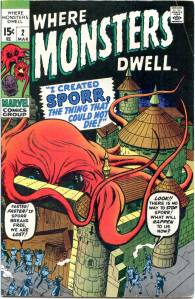
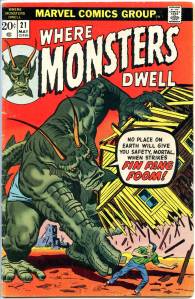
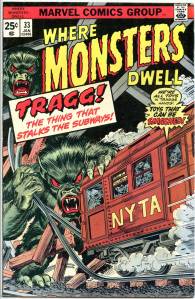
One of Marvel’s revival Horror and Monster comics. It lasted for 38 issues, making it one of the longest running Monster Mags from Marvel in the 1970’s. The series contains stories from many comic legends including Jack Kirby, Steve Ditko, Gil Kane and Bernie Wrightson. Issues #6 contains a reprint of Tales to Astonish #13, which is the 1st appearance of Groot from Guardians of the Galaxy.
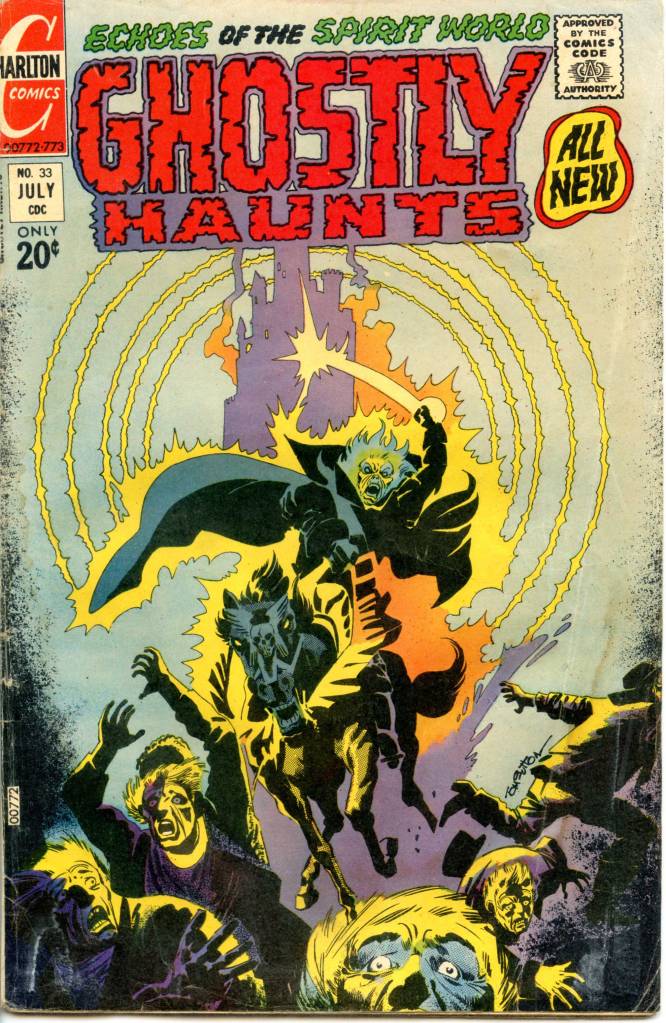
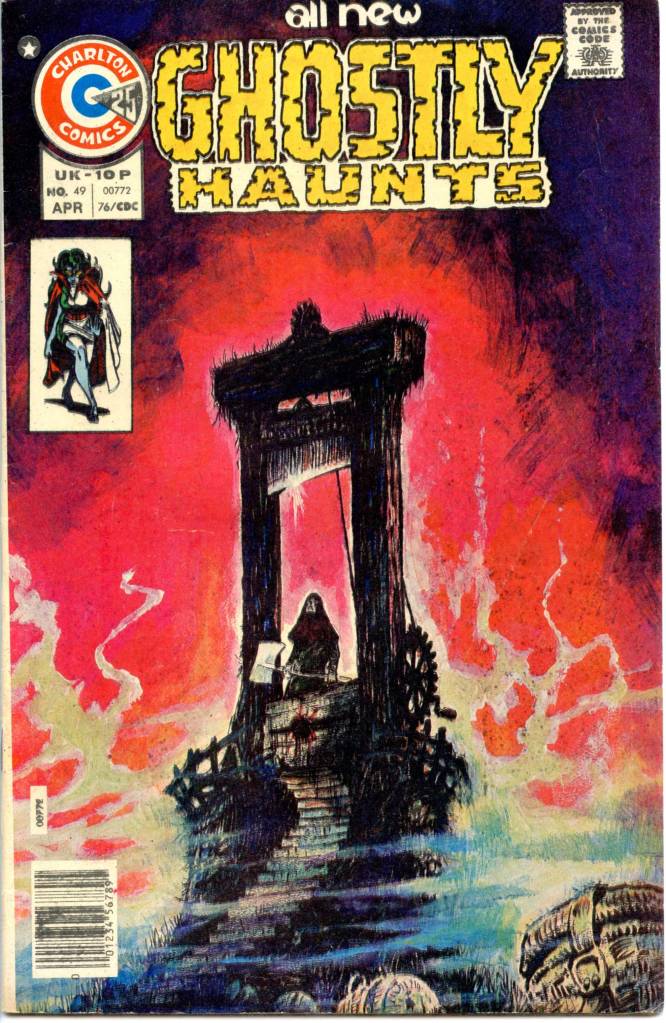
Ghostly Haunts is an American horror-suspense anthologycomic book series that was published by Charlton Comics from 1971 to 1978. The book was “hosted” by Winnie the Witch, a “moddish” blue-skinned witch.
Ghostly Haunts was part of a wave of new horror and suspense comics published by Charlton during this period. Its sister titles, with many of the same creators, were the Charlton anthologies The Many Ghosts of Doctor Graves (with host Dr. M. T. Graves), Ghostly Tales (with host Mr. L. Dedd, later I. M. Dedd), Ghost Manor (with host Mr. Bones), Haunted (with hosts Impy and then Baron Weirwulf), and Scary Tales (with host Countess R. H. Von Bludd).[1]
Although Charlton’s low page-rates and slapdash production values typically resulted in few notable characters or stories,[2]Ghostly Haunts featured some memorable stories in the old EC Comics vein, especially in its later issues; one theory for this being that the Charlton line was so obscure that it often evaded the eye of the Comics Code Authority censors.
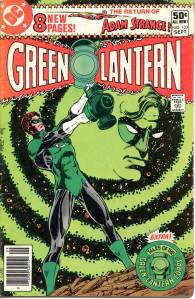
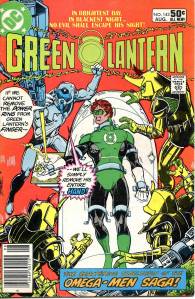
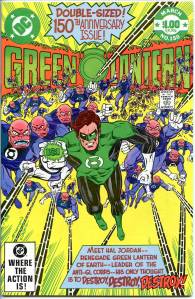
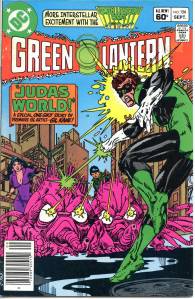
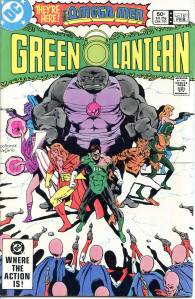
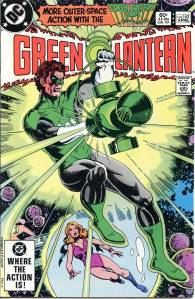
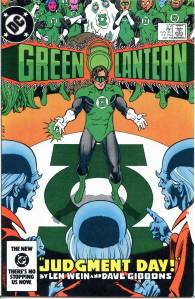
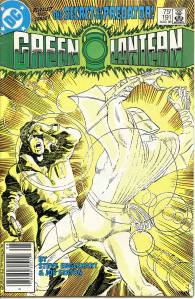
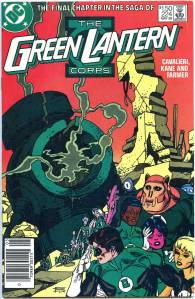
Green Lantern would know a number of revivals and cancellations. Its title would change to Green Lantern Corps at one point as the popularity rose and waned. During a time there were two regular titles, each with a Green Lantern, and a third member in the Justice League.
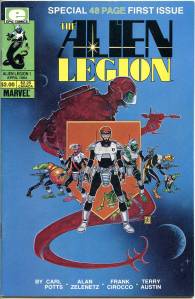
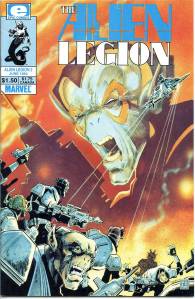
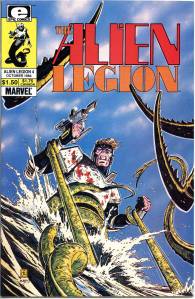
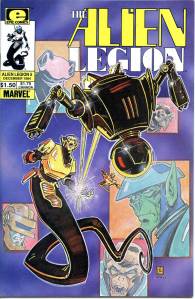
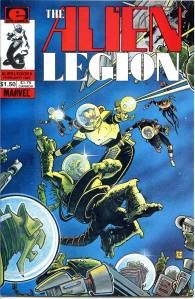
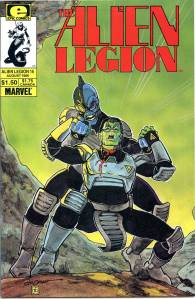
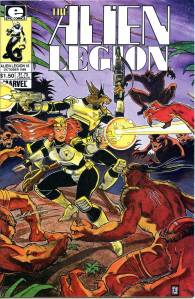
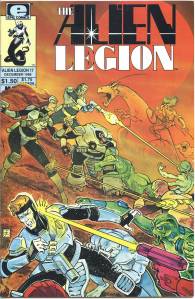
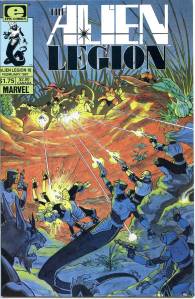
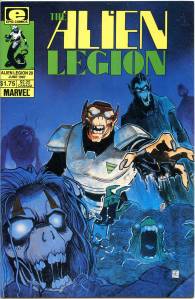
The franchise debuted with Marvel/Epic Comics’ The Alien Legion #1-20 (cover-dated April 1984 – June 1987). The 18-issue Alien Legion (Oct. 1987 – Aug. 1990), minus the “The”, followed, generally scripted by Chuck Dixon and penciled by Larry Stroman. Afterward came the three-issue Dixon-Stroman miniseries Alien Legion: On The Edge (Nov. 1990 – Jan. 1991); the two-issue Dixon-Stroman Alien Legion: Tenants of Hell (1991); the one-shot cover-titled Alien Legion: Grimrod and copyrighted Alien Legion: Jugger Grimrod (Aug. 1992), by Dixon and artist Mike McMahon; the single-issue Alien Legion: Binary Deep (Sept. 1993), by Dixon and Argentine artist Enrique Alcatena; and the three-issue miniseries Alien Legion: One Planet at a Time (April–July 1993), by Dixon and penciler Hoang Nguyen.
Additionally, Marvel/Epic published two spinoffs: Marvel Graphic Novel #25 (cover-titled Marvel Graphic Novel: The Alien Legion), released in 1986 and containing the story “A Grey Day To Die” by writers Potts and Zelenetz, penciler Cirocco, and the first series’ regular inker, Terry Austin; and the one-shot crossover with another series Law Dog and Grimrod: Terror at the Crossroads (1993)