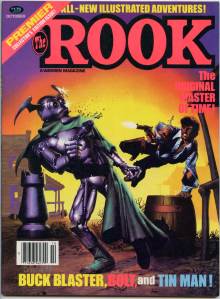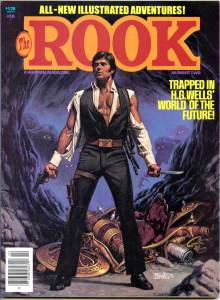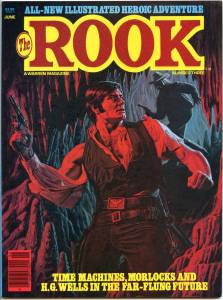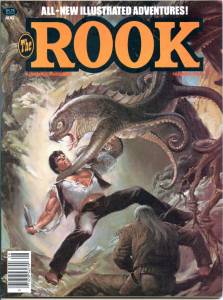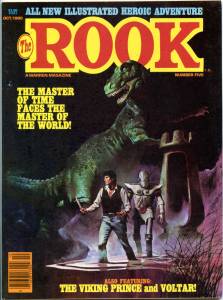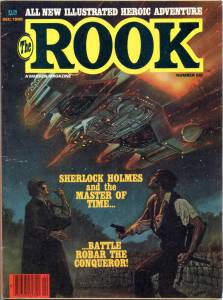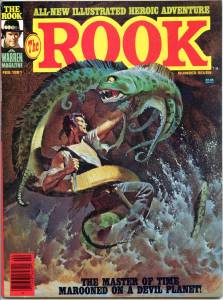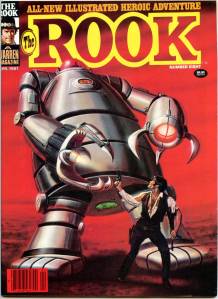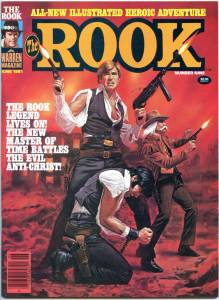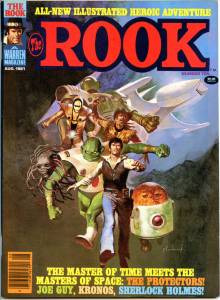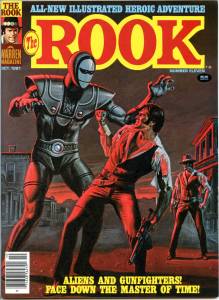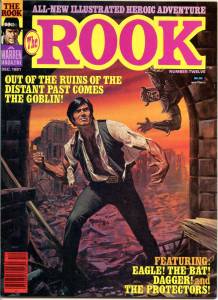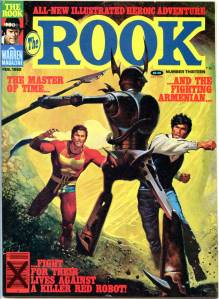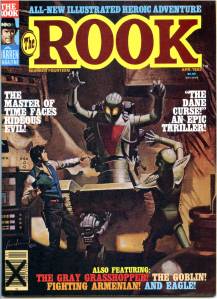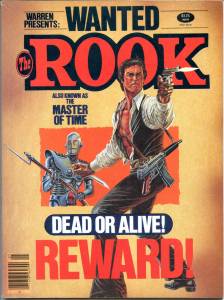
The Rook is a fictional, time-traveling comic book adventure hero. He first appeared in March 1977 in American company Warren Publishing‘s Eerie, Vampirella & Warren Presents magazines. In the 1980s, the Rook became popular and gained his own comic magazine title of the same name, The Rook Magazine.
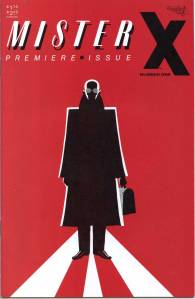
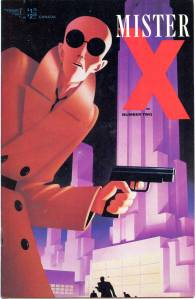
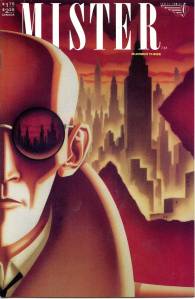
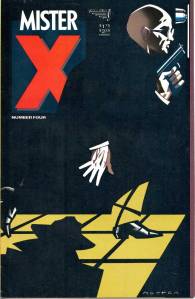
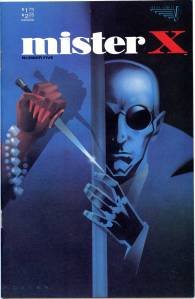
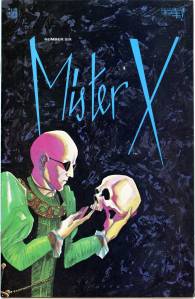
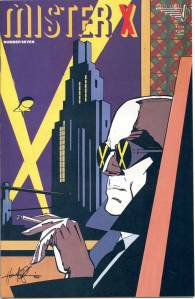
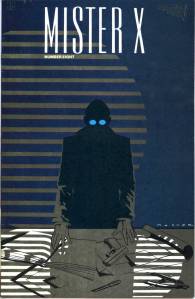
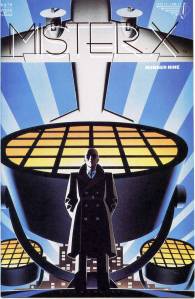
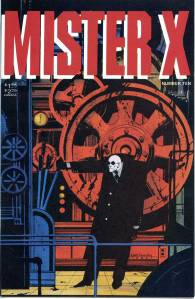
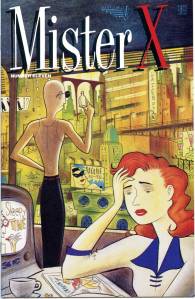
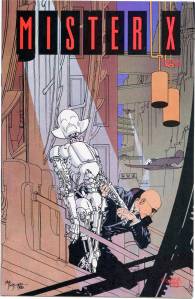
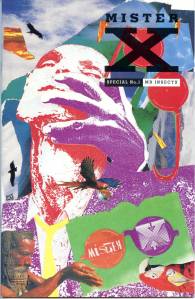
Created by album and book cover designer Dean Motter, Mister X was developed for a year in close collaboration with comic artist and illustrator Paul Rivoche, whose series of poster illustrations stirred up great interest in the project. The series published early work by comic artists who would later emerge as important alternative cartoonists, including Jaime Hernandez, Gilbert Hernandez, Mario Hernandez, Seth, Shane Oakley and D’Israeli.
A highly successful promotional campaign with posters and ads followed for the next year, while Motter and Rivoche struggled to produce an actual issue of Mister X. When Rivoche quit, Vortex Comics president Bill Marks became more skeptical than ever that Motter would be able to produce the series on time, and decided to turn the work over to the Hernandez brothers. The first four issues were written and illustrated by Jaime and Gilbert Hernandez, with additional writing by Mario Hernandez. The Hernandez brothers quit over payment delays from Vortex. Issues 5 through 14 of the series were then written by Motter, with issues 6 through 13 illustrated by Seth.
Vortex #2 VF $15Mister X #1 NM $15Mister X #2 VF+ $9Mister X #3 NM $12Mister X #4 VF $6Mister X #5 NM $10Mister X #6 NM $8Mister X #7 NM $8Mister X #8 VF-NM $5Mister X #9 NM $6Mister X #10 NM $6Mister X #11 NM $6Mister X #12 NM $6Mister X #13 NM $6Mister X #14 NM $6Mister X Special #1 NM $8
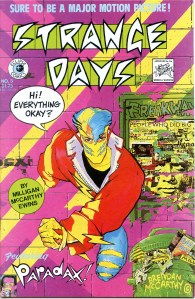
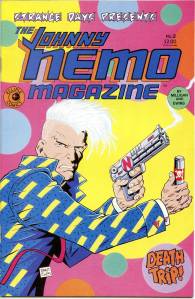
Concurrently, Milligan, Ewins and Brendan McCarthy worked on the anthology title, Strange Days for Eclipse Comics. Strange Days featured three strips, “Paradax“, “Freakwave“, and “Johnny Nemo“. Milligan, McCarthy and Ewins produced three issues of this psychedelic comic, it was not a great seller but it picked up a small, loyal readership. The most conventional strip, “Johnny Nemo”, had its own series, while the more quirky “Paradax” had a two-issue series published by Vortex Comics in 1987.
Strange Days #1 NM $12Strange Days #2 NM $10Strange Tales #3 NM $8Strange Days Presents – Johnny Nemo Magazine #2 VF+ $3
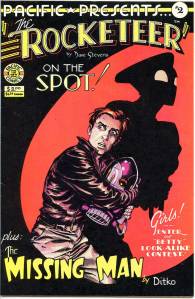
The Rocketeer’s first adventure appeared in 1982 as a backup feature in issues #2 and #3 of Mike Grell‘s Starslayer series from Pacific Comics. Two more installments appeared in Pacific’s showcase comic Pacific Presents #1 and 2. The fourth chapter ended in a cliffhanger that was later concluded in a special Rocketeer issue released by Eclipse Comics. The complete story was then collected by Eclipse in a single volume titled The Rocketeer. It was published in three versions: a trade paperback edition, a trade hardcover, and a signed, limited edition hardcover. Noted fantasy author Harlan Ellison, a fan of the Rocketeer and also an acquaintance of Dave Stevens, wrote the introduction to the collection; both Dave Stevens and Harlan Ellison signed the limited edition on a specially bound-in bookplate.
The story was continued in the Rocketeer Adventure Magazine. Two issues were published by Comico Comics in 1988 and 1989; the third installment was not published until 1995, six years later by Dark Horse Comics. All three issues were then collected by Dark Horse into a glossy trade paperback titled The Rocketeer: Cliff’s New York Adventure that quickly went out-of-print.
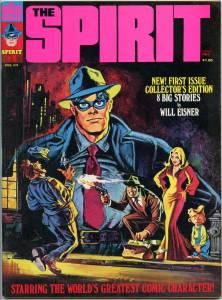
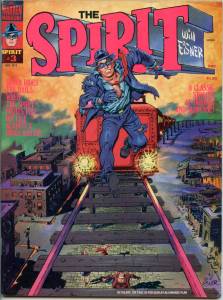
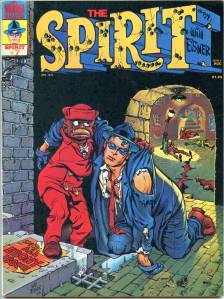
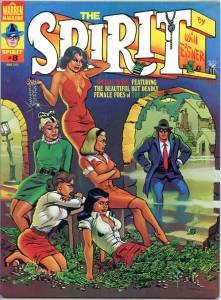
From 1974 to 1976, James Warren‘s Warren Publishing published 16 issues of The Spirit (also known as The Spirit Magazine), a large black-and-white magazine consisting of reprints with original covers (primarily by Eisner), concluding with a separate 1975 color issue, The Spirit Special, which includes an afterword by Bill DuBay. Kitchen Sink picked up the series beginning in 1977 with issue 17, eventually concluding with issue 41 (June 1983). Issue 30 of the Kitchen Sink series (July 1981) features “The Spirit Jam“, with a script from Eisner and a few penciled pages, plus contributions from 50 artists, including Fred Hembeck, Trina Robbins, Steve Leialoha, Frank Miller, Harvey Kurtzman, Howard Cruse, Brian Bolland, Bill Sienkiewicz, John Byrne, and Richard Corben.
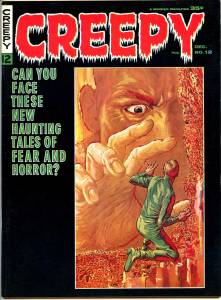
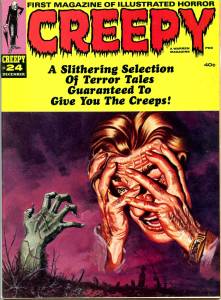
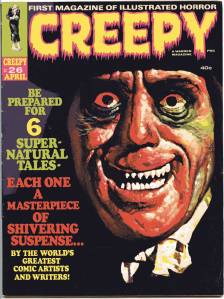
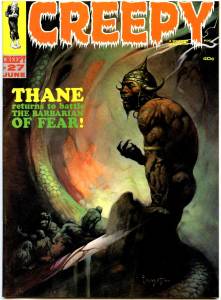
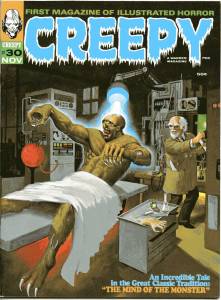
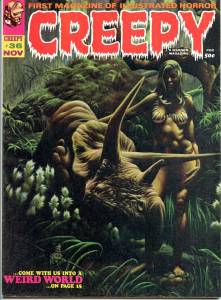
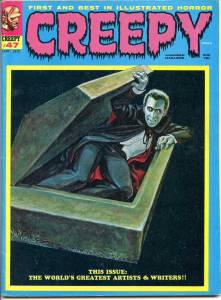
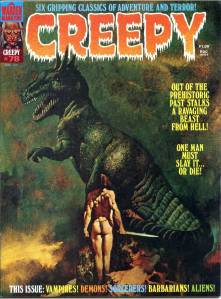
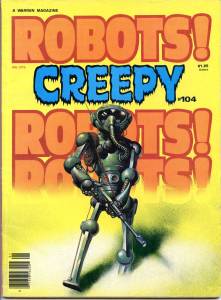
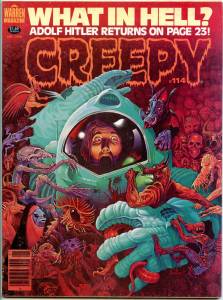
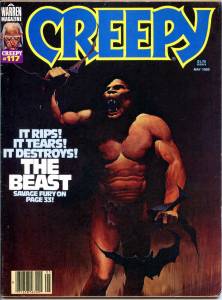
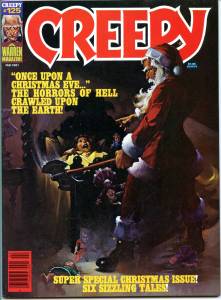
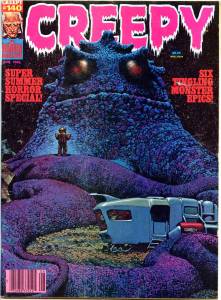
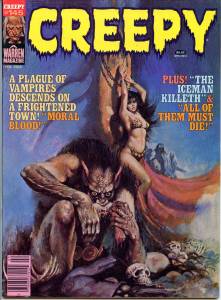
Creepy was an American horror-comics magazine launched by Warren Publishing in 1964. Like Mad, it was a black-and-white newsstand publication in a magazine format and thus did not require the approval or seal of the Comics Code Authority. The anthology magazine was initially published quarterly but later went bimonthly. Each issue’s stories were introduced by the host character, Uncle Creepy. Its sister publications were Eerie and Vampirella.
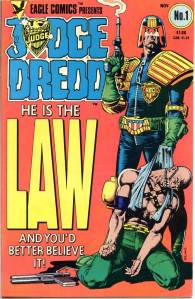
Judge Dredd is a fictional character who appears in British comic books published by Rebellion Developments, as well as in a number of movie and video game adaptations. He was created by writer John Wagner and artist Carlos Ezquerra, and first appeared in the second issue of 2000 AD (1977), a weekly science-fiction anthology. He is that magazine’s longest-running character.
Joseph Dredd is an American law enforcement officer in the dystopian future city of Mega-City One. He is a “street judge“, empowered to summarily arrest, convict, sentence, and execute criminals. Dredd’s entire face is never shown in the strip. This began as an unofficial guideline, but soon became a rule. As John Wagner explained: “It sums up the facelessness of justice − justice has no soul. So it isn’t necessary for readers to see Dredd’s face, and I don’t want you to”. Time passes in the Judge Dredd strip in real time, so as a year passes in life, a year passes in the comic. The first Dredd story, published in 1977, was set in 2099, whilst stories published in 2015 are set in 2137. Consequently, as former editor Alan McKenzie explains, “every year that goes by Dredd gets a year older – unlike Spider-Man, who has been a university student for the past twenty-five years!”. Therefore Dredd is over seventy years old, with over fifty years of active service (2079–2136), and for some time characters in the comic have been mentioning that Dredd is not as young and fit as formerly.
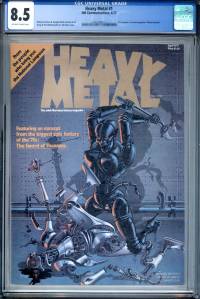
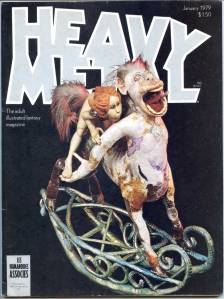
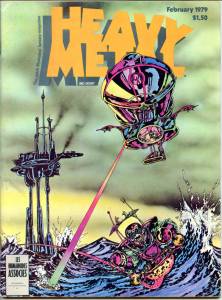
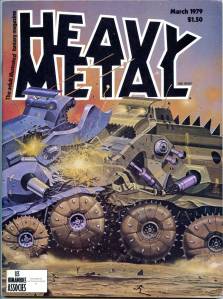
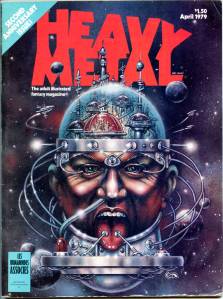
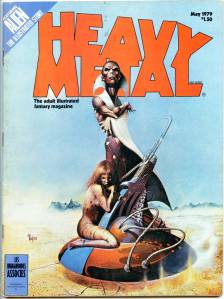
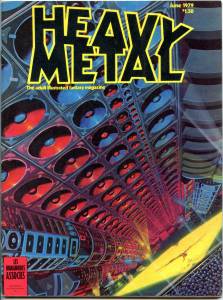
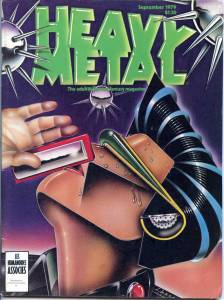
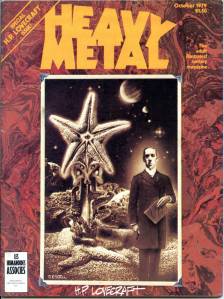
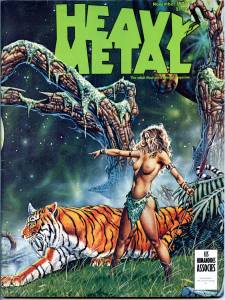
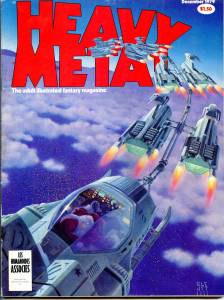
Heavy Metal is an American science fiction and fantasy comics magazine, published beginning in 1977. The magazine is known primarily for its blend of dark fantasy/science fiction and erotica and steampunk comics.
As cartoonist/publisher Kevin Eastman saw it, Heavy Metal published European art which had not been previously seen in the United States, as well as demonstrating an underground comix sensibility that nonetheless “wasn’t as harsh or extreme as some of the underground comix – but . . . definitely intended for an older readership.
Heavy Metal #1 (April, 1977) CGC 8.5 Off-White to White Pages $179Heavy Metal January 1979 VF- $19Heavy Metal February 1979 FN-VF $16Heavy Metal March 1979 VF $19Heavy Metal April 1979 FN $12Heavy Metal May 1979 FN $24Heavy Metal June 1979 FN-VF $29Heavy Metal September 1979 VF- $19Heavy Metal October 1979 FN-VF $34Heavy Metal November 1979 FN+ $15Heavy Metal December 1979 VG-FN $8
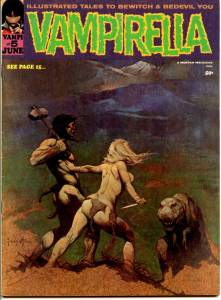
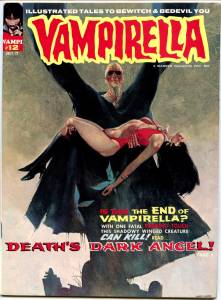
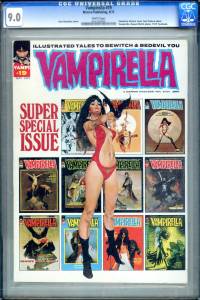
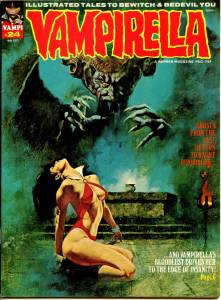
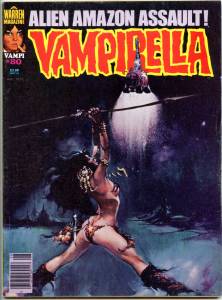
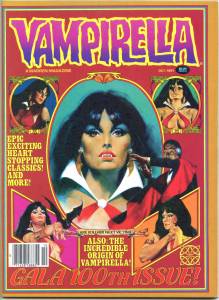
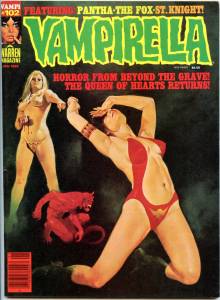
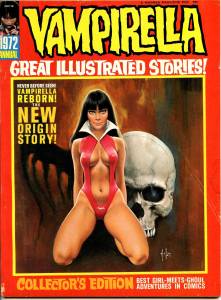
Vampirella is a vampire superheroine created by Forrest J Ackerman and costume designer Trina Robbins in Warren Publishing‘s black-and-white horror comics magazine Vampirella #1 (Sept. 1969). Writer-editor Archie Goodwin later developed the character from horror-story hostess, in which capacity she remained through issue #8 (Nov. 1970), to a horror-drama leading character. Vampirella was ranked 35th in Comics Buyer’s Guide‘s “100 Sexiest Women in Comics” list.
The Hernandez brothers self-published the first issue of Love and Rockets in 1981, but since 1982 it has been published by Fantagraphics Books. The magazine temporarily ceased publication in 1996 after the release of issue #50, while Gilbert and Jaime went on to do separate series involving many of the same characters. However, in 2001 Los Bros revived the series as Love and Rockets Volume 2.
Love and Rockets contains several ongoing serial narratives, the most prominent being Gilbert’s Palomar stories and Jaime’s Hoppers 13(aka Locas) stories. It also contains one-offs, shorter stories, surrealist jokes, and more.
Palomar tells the story of a fictional village in Latin America and its inhabitants. Its vibrant characters and sometimes-fantastic events are sometimes compared to the magical realism literary style of authors such as Gabriel García Márquez. The series is also sometimes referred to as Heartbreak Soup, after the first story set in Palomar.
Hoppers 13 follows the tangled lives of a group of primarily chicano characters, from their teenage years in the early days of the California punk scene to the present day. (Hoppers, or Huerta, is a fictional city based on the Hernandezes’s home town of Oxnard, California.) The series is also often called Locas (Spanish for “crazy women”) because of the many quirky female characters depicted.
Love and Rockets #5 VF $39Love and Rockets #6 VF- $29Love and Rockets #9 VF+ $39Love and Rockets #11 VF- $29Love and Rockets #12 FN-VFN $19Love and Rockets #13 VF $24Love and Rockets #14 VF $19Love and Rockets #15 VF-NM $27Love and Rockets #15 VF $18Love and Rockets #16 NM- $29Love and Rockets #17 NM $39Love and Rockets #17 VF+ $24Love and Rockets #18 F-VF $9Love and Rockets #19 NM- $34Love and Rockets #20 NM $39Love and Rockets #20 FN-VF $12Love and Rockets #21 NM $39Love and Rockets #22 VF $20Love and Rockets #23 NM $39Love and Rockets #25 NM $39Love and Rockets #27 VF-NM $24Love and Rockets #27 VF+ $22Love and Rockets #28 VF- $14Love and Rockets #29 NM- $34Love and Rockets #30 NM $29Love and Rockets #30 VF- $14Love and Rockets #31 VF $18Love and Rockets #32 NM $29Love and Rockets #34 NM $24Love and Rockets #35 NM $20Love and Rockets #38 NM $24Love and Rockets #39 VF $12Love and Rockets #40 VF $16Love and Rockets #43 VF+ $14Love and Rockets #44 VF $18Love and Rockets #46 VF-NM $29Love and Rockets #47 NM- $18Love and Rockets #49 VF- $16Ten Years of Love and Rockets NM $35