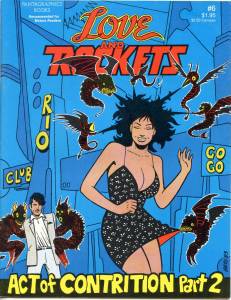
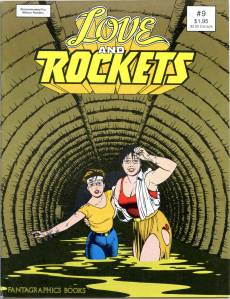
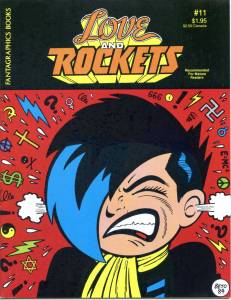
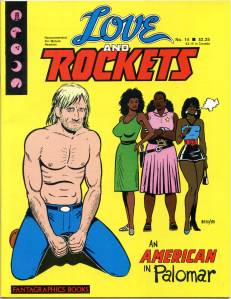
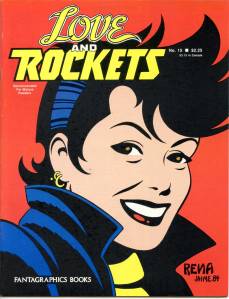
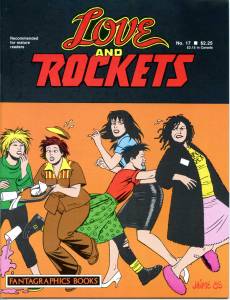
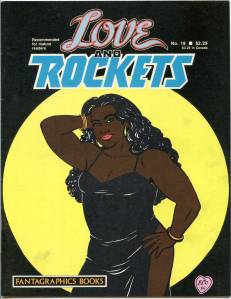
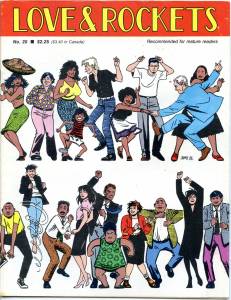
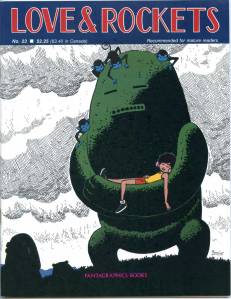
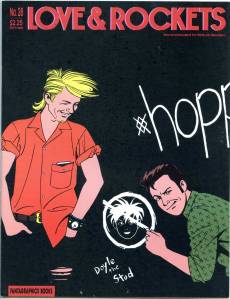
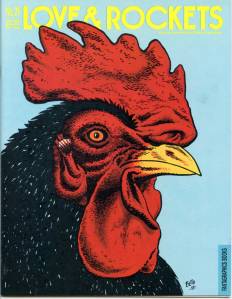
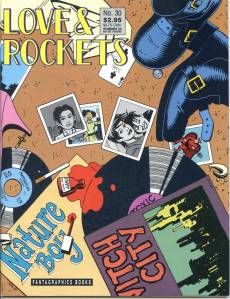
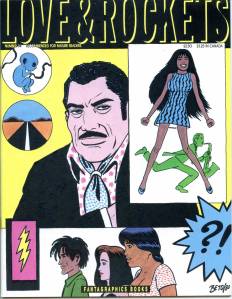
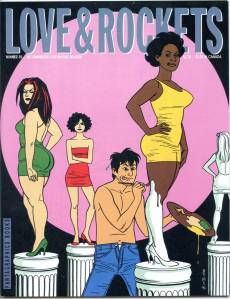
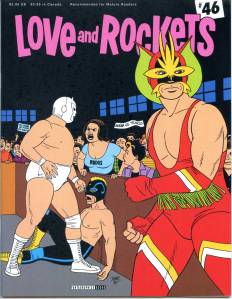
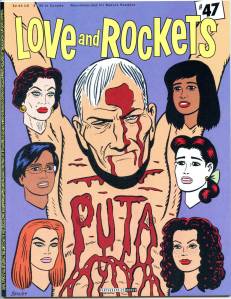
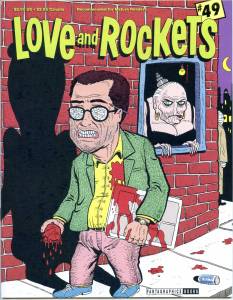
The Hernandez brothers self-published the first issue of Love and Rockets in 1981, but since 1982 it has been published by Fantagraphics Books. The magazine temporarily ceased publication in 1996 after the release of issue #50, while Gilbert and Jaime went on to do separate series involving many of the same characters. However, in 2001 Los Bros revived the series as Love and Rockets Volume 2.
Love and Rockets contains several ongoing serial narratives, the most prominent being Gilbert’s Palomar stories and Jaime’s Hoppers 13(aka Locas) stories. It also contains one-offs, shorter stories, surrealist jokes, and more.
Palomar tells the story of a fictional village in Latin America and its inhabitants. Its vibrant characters and sometimes-fantastic events are sometimes compared to the magical realism literary style of authors such as Gabriel García Márquez. The series is also sometimes referred to as Heartbreak Soup, after the first story set in Palomar.
Hoppers 13 follows the tangled lives of a group of primarily chicano characters, from their teenage years in the early days of the California punk scene to the present day. (Hoppers, or Huerta, is a fictional city based on the Hernandezes’s home town of Oxnard, California.) The series is also often called Locas (Spanish for “crazy women”) because of the many quirky female characters depicted.
Love and Rockets #5 VF $39Love and Rockets #6 VF- $29Love and Rockets #9 VF+ $39Love and Rockets #11 VF- $29Love and Rockets #12 FN-VFN $19Love and Rockets #13 VF $24Love and Rockets #14 VF $19Love and Rockets #15 VF-NM $27Love and Rockets #15 VF $18Love and Rockets #16 NM- $29Love and Rockets #17 NM $39Love and Rockets #17 VF+ $24Love and Rockets #18 F-VF $9Love and Rockets #19 NM- $34Love and Rockets #20 NM $39Love and Rockets #20 FN-VF $12Love and Rockets #21 NM $39Love and Rockets #22 VF $20Love and Rockets #23 NM $39Love and Rockets #25 NM $39Love and Rockets #27 VF-NM $24Love and Rockets #27 VF+ $22Love and Rockets #28 VF- $14Love and Rockets #29 NM- $34Love and Rockets #30 NM $29Love and Rockets #30 VF- $14Love and Rockets #31 VF $18Love and Rockets #32 NM $29Love and Rockets #34 NM $24Love and Rockets #35 NM $20Love and Rockets #38 NM $24Love and Rockets #39 VF $12Love and Rockets #40 VF $16Love and Rockets #43 VF+ $14Love and Rockets #44 VF $18Love and Rockets #46 VF-NM $29Love and Rockets #47 NM- $18Love and Rockets #49 VF- $16Ten Years of Love and Rockets NM $35
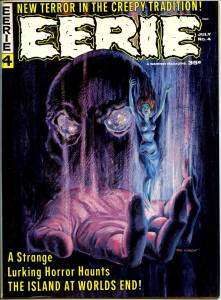
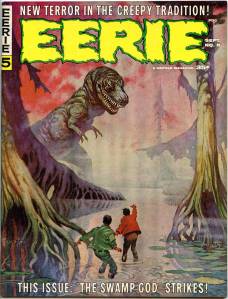
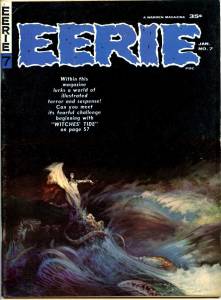
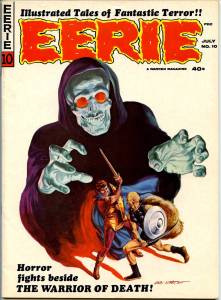
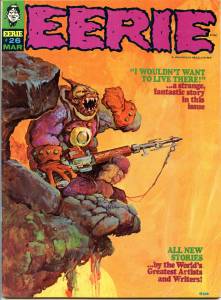
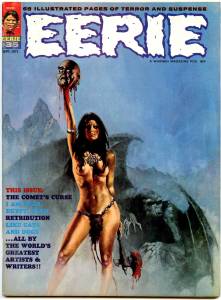
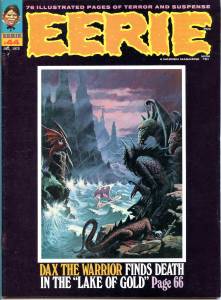
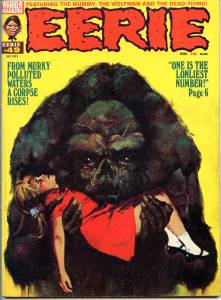
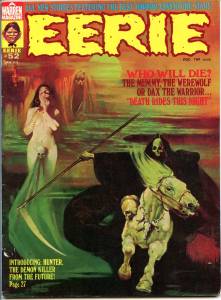
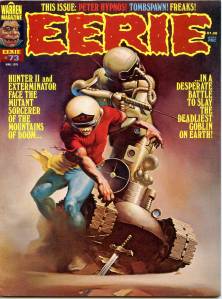
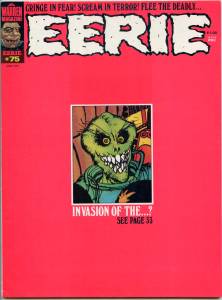
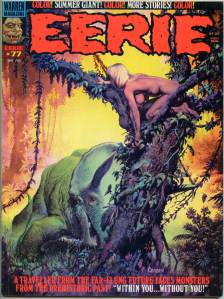
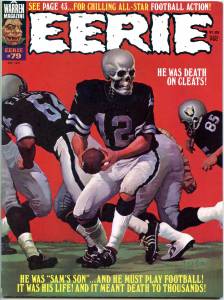
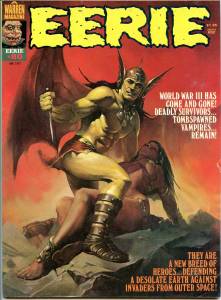
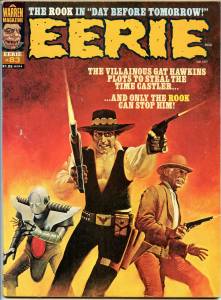
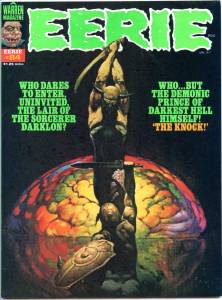
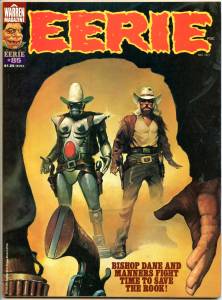
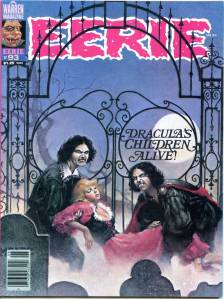
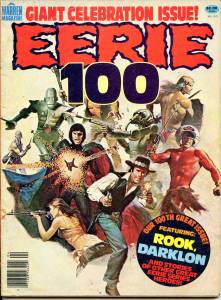
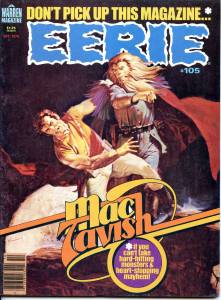
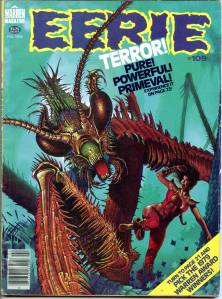
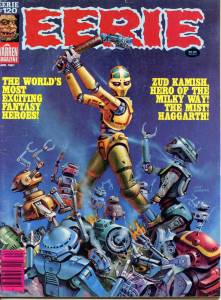
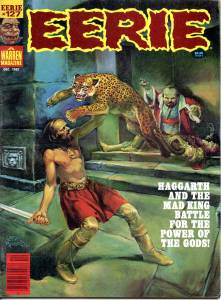
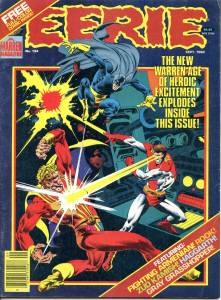
Eerie was an American magazine of horror comics introduced in 1966 by Warren Publishing. Like Mad, it was a black-and-white newsstand publication in a magazine format and thus did not require the approval or seal of the Comics Code Authority. Each issue’s stories were introduced by the host character, Cousin Eerie. Its sister publications were Creepy and Vampirella.
The first issue, in early 1966, had only a 200-issue run of an “ashcan” edition. With a logo by Ben Oda, it was created overnight by editor Archie Goodwin and letterer Gaspar Saladino to establish publisher Jim Warren’s ownership of the title when it was discovered that a rival publisher would be using the name.Warren explained, “We launched Eeriebecause we thought Creepy ought to have an adversary. The Laurel and Hardy syndrome always appealed to me. Creepy and Eerie are like Boris Karloff and Peter Lorre.”
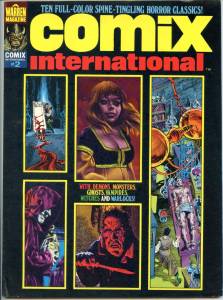
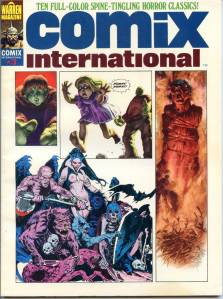
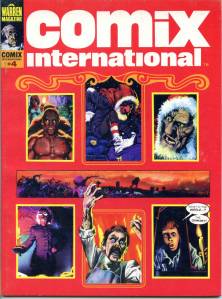
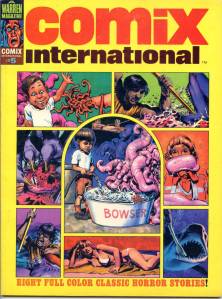
Comix International was a short-lived magazine comprised entirely of reprinted material (in color) from other Warren publications. With stories by Richard Corben, Reed Crandall, Wally Wood, Bernie Wrightson, and others. The name Comix International was originally to have been used for an underground title put together for Warren by Keith Green which never appeared.
Comix International #2 FN+ $20Comix International #3 FN-VFN $25Comix International #4 VF- $30Comix International #5 VF-NM $49
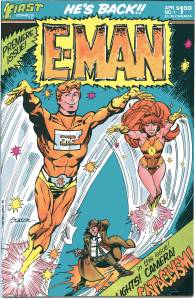
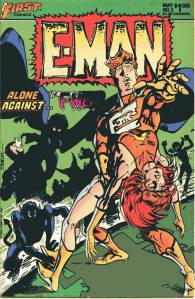
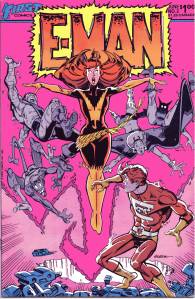
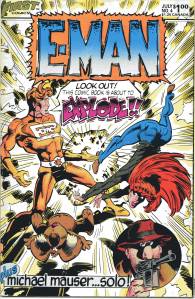
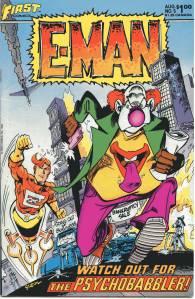
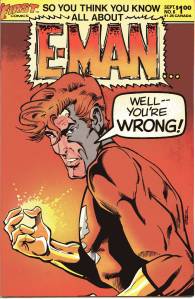
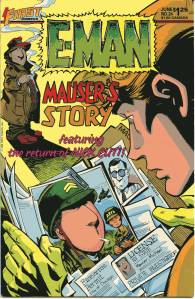
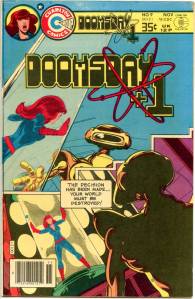
When Staton became art director at First Comics, the publisher acquired the rights to the character from Charlton and launched a series. Cuti was asked to write the title, but his obligations to DC Comics prevented him from accepting. The series was initially written by Martin Pasko, who had previously worked with Staton on Plastic Man and Metal Men. After Pasko’s run, Staton and Paul Kupperberg wrote the series until Cuti took over as writer with issue #24.
As a direct-market publisher not distributed to newsstands, the First series was not obligated to seek Comics Code Authority approval and could address more mature topics than Code-approved comics. Where the Charlton series featured broad whimsical themes, the First Comics series engaged in more specific satire directed at targets including the X-Men, Steven Spielberg, and Scientology.
The first 10 issues each contained a one-page parody of the Hostess snack advertisements that ran in comics through the 1970s and 1980s. These parodies were written and drawn by different creators and featured characters from across the independent comics industry.
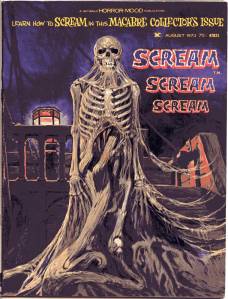
Scream is an American black and white illustrated comic magazine of the horror anthology genre. It was published by Skywald Publications and ran from August1973 to March1975, spanning a total of eleven issues.
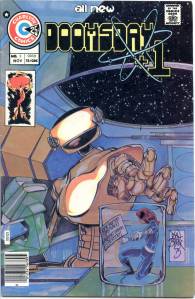
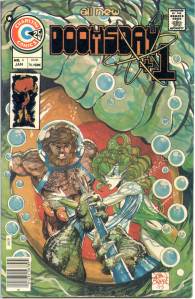
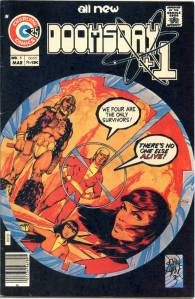
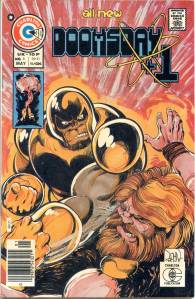
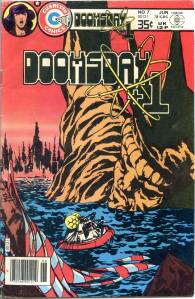
The series takes place in a near future in which a South American despot named Rykos launches his sole two atomic missiles on New York City in the U.S. and Moscow in the U.S.S.R. The two superpowers, each believing the other has launched a first strike, retaliate. By the time American president Cole and a Russian premier with the first name Mikhail have realized their errors, their fully automated nuclear-missile systems can not be countermanded.
Only hours before the apocalypse begins, a Saturn VIrocket launches bearing three astronauts: Captain Boyd Ellis, United States Air Force; his fiancée, Jill Malden; and Japanesephysicist Ikei Yashida. Weeks later, after the post-apocalyptic radiation has subsided to safe levels, their space capsule lands upon a melting Greenland ice field, where the three ally themselves with Kuno, a 3rd-century Goth revived from his ice-encased suspended animation.
The four encounter a Russian scientist/cyborg in Canada, where they commandeer a futuristic jet plane; undersea dwellers; and brutish U.S. military survivors, among others.
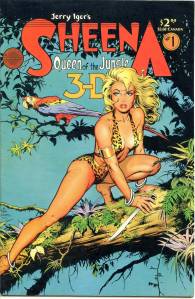
The first issue of Blackthorne’s long-running 3-D series, featuring Jerry Igers classic jungle princess, hero of pulps, comics, and the big and small screens. Absent from comics for almost three decades, this presents some of her 1950s adventures in 3-D format, including one by legendary good-girl artist Matt Baker. But the main draw for many fans will be the stunning cover by beloved artist (and Rocketeer creator) Dave Stevens. Also featuring an introduction by creator Jerry Iger, a Snarzan the Ape spoof from Great Comics (1941) #1, and a Congo King story with art by legendary good-girl artist Matt Baker. Heroine in the Jungle; Sargasso of Lost Safaris; Snarzan the Ape in Mein Kemp Von Der Chungle; Congo King; Spoor of the Dancing Skeletons. 32 pages, B&W with 3-D effects.
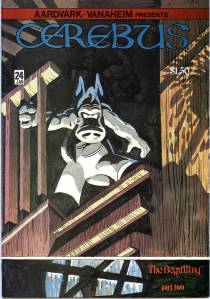
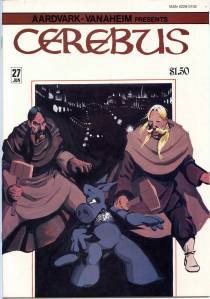
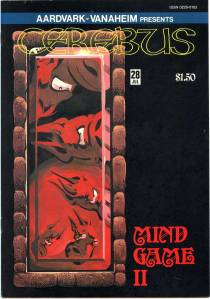
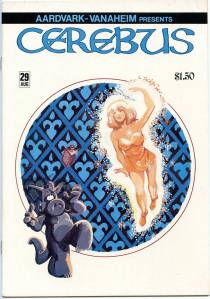
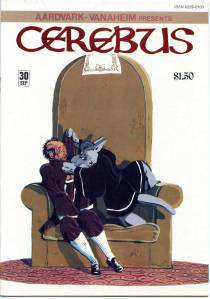
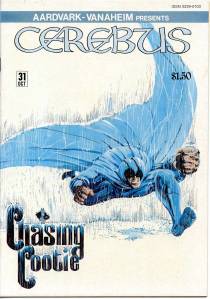
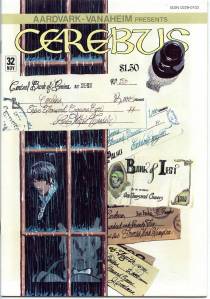
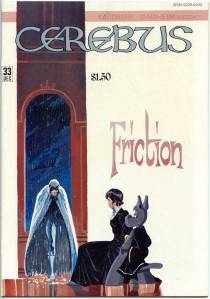
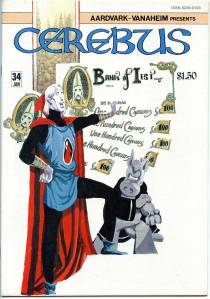
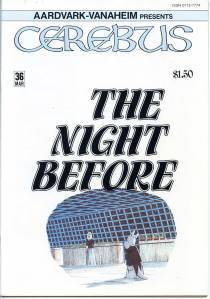
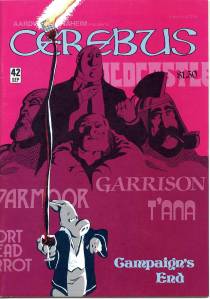
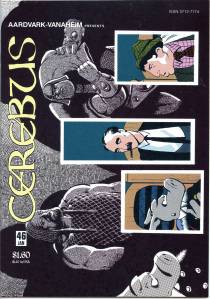
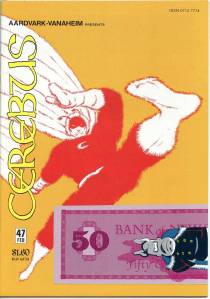
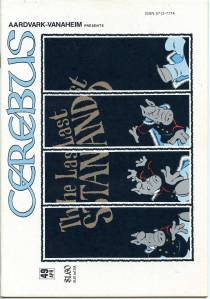
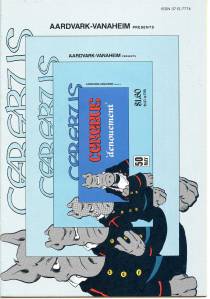
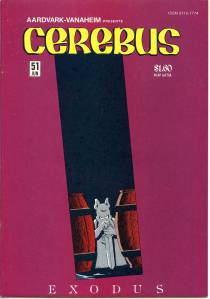
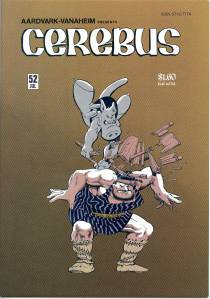
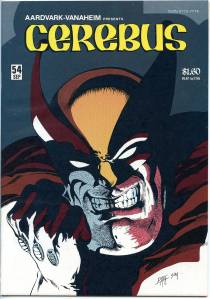
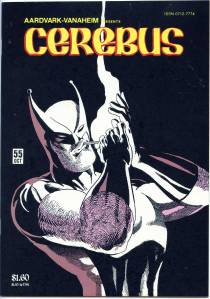
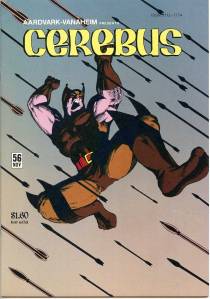
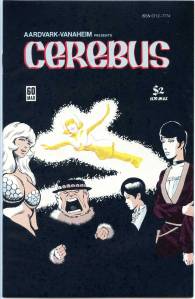
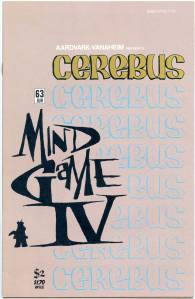
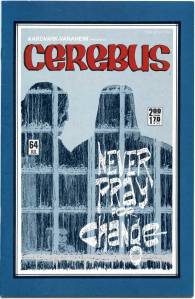
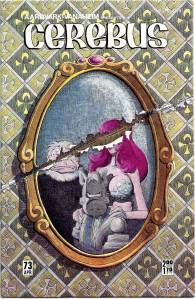
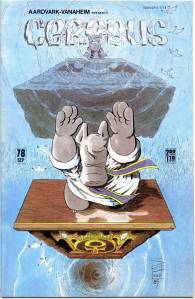
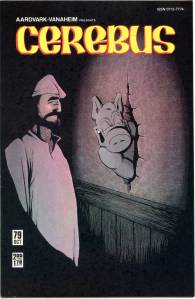
Cerebus the Aardvarkis a series created by Canadian cartoonist Dave Sim, which ran from December 1977 until March 2004. The title character of the 300-issue series was an anthropomorphic aardvark who takes on a number of roles throughout the series—barbarian, prime minister and Pope among them. The series stands out for its experimentation in form and content, and for the dexterity of its artwork, especially after background artist Gerhard joined in with the 65th issue. As the series progressed, it increasingly became a platform for Sim’s controversial beliefs.
The 6000-page story is a challenge to summarize. Beginning as a parody of sword and sorcery comics, it moved into seemingly any topic Sim wished to explore — power and politics, religion and spirituality, gender issues, and more. It progressively became more serious and ambitious than its parodic roots — what has come to be dubbed “Cerebus Syndrome“. Sim announced early on that the series would end with the death of the title character. The story has a large cast of characters, many of which began as parodies of characters from comic books and popular culture.
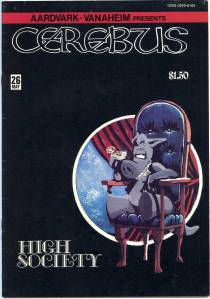
Starting with the High Society storyline, the series became divided into self-contained “novels”, which form parts of the overall story. The ten “novels” of the series have been collected in 16 books, known as “Cerebus phonebooks” for their resemblance to telephone directories. At a time when the series was about 70% completed, celebrated comic book writer Alan Moore wrote, “Cerebus, as if I need to say so, is still to comic books what Hydrogen is to the Periodic Table.”
The first Mr. Natural strip, “Mr. Natural: The Zen Master“, appeared in the premiere issue of the Philadelphia-based underground newspaper Yarrowstalks on 5 May 1967. When editor Brian Zahn proposed to Crumb to fill the entire third issue with his comix, Crumb created Flakey Foont and several other characters.
Mr. Natural made appearances in other underground newspapers such as the East Village Other, which published the strips “Mr. Natural Meets God” and “Mr. Natural Repents” among others. He made his first official comix appearance in Zap Comix #1 (Feb. 1968). Mr. Natural also appeared in early underground comix titles like Bijou Funnies, and Yellow Dog. He was a regular in Zap for the balance of the 1960s until appearing in his own three-issue title, originally co-published by The San Francisco Comic Book Company and Apex Novelties.
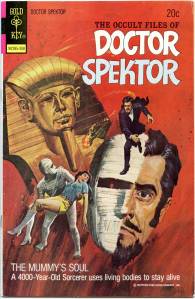
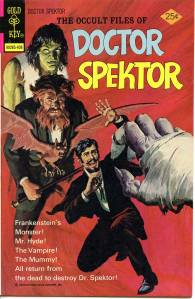
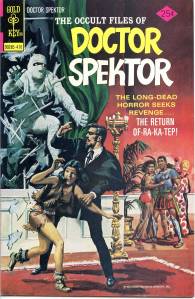
After his first appearance in a 10-page story in Mystery Comics Digest #5, Dr. Spektor was spun off into his own title, The Occult Files of Doctor Spektor. The series ran for 24 issues (May 1973 – February 1977). His final original story appeared in one issue of Gold Key Spotlight (#8, August 1977). Jesse Santos replaced Spiegle as artist on the series, and remained there for the entire run.
Dr. Spektor appeared in all four issues of Gold Key’s Spine-Tingling Tales (1975–76), where he provided linking narration for some of the stories within. (These stories were reprints from Mystery Comics Digest that dealt with characters who later appeared in his title). He also had stories he narrated in Mystery Comics Digest #10, #11, #12, and #21, and articles in Golden Comics Digest #25, #26, and #33.
Under the Whitman Comics name, issue #25 was released in May 1982. It reprinted issue #1, but with a line-art cover instead of the original painted cover.