The Boys (2006)

The series is set between 2006–2008 in a world where superheroes exist. However, most of the superheroes in the series’ universe are corrupted by their celebrity status and often engage in reckless behavior, compromising the safety of the world. For this reason, a superpowered CIA squad, known informally as “The Boys”, is charged with monitoring the superhero community; the name is Butcher’s contribution, a reference from his neighborhood that those in power would send “the boys” to handle anyone causing trouble.

Ennis has said that the series would “out-Preacher Preacher“, presumably referring to the extreme violence and sexuality that were that series’ hallmark, and that the series would end with its seventy-second issue.

Teenage Mutant Ninja Turtles – Mirage (1984)

The Teenage Mutant Ninja Turtles was first published by Mirage Studios in 1984 in Dover, New Hampshire. The concept arose from a humorous drawing sketched out by Kevin Eastman during a casual evening of brainstorming and bad television with Peter Laird. Using money from a tax refund, together with a loan from Eastman’s uncle, the young artists self-published a single-issue comic intended to parody four of the most popular comics of the early 1980s: Marvel ComicsDaredevil and New Mutants, Dave Sim’s Cerebus, and Frank Miller’s Ronin. The TMNT comic series has been published in various incarnations by various comic book companies since 1984.

The Tick (1989)

The Tick was created by cartoonist Ben Edlund in 1986 as a newsletter mascot for the New England Comics chain of Boston area comic stores. He is an absurdist spoof of comic book superheroes. After its creation, the character spun off into an independent comic book series in 1988, and gained mainstream popularity through an animated TV series on Fox in 1994. A short-lived live-action TV series, video game, and various merchandise have also been based on the character. IGN‘s list of the Top 100 Comic Book Heroes of All Time ranked The Tick as #57.
Youngblood V3 (1998)

Moore created a new, teenaged Youngblood group that was financed independently by millionaire Waxey Doyle, formerly the WWII superhero Waxman. The team was led by Shaft and was augmented by new members Big Brother, Doc Rocket, Twilight, Suprema, and Johnny Panic. Moore said he wanted Youngblood to be a “less sprawling, more dynamic team” and that “if you have more characters than [six], the action gets cluttered and it becomes increasingly difficult to establish each character as a real and solid person in their own right”. All of the new team members and most of the villains featured in this series, including Jack-A-Dandy, were Moore’s creations.

Love and Rockets (1981)

The Hernandez brothers self-published the first issue of Love and Rockets in 1981, but since 1982 it has been published by Fantagraphics Books. The magazine temporarily ceased publication in 1996 after the release of issue #50, while Gilbert and Jaime went on to do separate series involving many of the same characters. However, in 2001 Los Bros revived the series as Love and Rockets Volume 2.

Love and Rockets contains several ongoing serial narratives, the most prominent being Gilbert’s Palomar stories and Jaime’s Hoppers 13(aka Locas) stories. It also contains one-offs, shorter stories, surrealist jokes, and more.

Palomar tells the story of a fictional village in Latin America and its inhabitants. Its vibrant characters and sometimes-fantastic events are sometimes compared to the magical realism literary style of authors such as Gabriel García Márquez. The series is also sometimes referred to as Heartbreak Soup, after the first story set in Palomar.

Hoppers 13 follows the tangled lives of a group of primarily chicano characters, from their teenage years in the early days of the California punk scene to the present day. (Hoppers, or Huerta, is a fictional city based on the Hernandezes’s home town of Oxnard, California.) The series is also often called Locas (Spanish for “crazy women”) because of the many quirky female characters depicted.

The Many Ghosts of Doctor Graves (1967)

Following his introduction as Dr. M. T. Graves in Charlton Comics‘ Ghostly Tales #55 (cover-dated May 1966) in the three-page story “The Ghost Fighter” by writer-artist Ernie Bache, the character went on to host his own anthology title, The Many Ghosts of Doctor Graves. The series ran 72 issues (May 1967 – May 1982), generally published bimonthly. Following issue #60 (Jan. 1977), the title went on hiatus for seven months until issue #61 (Aug. 1977) before being canceled with #65 (May 1978). Charlton revived the title three years later with #66 (May 1981) before canceling it once more six issues later.

 The Many Ghosts of Doctor Graves#54 (Dec. 1973). The cover art is among the earliest professional works of John Byrne. Three additional issues consisting solely of reprints, and titled simply Dr. Graves, were published as issues #73-75 (Sept. 1985 – Jan. 1986).

Among the artists whose work appeared were Steve Ditko, following his falling-out with Marvel Comics; newcomer Jim Aparo, later to be one of Batman‘s signature artists; regular Charlton talents including Vince AlasciaPat BoyettePete MorisiRocke Mastroserio, and Charles Nicholas; and such others as Rich LarsonDon Newton and Tom Sutton. The cover of issue #54 (Dec. 1975) marks one of the earliest professional works of John Byrne.

Writers on the title included Ditko, Steve SkeatesMike Pellowski, and the prolific, generally uncredited staff writer Joe Gill.

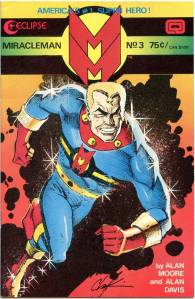
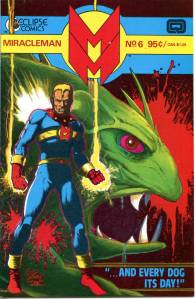
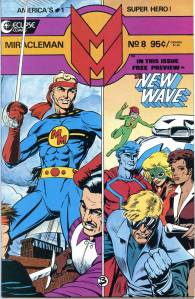
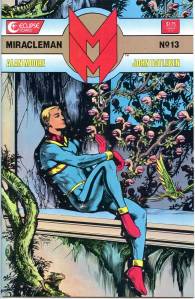
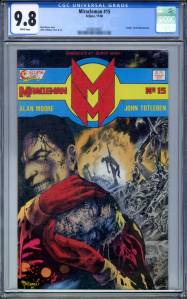
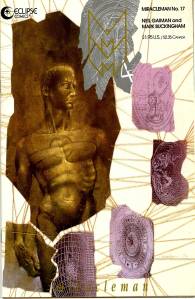
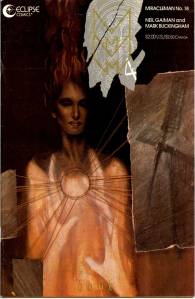
Miracleman – Eclipse (1980’s)

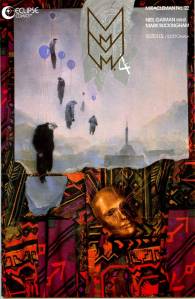
In August 1985, Eclipse began reprinting the Marvelman stories from Warrior, colored, and re-sized. They were renamed and re-lettered throughout as Miracleman to avoid further problems with Marvel Comics. Issues 1-6 reprinted all the Warrior content, after which Eclipse began publishing new Miracleman stories from Alan Moore and new artist Chuck Beckum (now better known as Chuck Austen), soon replaced by Rick Veitch and then John Totleben. Eclipse split the rights to the character, with 2/3 going to Eclipse and 1/3 split between the current writer and artist of the series. Moore wrote the series until issue 16.

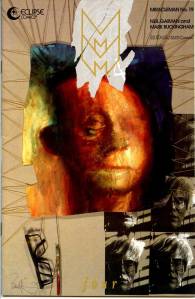
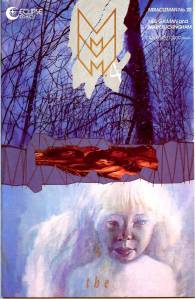
Writer Neil Gaiman picked up the series at #17 and developed it further in the 1990s, working with artist Mark Buckingham. He planned three books, consisting of six issues each; they would be titled “The Golden Age”, “The Silver Age” and “The Dark Age”.

Eerie (1966)

Eerie was an American magazine of horror comics introduced in 1966 by Warren Publishing. Like Mad, it was a black-and-white newsstand publication in a magazine format and thus did not require the approval or seal of the Comics Code Authority. Each issue’s stories were introduced by the host character, Cousin Eerie. Its sister publications were Creepy and Vampirella.

The first issue, in early 1966, had only a 200-issue run of an “ashcan” edition. With a logo by Ben Oda, it was created overnight by editor Archie Goodwin and letterer Gaspar Saladino to establish publisher Jim Warren’s ownership of the title when it was discovered that a rival publisher would be using the name. Warren explained, “We launched  Eerie because we thought Creepy ought to have an adversary. The Laurel and Hardy syndrome always appealed to me. Creepy and Eerie are like Boris Karloff and Peter Lorre.”

Grendel V2 (1986)

The Grendel ongoing series published by Comico started in 1986 and lasted 40 issues. It was written by Matt Wagner and drawn by a variety of artists, including the Pander Brothers, Bernie Mireault, Tim Sale, John K. Snyder III and others. It began with a story set in the near future, with Christine Spar, Hunter’s posthumous biographer, taking on the identity of Grendel to pursue a mission of revenge. The identity passed briefly, and tragically, to her deluded boyfriend Brian Li Sung. After a brief return to stories of Hunter Rose (actually two in-universe fictional novels written by Captain Wiggins, a supporting character from the Christine Spar arc), Wagner then spun the series further into the future, with the Grendel identity affecting a variety of people. The name “Grendel” took on several meanings as the stories portrayed a dystopian future. Grendel became a synonym for The Devil with the title held by the emperor of the world, (Grendel-Khan) and members of a warrior society identical to samurai.

Mars Attacks V1 (1994)

In conjunction with the expanded Mars Attacks trading card set released in 1994, Topps issued a six-issue limited comic book series written by Keith Giffen and drawn by Charles Adlard. The series featured a “flip-cover” format, with 22 pages of the book following the story of the card set and six pages detailing previous encounters leading up to the invasion. The limited series was successful and led Topps to continue it as a regular series.