
Look no further! We have a highly diverse selection of awesome comics.
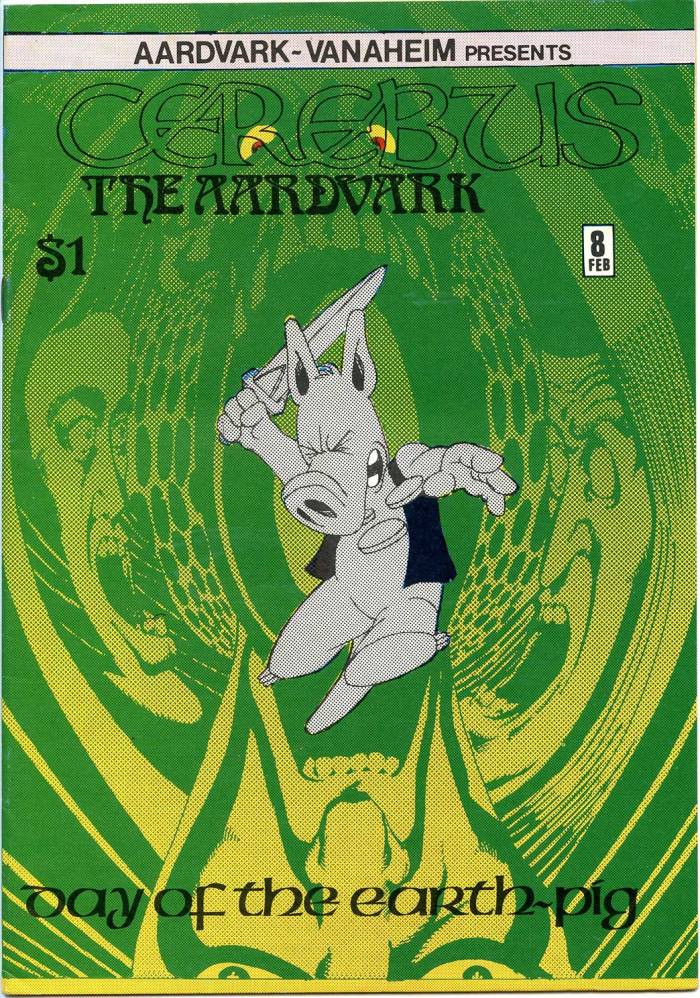
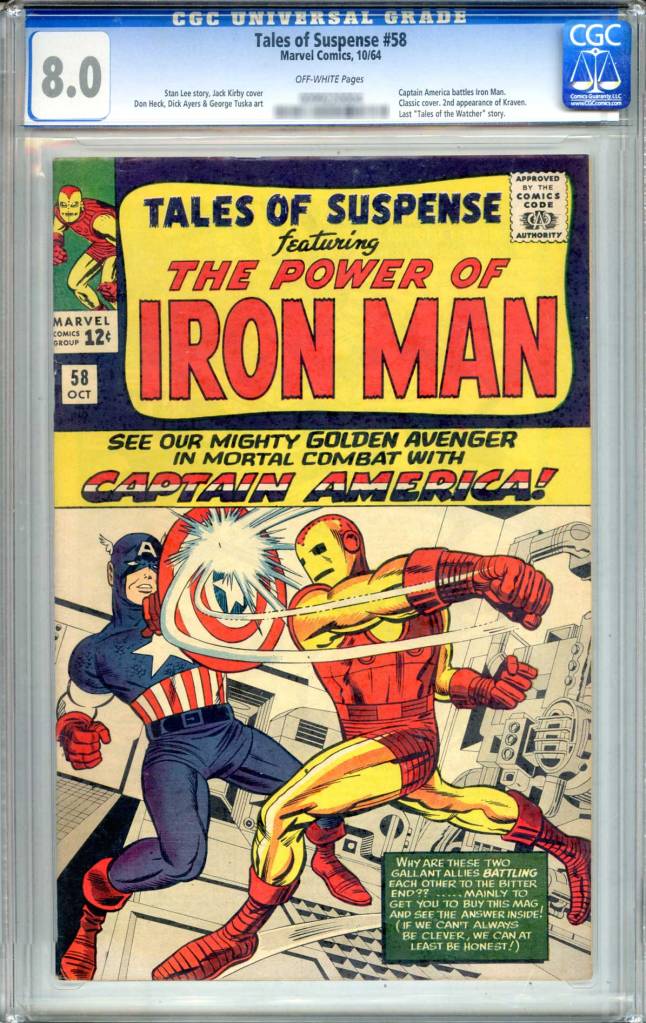
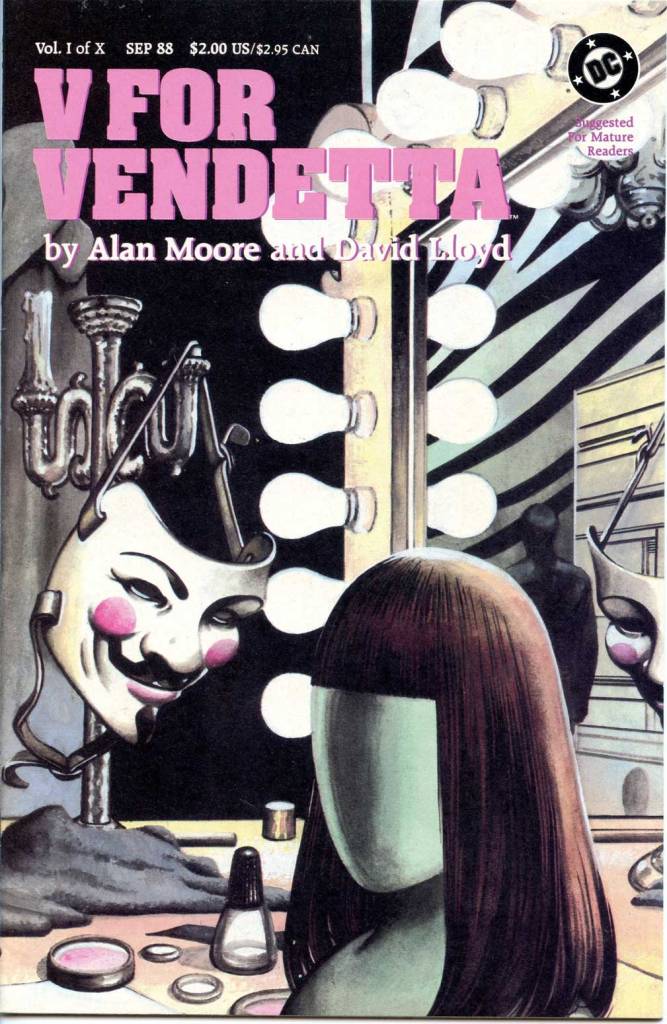
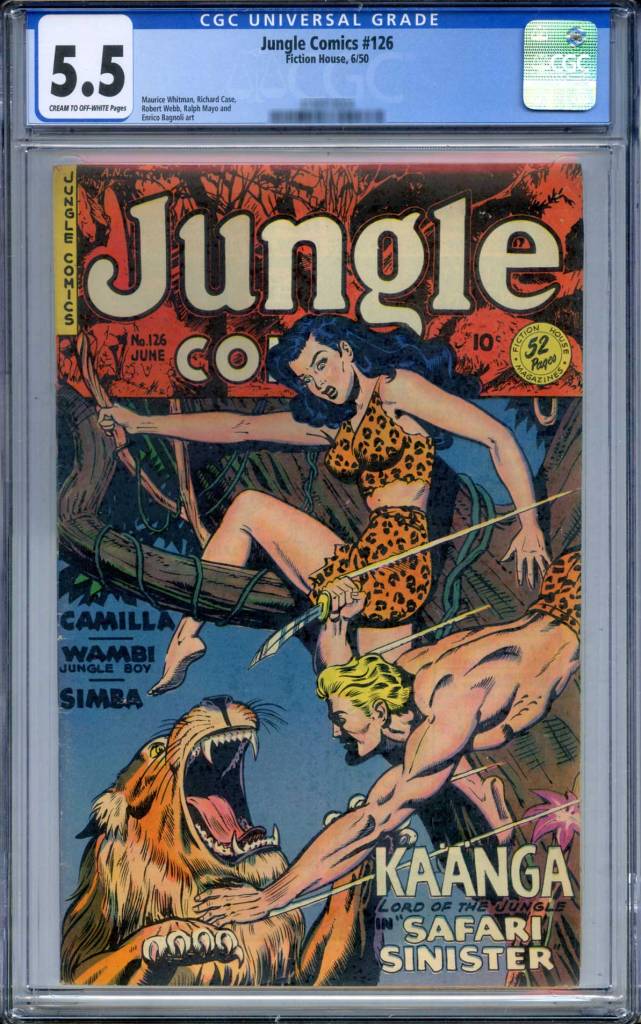

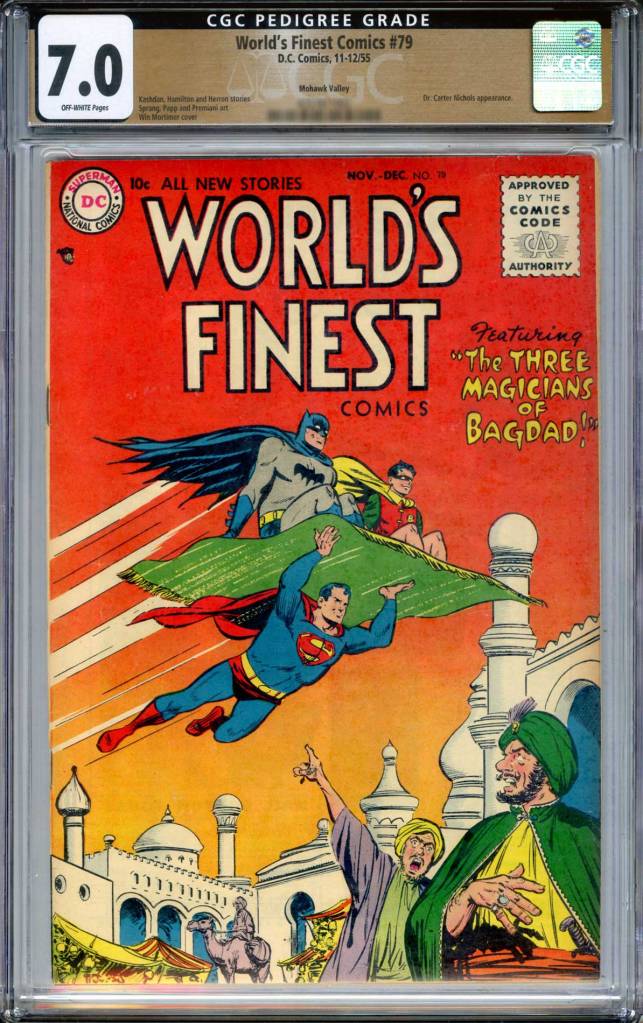
Look no further! We have a highly diverse selection of awesome comics.
 Hello and welcome to EHT Comics! Thank’s for taking the time to stop by our site. All of the items posted on our site are scans or photos of the actual items we have for sale. Just click on an item to view a larger and more detailed image. E-mail us anytime at EHTcomics@gmail.com in regards to items that you are interested in and a Paypal Invoice will be provided via email. Shipping information is provided under “About Us” on the right. We are always adding new comics, so stop back often and if you don’t see it, feel free to ask.
Thanks!
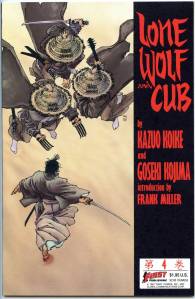
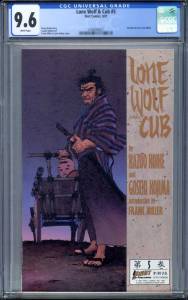
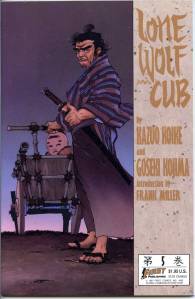
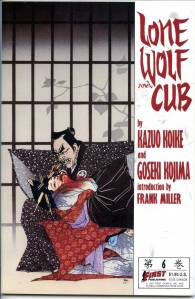
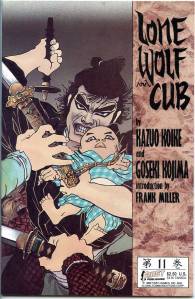
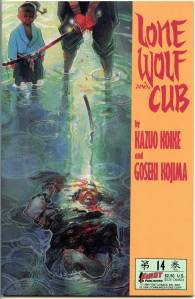
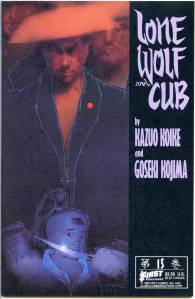
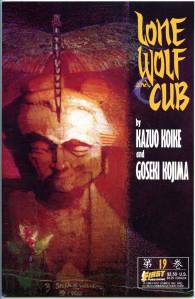
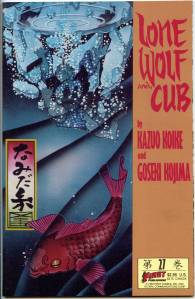
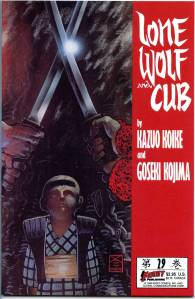
When Lone Wolf and Cub was first released in Japan in 1970, it became wildly popular (some 8 million copies were sold in Japan) for its powerful, epic samurai story and its stark and gruesome depiction of violence during Tokugawa era Japan.
Lone Wolf and Cub is one of most highly regarded manga due to its epic scope, detailed historical accuracy, masterful artwork and nostalgic recollection of the bushido ethos. The story spans 28 volumes of manga, with over 300 pages each (totaling over 8,700 pages in all). Many of the frames of the series are hauntingly beautiful depictions of nature, historical locations in Japan and traditional activities done in the classical ukiyo-e style.
Lone Wolf and Cub was initially released in North America in a translated English edition by First Comics in 1987, as a series of monthly, comic-book-sized, square-bound prestige-format black-and-white comics containing between 64 and 128 pages, with covers by Frank Miller, and later by Bill Sienkiewicz, Matt Wagner, Mike Ploog, and Ray Lago. Sales were initially strong, but fell sharply as the company went into a general decline. First Comics shut down in 1991 without completing the series, publishing less than a third of the total series in 45 prestige-format issues.
Starting in September 2000, Dark Horse Comics began to release the full series in 28 smaller-sized trade paperback volumes, similar to the volumes published in Japan, completing the series with the 28th volume in December 2002. Dark Horse reused all of Miller’s covers from the First Comics edition, as well as several done by Sienkiewicz, and commissioned Wagner, Guy Davis, and Vince Locke to produce new covers for several volumes of the collections. In October 2012, Dark Horse completed the release of all 28 volumes in digital format, as part of their “Dark Horse Digital” online service.





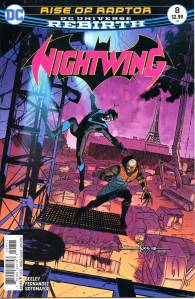
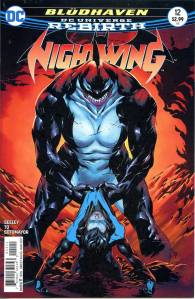
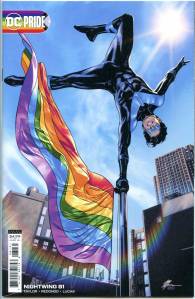
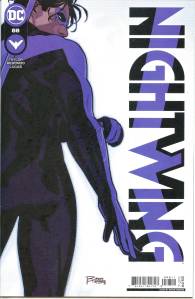
Following the erasure of the knowledge regarding his secret identity from most of the world in the final issue of Grayson, Dick went back to the Nightwing identity in the DC Rebirth era solo series, and the costume’s colors were changed back to the traditional black and blue. At the start of the series (rebirth) Nightwing is still a member of the Court of Owls (after Robin War) and he goes on missions around the world for the Court. They give him a partner named “Raptor” and like Nightwing he wears a costume, but he is much more violent than Dick and multiple times Dick has to try to stop him from killing. Throughout the story arc, Dick must work as an undercover agent but also has to keep his morals and not kill even if the Court tells him to.


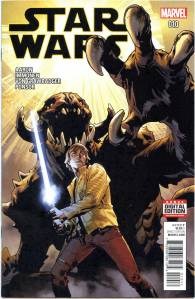
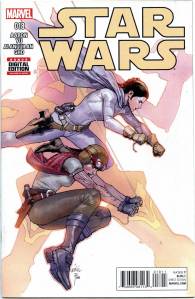
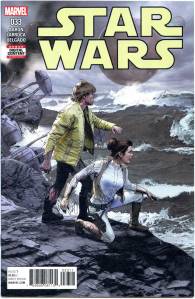
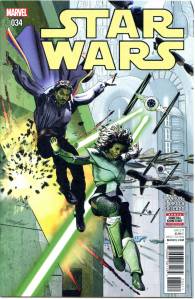
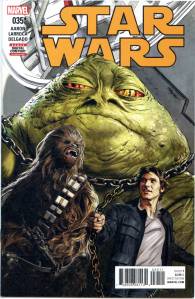
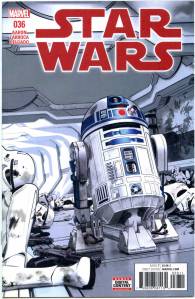
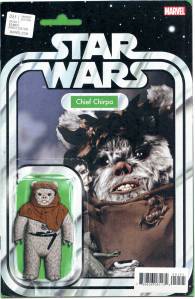
Star Wars was initially written by Jason Aaron with art by John Cassaday. The Marvel Comics series, which began publishing on January 14, 2015, and features the characters Luke Skywalker, Leia Organa, Han Solo, Chewbacca, C-3PO, and R2-D2, takes place between the events of Star Wars: Episode IV A New Hope and Star Wars: Episode V The Empire Strikes Back. The series concluded with issue 75, which was released on November 20, 2019, and was relaunched with another series of comics on January 1, 2020.



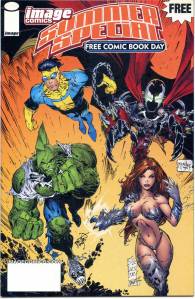
Cover by Todd McFarlane, Erik Larsen, Marc Silvestri and BATT. Free Comic Book Day 2004. Contains: “The Curse of Spawn”, “Witchblade First Strike” by Robert Place Napton with art by Francis Manapul, “Invincible” by Robert Kirkman with art by Ryan Ottley, “Savage Dragon Power Shortage” by Erik Larson.
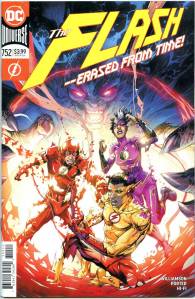
Meet Paradox: a new time-traveling villain with a tragic backstory who poses a big threat–and carries a big grudge against the Flash. He’s determined to destroy the Flash legacy at all costs, and he’s powerful enough to do it! With the Flash about to be erased from time and space, only one ally can help him defeat this seemingly insurmountable foe…Eobard Thawne, the Reverse-Flash? Can Barry Allen really trust his greatest enemy? And does he even have a choice?
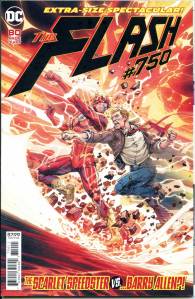



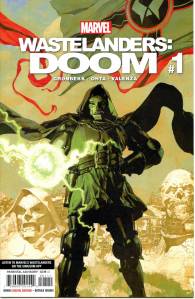
The Once and Future King! Doctor Doom helped wipe out the heroes on the Day the Villains Won, but even as he rules his domain in the Wastelands, a greater destiny calls to him. When a mysterious power blocks his oversight of a particular region, what he discovers will have ripple effects across the Wastelanders stories!
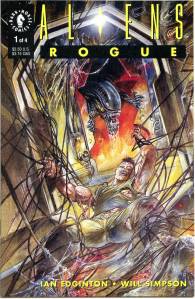
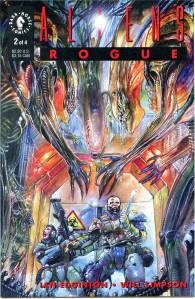
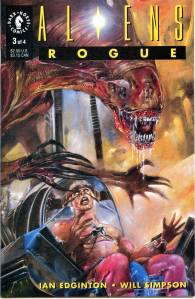
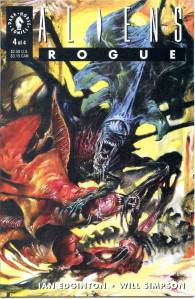
The mysterious Mr. Kray, a corporate spy, is sent to Charon Base to investigate Research Director Ernst Kleist’s genetic experiments on Xenomorphs. Kleist is attempting to breed the creatures into something controllable, but workers on the base are disappearing. Kray and his pilot, Palmer, must uncover Kleist’s schemes while surviving his “pet” Aliens.
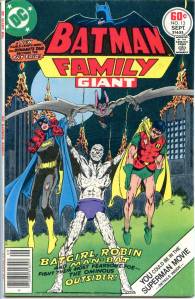
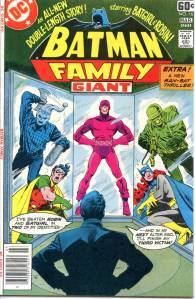
The Batman Family ran twenty issues from September-October 1975 to October-November 1978 and featured solo and team-up stories starring Batgirl and Robin. The lead story in the first issue teaming Batgirl and Robin was originally intended for publication in an issue of 1st Issue Special. The series additionally featured reprints of Golden Age and Silver Age stories. Many issues of Batman Family featured Batman supporting characters such as Alfred Pennyworth, Vicki Vale, the Elongated Man, the Huntress, and Ace the Bat-Hound. Writer Bob Rozakis introduced the Duela Dent character in issue #6 (July–August 1976) and revived the original Batwoman in issue #10 (March–April 1977). The series began featuring only new material as of issue #11 (May-June 1977) and Man-Bat began appearing as a regular feature. Batman Family converted to the Dollar Comics format with issue #17 (April–May 1978).

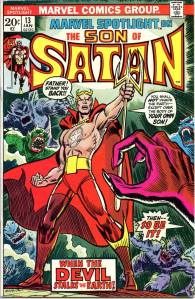
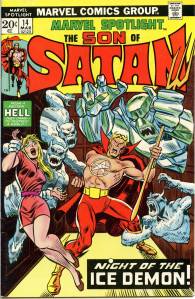
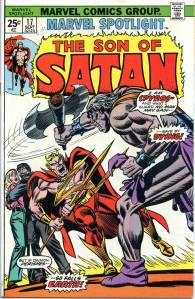
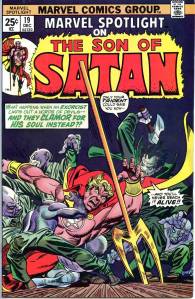
Encouraged by the success of Ghost Rider and The Tomb of Dracula, both of which starred occult characters, Stan Lee proposed a series starring Satan, to be titled The Mark of Satan. Editor Roy Thomas had reservations about this idea and suggested a series focusing on the son of Satan instead. (Due to an oversight, “The Mark of Satan” is mentioned in a blurb in Ghost Rider #1).
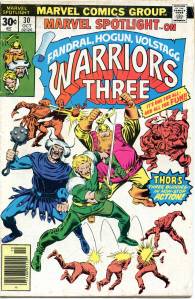
The character Daimon Hellstrom first appeared in Ghost Rider vol. 1, #1 (Sept. 1973), then was spun off into a feature, “Son of Satan”, in Marvel Spotlight #12–24 (Oct. 1973 – Oct. 1975). During the “Son of Satan” run, Marvel Spotlight was a controversial series, with numerous readers writing to object to the depictions of satanism and wiccanism as being either inaccurate or furthering the cause of evil. Nonetheless, sales were strong, prompting Marvel to launch the character into his own series, Son of Satan, written by John Warner. The character’s success faded soon after the series launch, and Son of Satan was cancelled with issue #7, though an unused fill-in was published as Son of Satan #8 (Feb. 1977).






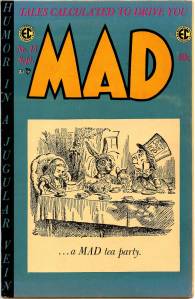
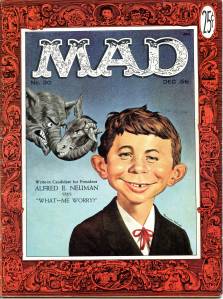
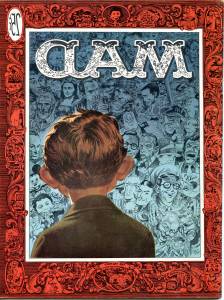
MAD is an American humor magazine founded in 1952 by editor Harvey Kurtzman and publisher William Gaines, launched as a comic book before it became a magazine. It was widely imitated and influential, affecting satirical media as well as the cultural landscape of the 20th century, with editor Al Feldstein increasing readership to more than two million during its 1974 circulation peak. As of January 2017, Mad has published 544 regular issues, as well as hundreds of reprint “Specials,” original material paperbacks, compilation books and other print projects.
 EHT Comics