Monstress (2015)

Monstress is an epic fantasy comics series written by Marjorie Liu and drawn by Sana Takeda, published since 2015 by Image Comics.

The series is set in a matriarchal “alternate Asia” riven by war between the Arcanics, magical creatures who sometimes can pass for human, and the Cumea, an order of sorceresses who consume Arcanics to fuel their power. The main character, Maika, is an Arcanic who is set on learning more about, and avenging, her dead mother. According to Liu, among the series’s themes are the inner strength required to withstand constant dehumanization, as well as the power of friendship among women.
The first, triple-sized issue of Monstress received critical praise. Writing for Kotaku, Evan Narcisse called it “a gorgeous comic book about racism, war and slavery”, noting the intricate detail of Takeda’s manga-inspired art. In the A.V. Club, Caitlin Rosberg described the leading characters, all women, as “deeply flawed and showing layers of nuanced characterization that you don’t often see in comic books”, and appreciated the series’s “sense of in-between-ness—(…) neither traditionally Western nor manga, paced like a novel but drawn like a comic”.

Robin V4 (1993)

In 1993, the success of the three Robin miniseries led to the ongoing Robin series which ran 183 issues until 2009 and helped his transition from sidekick to a superhero in his own right. In 2004 storylines, established DC Comics character Stephanie Brown became the fourth Robin for a short while before the role reverted to Tim Drake. Batman’s son Damian Wayne then succeeds Drake as Robin in the 2009 story arc “Battle for the Cowl“, until his death in 2013 story. Following the 2011 continuity rebootThe New 52“, Tim Drake is revised as having assumed the title Red Robin out of deference to the deceased Jason Todd; Jason Todd, as he exists today, operates as the Red Hood and has been slowly repairing his relationship with Batman; Dick Grayson is Nightwing, and later fakes his death to become an undercover operative; and Stephanie Brown is introduced anew as Spoiler once again in the pages of Batman Eternal (2014).

Venom V5 (2021)

An all-new Venom from some of comics’ greatest talents! Marvel mainstay Al Ewing, who himself has just ended a character-redefining run on Immortal Hulk, is being joined by Ram V, a horror maestro all his own, to craft a mind-bending and gut-wrenching tale of symbiosis the likes of which the Marvel Universe has never seen! Aa if that wasn’t enough, they’ve been joined by Bryan Hitch, who is leaving it all on the page.

Aliens: Stronghold (1994)

On an apparently routine supply run, Philip and Joy Strunk deliver a shipment of synthetic photo receptors to Caspar Nordling, biotechnologist for Grant Corporation. When the Strunks discover that Nordling’s experiments have exceeded Stanislaw Mayakovsky’s work (as seen in Aliens: Hive), they realize that there’s more to Nordling — and the Aliens — than meets the eye.
The House of Mystery (1980’s)

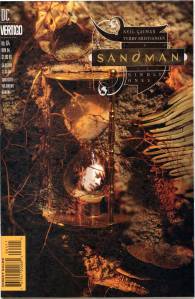
Karen Berger became editor of the series with #292 (May 1981), her first for DC Comics. Under Berger, the series experimented with long-form storylines in the popular I…Vampire serial created by writer J. M. DeMatteis. “I… Vampire” revolved around the heroic vampire, Andrew Bennett, who sought to defeat his nemesis and former lover Mary, the Queen of Blood. This series began in #290 (March 1981) and would last until #319 (August 1983), two issues before the title ended with #321 (October 1983).

Captain America (1960’s)

Tales of Suspense became Captain America with #100 (April 1968)  This series — considered Captain America volume one by comics researchers and historians, following the 1940s Captain America Comics and its 1950s numbering continuation of Tales of Suspense — ended with #454 (Aug. 1996).

Faust (1988)

Faust is the lead superhero character and title of a collective series of comic books by Tim Vigil (art) and playwright David Quinn, released by American publishers Northstar PublishingAvatar Press, and principally by Vigil and Quinn’s own Rebel Studios.

Alongside contemporaries WatchmenThe Crow, and The Dark Knight Returns, Faust was credited with popularizing the “deconstructed superheroes” genre and the notion that “comics aren’t just for kids.” One of the bestselling independent comics of the era, Faust issue 1 sold over 100,000 copies with later issues averaging 50,000 sales per issue, most of which sold through several printings and editions.

The series features strong graphic violence and sexual situations. The main series is known as Faust: Love of The Damned and debuted in 1988, with new issues published irregularly, roughly once a year, or sometimes every two years. David Quinn completed a script in 1996 (when writing the proposal to sell the film). The gap between issues grew wider with time. Issue 13 was published in 2005. It then took seven years for the authors to deliver the two last issues, 14 and 15, which concluded the story 25 years after the first episode.

Superman (1970’s)

The early 1970s were a time of change for the Man of Steel. As Clark Kent shifted from being a newspaper reporter to a TV newscaster, his alter ego saw the destruction of all remaining Kryptonite on Earth! This period also featured many new villains, including Terra-Man, and the dramatic reintroductions of such foes as Lex Luthor — in green and purple armor!

Avengers (1970’s)

During the summer of 1973, Englehart and artists Bob Brown and Sal Buscema produced “The Avengers-Defenders Clash” storyline which crossed over between the two team titles. “The Celestial Madonna” arc linked Mantis’ origins to the very beginnings of the Kree-Skrull conflict in a time-spanning adventure involving Kang the Conqueror, and Immortus, who were past and future versions of each other. Mantis was revealed to be the Celestial Madonna, who was destined to give birth to a being that would save the universe. It was revealed that the Vision’s body had only been appropriated, and not created by Ultron, and that it originally belonged to the 1940s Human Torch. With his origins clear to him, the Vision proposed to the Scarlet Witch. The “Celestial Madonna” saga ended with their wedding, presided over by Immortus. The Beast and Moondragon joined the team soon after. George Pérez became the title’s artist with issue #141 (Nov. 1975) which saw the start of a seven-part story featuring the Squadron Supreme and the Serpent Crown. In 2010, Comics Bulletin ranked Englehart’s run on The Avengers eighth on its list of the “Top 10 1970s Marvels”.
Witchblade V1 (1990’s)

Witchblade is a comic book series published by Top Cow Productions, an imprint of Image Comics, which ran from November 1995 to October 2015. The series was created by Top Cow founder and owner Marc Silvestri, editor David Wohl, writers Brian Haberlin and Christina Z, and artist Michael Turner.

The Witchblade comic was adapted into a television series in 2001, as well as an anime, a manga and a novel in 2006. A feature film based on the comic, titled The Witchblade, was announced for a 2009 release, but was never produced. A second Witchblade television series was announced for development in January 2017.