Moore created a new, teenaged Youngblood group that was financed independently by millionaire Waxey Doyle, formerly the WWII superhero Waxman. The team was led by Shaft and was augmented by new members Big Brother, Doc Rocket, Twilight, Suprema, and Johnny Panic. Moore said he wanted Youngblood to be a “less sprawling, more dynamic team” and that “if you have more characters than [six], the action gets cluttered and it becomes increasingly difficult to establish each character as a real and solid person in their own right”. All of the new team members and most of the villains featured in this series, including Jack-A-Dandy, were Moore’s creations.
The Hernandez brothers self-published the first issue of Love and Rockets in 1981, but since 1982 it has been published by Fantagraphics Books. The magazine temporarily ceased publication in 1996 after the release of issue #50, while Gilbert and Jaime went on to do separate series involving many of the same characters. However, in 2001 Los Bros revived the series as Love and Rockets Volume 2.
Love and Rockets contains several ongoing serial narratives, the most prominent being Gilbert’s Palomar stories and Jaime’s Hoppers 13(aka Locas) stories. It also contains one-offs, shorter stories, surrealist jokes, and more.
Palomar tells the story of a fictional village in Latin America and its inhabitants. Its vibrant characters and sometimes-fantastic events are sometimes compared to the magical realism literary style of authors such as Gabriel García Márquez. The series is also sometimes referred to as Heartbreak Soup, after the first story set in Palomar.
Hoppers 13 follows the tangled lives of a group of primarily chicano characters, from their teenage years in the early days of the California punk scene to the present day. (Hoppers, or Huerta, is a fictional city based on the Hernandezes’s home town of Oxnard, California.) The series is also often called Locas (Spanish for “crazy women”) because of the many quirky female characters depicted.
Love and Rockets #5 VF $39Love and Rockets #6 VF- $29Love and Rockets #9 VF+ $39Love and Rockets #11 VF- $29Love and Rockets #12 FN-VFN $19Love and Rockets #13 VF $24Love and Rockets #14 VF $19Love and Rockets #15 VF-NM $27Love and Rockets #15 VF $18Love and Rockets #16 NM- $29Love and Rockets #17 NM $39Love and Rockets #17 VF+ $24Love and Rockets #18 F-VF $9Love and Rockets #19 NM- $34Love and Rockets #20 NM $39Love and Rockets #20 FN-VF $12Love and Rockets #21 NM $39Love and Rockets #22 VF $20Love and Rockets #23 NM $39Love and Rockets #25 NM $39Love and Rockets #27 VF-NM $24Love and Rockets #27 VF+ $22Love and Rockets #28 VF- $14Love and Rockets #29 NM- $34Love and Rockets #30 NM $29Love and Rockets #30 VF- $14Love and Rockets #31 VF $18Love and Rockets #32 NM $29Love and Rockets #34 NM $24Love and Rockets #35 NM $20Love and Rockets #38 NM $24Love and Rockets #39 VF $12Love and Rockets #40 VF $16Love and Rockets #43 VF+ $14Love and Rockets #44 VF $18Love and Rockets #46 VF-NM $29Love and Rockets #47 NM- $18Love and Rockets #49 VF- $16Ten Years of Love and Rockets NM $35
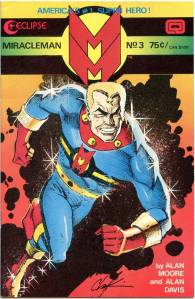
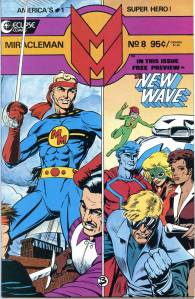
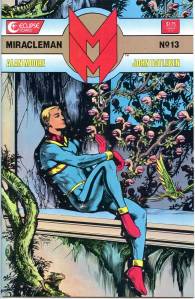
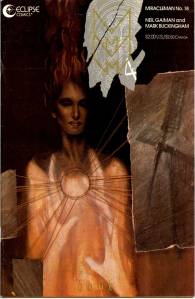
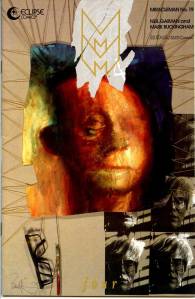
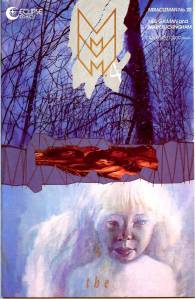
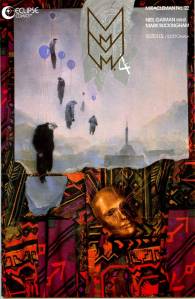
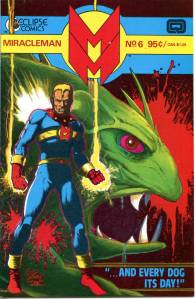
In August 1985, Eclipse began reprinting the Marvelman stories from Warrior, colored, and re-sized. They were renamed and re-lettered throughout as Miracleman to avoid further problems with Marvel Comics.Issues 1-6 reprinted all the Warrior content, after which Eclipse began publishing new Miracleman stories from Alan Moore and new artist Chuck Beckum (now better known as Chuck Austen), soon replaced by Rick Veitch and then John Totleben. Eclipse split the rights to the character, with 2/3 going to Eclipse and 1/3 split between the current writer and artist of the series. Moore wrote the series until issue 16.
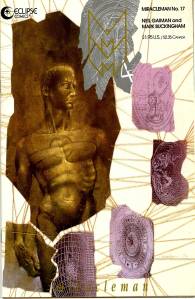
Writer Neil Gaiman picked up the series at #17 and developed it further in the 1990s, working with artist Mark Buckingham. He planned three books, consisting of six issues each; they would be titled “The Golden Age”, “The Silver Age” and “The Dark Age”.
The Grendel ongoing series published by Comico started in 1986 and lasted 40 issues. It was written by Matt Wagner and drawn by a variety of artists, including the Pander Brothers, Bernie Mireault, Tim Sale, John K. Snyder III and others. It began with a story set in the near future, with Christine Spar, Hunter’s posthumous biographer, taking on the identity of Grendel to pursue a mission of revenge. The identity passed briefly, and tragically, to her deluded boyfriend Brian Li Sung. After a brief return to stories of Hunter Rose (actually two in-universe fictional novels written by Captain Wiggins, a supporting character from the Christine Spar arc), Wagner then spun the series further into the future, with the Grendel identity affecting a variety of people. The name “Grendel” took on several meanings as the stories portrayed a dystopian future. Grendel became a synonym for The Devil with the title held by the emperor of the world, (Grendel-Khan) and members of a warrior society identical to samurai.
High school student Buffy Summers has recently moved to the small town of Sunnydale, California with her mother Joyce and Joyce’s doctor boyfriend Eric. Secretly, Buffy is in fact a Vampire Slayer, chosen to battle supernatural forces of evil, and undergoes training by her Watcher and school librarian Rupert Giles. Three weeks after arriving in Sunnydale, Buffy accidentally blows her cover saving Willow Rosenberg and Xander Harris from a vampire outside Tunaverse, the fast food restaurant where she works part-time. Giles is disappointed in her lack of discretion, but Willow and Xander prove to be reliable allies when they aid Buffy in battle against the new vampires in town, Spike and his Mistress Drusilla.
Buffy the Vampire Slayer #16 NM- $3Buffy the Vampire Slayer #17 NM $4Buffy the Vampire Slayer #18 NM $4Buffy the Vampire Slayer #19 NM $4Buffy the Vampire Slayer #20 NM $4
Once upon a time, monster attacks were rare. A forest witch might murder a few hikers, a killer clown might eat a few children, or a malevolent ghost might drive a young couple insane just for the hell of it. But these events were scarce, easily covered up, and soon faded into campfire stories good for a laugh. But no one’s laughing now. Over the past 90 days, cryptozoological attacks have increased a hundredfold, and the arcane has become everyday. Monsters of every shape and size strike at will, and the good, taxpaying folks of the US of A have had enough of this nonsense. Enter: THE MONSTER KILL SQUAD. A Government Unit of the most dangerous motherf-ckers on the planet, the deadliest folks alive are here to put a bullet in the brain of everything that walks, crawls, flies, or hides in shadows. And if it doesn’t have a brain, all the better — we’ve got a gun for that, too. Witches and wraiths. Demons and deadites. Goblins and ghosts. There have always been monsters. Now there are monster killers, and the MKS will kill it, and kill it good.
The most notorious name in terror is back with a vengeance! From the publisher that drove Tales from the Crypt, Vault of Horror, Haunt of Fear, and many more into the depraved hearts of an unsuspecting world, the immortal EC COMICS returns . . . with its first all-new series in nearly 70 years! What the Comics Code Authority couldn’t kill has only made it stronger . . . EC Comics lives again in Epitaphs from the Abyss!
Epitaphs from the Abyss #1A NM $9Epitaphs from the Abyss #3 NM $9Epitaphs from the Abyss #2 1:10 Variant NM $9Epitaphs from the Abyss #2 NM $9Epitaphs from the Abyss #1 NM $5
Heavy Metal is an American science fiction and fantasy comics magazine, published beginning in 1977. The magazine is known primarily for its blend of dark fantasy/science fiction and erotica and steampunk comics.
As cartoonist/publisher Kevin Eastman saw it, Heavy Metal published European art which had not been previously seen in the United States, as well as demonstrating an underground comix sensibility that nonetheless “wasn’t as harsh or extreme as some of the underground comix – but . . . definitely intended for an older readership.
Heavy Metal #1 (April, 1977) CGC 8.5 Off-White to White Pages $179
When the children of Archer’s Peak—a sleepy town in the heart of America—begin to go missing, everything seems hopeless. Most children never return, but the ones that do have terrible stories—impossible details of terrifying creatures that live in the shadows. Their only hope of finding and eliminating the threat is the arrival of a mysterious stranger, one who believes the children and claims to be the only one who sees what they can see. Her name is Erica Slaughter. She kills monsters. That is all she does, and she bears the cost because it must be done.
Something is Killing the Children #11 NM $5
Something is Killing the Children #12 NM $5
Something is Killing the Children #19 NM $4
Something is Killing the Children #22B NM $5
Something is Killing the Children #22C NM $5
Something is Killing the Children #24 NM $4
Something is Killing the Children #25 NM $4
Something is Killing the Children #25 B NM $5
Book of Slaughter #1 Virgin Variant NM $12
Book of Butcher #1 Virgin Variant NM $9
Something is Killing the Children #28 Battle Damage Variant NM $29
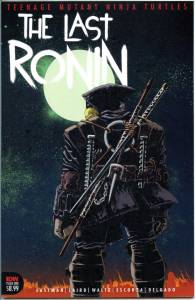
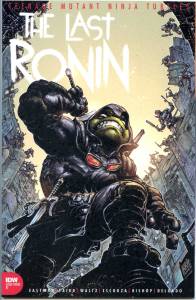
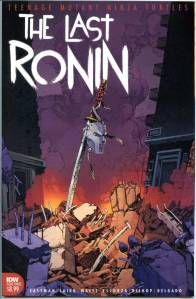
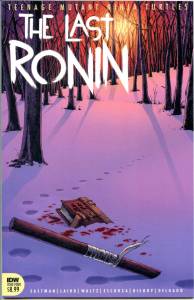
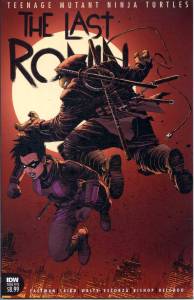
The Teenage Mutant Ninja Turtles was first published by Mirage Studios in 1984 in Dover, New Hampshire. The concept arose from a humorous drawing sketched out by Kevin Eastman during a casual evening of brainstorming and bad television with Peter Laird. Using money from a tax refund, together with a loan from Eastman’s uncle, the young artists self-published a single-issue comic intended to parody four of the most popular comics of the early 1980s: Marvel Comics’ Daredevil and New Mutants, Dave Sim’s Cerebus, and Frank Miller’s Ronin. The TMNTcomic series has been published in various incarnations by various comic book companies since 1984.