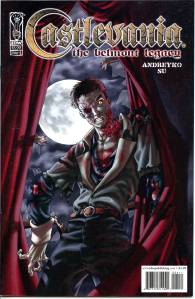
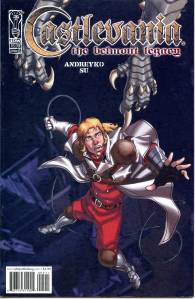
It is 1576, and the legend of the Belmont family’s vampire-hunting prowess still echoes through the Romanian countryside. While Christopher Belmont celebrates his nuptials, dark forces conspire to raise Count Dracula from his unholy slumber. With this ancient evil unleashed once more, young Belmont must to prove he is worthy of the Belmont legacy. Based on the smash-hit Konami videogame series.
Castlevania – The Belmont Legacy #4 VFN $19Castlevania – The Belmont Legacy #5 VFN $16
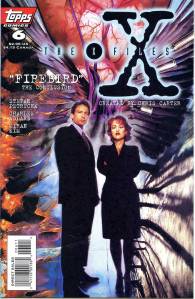
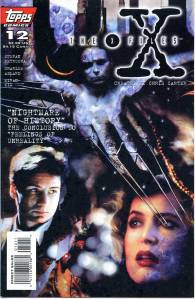
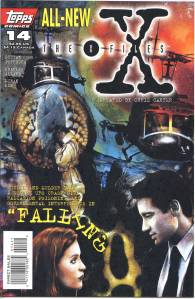
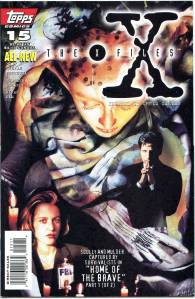
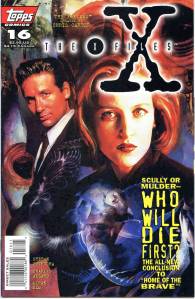
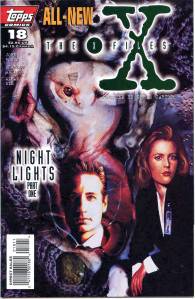
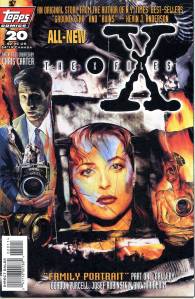
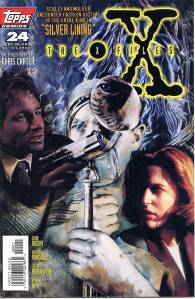
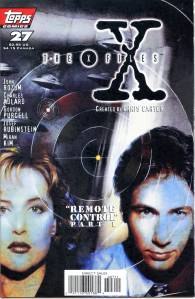
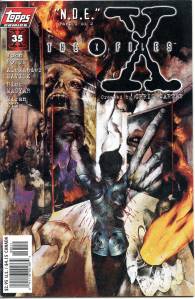
X-Files was originally published by Topps Comics and ran for 41 issues from January 1995 to September 1998, coinciding with the second through fifth seasons of the television program.
In 1996, Topps published X-Files #0, an adaptation of the pilot episode, in order to test the market for a series adapting the episodes of the X-Files TV series. The issue was successful, and X-Files Season One ran for nine issues (August 1997 – July 1998). The series’s name was provisional, and Topps in fact intended to adapt every episode, but never got as far as season two. The series was written by Roy Thomas, who would create a first draft for each issue by working off of the episode’s script, then watch the actual episode and modify his work to account for changes made on the set.
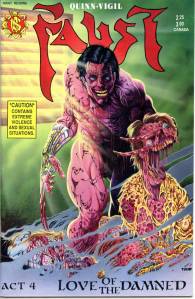
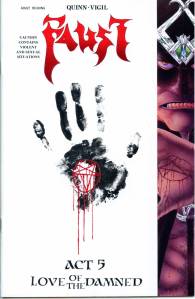
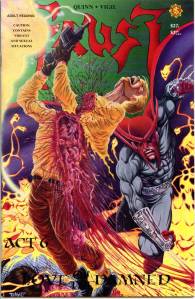
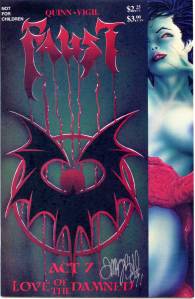
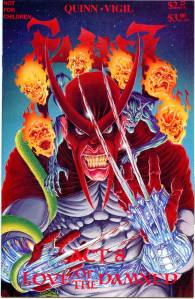
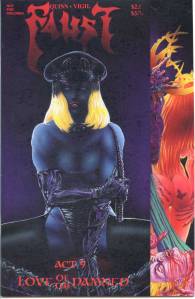
Alongside contemporaries Watchmen, The Crow, and The Dark Knight Returns, Faust was credited with popularizing the “deconstructed superheroes” genre and the notion that “comics aren’t just for kids.” One of the bestselling independent comics of the era, Faust issue 1 sold over 100,000 copies with later issues averaging 50,000 sales per issue, most of which sold through several printings and editions.
The series features strong graphic violence and sexual situations. The main series is known as Faust: Love of The Damned and debuted in 1988, with new issues published irregularly, roughly once a year, or sometimes every two years. David Quinn completed a script in 1996 (when writing the proposal to sell the film). The gap between issues grew wider with time. Issue 13 was published in 2005. It then took seven years for the authors to deliver the two last issues, 14 and 15, which concluded the story 25 years after the first episode.
Faust #4 1st Print VF+ $9Faust #5 2nd Print NM $7Faust #6 VF+ $5Faust #7 NM $12Faust #7 Signed by Tim Vigil VF+$9Faust #8 VF+ $5Faust #9 VF-NM $9
Set in the suburbs of Seattle during the 1970s, the story follows a group of teenagers who contract a mysterious sexually transmitted disease referred to as “the Bug, which causes them to develop bizarre unique physical mutations and subsequently become social outcasts, many of them running away from home to live in the nearby woodland.
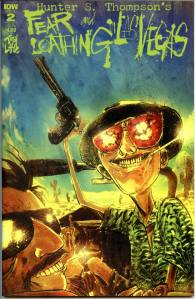
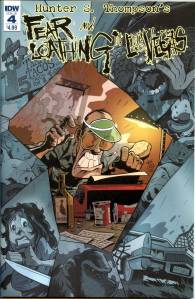
“What were we doing out here…? What was the meaning of this trip? Did I actually have a big red convertible out there on the street? Was I just roaming around these Mint Hotel escalators in a drug frenzy of some kind, or had I really come out here to Las Vegas to work on a story?” — Hunter S. Thompson, Fear and Loathing in Las Vegas
Fear and Lothing in Las Vegas #2 Variant NM $39Fear and Lothing in Las Vegas #4 NM $22
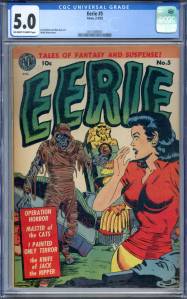
In 1951, Eerie #1, cover-dated May/June 1951, was published by Avon and saw a run of seventeen issues. The first issue of Eerie reprinted “The Strange Case of Henpecked Harry” from one-shot Eerie of 1947 as “The Subway Horror”, and issue 12 printed a Dracula story based on the Bram Stoker novel. Several covers featured large-breasted women in bondage. Artists Joe Orlando and Wallace Wood were associated with the series. The title saw a run of seventeen issues, ceasing publication with its August/September 1954 issue. Eerie then morphed into Strange Worlds with #18, October/November 1954.
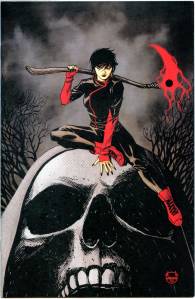
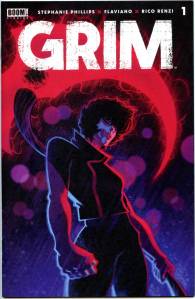
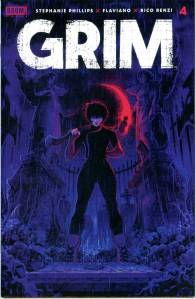
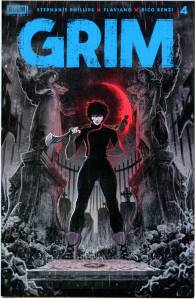
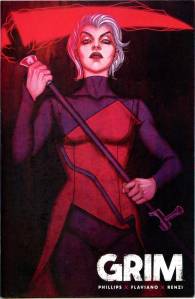
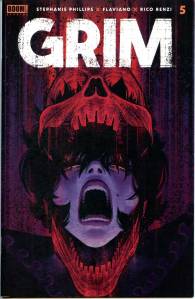
Jessica Harrow is dead. But her journey has only just begun! Discover the world of the afterlife, where Jessica has been recruited as a Reaper, tasked with ferrying countless souls to their final destination. But unlike the rest of the Reapers, she has no memory of what killed her and put her into this predicament. In order to unravel the mystery of her own demise, she’ll have to solve an even bigger one – where is the actual GRIM REAPER?
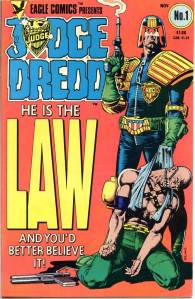
Judge Dredd is a fictional character who appears in British comic books published by Rebellion Developments, as well as in a number of movie and video game adaptations. He was created by writer John Wagner and artist Carlos Ezquerra, and first appeared in the second issue of 2000 AD (1977), a weekly science-fiction anthology. He is that magazine’s longest-running character.
Joseph Dredd is an American law enforcement officer in the dystopian future city of Mega-City One. He is a “street judge“, empowered to summarily arrest, convict, sentence, and execute criminals. Dredd’s entire face is never shown in the strip. This began as an unofficial guideline, but soon became a rule. As John Wagner explained: “It sums up the facelessness of justice − justice has no soul. So it isn’t necessary for readers to see Dredd’s face, and I don’t want you to”. Time passes in the Judge Dredd strip in real time, so as a year passes in life, a year passes in the comic. The first Dredd story, published in 1977, was set in 2099, whilst stories published in 2015 are set in 2137. Consequently, as former editor Alan McKenzie explains, “every year that goes by Dredd gets a year older – unlike Spider-Man, who has been a university student for the past twenty-five years!”. Therefore Dredd is over seventy years old, with over fifty years of active service (2079–2136), and for some time characters in the comic have been mentioning that Dredd is not as young and fit as formerly.
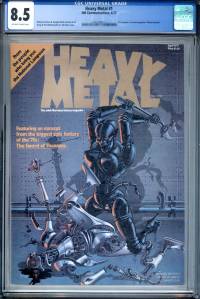
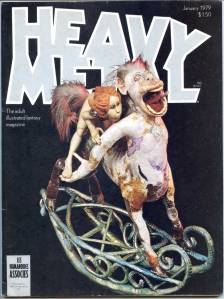
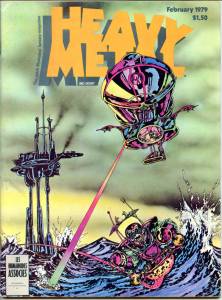
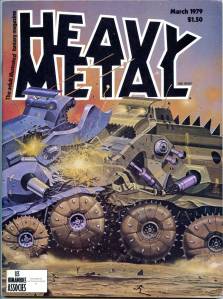
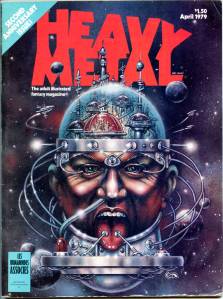
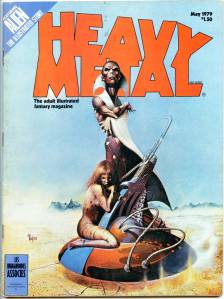
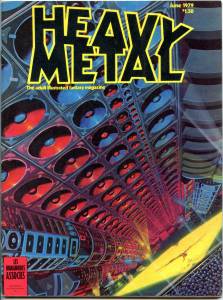
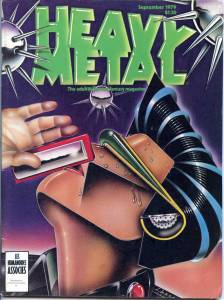
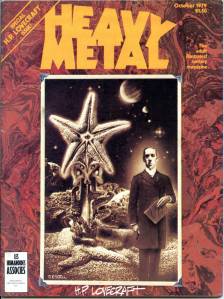
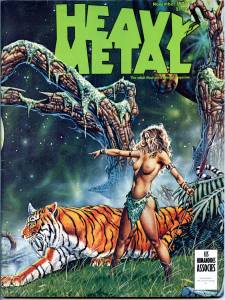
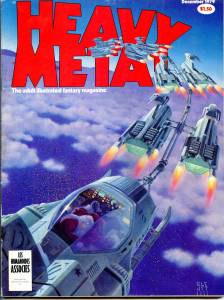
Heavy Metal is an American science fiction and fantasy comics magazine, published beginning in 1977. The magazine is known primarily for its blend of dark fantasy/science fiction and erotica and steampunk comics.
As cartoonist/publisher Kevin Eastman saw it, Heavy Metal published European art which had not been previously seen in the United States, as well as demonstrating an underground comix sensibility that nonetheless “wasn’t as harsh or extreme as some of the underground comix – but . . . definitely intended for an older readership.
Heavy Metal #1 (April, 1977) CGC 8.5 Off-White to White Pages $179Heavy Metal January 1979 VF- $19Heavy Metal February 1979 FN-VF $16Heavy Metal March 1979 VF $19Heavy Metal April 1979 FN $12Heavy Metal May 1979 FN $24Heavy Metal June 1979 FN-VF $29Heavy Metal September 1979 VF- $19Heavy Metal October 1979 FN-VF $34Heavy Metal November 1979 FN+ $15Heavy Metal December 1979 VG-FN $8