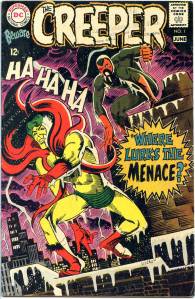
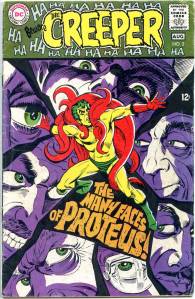
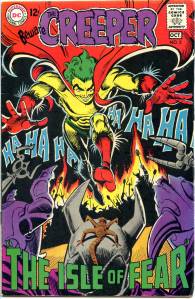
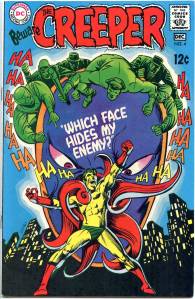
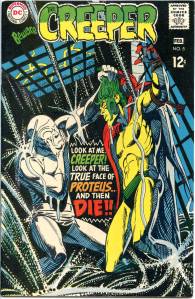
Following his debut in Showcase, the Creeper was given his own series Beware the Creeper, written by Dennis O’Neil; Steve Ditko plotted the first issue. It lasted six issues Most pitted him against a chameleonic villain called Proteus, whose true identity was revealed just before his violent death in the final issue.
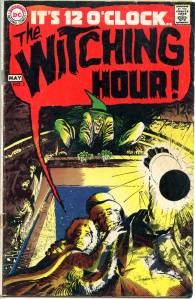
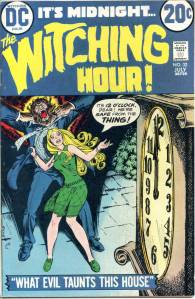
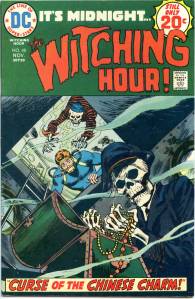
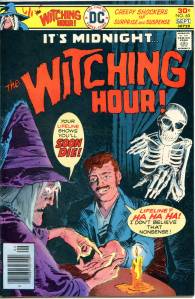
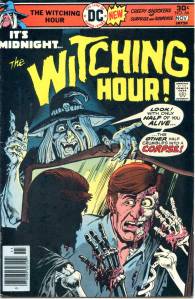
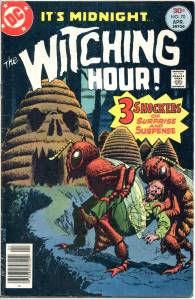
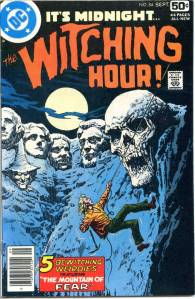
The series was published for 85 issues from February–March 1969 to October 1978. Its tagline was “It’s 12 o’clock… The Witching Hour!” and was changed to “It’s midnight…” from issue #14 onwards. The series was originally edited by Dick Giordano, who was replaced by Murray Boltinoff with issue #14.Nick Cardy was the cover artist for The Witching Hour for issues #1–6, 11–12, 15–16, 18–52, and 60. Stories in the comic were “hosted” and introduced by three witches, Morded, Mildred, and Cynthia.
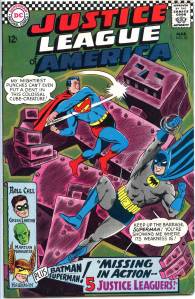
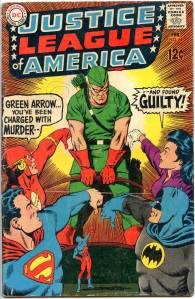
The initial Justice League lineup included seven of DC Comics’ superheroes who were regularly published at that time: Superman, Batman, Aquaman, Flash, Green Lantern, Martian Manhunter, and Wonder Woman. Rarely featured in most of the stories, Superman and Batman did not even appear on the cover most of the time. Three of DC’s other surviving or revived characters, Green Arrow,the Atom, and Hawkman were added to the roster over the next four years.
The title’s early success was indirectly responsible for the creation of the Fantastic Four. In his autobiography Stan Lee relates how in 1961, during a round of golf, DC publisher Jack Liebowitz mentioned to Marvel-Timely owner Martin Goodman how well DC’s new book (Justice League) was selling. Later that day Goodman, a publishing trend-follower aware of the JLA’s strong sales, told Lee, his comics editor, to come up with a team of superheroes for Marvel.
Justice League of America #45 VG $10Justice League of America #50 FN+ $18Justice League of America #52 FN $12Justice League of America #69 VG- $8
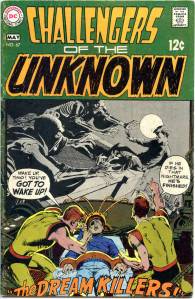
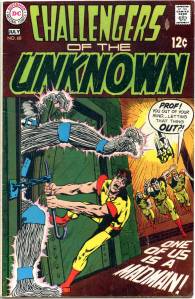
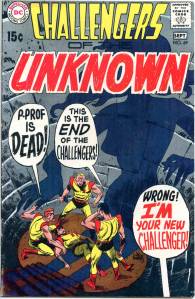
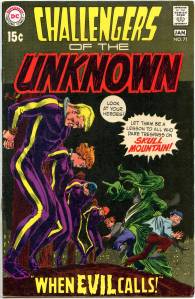
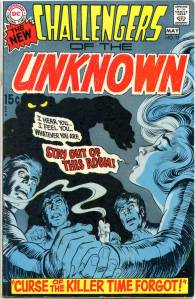
The Challengers of the Unknown is a fictional group of adventurers appearing in comic books published by DC Comics. The quartet of adventurers explored paranormal occurrences while facing several fantastic menaces. The characters were created by Joe Simon and JJack Kirby during the end of their company, Mainline Comics. Following the end of the Challengers comic, DC has revived the characters in different incarnations over the years. Some have claimed that Kirby reworked the basic concept of the series with Stan Lee in 1961 to create The Fantastic Four, the first creation that marked the rise of Marvel Comics.
Challengers of the Unknown #67 FN- $9Challengers of the Unknown #68 FN+ $14Challengers of the Unknown #69 FN-VF $12Challengers of the Unknown #71 VF- $14Challengers of the Unknown #73 VF- $14
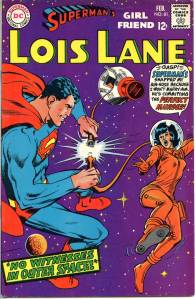
Following a tryout in Showcase, DC decided to give Lois Lane her own ongoing series. The comic series focus on Lois’ solo adventures, and sometimes with stories centered on Lois’ romantic interest in Supermanand her attempts to maneuver him into marriage, only to fail due to a comic plot twist. In the early 1960s, Lana Lang made regular guest appearances, generally as Lois’ romantic rival. Artist Kurt Schaffenberger drew most of the stories for the first 81 issues of the series, missing only issue #29. Schaffenberger’s rendition of Lois Lane became cited by many as the “definitive” version of the character.
Superman’s Girl Friend Lois Lane #44 VG- $14Supermans Girlfriend Lois Lane #81 VF- $15
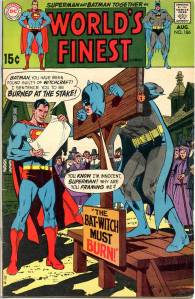
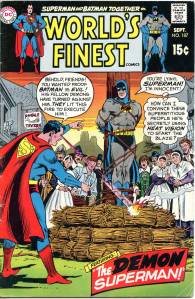
World’s Finest was initially a 96 page quarterly anthology, featuring various DC characters – always including Superman and Batman – in separate stories. Comics historian Les Daniels noted that “Pairing Superman and Batman made sense financially, since the two were DC’s most popular heroes.” When superheroes fell out of vogue in the early 1950s, DC shortened the size of the publication to that of the rest of its output, leaving only enough space for one story; this led to Superman and Batman appearing in the same story together starting with World’s Finest Comics #71 (July 1954).The series continued to feature Superman and Batman team-ups until issue #197. Noted Batman artist Neal Adams first drew the character in an interior story in “The Superman-Batman Revenge Squads” in issue #175 (May 1968).
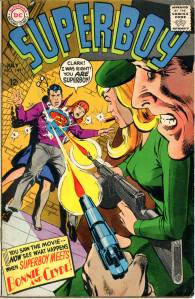
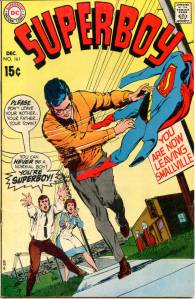
Four years after his debut, Superboy became only the sixth DC superhero to receive his own comic book when Superboy #1 (March–April 1949) was published. The series became the first new DC superhero title to succeed since World War II. Superboy saw the debuts of the first Superbaby story, (about Clark’s adventures as a super-powered toddler), and of Clark’s two closest friends: Lana Lang, who also serves as a romantic interest for Superboy; and Pete Ross, who later discovers and helps protect Clark’s secret identity. Other notable stories to appear in Superboy include the story of the first Bizarro and the first appearances of Legion of Super-Heroes members Mon-El and Ultra Boy.
Aquaman, published by DC Comics was created by Paul Norris and Mort Weisinger. The character debuted in More Fun Comics #73 (November 1941). Initially a backup feature in DC’s anthology titles, Aquaman later starred in several volumes of a solo title. During the late 1950s and 1960s superhero-revival period known as the Silver Age, he was a founding member of the Justice League of America. In the 1990s Modern Age, Aquaman’s character became more serious than in most previous interpretations, with storylines depicting the weight of his role as king of Atlantis.
Later accounts reconciled both facets of the character, casting Aquaman as serious and brooding, saddled with an ill reputation, and struggling to find a true role and purpose beyond his public side as a deposed king and a fallen hero.
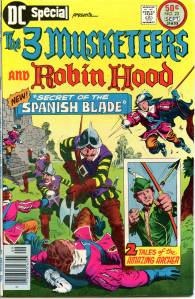
DC Special was a comic book anthology series published by DC Comics originally from 1968 to 1971; it resumed publication from 1975 to 1977. For the most part, DC Special was a theme-based reprint title, mostly focusing on stories from DC’s Golden Age; at the end of its run it published a few original stories. Issue #4 featured many supernatural characters and writer Mark Hanerfeld and artist Bill Draut crafted the first appearance of Abel, who later became (along with his brother Cain) a major character in Neil Gaiman‘s The Sandman. Paul Levitz and Joe Staton finished the series with a Justice Society of America story which revealed the team’s origin.
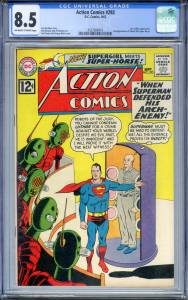
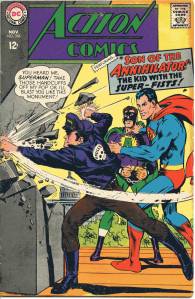
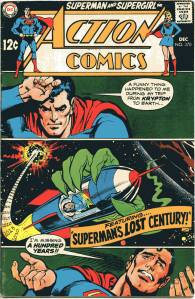
In the view of comics historian Les Daniels, artist Curt Swan became the definitive artist of Superman in the early 1960s with a “new look” to the character that replaced Wayne Boring’s version. Bizarro World first appeared in the story “The World of Bizarros!” in issue #262 (April 1960). Writer Jim Shooter created the villain the Parasite in Action Comics #340 (Aug. 1966).
Action Comics #280 CGC 7.0 Off-White to White Pages $149Action Comics #292 CGC 8.5 Off White – White Pages $195Action Comics #356 VG $6Action Comics #359 VF+ $50Action Comics #370 FN $16Action Comics #383 GD+ $6