Monster of Frankenstein (1973)

The first appearance of Frankenstein’s Monster in the Marvel Comics Universe came in the five-page horror comics story “Your Name Is Frankenstein”, by writer-editor Stan Lee and artist Joe Maneely in Menace #7 (Sept. 1953), from Marvel’s 1950s forerunner, Atlas Comics. The following decade, a robot replica of Frankenstein’s Monster appeared as an antagonist in The X-Men #40 (Jan. 1968), by writer Roy Thomas and penciler Don Heck, and was destroyed by the titular team of mutant superheroes. The actual Monster first appeared in Marvel Comics continuity in a cameo flashback in “The Heir of Frankenstein” in The Silver Surfer #7 (Aug. 1969), by writer-editor Lee and penciler John Buscema.

The character received an ongoing series, titled Frankenstein in the postal indicia and initially The Monster of Frankenstein (issues #1-5) and later The Frankenstein Monster as the cover logo, that ran 18 issues (Jan. 1973 – Sept. 1975). This series began with a four-issue retelling of the original novel, by writer Gary Friedrich and artist Mike Ploog. Several more issues continued his story into the 1890s, until he was placed in suspended animation and revived in modern times.

The Goon – Dark Horse (2003)

The Goon is written and drawn by Eric Powell. The series mixes both a comical and violent atmosphere with a supernatural slant, which pit the titular character against undead creatures/zombies, ghosts, ghouls, mutants, skunk-apes with an unnatural hunger for pies, giant squids, mob/gang leaders, extra-dimensional aliens, mad scientists and robots.

Legion of Super-Heroes V1 (1980’s)

Paul Levitz returned to write the series with #284. Pat Broderick and Bruce Patterson illustrated the title for a short time before Keith Giffen began on pencils, with Patterson, and then Larry Mahlstedt, on inks. The creative team received enhanced popularity following “The Great Darkness Saga“, which ran from #287; #290–294; and Annual #3, featuring a full assault on the United Planets by Darkseid. Comics historian Les Daniels observed that “Working with artist Keith Giffen, Levitz completed the transformation of Legion into a science-fiction saga of considerable scope and depth.”

The Legion celebrated issue #300 (June 1983) by revisiting the “Adult Legion” storyline through a series of parallel world short stories illustrated by a number of popular Legion artists from previous years. The story served to free up Legion continuity from following the “Adult Legion” edict of previous issues.

Detective Comics (1970’s)

Writer Dennis O’Neil and artist Neal Adams had their first collaboration on Batman on the story “The Secret of the Waiting Graves” in issue #395 (Jan. 1970). The duo, under the direction of Schwartz, would revitalize the character with a series of noteworthy stories reestablishing Batman’s dark, brooding nature and taking the books away from the campy look and feel of the 1966–68 ABC TV series. Comics historian Les Daniels observed that “O’Neil’s interpretation of Batman as a vengeful obsessive-compulsive, which he modestly describes as a return to the roots, was actually an act of creative imagination that has influenced every subsequent version of the Dark Knight.” Adams introduced the Man-Bat with writer Frank Robbins in Detective Comics #400 (June 1970). O’Neil and artist Bob Brown crafted Batman’s first encounter with the League of Assassins in Detective Comics #405 (Nov. 1970) and created Talia al Ghul in issue #411 (May 1971).

After publishing on a monthly schedule throughout its run, Detective Comics became a bi-monthly book from issues #435 (June–July 1973) to #445 (Feb.-March 1975). Issues #438 (Dec. 1973-Jan. 1974) to #445 (Feb.–March 1975) of the series were in the 100 Page Super Spectacular format. O’Neil and artist Dick Giordano created the Batman supporting character Leslie Thompkins in the story “There Is No Hope in Crime Alley” appearing in issue #457 (March 1976). Writer Steve Englehart and artist Marshall Rogers produced an acclaimed run of Batman stories in Detective Comics #471–476 (Aug. 1977 – April 1978), and provided one of the definitive interpretations that influenced the 1989 Batman movie and would be adapted for the 1990s animated series. The Englehart and Rogers pairing, was described in 2009 by comics writer and historian Robert Greenberger as “one of the greatest” creative teams to work on the Batman character. In their story “The Laughing Fish”, the Joker is brazen enough to disfigure fish with a rictus grin, then expects to be granted a federal trademark on them, only to start killing the bureaucrats who try to explain to him that obtaining such a claim on a natural resource is legally impossible. Writer Len Wein and Rogers co-created the third version of the supervillain Clayface in Detective Comics #478 (July–Aug. 1978). The original Katherine Kane also known as “Batwoman” was killed in the lead story in issue #485 (Aug.–Sept. 1979) by the League of Assassins.

Groo the Wanderer (1985)

Groo the Wanderer is a fantasy/comedy series written and drawn by Sergio Aragonés, rewritten, co-plotted and edited by Mark Evanier, lettered by Stan Sakai and colored by Tom Luth. Over the years it has been published by Pacific Comics, Eclipse Comics (one special issue), Marvel Comics (under its Epic imprint), Image Comics and Dark Horse Comics.

Groo was one of the first widely successful creator-owned comics, one of the few successful humorous comic books (outside Archie Comics) during its time, and one of the longest-running collaborations in comic book history. In 2011 IGN ranked Groo 100th in the “Top 100 comic books heroes”.

Aragonés and Evanier negotiated a deal with Epic Comics, an imprint of Marvel Comics, for that company to take care of publication while preserving creator rights. This resulted in the longest run of Groo the Wanderer with 120 issues. In 1994, with Marvel facing financial difficulties, the title switched to Image Comics and was retitled Groo. (In the first issue Groo remarks “The marvels of the world are but images before me.”)

When Image in turn faced legal problems after publishing twelve issues, the title switched to Dark Horse Comics in 1998. Dark Horse is not publishing the title as a regular series, but is periodically releasing new material and reprints as mini-series and collections.

Nailbiter (2014)

The series centers around the fictional town of Buckaroo, Oregon, which has produced sixteen of the United States’ worst serial killers. Its most recent creation is Edward Charles Warren, otherwise known as “Nailbiter” due to his predilection for chewing off his victim’s nails and part of their flesh. By the series’s start Warren has been caught by FBI agent Charles Carroll, however Carroll has since gone missing, leaving it up to his friend and NSA agent Nicholas Finch to search for him. Nicholas decides to start his search in Buckaroo, where he begins to question why the small town has produced so many murderers.

Batman (1960’s)

By 1964, sales of Batman titles had fallen drastically. Bob Kane noted that, as a result, DC was “planning to kill Batman off altogether”. In response to this, editor Julius Schwartz was assigned to the Batman titles. He presided over drastic changes, beginning with 1964’s Detective Comics #327 (May 1964), which was cover-billed as the “New Look”. Schwartz introduced changes designed to make Batman more contemporary, and to return him to more detective-oriented stories. He brought in artist Carmine Infantino to help overhaul the character. The Batmobile was redesigned, and Batman’s costume was modified to incorporate a yellow ellipse behind the bat-insignia. The space aliens, time travel, and characters of the 1950s such as Batwoman, Ace, and Bat-Mite were retired. Bruce Wayne’s butler Alfred was killed off (though his death was quickly reversed) while a new female relative for the Wayne family, Aunt Harriet, came to live with Bruce Wayne and Dick Grayson.
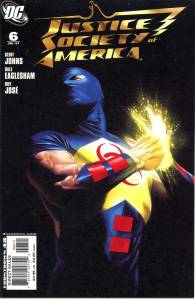
Star Wars: Legacy (2006)

Star Wars: Legacy is set over 126 years after the film Return of the Jedi. The comics feature Cade Skywalker, a descendant of Luke Skywalker, who was trained as a Jedi, but abandoned the order. He apprenticed himself to the pirate Rav and lives among bounty hunters, smugglers and pirates. Cade also dropped his last name. The series begins with an attack on the Jedi Temple and the overthrow of the Galactic Alliance by the One Sith order.
After a great and furious struggle, Cade and his friends manage to kill the evil Sith emperor, Darth Krayt. However, even without their leader, the Sith remain a powerful danger.
Boy Commandos (1942)

Boy Commandos spun off into their own title with a ‘Winter 1942’ date. The title sold “over a million copies each month”, and was one of DC’s “three biggest hits” alongside Superman and Batman. Jack Kirby drew around five pages a day of the title, but Jack Liebowitz requested an even faster turn-around – fearing (as happened) that the two would be drafted, as had many other industry professionals. Simon & Kirby hired “inkers, [letterers], colorists, and writers, striving to create a year’s worth of tales” (Boy Commandos was also a quarterly title until Winter, 1945). Among those hired was a young Gil Kane.

Boy Commandos ran until issue #36 (Nov/Dec 1949), and was edited throughout by Jack Schiff. Among the individuals who assisted Simon and Kirby on the title (and its covers) were future-Superman legend Curt Swan, as well as Steve Brodie, Louis Cazeneuve and Carmine Infantino.

Old Man Logan (2016)

Fifty years from now, Logan – the man who no longer calls himself Wolverine – will have endured many atrocities: The Marvel Universe’s villains will have banded together and rid the world of its heroes. Logan’s closest friend, Hawkeye, will have been murdered in cold blood right before his eyes. And driven mad by the same radiation that gave him his superhuman strength, Bruce Banner will have fathered a family of hillbilly Hulks…that eventually went on to slaughter Logan’s wife and two children. But now, in the present, Old Man Logan wakes up to discover himself in a world before these atrocities, before the Wasteland. And he’s going to seize this opportunity and change history to ensure that his future never comes to pass…