In 2019, a 5 part mini-series titled Silver Surfer: Black was released featuring art from Tradd Moore in collaboration with writing from Donny Cates. The series is an extension of a Guardians of the Galaxy storyline which the Surfer was sucked into a black hole and ejected into unfamiliar space territory. This run follows the Surfer as he traverses the spaceways on a journey back home.
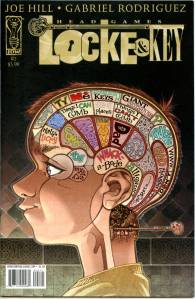
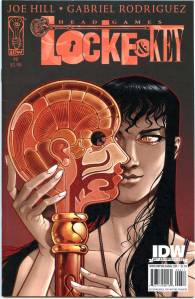
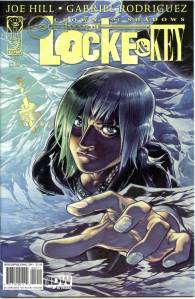
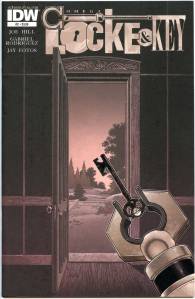
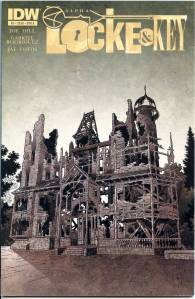
Following their father’s gruesome murder in a violent home invasion, the Locke children return to his childhood home of Keyhouse in secluded Lovecraft, Massachusetts. Their mother, Nina, is too trapped in her grief—and a wine bottle—to notice that all in Keyhouse is not what it seems: too many locked doors, too many unanswered questions. Older kids Tyler and Kinsey aren’t much better. But not youngest son Bode, who quickly finds a new friend living in an empty well and a new toy, a key, that offers hours of spirited entertainment. But again, all at Keyhouse is not what it seems, and not all doors are meant to be opened. Soon, horrors old and new, real and imagined, will come ravening after the Lockes and the secrets their family holds.
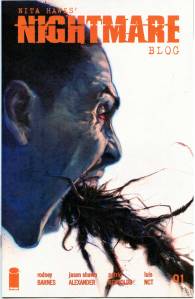
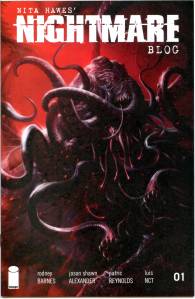
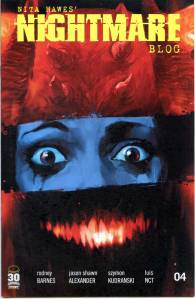
Jimmy Sangster might have left Maryland for the vampire-infested city of “Killadelphia,” but there is still untold evil lurking the streets of Baltimore. The demon Corson has surfaced from the underworld to possess a once-wronged man, and his vengeance will come at the cost of humanity’s despair! But Jimmy’s former lover Nita Hawes—a woman with demons of her own—has begun a quest to root the evil out of her city. Guided by the ghost of her dead brother, she must come to terms with her own past, lest she join her brother in a state worse than death!
The series begins with Diego turning 13, that being the rite of passage the series’ title alludes to. Antón uses the occasion to impart on Diego “important lessons in leadership” and “cautionary tales he has heard about the undoing of three legendary men.”
Legends served mainly as a launching pad for several new comic series, including the latter-day Flash title, Keith Giffen and J. M. DeMatteis‘ comedy/action take on the Justice League, and the villain-based black ops Suicide Squad. The series also saw the post-Crisis introduction into the DC Universe of Captain Marvel (who was spun off in the miniseries Shazam!: The New Beginning) as well as Wonder Woman, who had been rebooted by DC Comics at the same time Legends was being published.
The series was launched with an April 1985 cover dated issue by writer Louise Simonson and penciller Greg LaRocque and featured the return of Spider-Man’s alien black costume, which attempted to rebond with Peter Parker. Peter managed to rid himself of the costume again using church bells and the alien was presumed to have died after that. The first issue featured a cover painting by artist Charles Vess.
In issue #18 (September 1986), Peter Parker is pushed in front of an oncoming train. He thinks to himself that this should not have happened, as his spider-sense would have warned him of the danger. Writer David Michelinie has said that he wrote this as the first “teaser” appearance of the characterVenom, whom he was planning to introduce at a later date. Venom is an amalgam of reporter Eddie Brock and the alien costume. The costume could nullify Spider-Man’s spider-sense, and this was the first clue of a puzzle that Michelinie was planning to weave to introduce Venom.
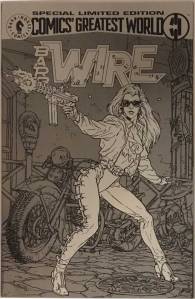
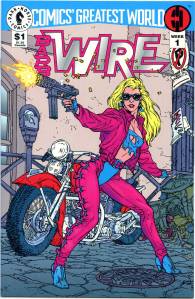
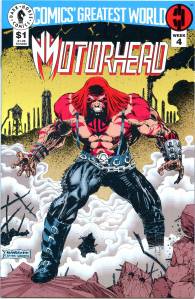
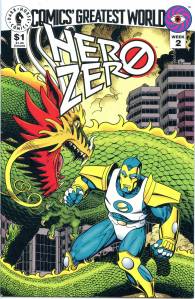
Comics’ Greatest World was created by Team CGW. Originally conceived in 1990, it took three years for the line to be released, which led to an industry-wide perception that it was created to capitalize on the speculator mania of the early 1990s. When the mania ended, most of the titles were canceled. Ghost, one of the imprint’s more unorthodox titles, managed to survive the longest. It was canceled twice, first in early 1998, before being revived later that year and canceled again after a run of just less than two years.
All Comics’ Greatest World titles took place in a shared universe. Most of the action centered on four cities in a slightly skewed version of America: Arcadia, Golden City, Steel Harbor, and the Cinnibar Flats area of Nevada, home of an interdimensional rift called the “Vortex”.
The series started off with a story in Dark Horse Comics before kicking off in four weekly limited series, introducing the cities and characters. These were followed by several short-lived series, one-shots, and mini-series. Only a few titles lasted very long.
Around April 1995, the imprint was renamed “Dark Horse Heroes”. With the name change, the use of the city logos was also dropped.
Comics Greatest World – Arcadia NM $8
Comics Greatest World – Cinnabar Flats NM $8
Comics Greatest World – Golden City NM $8
Comics Greatest World – Steel Harbor NM $8
Comics’ Greatest World Arcadia Week #1 X Limited Edition NM $6
Comics’ Greatest World Arcadia Week #1 X NM $4
Comics’ Greatest World Arcadia Week #2 Pit Bulls NM $2
Comics’ Greatest World Arcadia Week #3 Ghost NM $3
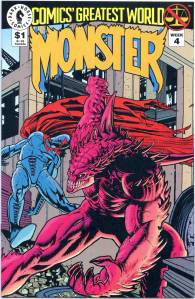
Comics’ Greatest World Arcadia Week #4 Monster NM $2
Comics Greatest World Golden City Week #1 Rebel Limited Edition NM $6
Comics Greatest World Golden City Week #1 Rebel NM $2
Comics Greatest World Golden City Week #2 Mecha NM $2
Comics Greatest World Golden City Week #3 Titan NM $2
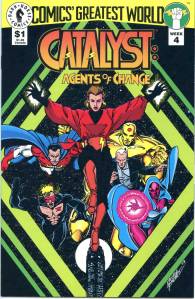
Comics Greatest World Golden City Week #4 Catalyst NM $2
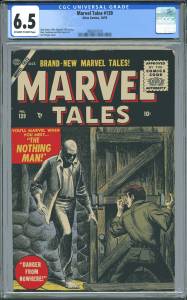
The first Marvel Tales was the direct continuation of the superhero anthology Marvel Mystery Comics, published by Marvel Comics‘ initial iteration, Timely Comics. This series ran through issue #92 (cover-dated June 1949). Beginning with issue #93 (Aug. 1949), it became Marvel Tales, an anthology of horror, fantasy, and science fiction stories. The bulk of this series was published under the company name Atlas Comics.
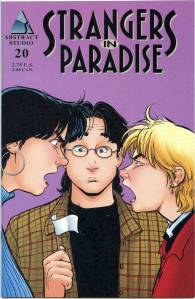
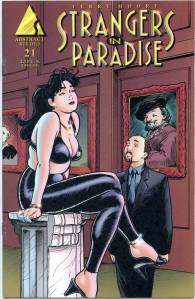
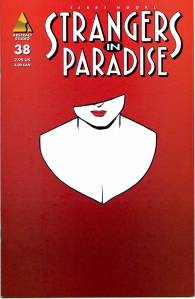
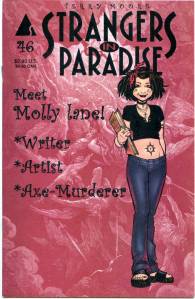
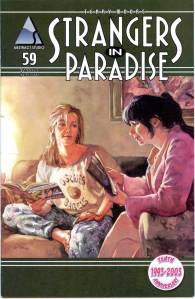
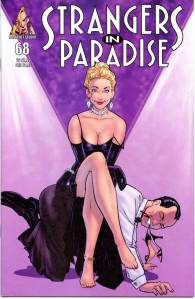
Strangers in Paradise is the entertaining and poignant look at the relationship of two young women and the twists and turns that life throws at them. Francine and Katchoo are high-school best friends who are reunited when Francine comes back to town after years away from her hometown. David is their new friend entangled in their complicated lives. From creepy ex-boyfriends and insensitive bosses to the reality of AIDS and underworld prostitution, you never know what will come up next – but you can always count on laughing and crying at the same time.
The second Grendel anthology, in the tradition of the multiple Eisner Award-winning Grendel: Black, White, & Red. Each written by the Devil’s acclaimed creator, Matt Wagner, these short stories are vignettes of the devious misdeeds of Hunter Rose, the first incarnation of Grendel. The tales are illustrated in stark black, white, and blood red by some of the top talents in comics, including Zander Cannon, Andy Kuhn, Ashley Wood, Tom Fowler, Mike Huddleston, Cliff Chiang, John K. Snyder, and more.