Deadpool V1 (1997)

In 1997, Deadpool was given his own ongoing title, initially written by Joe Kelly, with then-newcomer Ed McGuinness as an artist. Deadpool became an action comedy parody of the cosmic drama, antihero-heavy comics of the time. The series firmly established his supporting cast, including his prisoner/den mother Blind Al and his best friend Weasel. The ongoing series gained cult popularity for its unorthodox main character and its balance of angst and pop culture slapstick and the character became less of a villain, though the element of his moral ambiguity remained. The writer Joe Kelly noted, “With Deadpool, we could do anything we wanted because everybody just expected the book to be cancelled every five seconds, so nobody was paying attention. And we could get away with it.”

The series was taken over by Christopher Priest who noted that he found Kelly’s issues to be “complex and a little hostile to new readers like me” and that by issue 37, he realized that “it was okay to make Deadpool look stupid.”

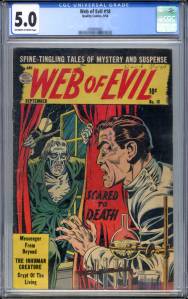
Web of Evil (1952)

From the people who brought you Captain Marvel comes horror. Web of Evil was an anthology horror comic published by Quality Comics, and was acquired by DC Comics when DC bought Quality in 1956. It rivaled EC’s horror comics, often considered the measuring stick for greatness in this genre. With its smart writing, consistently high-end artwork, and willingness to push-the-envelope with its, violent, graphic depiction of scenes of the macabre, Web Of Evil, as with several EC horror titles, ended up getting Quality Comics in hot water, metaphorically.


Superman (Golden Age)

The major event many cite as marking the beginning of the Golden Age was the 1938 debut of Superman in Action Comics #1, published by the predecessor of modern-day DC Comics. The creation of Superman made comic books into a major industry. Some date the start to earlier events in the 1930s: The Overstreet Comic Book Price Guide‘s regular publication The Golden Age Quarterly lists comic books from 1933 onwards (1933 saw the publication of the first comic book in the size that would subsequently define the format); some historians, such Roger Sabin, date it to the publication of the first comic books featuring entirely original stories rather than re-prints of comic strips from newspapers (1935) by the company that would become DC Comics.

Giant Size Creatures/Werewolf (1974)

The Werewolf by Night character (birth name Jacob Russoff, legal name Jacob Russell, nicknamed Jack) first appeared in Marvel Spotlight #2 (Feb. 1972) and was based on an idea by Roy Thomas. The series name was suggested by Stan Lee and the debut story was crafted by Gerry Conway and Mike Ploog. The character made additional appearances in Marvel Spotlight #3 and #4 and then graduated to his own eponymous series in September 1972. Jack Russell co-starred with Tigra in Giant Size Creatures #1 (July 1974), which was the first appearance of Greer Grant as Tigra instead of the Cat. That series was retitled Giant-Size Werewolf with its second issue.

Star Wars: Darth Maul (2017)

Darth Maul’s time as apprentice to Darth Sidious has long been cloaked in shadows, but at last his tale of revenge will be reveled. From writer Cullen Bunn and artist Luke Ross comes a tale of rage unleashed as Darth Maul prepares for his first encounter with the Jedi.

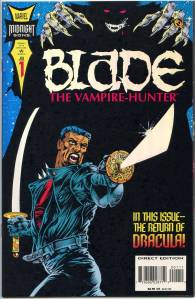
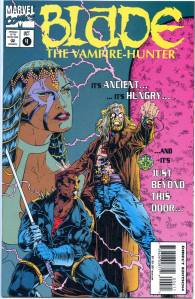
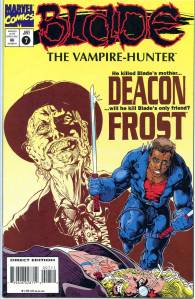
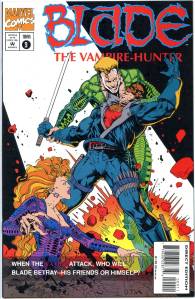
Blade: The Vampire-Hunter (1994)

Following the cancellation of Nightstalkers, Blade debuted in his first color-comics series, Blade: The Vampire Hunter #1–10 (July 1994 – April 1995), written by Ian Edginton (with the last two issues by Terry Kavanagh) and penciled by Doug Wheatley.

Predator vs Judge Dredd vs Aliens (2016)

Predator vs Judge Dredd vs Aliens was a co-publication with IDW and 2000 AD. The ultimate science-fiction crossover pits the legendary lawman Judge Dredd against the universe’s supreme hunters, the Predators, as they both try to survive an onslaught by the galaxy’s ultimate killing machines, the Aliens! Written by Eisner Award–winning, NYT best-selling Chew creator John Layman! Covers by Eisner Award winner Glenn Fabry!

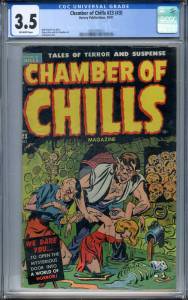
Chamber of Chills (1951)

The first Chamber of Chills was a 10-cent horror anthology published bimonthly by Harvey Publications that ran 26 issues (cover-dated June 1951 – Dec. 1954).

Artists included Bob Powell, Lee Elias, Rudy Palais, Howard Nostrand, and Warren Kremer. Issue #7 is mentioned in Dr. Fredric Wertham‘s 1954 indictment of comic books Seduction of the Innocent (p. 389). Chamber ceased publication following the Senate Subcommittee on Juvenile Delinquency hearings of 1954. Harvey Comics then began concentrating on titles for young children, including Little Dot and Richie Rich.

Chamber of Chills was formerly Blondie Comics, taking over that comic’s numbering with issue #21. After issue #24 (Dec. 1951), the numbering was reset to #1. Chamber of Chills became Chamber of Clues with the February 1955 issue, and ceased publication two issues later, the last cover-dated April 1955.

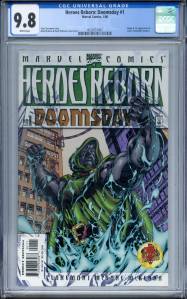
Heroes Reborn (2000)

In the years after the Heroes Reborn event, Marvel published a series of one-shots that revisit the pocket universe created by Franklin Richards. These can be read in any order and even touch on some characters who were not featured in the original storyline.

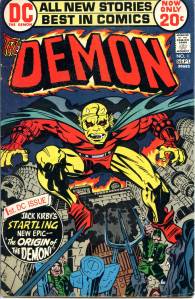
The Demon (1972)

The Demon was created by Jack Kirby. The titular character, named Etrigan, is a demon from Hell who, despite his violent tendencies, usually finds himself allied to the forces of good, mainly because of the alliance between the heroic characters of the DC Universe and Jason Blood, a human to whom Etrigan is bound.

Jack Kirby created the Demon in 1972 when his Fourth World titles were cancelled. According to Mark Evanier, Kirby had no interest in horror comics, but created Etrigan in response to a demand from DC for a horror character. Kirby was annoyed that the first issue sold so well that DC required him to remain on it and abandon the Fourth World titles before he was done with them. Etrigan was inspired by a comic strip of Prince Valiant in which the titular character dressed as a demon. Kirby gave his creation the same appearance as Valiant’s mask.