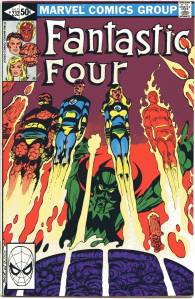
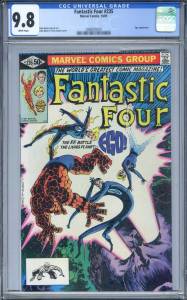
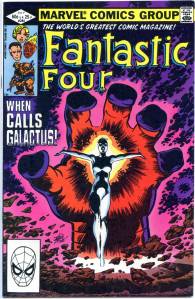
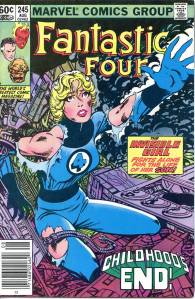
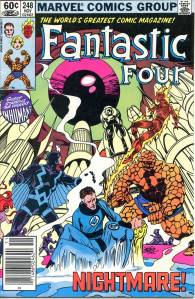
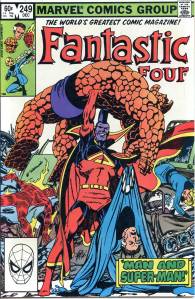
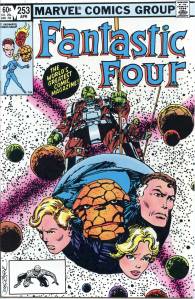
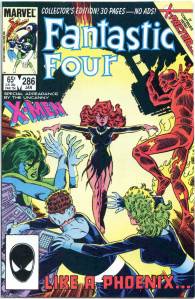
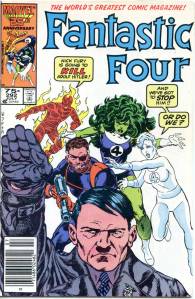
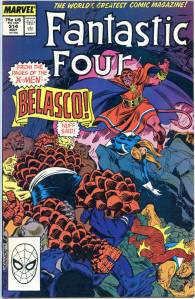
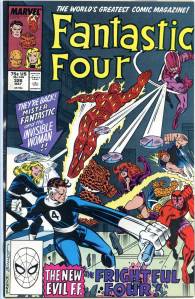
John Byrne revitalized the slumping title with his run. Originally, Byrne was slated to write with Sienkiewicz providing the art. Sienkiewicz left to do Moon Knight, and Byrne subsequently became writer, artist, and inker. Various editors were assigned to the comic; eventually Bob Budiansky became the regular editor. Byrne told Jim Shooter that he could not work with Budiansky, although they ultimately continued to work together. In 2006, Byrne said “that’s my paranoia. I look back and I think that was Shooter trying to force me off the book”. Byrne left following issue #293 (Aug. 1986) in the middle of a story arc, explaining he could not recapture the fun he had previously had on the series. One of Byrne’s changes was making the Invisible Girl into the Invisible Woman: assertive and confident. During this period, fans came to recognize that she was quite powerful, whereas previously, she had been primarily seen as a superpowered mother and wife in the tradition of television moms like those played by Donna Reed and Florence Henderson.
Fantastic Four #218 VF-NM $5Fantastic Four #220 VF $3Fantastic Four #232 VF-NM $9Fantastic Four #235 CGC 9.8 White Pages $89Fantastic Four #239 VF+ $3Fantastic Four #242 VF+ $3Fantastic Four #244 VF $29Fantastic Four #245 VF+$9Fantastic Four #248 Newstand VF+$4Fantastic Four #248 VF-NM $4Fantastic Four #249 Newstand VF+ $3Fantastic Four #249 VF-NM $3Fantastic Four #250 NM $6Fantastic Four #251 Newstand VF-NM $5Fantastic Four #251 VF-NM $4Fantastic Four #253 Newstand VF+ $4Fantastic Four #253 VF-NM $4Fantastic Four #254 Newstand VF+ $4Fantastic Four #254 VF-NM $4Fantastic Four #256 VF+ $3Fantastic Four #277 NM- $8Fantastic Four #286 Newsstand NM- $12Fantastic Four #286 NM $12Fantastic Four #292 Newsstand VF+ $9Fantastic Four #293 Newsstand VF+ $6Fantastic Four #299 VF+ $5Fantastic Four #303 VF-NM $2Fantastic Four #314 NM- $4Fantastic Four #316 VF-NM $3Fantastic Four #323 NM- $4Fantastic Four #324 VF-NM $3Fantastic Four #326 VF-NM $2
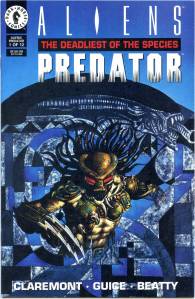
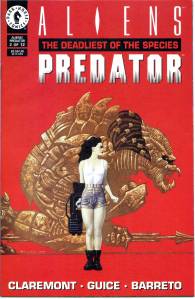
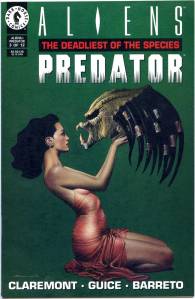
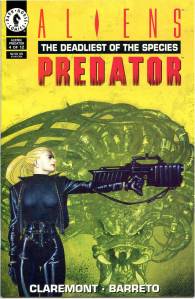
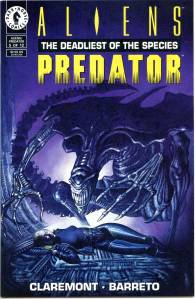
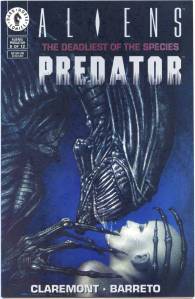
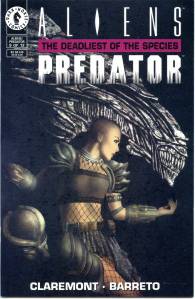
The Story takes place in the futuristic Alien vs. Predator universe, where Earth has been overrun by Aliens, and the social elite have taken refuge in gigantic skyliners. Caryn Delacroix is the protagonist, with an unclear past regarding both the Aliens and Predators throughout most of the comic. An artificial intelligence serves as the primary antagonist, while the Xenomorphs and the Predator are many times in cooperation with Delacroix and her companions for parts of the series, in particular a Predator called “Big Mama”.
Aliens – Predator – Deadliest of the Species #1 NM- $5Aliens – Predator – The Deadliest of the Species #2 NM $6Aliens – Predator – Deadliest of Species #3 NM- $6Aliens – Predator – Deadliest of Species #4 NM $7Aliens – Predator – Deadliest of Species #5 NM $7Aliens – Predator – Deadliest of Species #8 NM $7Aliens – Predator – The Deadliest of the Species #9 NM $6
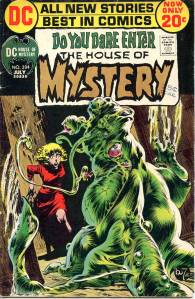
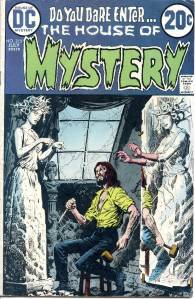
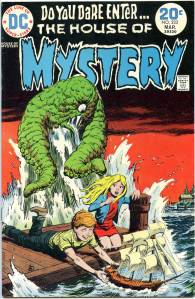
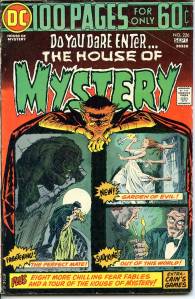
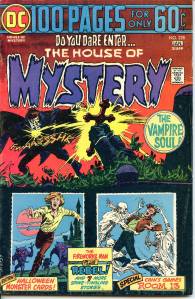
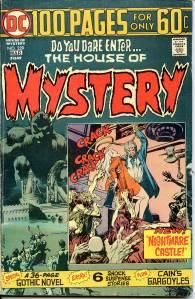
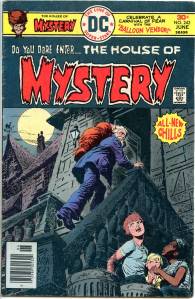
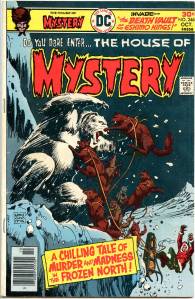
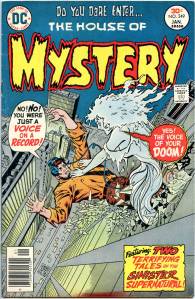
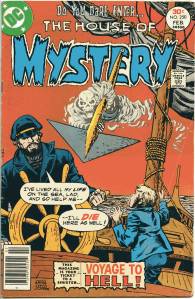
With issue #174, EC Comics veteran Joe Orlando was hired by DC to take over as editor of House of Mystery. As the Comics Code Authority was now being challenged by both DC and Marvel over content restrictions, the series returned to its overt horror themes. The first issue under Orlando would be a reprint issue of old horror/suspense stories, as the new direction would truly begin with #175 (July–August 1968). The issue would introduce a new figure to the series, Cain, the “able care taker” of the House of Mystery who would introduce nearly all stories that would run in the series before its cancellation. Cain would also host the spin-off humor series Plop! and later become a recurring character in Blue Devil and The Sandman.
Artist Bernie Wrightson‘s first professional comic work was the story “The Man Who Murdered Himself” which appeared in issue #179 (March–April 1969)
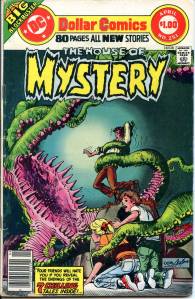
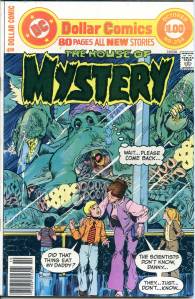
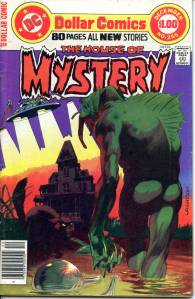
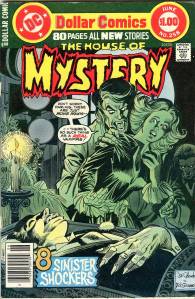
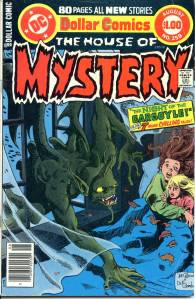
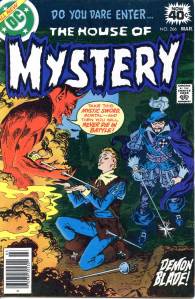
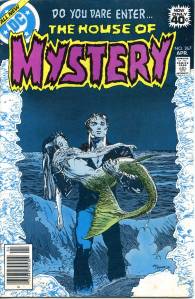
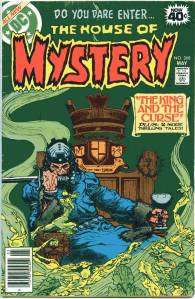
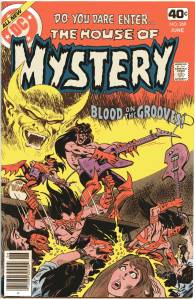
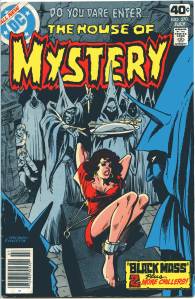
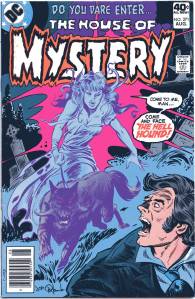
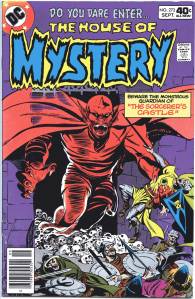
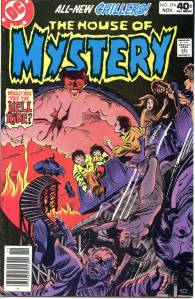
House of Mystery was in the Dollar Comics format for issues #251 (March–April 1977) to #259 (July–August 1978). House of Mystery featured stories by writers T. Casey Brennan (#260, 267, 268 and 274) and Scott Edelman (#257, 258, 260, 264, 266, 270, 272, 273). Orlando’s tenure as editor ended with #257 (March–April 1978).
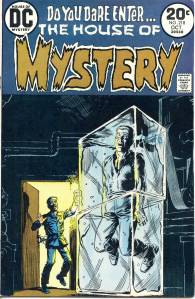
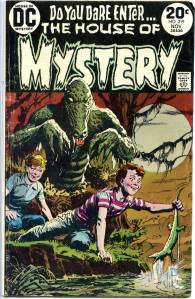
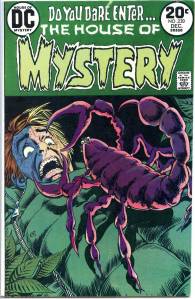
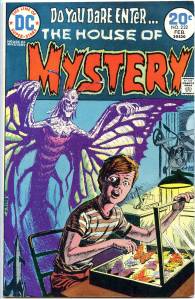
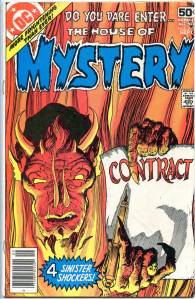
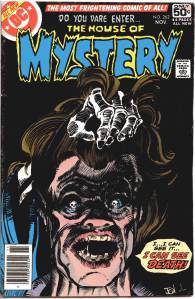
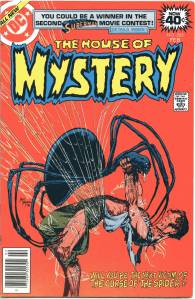
House of Mystery #199 VG+ $14House of Mystery #204 FN $18House of Mystery #209 FN $24House of Mystery #215 FN+ $14House of Mystery #218 FN-VF $16House of Mystery #219 VG $8House of Mystery #220 FN+ $12House of Mystery #222 VF- $12House of Mystery #223 VF- $12House of Mystery #224 VG+ $14House of Mystery #226 VG+ $14House of Mystery #228 FN+ $24House of Mystery #229 FN $19House of Mystery #240 FN-VF $13House of Mystery #242 VG-FN $10House of Mystery #244 FN-VF $15House of Mystery #246 VG-FN $10House of Mystery #249 VG $5House of Mystery #250 FN-VF $10The House of Mystery #251 FN $11The House of Mystery #252 FN+ $12The House of Mystery #254 VF $16The House of Mystery #255 FN- $8House of Mystery #258 VF- $16The House of Mystery #259 FN+ $10House of Mystery #260 VG+ $7House of Mystery #262 FN $8House of Mystery #263 VF $6House of Mystery #265 FN- $6House of Mystery #266 VF-NM $10House of Mystery #267 VF+ $8House of Mystery #268 VG-FN $5House of Mystery #269 VF- $5House of Mystery #270 FN $6House of Mystery #271 VF- $5House of Mystery #272 FN $5House of Mystery #273 VF-NM $12House of Mystery #274 VF $6
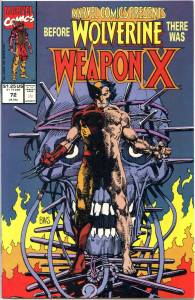
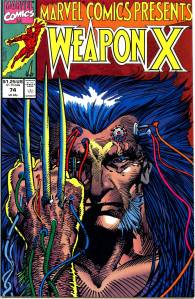
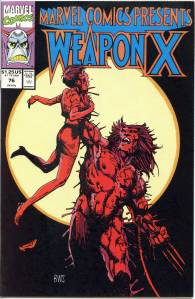
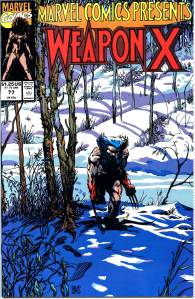
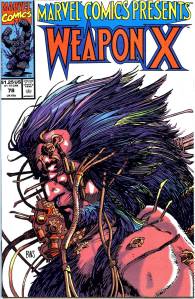
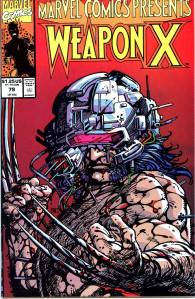
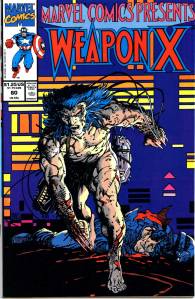
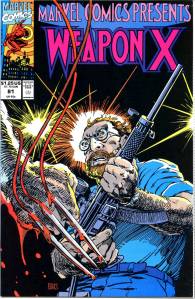
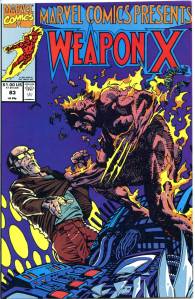
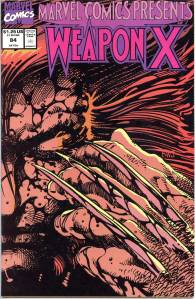
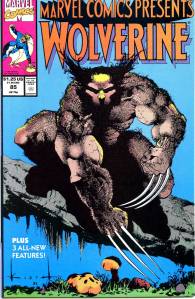
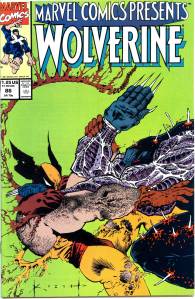
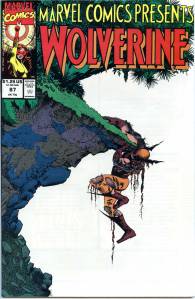
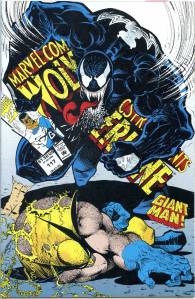
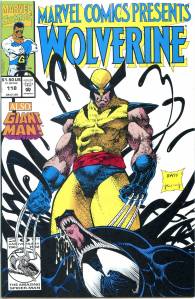
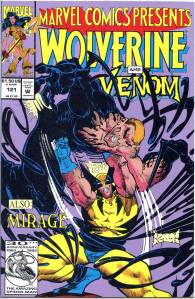
Marvel Comics Presentswas published from 1988 to 1995. The original plan was for the lead story to feature different members of the X-Men in solo adventures lasting between eight and ten episodes. The first ten issues featured Wolverine; others featured were Colossus, Cyclops, Havok, and Excalibur. From issue 39 onwards,Wolverine was featured as the lead story in all issues. Particularly notable was “Weapon X” in issues #72-84, which revealed Wolverine’s origin, with story and art by Barry Windsor-Smith.
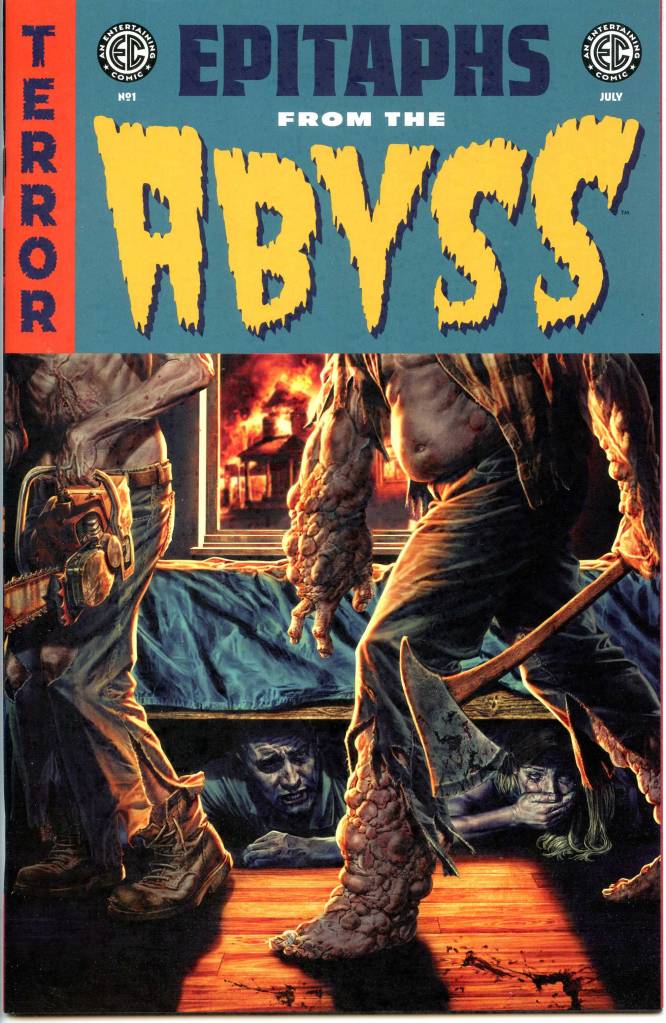
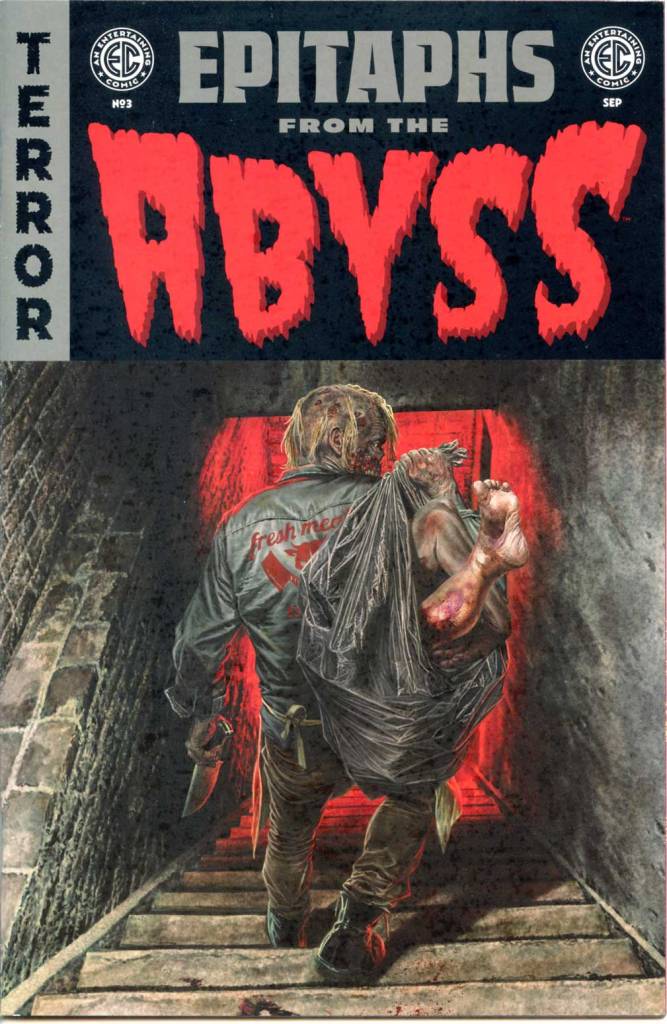
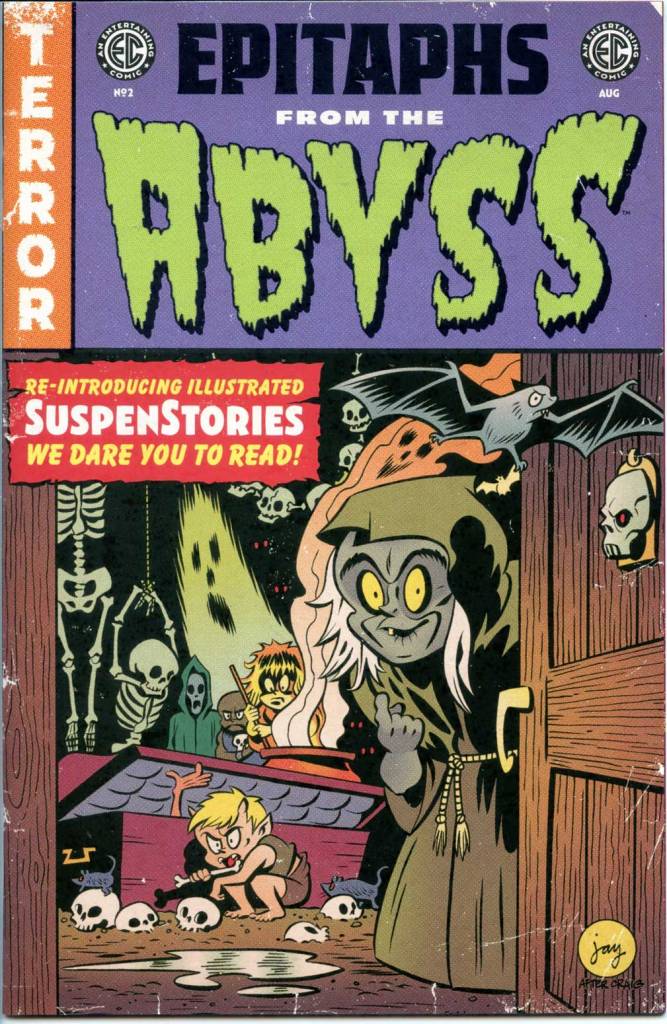
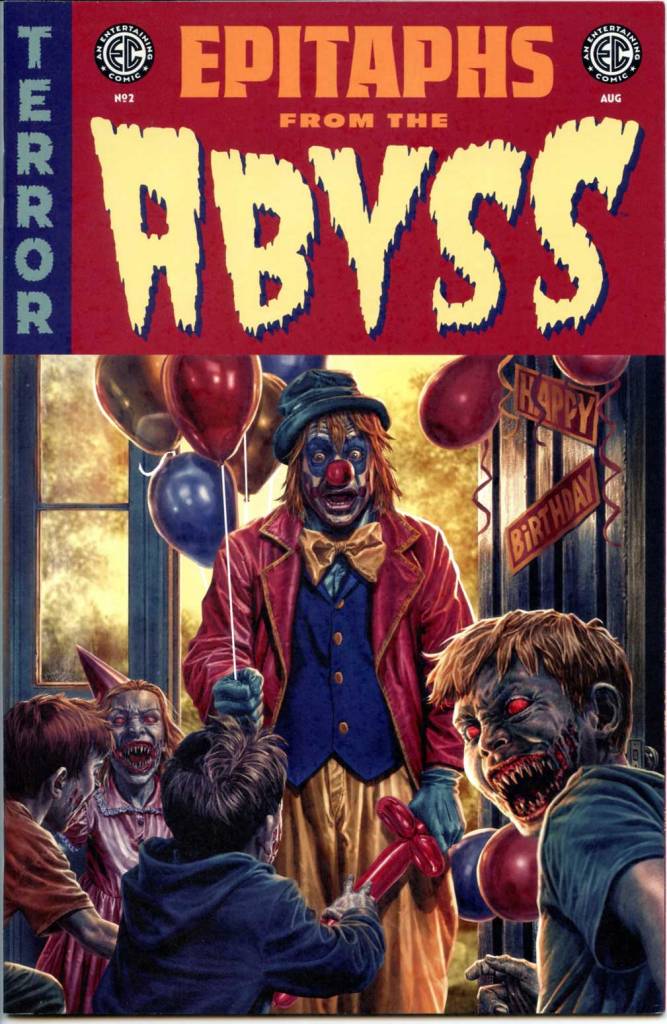
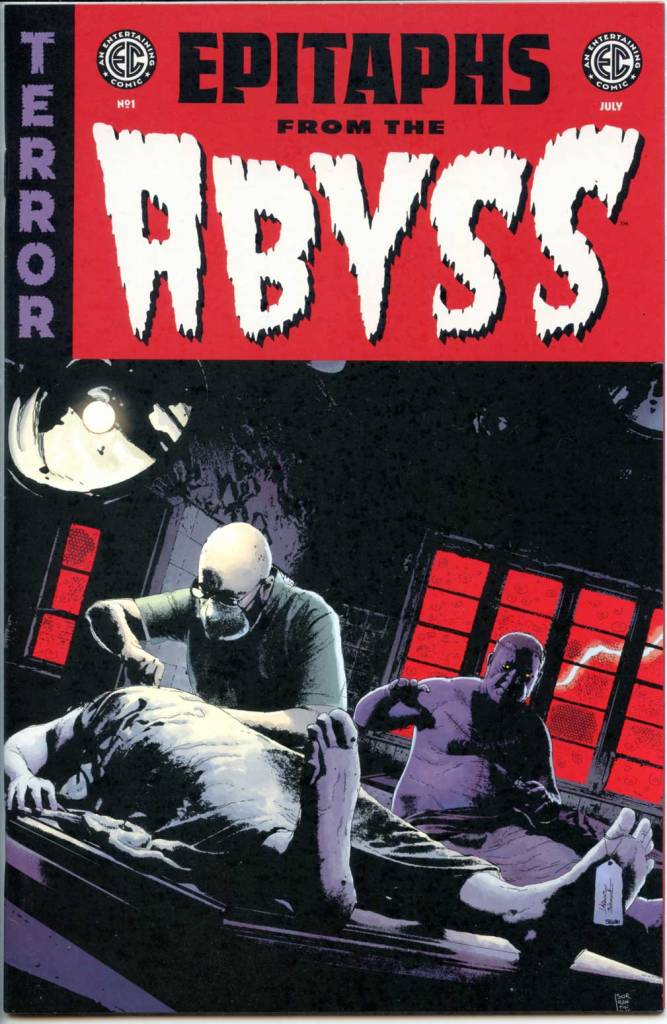
The most notorious name in terror is back with a vengeance! From the publisher that drove Tales from the Crypt, Vault of Horror, Haunt of Fear, and many more into the depraved hearts of an unsuspecting world, the immortal EC COMICS returns . . . with its first all-new series in nearly 70 years! What the Comics Code Authority couldn’t kill has only made it stronger . . . EC Comics lives again in Epitaphs from the Abyss!
Epitaphs from the Abyss #1A NM $9Epitaphs from the Abyss #3 NM $9Epitaphs from the Abyss #2 1:10 Variant NM $9Epitaphs from the Abyss #2 NM $9Epitaphs from the Abyss #1 NM $5
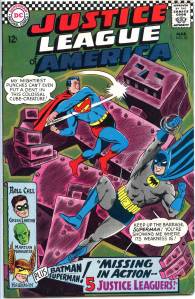
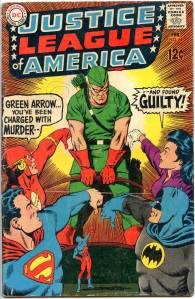
The initial Justice League lineup included seven of DC Comics’ superheroes who were regularly published at that time: Superman, Batman, Aquaman, Flash, Green Lantern, Martian Manhunter, and Wonder Woman. Rarely featured in most of the stories, Superman and Batman did not even appear on the cover most of the time. Three of DC’s other surviving or revived characters, Green Arrow,the Atom, and Hawkman were added to the roster over the next four years.
The title’s early success was indirectly responsible for the creation of the Fantastic Four. In his autobiography Stan Lee relates how in 1961, during a round of golf, DC publisher Jack Liebowitz mentioned to Marvel-Timely owner Martin Goodman how well DC’s new book (Justice League) was selling. Later that day Goodman, a publishing trend-follower aware of the JLA’s strong sales, told Lee, his comics editor, to come up with a team of superheroes for Marvel.
Justice League of America #45 VG $10Justice League of America #50 FN+ $18Justice League of America #52 FN $12Justice League of America #69 VG- $8
Steve Gerber’s posthumous Man-Thing story “The Screenplay of the Living Dead Man”, with art by Kevin Nowlan, originally planned as a 1980s graphic novel before being left uncompleted by the artist, was revived in the 2010s and appeared as a three-issue miniseries cover-titled The Infernal Man-Thing (Early Sept.-Oct. 2012). The story was a sequel to Gerber’s “Song-Cry of the Living Dead Man” in Man-Thing #12 (Dec. 1974).
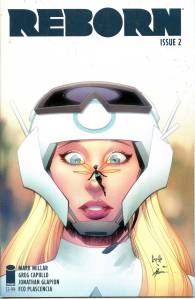
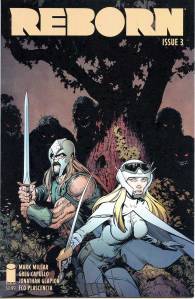
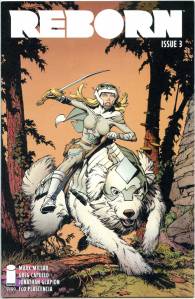
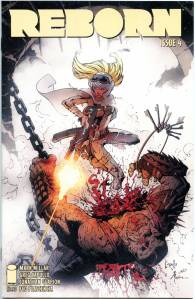
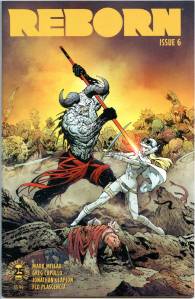
Mark Millar & Greg Capullo join forces to create the smash hit sci-fi / fantasy story: REBORN. Where do you go when you die? Not heaven or hell; somewhere else. Somewhere you have to fight to survive. Somewhere the people from the past are waiting for you—the good and the bad.
Amazing Spider-Man reverted completely to its original numbering for #500 (Dec. 2003).Mike Deodato, Jr. penciled the series from mid-2004 until 2006. That year Peter Parker revealed his Spider-Man identity on live television in the company-crossover storyline “Civil War“, in which the superhero community is split over whether to conform to the federal government’s new Superhuman Registration Act. This knowledge was erased from the world with the event of the four-part, crossover story arc, “One More Day“, written partially by J. Michael Straczynski and illustrated by Joe Quesada, running through The Amazing Spider-Man #544-545 (Nov.-Dec. 2007), Friendly Neighborhood Spider-Man #24 (Nov. 2007) and The Sensational Spider-Man #41 (Dec. 2007), the final issues of those two titles. Here, the demonMephisto makes a Faustian bargain with Parker and Mary Jane, offering to save Parker’s dying Aunt May if the couple will allow their marriage to have never existed, rewriting that portion of their pasts. This story arc marked the end of Straczynski’s tenure as writer.


































 EHT Comics