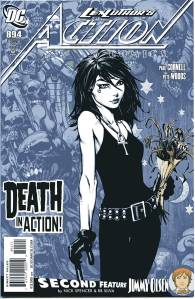
Although DC had initially announced Marc Guggenheim as writer of the title following the War of the Supermen limited series, he was replaced by Paul Cornell. Cornell featured Lex Luthor as the main character in Action Comics from issues #890-900 and Death appeared in issue #894, with the agreement of the character’s creator, Neil Gaiman. In April 2011, the 900th issue of Action Comics was released. It served as a conclusion for Luthor’s “Black Ring” storyline and a continuation for the “Reign of Doomsday” storyline. The final issue of the original series was Action Comics #904.
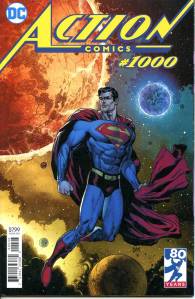
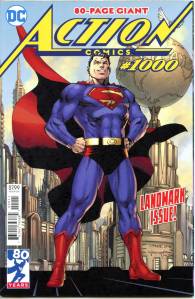
Action Comics #894 VF $29Action Comics #900 Hughes Variant NM $19Action Comics #900 NM $17Action Comics #1000 Fried Pie Variant NM $19Action Comics #1000 Jim Lee NM $9
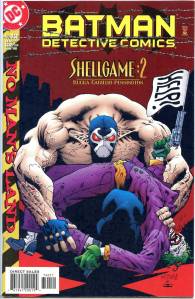
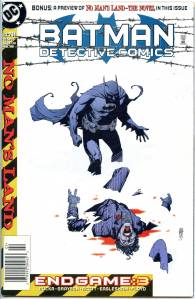
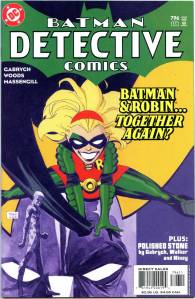
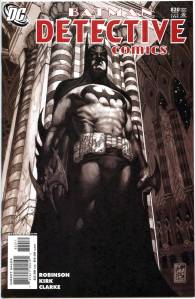
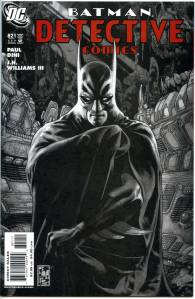
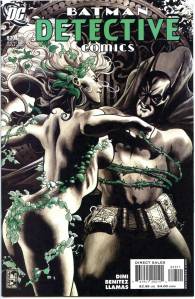
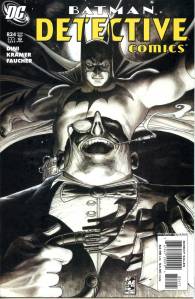
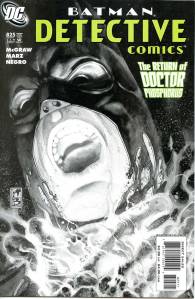
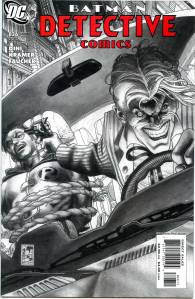
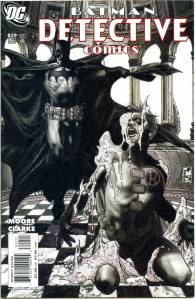
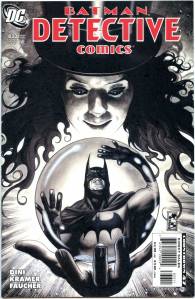
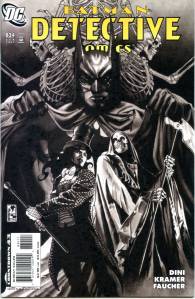
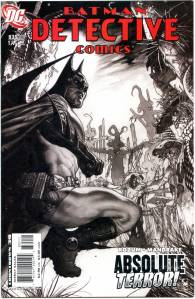
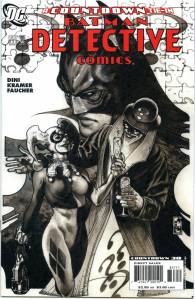
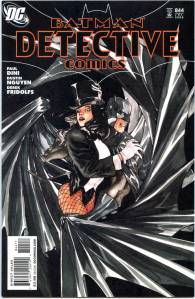
Writer Greg Rucka and artist Shawn Martinbrough became the creative team as of #742 (March 2000) and created the Sasha Bordeaux character is #751 (Dec. 2000). Issue #800 (Jan. 2005) was written by Andersen Gabrych and drawn by Pete Woods. Paul Dini became the writer of the series as of issue #821 (Sept. 2006) and created a new version of the Ventriloquist in #827 (March 2007).
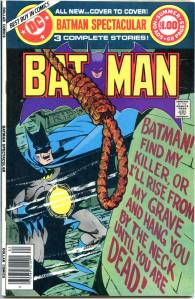
DC Special Series was an umbrella title for one-shots and special issues published by DC Comics between 1977 and 1981. Each issue featured a different character and was often in a different format than the issue before it. DC Special Series was published in four different formats: Dollar Comics, 48 page giants, digests, and treasury editions. Neither the umbrella title nor the numbering system appear on the cover; the title “DC Special Series” appeared only on the first page in the indicia. Most issues featured new material, but eight issues were reprints of previously published material.
DC Special Series #7 FN+ $6DC Special Series #8 FN-VF $10DC Special Series #15 -Batman Spectacular FN-VF $19DC Special Series #21 FN $19
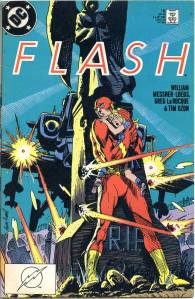
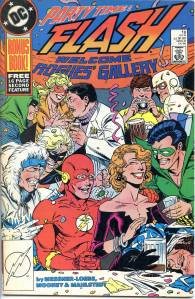
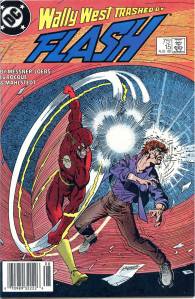
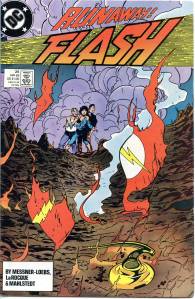
The third Flash was Wally West, introduced in The Flash (vol. 1) #110 (Dec. 1959) as Kid Flash. West, Allen’s nephew by marriage, gained the Flash’s powers through an accident identical to Allen’s. Adopting the identity of Kid Flash, he maintained membership in the Teen Titans for years. Following Allen’s death, West adopted the Flash identity in Crisis on Infinite Earths #12 and was given his own series, beginning with The Flash (vol. 2) #1 in 1987.[1] Many issues began with the catchphrase: “My name is Wally West. I’m the fastest man alive.”
“Dark Nights: Death Metal” is the sequel to 2017’s Dark Nights: Metal and concludes Scott Snyder‘s run in DC Comics; he stated “Everything is coming back, we want to pay it forward. The Omega Titans, Barbatos, the Forge, it’s all coming back. Everything you read, our goal is to reward. All of it culminates in like a year in like a “Metal” event.”[1] “Death Metal” not only concludes the three-year spanning Dark Multiverse narrative that began with “Dark Nights: Metal”, but will bring an end to the New 52 and DC Rebirth continuities that began with 2011’s “Flashpoint” storyline.
In April 2020 during an interview on DC Daily, Snyder assured that the purpose of “Death Metal” is to unify every storyline from mainline DC Universe comic books, including the standalone stories
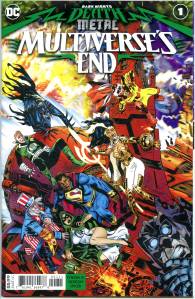
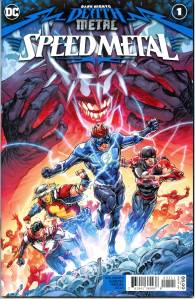
Dark Nights Death Metal – The Last 52 War of the Multiverses #1 NM $7Dark Nights – Death Metal – Legends of the Dark Knights #1 NM $7Dark Nights – Death Metal – Multiverse’s End #1 NM $6Dark Nights – Death Metal – Speed metal #1 NM $6
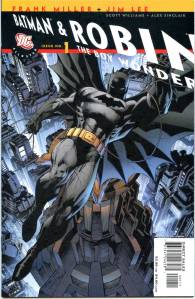
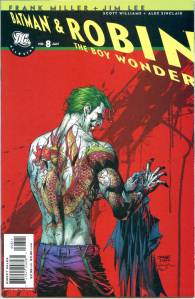
All Star Batman & Robin the Boy Wonder is an American comic book series written by Frank Miller and penciled by Jim Lee. It was published by DC Comics, with a sporadic schedule, between 2005[1] and 2008. The series was to be rebooted under the title Dark Knight: Boy Wonder in 2011, when both Miller and Lee were to finish the last six issues. The series retells the origin story of Dick Grayson, who became Batman‘s sidekick Robin.
This was the first series to be launched in 2005 under DC’s All Starimprint. These series are helmed by renowned writers and artists in the American comic book industry and attempt to retell some of the history of prominent DC Universe characters, but outside of DC Universe continuity, and not be restricted by it, in order to appeal to new and returning readers. Each title under the All Star imprint is set in its own continuity and separate universe.[2] According to Miller, the series takes place in the same continuity as Miller’s other Batman-related works, such as The Dark Knight Returns.
Since its initial publication, Miller’s writing of All Star Batman has consistently received an overwhelmingly negative critical response, though Lee’s artwork has been praised.
Batman and Robin the Boy Wonder #1 NM- $5Batman and Robin the Boy Wonder #2 NM- $4Batman and Robin the Boy Wonder #3 NM $4Batman and Robin the Boy Wonder #4 NM $4Batman and Robin the Boy Wonder #5 NM $4Batman and Robin the Boy Wonder #7 NM $4All Star Batman and Robin the Boy Wonder #8 NM $8
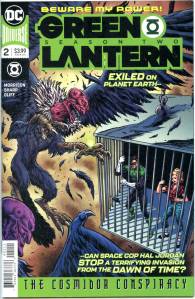
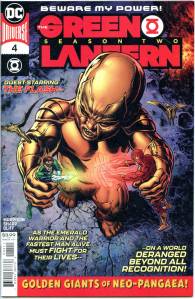
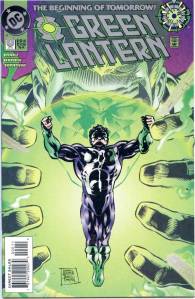
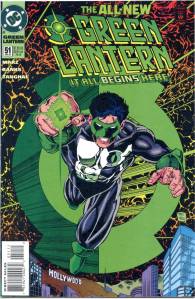
Green Lantern would know a number of revivals and cancellations. Its title would change to Green Lantern Corps at one point as the popularity rose and waned. During a time there were two regular titles, each with a Green Lantern, and a third member in the Justice League. A new character, Kyle Rayner, was created to become the feature while Hal Jordan first became the villain Parallax, then died and came back as the Spectre.
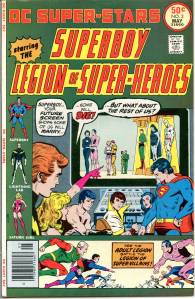
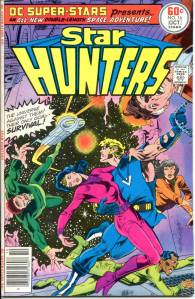
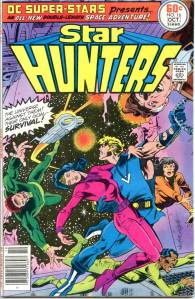
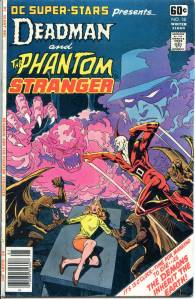
The series’ middle period was marked by theme issues — Aquaman, heroes with guns, sports, magic-users — until issue #12, which heralded the title’s second original story, featuring Superboy. From that point until DC Super Stars was cancelled after issue #18, the series contained new stories about a range of different characters (some being showcased for their own titles), as well as a collection of “secret origin” stories. The Bronze AgeHuntress made her first appearance in DC Super Stars #17 (November/December 1977) in a story written by Paul Levitz and drawn by Joe Staton and Bob Layton.