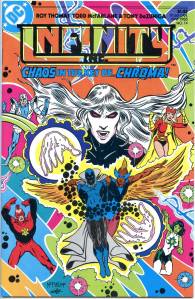
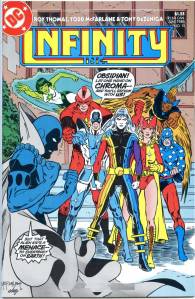
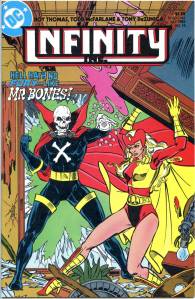
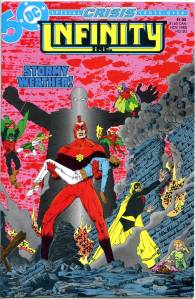
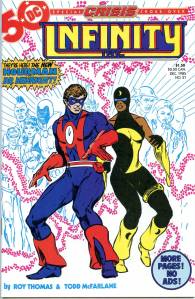
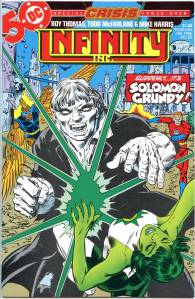
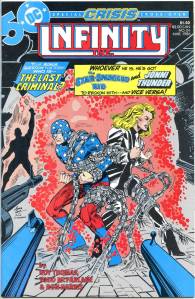
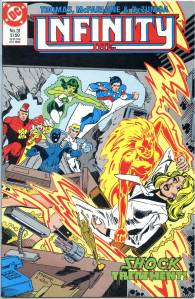
The group was organized by Sylvester Pemberton, the original Star-Spangled Kid, in Infinity Inc. #1, when a number of JSA protégés were denied admission to the JSA. They instead formed their own group. Members of Infinity, Inc. were known as Infinitors.
The series ended in 1988 with the death of the Star-Spangled Kid (by then known as Skyman), and presumably the group disbanded shortly thereafter. Several members have gone on to supporting roles in other comics series. Fury filled a pivotal role in The Sandman and is the mother of Daniel Hall. Hourman, Obsidian, Nuklon (as Atom Smasher), Silver Scarab(as Doctor Fate), and Power Girl eventually joined the 21st century incarnation of the JSA.
Originally, the series took place on the parallel world of Earth-Two, but in 1986 it was merged with the rest of DC continuity following Crisis on Infinite Earths. From then on, they shared their spot as Los Angeles’ superteam with the Outsiders, and were involved in a crossover with the New Teen Titans.
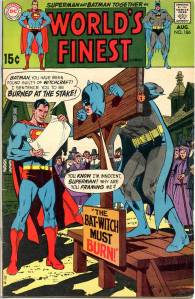
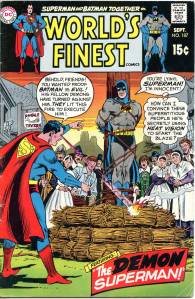
World’s Finest was initially a 96 page quarterly anthology, featuring various DC characters – always including Superman and Batman – in separate stories. Comics historian Les Daniels noted that “Pairing Superman and Batman made sense financially, since the two were DC’s most popular heroes.” When superheroes fell out of vogue in the early 1950s, DC shortened the size of the publication to that of the rest of its output, leaving only enough space for one story; this led to Superman and Batman appearing in the same story together starting with World’s Finest Comics #71 (July 1954).The series continued to feature Superman and Batman team-ups until issue #197. Noted Batman artist Neal Adams first drew the character in an interior story in “The Superman-Batman Revenge Squads” in issue #175 (May 1968).
The story explores the different universes that Doctor Manhattan alias Jon Osterman simultaneously perceives. It also adds a notable new element to Osterman’s backstory by revealing him to be a half-Jewish German immigrant who escaped with his father from the Third Reich to America; in the original Watchmen series, he was not implied to be anything other than American. It debuted to positive reviews.
Before Watchmen – Dr. Manhattan #1 NM $7Before Watchmen – Dr. Manhattan #2 NM $5Before Watchmen – Dr Manhattan #2 Variant NM $19Before Watchmen – Dr. Manhattan #3 NM $7Before Watchmen – Dr. Manhattan #4 NM $17
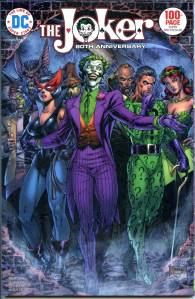
The Clown Prince of Crime celebrates 80 years of chaos! The stories feature a range of terror and anarchy, showing how the Joker has impacted Gotham City from the police to Arkham Asylum, from the local underworld to the Dark Knight and his allies!
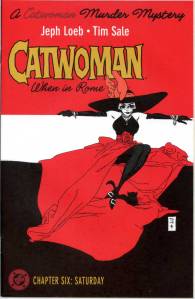
The story features Catwoman, on a trip to Rome to find information concerning her long-lost parents, who she believes to be the crime lord Carmine Falcone and his wife Louisa. The story takes place parallel to the later issues of Batman: Dark Victory.
Catwoman – When in Rome #5 NM $12Catwoman – When in Rome #6 NM $12
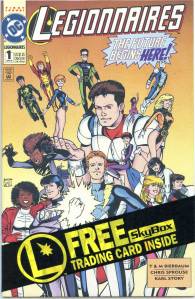
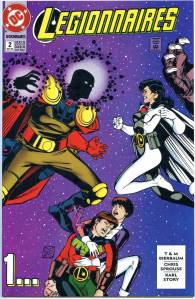
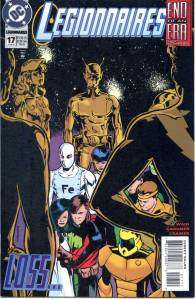
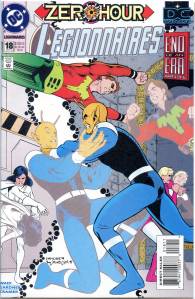
Following Zero Hour, a new Legion continuity was created, beginning with a retelling of the origin story starting in Legion of Super-Heroes (vol. 4) #0 and then continued in spin-off sister series Legionnaires #0 (both released in October 1994). Lightning Lad was renamed Live Wire, and after the group’s founding, a large number of heroes were added to the roster very quickly. Several members from the previous continuity were given new codenames, and some new heroes were added, including XS (the granddaughter of Barry Allen, the second Flash), Kinetix, and Gates.
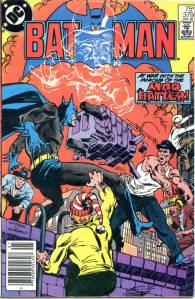
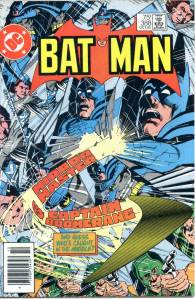
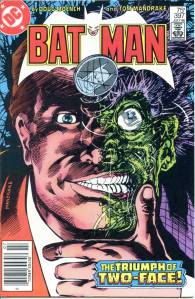
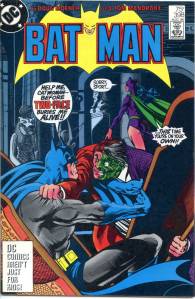
Frank Miller‘s limited series The Dark Knight Returns (February–June 1986), which tells the story of a 55-year old Batman coming out of retirement in a possible future, reinvigorated the character. The Dark Knight Returns was a financial success and has since become one of the medium’s most noted touchstones. The series also sparked a major resurgence in the character’s popularity.
That year Dennis O’Neil took over as editor of the Batman titles and set the template for the portrayal of Batman following DC’s status quo-altering miniseries Crisis on Infinite Earths. O’Neil operated under the assumption that he was hired to revamp the character and as a result tried to instill a different tone in the books than had gone before. One outcome of this new approach was the “Year One” storyline in Batman #404–407 (February–May 1987), in which Frank Miller and artist David Mazzucchelli redefined the character’s origins. Writer Alan Moore and artist Brian Bolland continued this dark trend with 1988’s 48-page one-shotBatman: The Killing Joke, in which the Joker, attempting to drive Commissioner Gordon insane, cripples Gordon’s daughter Barbara, and then kidnaps and tortures the commissioner, physically and psychologically.
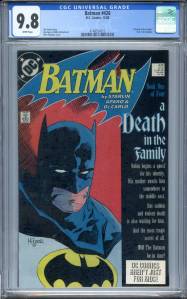
The Batman comics garnered major attention in 1988 when DC Comics created a 900 number for readers to call to vote on whether Jason Todd, the second Robin, lived or died. Voters decided in favor of Jason’s death by a narrow margin of 28 votes (see Batman: A Death in the Family). The following year saw the release of Tim Burton‘s Batman feature film, which firmly brought the character back to the public’s attention, grossing millions of dollars at the box office, and millions more in merchandising.
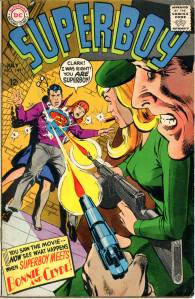
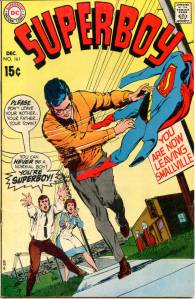
Four years after his debut, Superboy became only the sixth DC superhero to receive his own comic book when Superboy #1 (March–April 1949) was published. The series became the first new DC superhero title to succeed since World War II. Superboy saw the debuts of the first Superbaby story, (about Clark’s adventures as a super-powered toddler), and of Clark’s two closest friends: Lana Lang, who also serves as a romantic interest for Superboy; and Pete Ross, who later discovers and helps protect Clark’s secret identity. Other notable stories to appear in Superboy include the story of the first Bizarro and the first appearances of Legion of Super-Heroes members Mon-El and Ultra Boy.
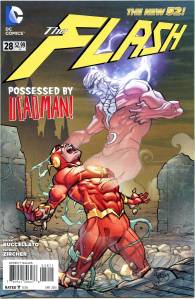
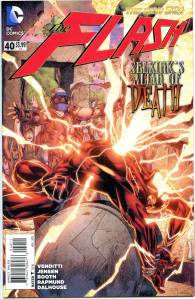
In September 2011, The New 52 rebooted DC’s continuity. In this new timeline, DC Comics relaunched The Flash with issue #1, with writing and art handled by Francis Manapul and Brian Buccellato. As with all of the titles associated with the DC relaunch, Barry Allen appears to be about five years younger than the previous incarnation of the character. Superheroes at large have appeared only in the past five years, and are viewed with at best, suspicion, and at worst, outright hostility. In this new continuity, Barry’s marriage to Iris West never took place, and he is instead in a relationship with longtime co-worker Patty Spivot. In this new series, the Flash draws deeper into the Speed Force, enhancing his mental abilities while still trying to get a full grasp on his powers, which he doesn’t yet exert total control over.
As revealed in issue #0 of this series, Barry Allen’s father was placed in prison for the murder of his mother. While the evidence seems to indicate his father’s guilt, Barry makes proving his father’s innocence a priority. The murder occurred shortly after Barry returned victorious from a school spelling bee, and Barry placed the trophy he won on his mother’s grave in her memory. Barry is also part of the main cast of the relaunched Justice League series, making his debut in the series’ second issue.
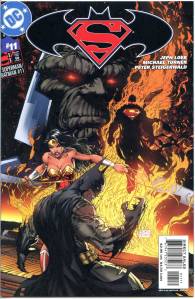
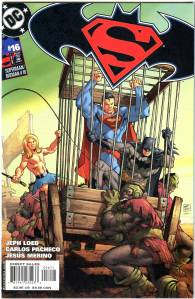
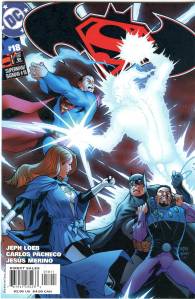
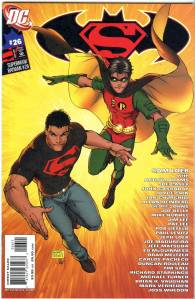
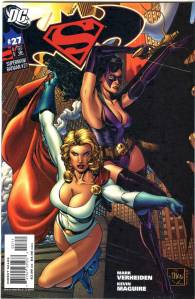
Superman/Batman was a monthly series published by DC Comics that features the publisher’s two most popular characters: Superman and Batman. Superman/Batman premiered in August 2003 and was an update of the previous series, World’s Finest Comics, in which Superman and Batman regularly joined forces.
Superman/Batman explored the camaraderie, antagonism, and friendship between its titular characters. Jeph Loeb, the series’ first writer, introduced a dual-narrator technique to present the characters’ often opposing viewpoints and estimations of each other, which subsequent series writers have maintained. Before the 1985 limited seriesCrisis on Infinite Earths, the two iconic characters were depicted as the best of friends. Frank Miller‘s landmark series The Dark Knight Returns was the first DC story that depicts the heroes at odds with each other, as opposed to pre-Crisis incarnations. This dynamic became DC Universecanon with John Byrne‘s The Man of Steel, a Superman reboot published in 1986.
Superman Batman #7 NM $4Superman Batman #8 1st NM $19Superman Batman #8 2nd NM $14Superman Batman #8 3rd NM $14Superman Batman #9 NM $9Superman Batman #10 Lee Variant $5Superman Batman #10 NM $5Superman Batman #11 NM $5Superman Batman #12 NM $5Superman Batman #13 NM $5Superman Batman #14 NM $3Superman Batman #15 NM $3Superman Batman #16 NM $3Superman Batman #17 NM $3Superman Batman #18 NM $3Superman Batman #20 NM $3Superman Batman #21 NM $3Superman Batman #23 NM $19Superman Batman #24 NM $3Superman Batman #25 NM $3Superman Batman #26 NM $5Superman Batman #27 NM $3Superman Batman #28 NM $5Superman – Batman #66 NM $4Superman Batman #78 NM $9