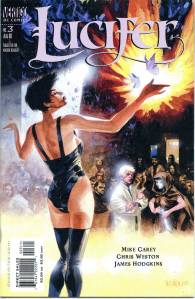
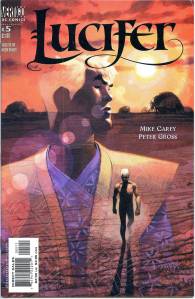
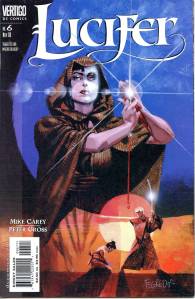
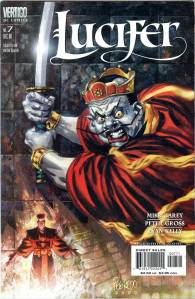
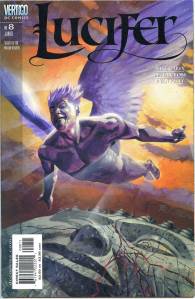
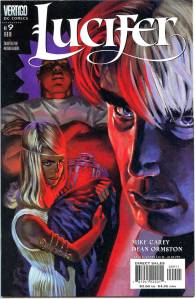
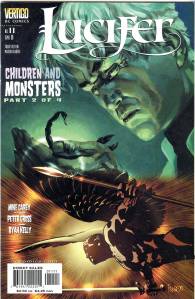
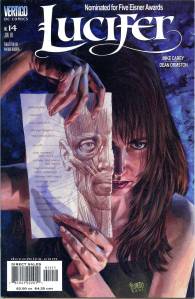
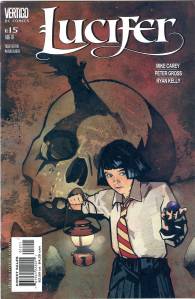
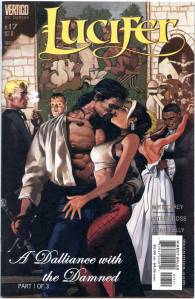
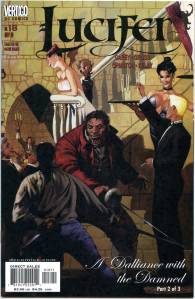
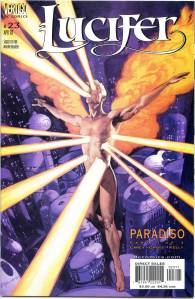
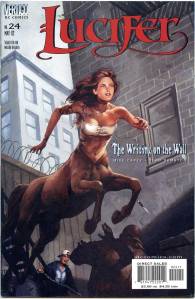
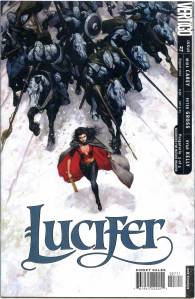
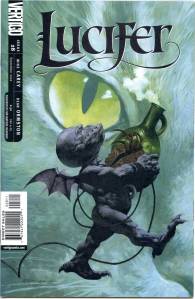
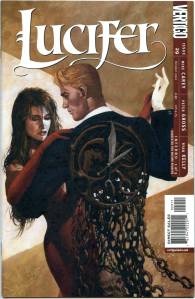
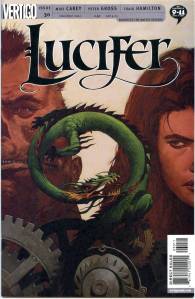
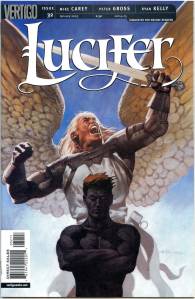
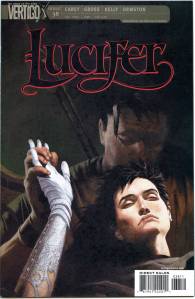
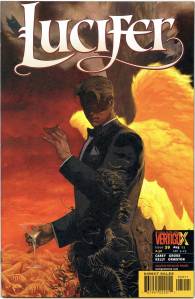
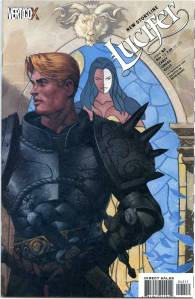
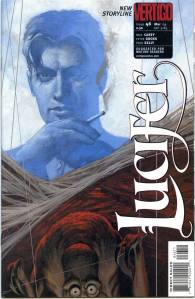
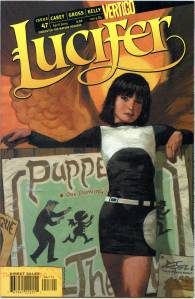
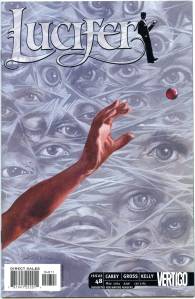
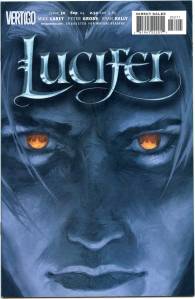
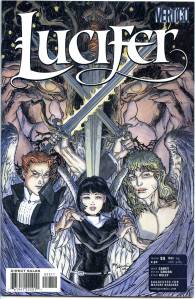
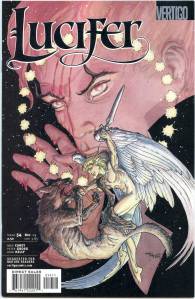
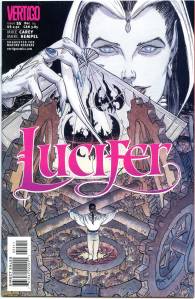
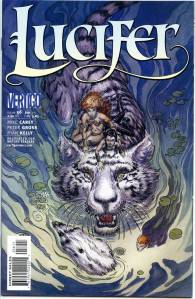
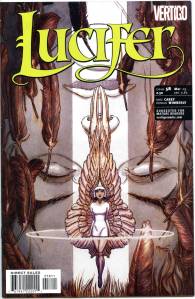
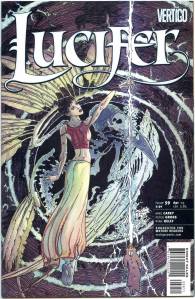
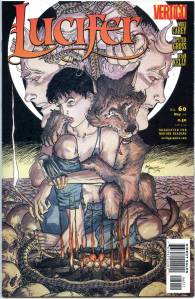
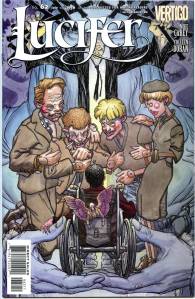
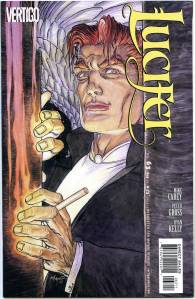
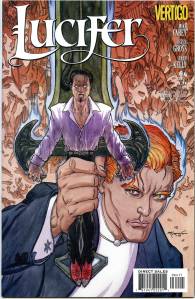
Lucifer was the main character in an eponymous series that ran for 75 issues and the Lucifer: Nirvana one-shot, from June 2000 to August 2006, the entire run of which was written by Mike Carey (this series was preceded by Carey’s work in 1999, The Sandman Presents: Lucifer mini-series). To Carey, the essence of the character was:
We play safe. Most of us do, most of the time… but Lucifer doesn’t know the meaning of safe, and he never bothers to look down at the tramlines. He goes wherever the hell he likes, picks his fights where he finds them and generally wins… following [his] own will and [his] own instincts to the very end of the line, no matter what the obstacles are star.
In the series, Lucifer runs a piano bar (an element introduced in the Sandman story “The Kindly Ones”) called “Lux” in Los Angeles, with the assistance of his mistress, Mazikeen who is a Lilim, one of the race descended from Lilith. Lucifer is portrayed as a sophisticated and charming man, in accordance with the stereotypical gentleman-devil.
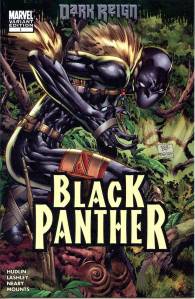
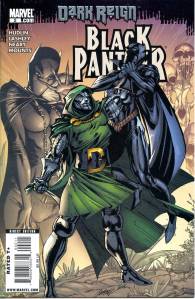
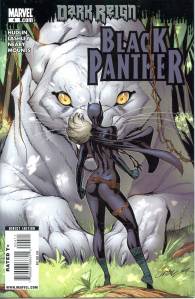
Attacked by the forces of fellow Cabal member Doctor Doom, T’Challa is left comatose. His sister Shuri is trained as the next Panther, with the mantle passing onto her officially after T’Challa awakens from his coma and attempts to recover from his injuries.
In the aftermath, T’Challa loses all of his enhanced attributes given to him by being the panther totem. As a result, he works with his sorcerer, Zawavari, to accumulate a replacement. He has since made a pact with another unknown Panther deity, returning his attributes to an even higher level as well as placing incantations on his body, making himself highly resistant to most magic and mystic assaults. This has all been done in preparation for the imminent battle with Doctor Doom, which culminated in T’Challa rendering all of the processed vibranium inert to give his people a chance to rebuild without their dependence on the element.
Aliens is a line of several comic books set in the fictional universe of the Alien films published by Dark Horse Comics starting in 1988. The stories often feature the company Weyland-Yutani and the United States Colonial Marines. Originally intended as a sequel to James Cameron‘s 1986 film Aliens, the first mini-series features the characters of Rebecca “Newt” Jorden and Corporal Dwayne Hicks. Later series also included the further adventures of Ellen Ripley, with other stories being completely unique to the Alien universe and are often used to explore other aspects of the species, such as their sociology and biology, and also tying into Dark Horse Comics’ Predator and Aliens vs. Predator lines.
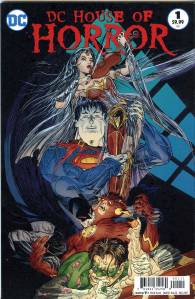
An all-new, all-creepy one-shot set in the DC Universe! Martha Kent fights for her life against a creature from a spacecraft that lands in front of her farmhouse. A young woman is possessed by the spirit of a murderous Amazon warrior. The last surviving member of the Justice League faces down a horror beyond imagining. All these and more are what happens when the most exciting new voices in contemporary horror fiction are paired with the talents of some of the greatest artists in the DC firmament! And if that isn’t enough to scare you, there’s Keith Giffen, too.
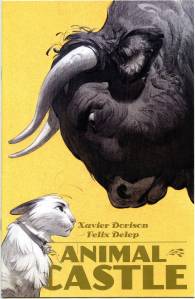
On the Farm all animals were equal. In the Castle some are more equal than others. For fans of the bestselling Stray Dogs and the Eisner Award winning Beasts of Burden comes an animal fable at once familiar and surprising! You may think you know the story, but set aside your assumptions. This animal uprising is unlike any you have read! Nestled in the heart of a farm forgotten by men, the Animal Castle is ruled with an iron hoof by President Silvio. The bull and its dog militia savor their power, while the other animals are exhausted by work, until the arrival of the mysterious Azelar, a traveling rat who will teach them the secrets of civil disobedience.
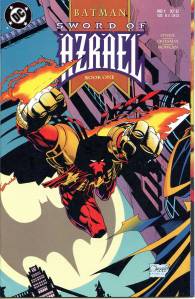
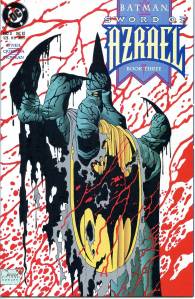
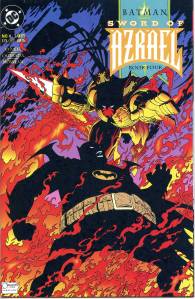
Azrael first appeared in the 1992 series Batman: Sword of Azrael as Jean-Paul Valley.
He then became a supporting character in the monthly Batman titles, eventually taking over the role of Batman through the “Knightfall,” “Knightquest,” and “KnightsEnd” story arcs. One of the creators, Denny O’Neil, admitted to having difficulties with Azrael’s transition from villain to hero: “If I’d known he was to become a monthly character, I might have set him up differently … The problem is that I had to turn a bad guy into a real hero, not just an anti-hero or lead. It’s possible to do that, but it’s difficult to retain the original characterization. You almost have to change his personality.”
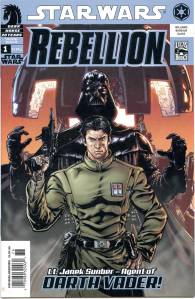
Star Wars: Rebellion was released in April2006. The 16-issue series was a continuation of the series Star Wars: Empire and was presented as a series of miniseries, the first arc having five issues. In 2008, it was paused for six months to give precedence to the The Clone Wars monthly comic only to be officially canceled to make way for the upcoming Star Wars: Invasion comic series.
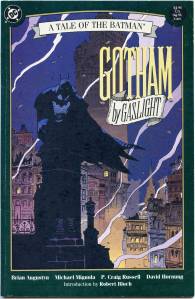
Although it was not initially labeled as such, Gotham by Gaslight is considered to be the first Elseworlds story in which DC Comics characters from alternate timelines or realities are featured in stories outside of the DC Universe canon. While not originally labelled as such, subsequent printings of Gotham by Gaslight have incorporated the Elseworlds logo. It spawned one sequel, Batman: Master of the Future (1991), also written by Augustyn, with art by Eduardo Barreto.
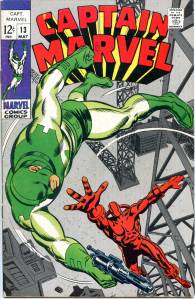
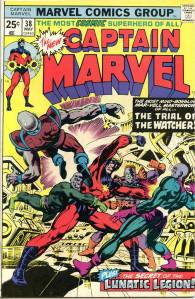
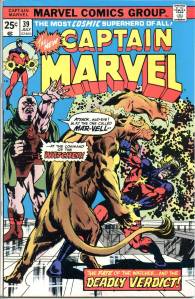
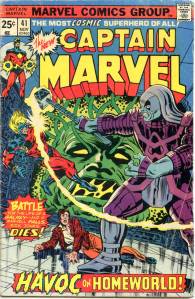
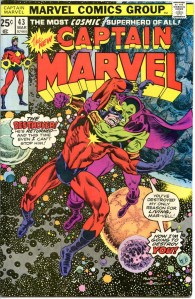
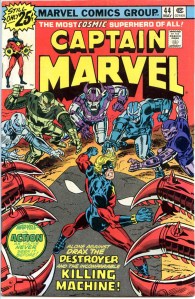
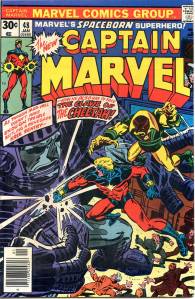
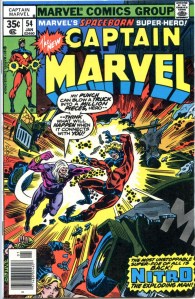
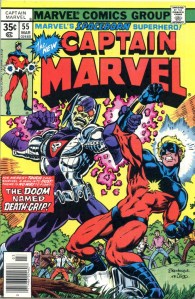
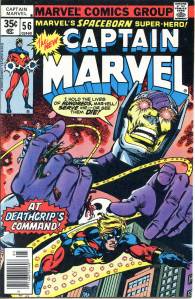
The first Captain Marvel was created by Stan Lee and Gene Colan in Marvel Super-Heroes #12 (December 1967). This character is an alien military officer, Captain Mar-Vell of the Kree Imperial Militia, who is sent to observe the planet Earth as it is developing technology to travel into space. Mar-Vell eventually wearies of his superiors’ malign intent and allies himself with Earth, and the Kree Empire brands him a traitor. From then on, Mar-Vell fights to protect Earth from all threats.
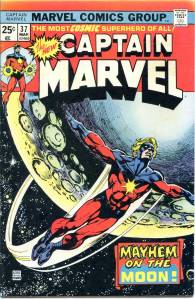
He was later revamped by Roy Thomas and Gil Kane. Having been exiled to the Negative Zone by the Supreme Intelligence, the only way Mar-Vell can temporarily escape is to exchange atoms with Rick Jones by means of special wristbands called Nega-Bands. He is also given superpowers and his Kree military uniform is replaced with a form fitting costume.
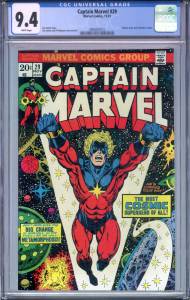
With the title’s sales still flagging, Marvel allowed Jim Starlin to conceptually revamp the character, although his appearance was little changed. Mar-Vell is freed from the Negative Zone and becomes a cosmic champion, the “Protector of the Universe” appointed by the cosmic entity Eon. Together, Mar-Vell and Rick continue to battle against evil, most notably battling the Death-worshipping Thanos. Mar-Vell became a close ally of the Titans, and one of their number, Elysius, became his lover.
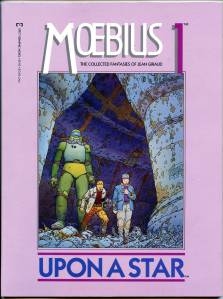
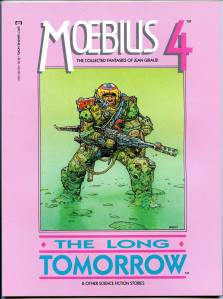
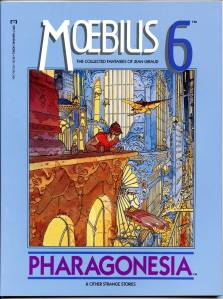
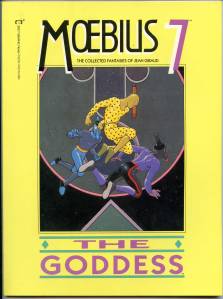
The Moebius pseudonym, which Jean Giraud came to use for his science fiction and fantasy work, was born in 1963. In a satire magazine called Hara-Kiri, Giraud used the name for 21 strips in 1963–64. Subsequently, the pseudonym went unused for a decade.
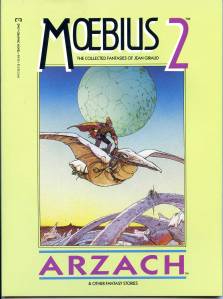
Arzach is a wordless comic, created in a conscious attempt to breathe new life into the comic genre which at the time was dominated by American superhero comics. It tracks the journey of the title character flying on the back of his pterodactyl through a fantastic world mixing medieval fantasy with futurism. Unlike most science fiction comics it has no captions, no speech balloons and no written sound effects. It has been argued that the wordlessness provides the strip with a sense of timelessness, setting up Arzach’s journey as a quest for eternal, universal truths.
His series The Airtight Garage is particularly notable for its non-linear plot, where movement and temporality can be traced in multiple directions depending on the readers own interpretation even within a single planche (page or picture). The series tells of Major Grubert, who is constructing his own universe on an Asteroid named fleur, where he encounters a wealth of fantastic characters including Michael Moorcock‘s creation Jerry Cornelius.
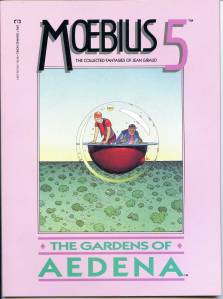
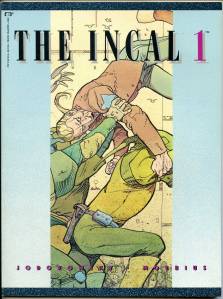
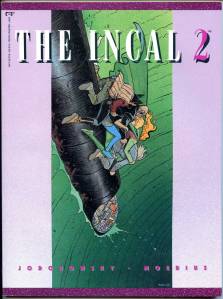
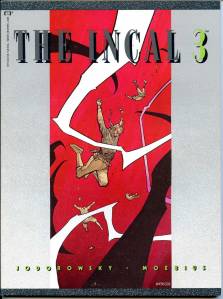
In 1980 he started his famous L’Incal series in collaboration with Alejandro Jodorowsky. From 1985 to 2001 he also created his six-volume fantasy series Le Monde d’Edena, portions of which appeared in English as The Aedena Cycle.
In his later life, Giraud decided to revive the Arzak character in an elaborate new adventure series; the first volume of a planned trilogy, Arzak l’arpenteur, appeared in 2010. He also added to the Airtight Garage series with a new volume entitled Le chasseur déprime.