Batman: The Killing Joke is a 1988 DC Comicsone-shotgraphic novel featuring the characters Batman and the Joker written by Alan Moore and illustrated by Brian Bolland. The Killing Joke provides an origin story for the supervillain the Joker, loosely adapted from the 1951 story “The Man Behind the Red Hood!“, which was written by Batman co-creator Bill Finger. The Joker’s origin is presented via flashback, while simultaneously depicting his attempt to drive Jim Gordon insane and Batman’s desperate attempt to stop him.
Created by Moore, Bolland, and Higgins as their own take on the Joker’s source and psychology, the story became famous for its origin of the Joker as a tragic character; a family man and failed comedian who suffered “one bad day” that finally drove him insane. Moore stated that he attempted to show the similarities and contrasts between Batman and the Joker. The story’s effects on the mainstream Batman continuity also included the shooting and paralysis of Barbara Gordon (a.k.a. Batgirl), an event that eventually leads her to develop the identity of Oracle, secret data broker for the DC Universe‘s superhero community and leader of the superhero team Birds of Prey.
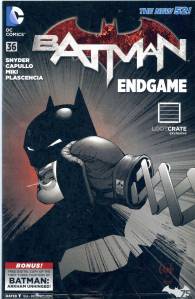
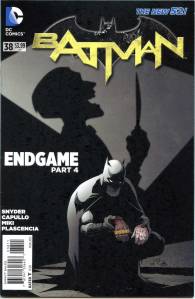
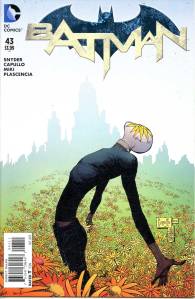
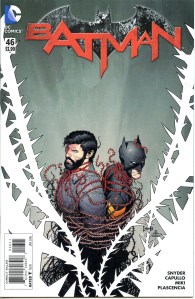
Since the beginning of The New 52, Scott Snyder has been the writer of the flagship Batman title. His first major story arc was “Night of the Owls“, where Batman confronts the Court of Owls, a secret society that has controlled Gotham for centuries. The second story arc was “Death of the Family“, where the Joker returns to Gotham and simultaneously attacks each member of the Batman family. The third story arc was “Batman: Zero Year“, which redefined Batman’s origin in The New 52. It followed Batman #0, published in June 2012, which explored the character’s early years. The final storyline before the Convergence (2015) event was Endgame, depicting the supposed final battle between Batman and the Joker when he unleashes the deadly Endgame virus onto Gotham City. The storyline ends with Batman and the Joker’s supposed deaths. Starting with #41, Commissioner James Gordon takes over Bruce’s mantle as a new, state-sanctioned, mecha Batman, debuting in the Free Comic Book Day special comic Divergence. However, Bruce Wayne is soon revealed to be alive, albeit now suffering almost total amnesia of his life as Batman and only remembering his life as Bruce Wayne through what he has learned from Alfred. Bruce Wayne finds happiness and proposes to his girlfriend, Julie, but Mr. Bloom heavily injures Jim Gordon and takes control of Gotham City and threatens to destroy the city by energizing a particle reactor to create a “strange star” to swallow the city. Bruce Wayne discovers the truth that he was Batman and after talking to a stranger who smiles a lot (it is heavily implied that this is the amnesic Joker) he forces Alfred to implant his memories as Batman, but at the cost of his memories as the reborn Bruce Wayne. He returns and helps Jim Gordon defeat Mr. Bloom and shut down the reactor. Gordon gets his job back as the commissioner, and the government Batman project is shuttered.
Batman: Beyond the White Knight takes place 12 years after the events which are described in the previous volume Batman: Curse of the White Knight, which ended with Bruce Wayne exposed as Batman to the general public and donating his entire fortune to the people of Gotham City, and then turning himself in to the police. Since that, the city has evolved into a futuristic megalopolis known as “Neo-Gotham”. Following the murder of his father Warren, young Terry McGinnis — under the orders of his employer Derek Powers — steals a technologically advanced Batsuit to become the new Batman and avenge his father’s death. At the same time, a middle-aged Bruce escapes from prison in an attempt to rid Neo-Gotham of Batman for good, all while a civil war slowly rages through the city and Powers transforms into the supervillain Blight.
In early 1939, the success of Superman in Action Comics prompted editors at National Comics Publications (the future DC Comics) to request more superheroes for its titles. In response, Bob Kane created “the Bat-Man”. Collaborator Bill Finger recalled that “Kane had an idea for a character called ‘Batman,’ and he’d like me to see the drawings. I went over to Kane’s, and he had drawn a character who looked very much like Superman with kind of … reddish tights, I believe, with boots … no gloves, no gauntlets … with a small domino mask, swinging on a rope. He had two stiff wings that were sticking out, looking like bat wings. And under it was a big sign … BATMAN”. The bat-wing-like cape was suggested by Bob Kane, inspired by Leonardo Da Vinci‘s sketch of an ornithopter flying device as a child.
Finger suggested giving the character a cowl instead of a simple domino mask, a cape instead of wings, and gloves; he also recommended removing the red sections from the original costume. Finger said he devised the name Bruce Wayne for the character’s secret identity: “Bruce Wayne’s first name came from Robert Bruce, the Scottish patriot. Wayne, being a playboy, was a man of gentry. I searched for a name that would suggest colonialism. I tried Adams, Hancock … then I thought of Mad Anthony Wayne.” He later said his suggestions were influenced by Lee Falk‘s popular The Phantom, a syndicated newspaper comic-strip character with which Kane was also familiar.
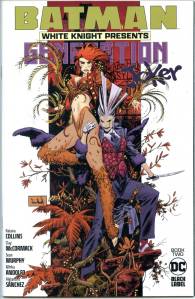
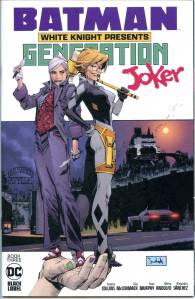
When the rebellious twins run away in a stolen Batmobile, only Joker Jack Napier’s quickly fading hologram has any hope of getting them home safely and keeping them out of the family business. But a life of crime isn’t the only temptation young Bryce and Jackie are facing: the kids uncover a dark secret that could bring their dad back to life for good!
With a wild array of Batman’s former enemies and allies on their tails, will the kids succeed in reviving the Dark Knight’s greatest foe?
Batman – White Knight Presents – Generation Joker #1 NM $5
Batman – White Knight Presents – Generation Joker #2 NM $5
Batman – White Knight Presents – Generation Joker #3 NM $5
Batman-Spawn: War Devil is a 1994 graphic novel published by DC Comics and written by Doug Moench, Alan Grant, and Chuck Dixon. This is one of two such crossovers between the two characters published that year (the other being Spawn/Batman). A third meeting between the two characters, to be titled Spawn/Batman: Inner Demons and pitting Batman and Spawn against the Joker and Clown, was planned but never made.
In 2010, the storyline Batman: The Return of Bruce Wayne saw Bruce travel through history, eventually returning to the present day. Although he reclaimed the mantle of Batman, he also allowed Grayson to continue being Batman as well. Bruce decided to take his crime-fighting cause globally, which is the central focus of Batman Incorporated. DC Comics would later announce that Grayson would be the main character in Batman, Detective Comics, and Batman and Robin, while Wayne would be the main character in Batman Incorporated. Also, Bruce appeared in another ongoing series, Batman: The Dark Knight.
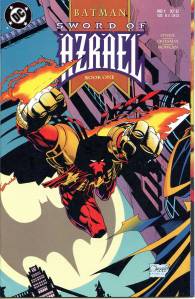
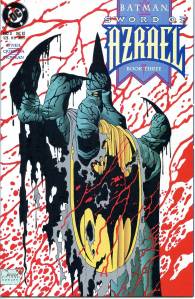
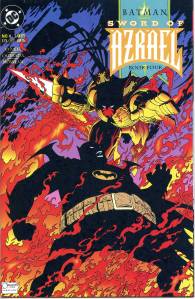
Azrael first appeared in the 1992 series Batman: Sword of Azrael as Jean-Paul Valley.
He then became a supporting character in the monthly Batman titles, eventually taking over the role of Batman through the “Knightfall,” “Knightquest,” and “KnightsEnd” story arcs. One of the creators, Denny O’Neil, admitted to having difficulties with Azrael’s transition from villain to hero: “If I’d known he was to become a monthly character, I might have set him up differently … The problem is that I had to turn a bad guy into a real hero, not just an anti-hero or lead. It’s possible to do that, but it’s difficult to retain the original characterization. You almost have to change his personality.”
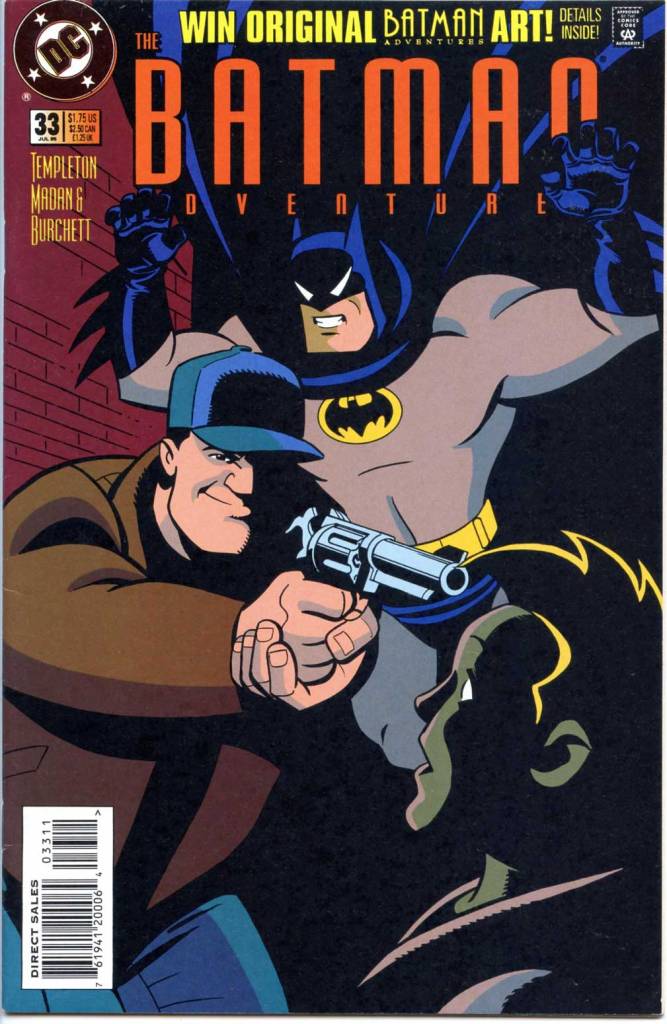
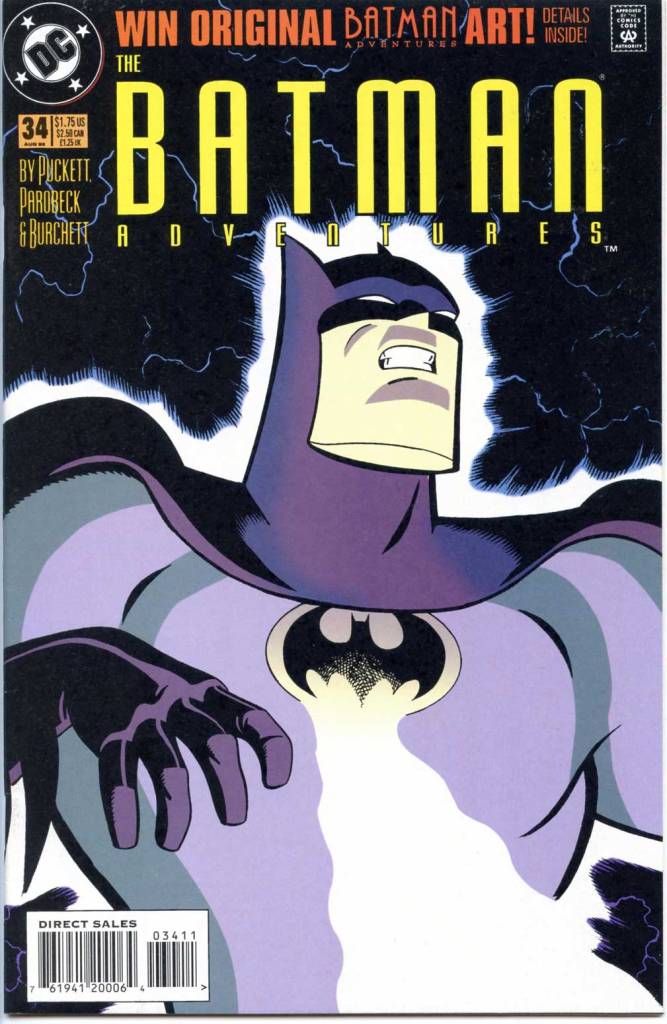
Based on Batman: The Animated Series, the first series ran for 36 issues, 2 annuals, and 3 specials (Mad Love and Holiday Special, which were both adapted into episodes for The New Batman Adventures, plus an adaptation of the Batman: Mask of the Phantasm movie). The first annual introduces Roxy Rocket, who would later appear in The New Batman Adventures episode “The Ultimate Thrill” and the Superman: The Animated Series episode “Knight Time”. Most of the issues were written by Kelley Puckett, and illustrated by Mike Parobeck and Rick Burchett, though Ty Templeton did the writing and art on a few issues. Mad Love was written by Paul Dini and illustrated by Bruce Timm, while the holiday special was written and illustrated by a number of creative people who had worked on the animated series, including Paul Dini, Bruce Timm, Glen Murakami, Dan Riba, and Kevin Altieri.
World’s Finest featured Superman and Batman team-ups until issue #197. Noted Batman artist Neal Adams first drew the character in an interior story in “The Superman-Batman Revenge Squads” in issue #175 (May 1968). The title briefly featured Superman teaming with heroes other than Batman in the early 1970s beginning with issue #198 (November 1970). That issue featured the first part of a two-issue team-up with the Flash. The series reverted to Superman and Batman team-ups after issue #214, initially with a unique twist, featuring the children they might one day have, Superman Jr. and Batman Jr. These characters, billed as the Super-Sons, were co-created by writer Bob Haney and artist Dick Dillin in issue #215 (January 1973).