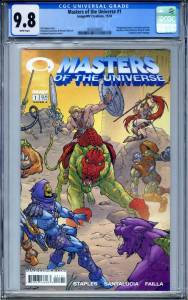
From 2002 to 2005 Image Comics and MVCreations published several series of comics and one-shots that mirrored tales of the 2002 Mike Young Productions show; the comic series elaborated and added to the mythos by introducing characters that never made it in after the 39 episodes of the television series. The first issues were seen in the summer of 2002 in the form of special promotional/preview issues, with three mini-series continuing on after; ‘The Shards of Darkness’ in fall 2002, followed by ‘Dark Reflections’ and ‘Rise of the Snake Men’ in 2003. After delving into the back-stories of Skeletor’s henchmen Beast-Man, Mer-Man, Trap-Jaw and Tri-Klops in a four issue ‘Icons of Evil’ series, a short-lived ongoing series, solely produced by MVC, continued on for eight issues in 2004. Along with these, a handful of special or ‘pack-in’ one-shots and trade paperback collected volumes were also produced.
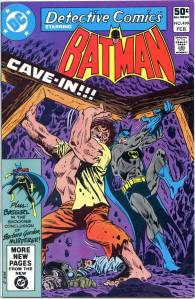
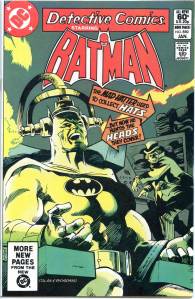
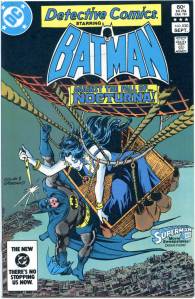
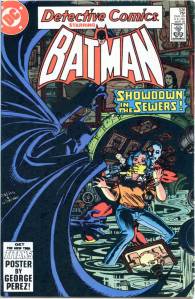
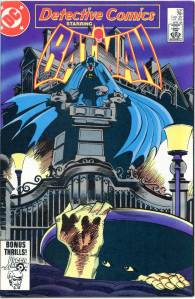
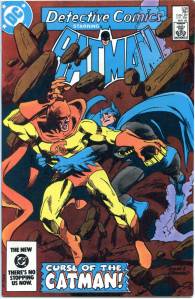
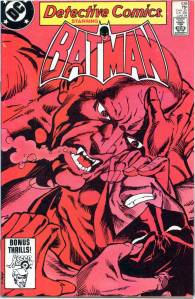
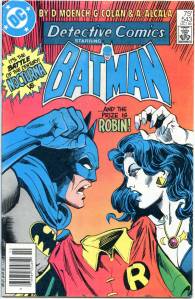
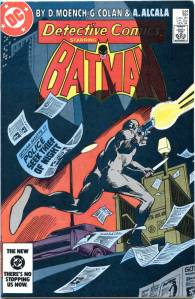
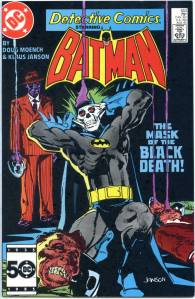
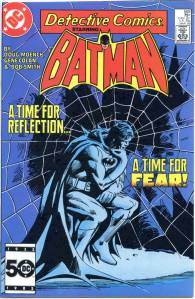
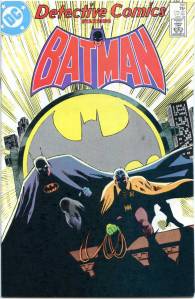
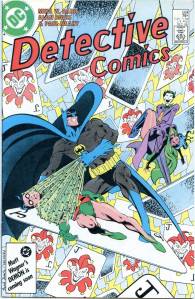
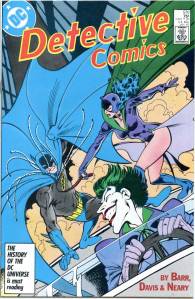
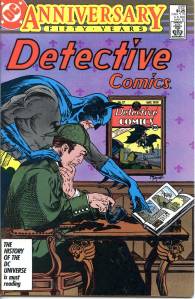
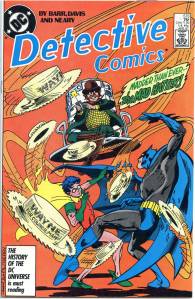
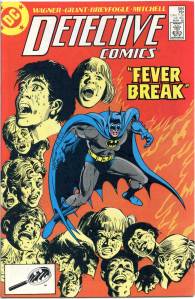
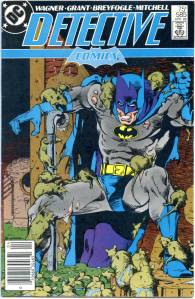
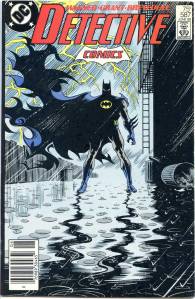
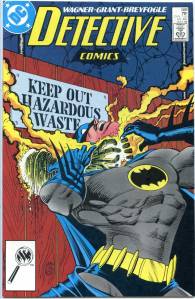
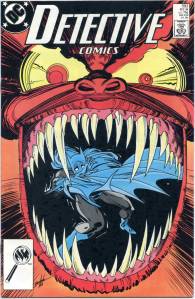
Detective Comics (1980’s)
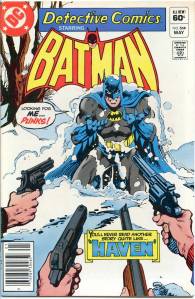
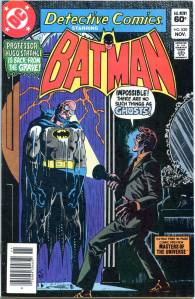
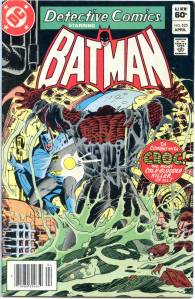
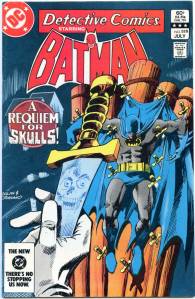
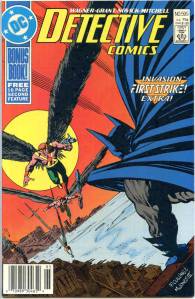
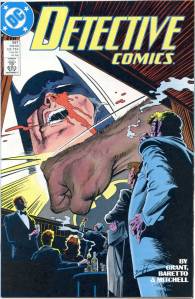
The title’s 500th issue (March 1981) featured stories by several well-known creators including television writer Alan Brennert and Walter B. Gibson best known for his work on the pulp fiction character The Shadow. Also used during the 1980s was the use of serialization of the main Batman story, with stories from Detective Comics and Batman directly flowing from one book to another, with cliffhangers at the end of each book’s monthly story that would be resolved in the other title of that month. A single writer handled both books during that time beginning with Gerry Conway and followed up by Doug Moench. The supervillain Killer Croc made a shadowy cameo in issue #523 (Feb. 1983). Noted author Harlan Ellison wrote the Batman story in issue #567.
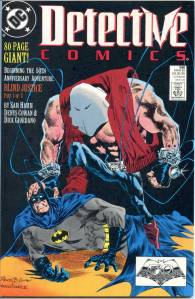
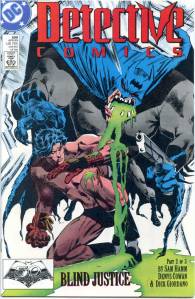
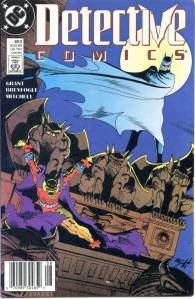
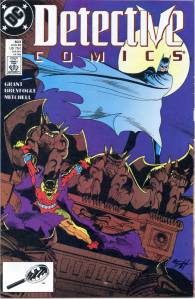
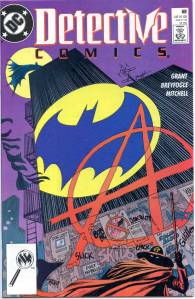
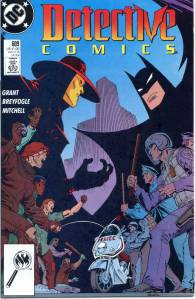
Writer Mike W. Barr and artists Alan Davis and Todd McFarlane crafted the “Batman: Year Two” storyline in Detective Comics #575-578 which followed up on Frank Miller’s “Batman: Year One“. Writer Alan Grant and artist Norm Breyfogle introduced the Ventriloquist in their first Batman story together and the Ratcatcher in their third (#585). Sam Hamm, who wrote the screenplay for Tim Burton‘s Batman, wrote the “Blind Justice” story in Detective Comics issues #598-600.
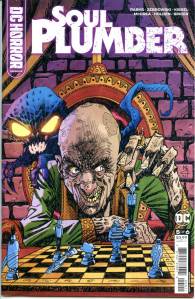
Soul Plumber (2021)
Edgar Wiggins, a disgraced former seminary student, is desperate to find a way to answer what he believes is his higher calling. He thinks he’s found it in a seminar hosted in a hotel conference room by the Soul Plumbers, who have a machine that could be the secret to delivering souls from Satan. Edgar’s too broke to buy in, but that’s not enough to stop this true devotee: he steals the blueprints and builds a pirated version with what components he can afford on his gas station attendant salary. Then he goes after a demon, misses… and ends up pulling out something much worse.
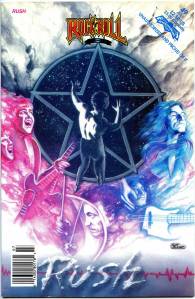
Rock “N” Roll Comics (1989)
Rock ‘N’ Roll Comics was a comic book series published by Revolutionary Comics from 1989 to 1993. Revolutionary’s flagship title, the series was notable for its unauthorized and unlicensed biographies of rock stars, told in comic book form but well-researched and geared to adults, often with very adult situations (nudity, drug use, violence, etc.).
Some musicians featured in the comics, like Frank Zappa and KISS, were supportive; while others, like the New Kids on the Block, considered the comic akin to a bootleg recording and sued the publisher. Publisher Todd Loren‘s legal victory in the U.S. District Court established that comic book biographies were entitled to the same protections as other unauthorized biographies.

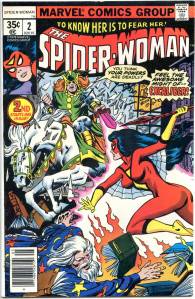
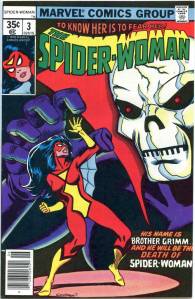
Spider-Woman (1978)
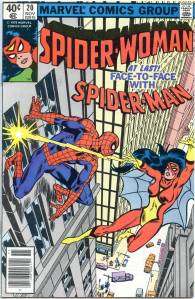
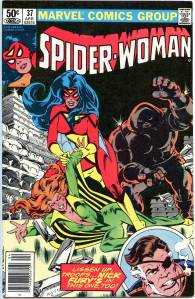
Marvel Comics‘ then-publisher Stan Lee said in 1978, shortly after Spider-Woman’s debut in Marvel Spotlight #32 (Feb. 1977) and the start of the character’s 50-issue self-titled series (cover-datedApril 1978 – June 1983), the character originated because,
I suddenly realized that some other company may quickly put out a book like that and claim they have the right to use the name, and I thought we’d better do it real fast to copyright the name. So we just batted one quickly, and that’s exactly what happened. I wanted to protect the name, because it’s the type of thing [where] someone else might say, ‘Hey, why don’t we put out a Spider-Woman; they can’t stop us.’ … You know, years ago we brought out Wonder Man, and [DC Comics] sued us because they had Wonder Woman, and … I said okay, I’ll discontinue Wonder Man. And all of a sudden they’ve got Power Girl [after Marvel had introduced Power Man]. Oh, boy. How unfair.
Ice Cream Man (2018)
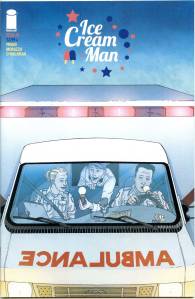
Ice Cream Man is a genre-defying comic book series featuring disparate ‘one-shot’ tales of sorrow, wonder, and redemption. Each installment features its own cast of strange characters, dealing with their own special sundae of suffering. And on the periphery of all of them, like the twinkly music of his colorful truck, is the Ice Cream Man-a weaver of stories, a purveyor of sweet treats. Friend. Foe. God. Demon. The man who, with a snap of his fingers-lickety split!-can change the course of your life forever.
Daredevil V8 (2023)
The new era of Daredevil starts here! Industry stars SALADIN AHMED and AARON KUDER have laced up and entered the ring, ready to take Matt Murdock on a knockout of an adventure! Where does Elektra fit into all of this? What is the future of Hell’s Kitchen? Romance! Intrigue! And, of course, ACTION! All delivered in the Mighty Marvel Manner!
Star Wars – Boba Fett: Overkill (2006)
Boba Fett rockets onto the scene with blasters blazing in this stand-alone story featuring the galaxy’s greatest bounty hunter taking on a dangerous contract that proves deadly for all involved!
Summoned to settle the score between two warring factions, Fett quickly shows his employers the importance of always choosing the right tool for the job, and the folly of underestimating just how much damage and chaos a single Mandalorian can inflict. Once unleashed, Fett’s drive to finish the job is unshakable, and both groups quickly realize they’re dealing with a bigger and much deadlier mutual problem—one that must be stopped before it obliterates everything!
Heavy Liquid (1999)
A former police officer known only as “S” operates as a private detective based in New York City, finding people and objects for a fee. S steals a quantity of a strange substance called “Heavy Liquid”. On its own, it is a metallic-liquid explosive, but it turns into “black milk” when cooked, and exhibits mind-altering, drug-like properties. A mysterious art collector who also has a quantity of Heavy Liquid wishes to hire S to find a missing artist named Rodan Esperella (coincidentally S’s ex-lover), whom he hopes will create a piece out of the Heavy Liquid for him. In the meantime, assassins are on S’s trail, looking to retrieve the stolen Heavy Liquid. S finally trails Esperella to Paris, and he tries to broker a deal between her and the art collector. Esperella promises to sculpt a masterpiece on the condition that she never see S again. His job done, S boards a train heading to Prague, where he is cornered by one of his pursuers. S then discovers from his pursuer that the Heavy Liquid is alien in origin, and may even possess some form of consciousness. Ingesting the drug himself, S escapes by jumping onto another train, his physical abilities dramatically increased by the Heavy Liquid. S comes to understand its nature as a medium containing an alien intelligence. Ultimately, on the European train, S experiences first contact with the being.
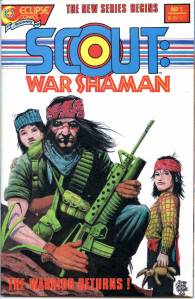
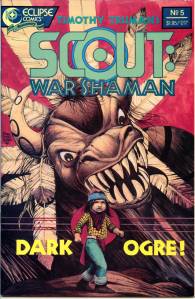
Scout: War Shaman (1988)
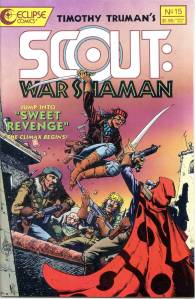
Picking up the main character’s story over a decade after the events of Scout #24, with the lead now a widowed father of two. To promote the new series, retailers were encouraged to create a display for the series in order to win original Truman artwork. The first issue reached #98 on Diamond Comic Distributors‘ chart in January 1988, a solid performance for an Eclipse title. Truman also produced the Scout Handbook, a collection of profiles, maps and other material, while Eclipse collected Scout #1-7 in the trade paperback Scout – The Four Monsters. While War Shaman #2 was delayed due to colourist Sam Parsons falling ill, War Shaman became monthly from #3. Scout: War Shaman #8-9 featured the character Beau La Duke (a fictionalized version of Eclipse sales manager Beau Smith), who then appeared in a backup strip in #14-16. As planned by Truman, the series ended after 16 issues, ending with Rosa killing Scout. Truman stated that Santana would not be resurrected, with the series instead slated to continue with the wider supporting cast he had built up.