The Goon is written and drawn by Eric Powell. The series mixes both a comical and violent atmosphere with a supernatural slant, which pit the titular character against undead creatures/zombies, ghosts, ghouls, mutants, skunk-apes with an unnatural hunger for pies, giant squids, mob/gang leaders, extra-dimensional aliens, mad scientists and robots.
Paul Levitz returned to write the series with #284. Pat Broderick and Bruce Patterson illustrated the title for a short time before Keith Giffen began on pencils, with Patterson, and then Larry Mahlstedt, on inks. The creative team received enhanced popularity following “The Great Darkness Saga“, which ran from #287; #290–294; and Annual #3, featuring a full assault on the United Planets by Darkseid. Comics historian Les Daniels observed that “Working with artist Keith Giffen, Levitz completed the transformation of Legion into a science-fiction saga of considerable scope and depth.”
The Legion celebrated issue #300 (June 1983) by revisiting the “Adult Legion” storyline through a series of parallel world short stories illustrated by a number of popular Legion artists from previous years. The story served to free up Legion continuity from following the “Adult Legion” edict of previous issues.
Legion of Super-Heroes #294 NM- $8Legion of Super-Heroes #303 NM- $3Legion of Super Heros Annual #3 VF-NM $3Tales of the Legion of Super-Heroes #316 VF $3
The Fantastic Four debuted in The Fantastic Four #1 (Nov. 1961), which helped to usher in a new level of realism in the medium. The Fantastic Four was the first superhero team created by writer-editor Stan Lee and artist/co-plotter Jack Kirby, who developed a collaborative approach to creating comics with this title that they would use from then on. As the first superhero team title produced by Marvel Comics, it formed a cornerstone of the company’s 1960s rise from a small division of a publishing company to a pop culture conglomerate.
Fantastic Four #38 G $24Fantastic Four #41 FN+ $60Fantastic Four #58 CGC 8.0 White Pages $195Fantastic Four #59 VF+ $125Fantastic Four #60 VF- $74Fantastic Four #61 VF- $75Fantastic Four #66 FN $95Fantastic Four #77 VF $70Fantastic Four #78 VF+ $75Fantastic Four #83 VF- $30
Eightball is an alternative comic book series written and drawn by Daniel Clowes. The first issue was published by Fantagraphics Books in 1989, soon after the end of Clowes’s previous comic series, Lloyd Llewellyn. It has consistently been among the best-selling independently authored comics.
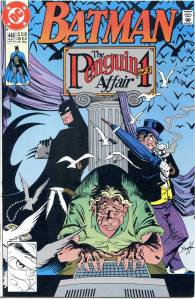
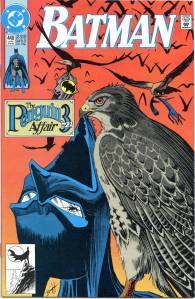
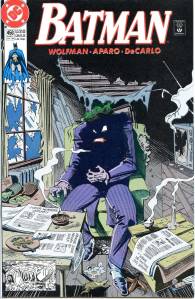
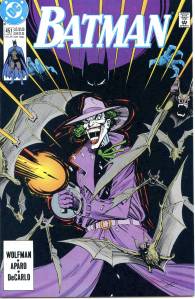
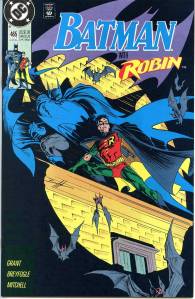
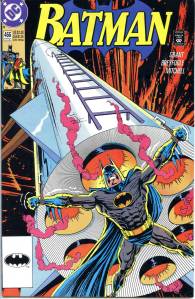
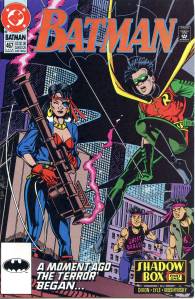
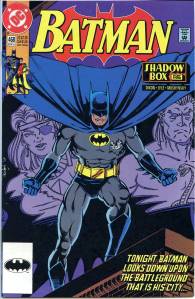
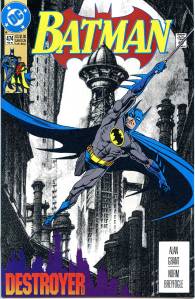
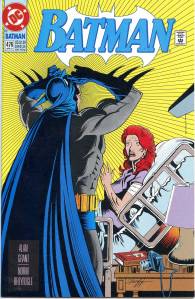
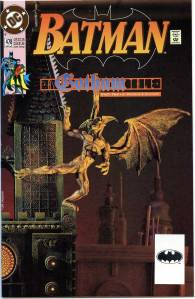
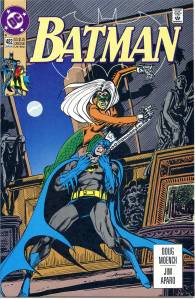
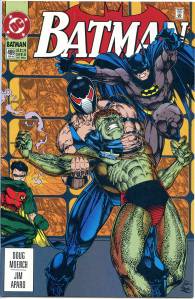
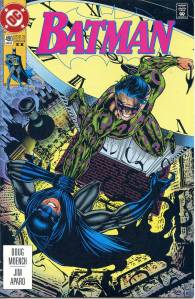
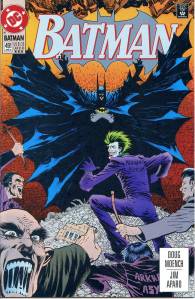
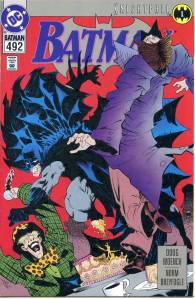
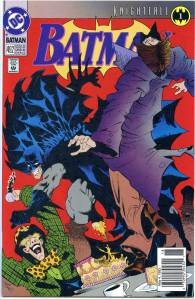
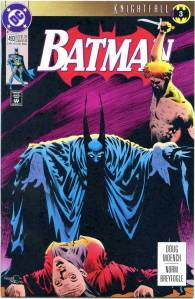
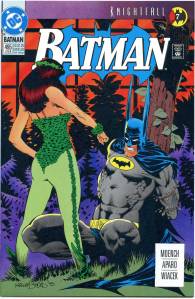
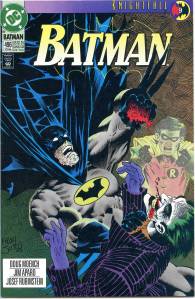
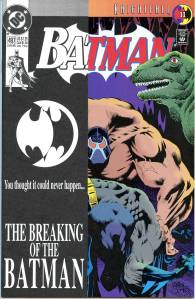
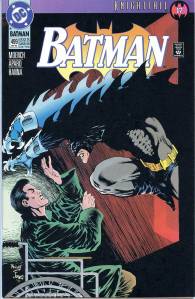
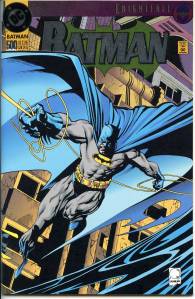
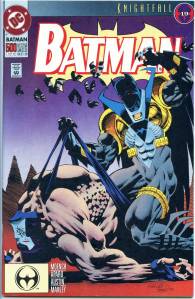
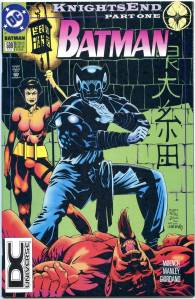
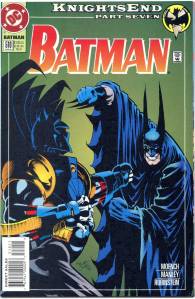
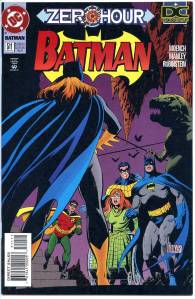
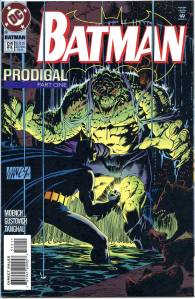
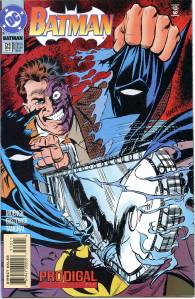
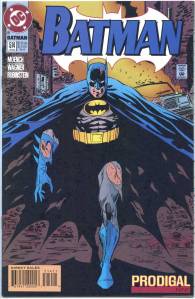
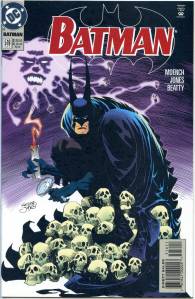
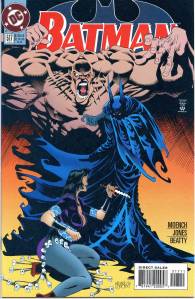
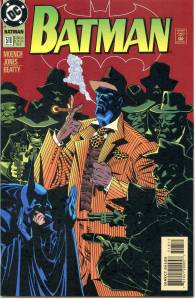
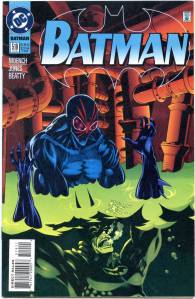
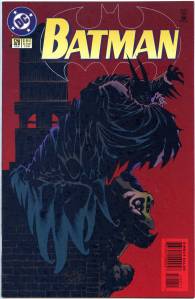
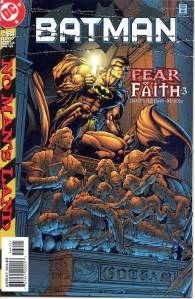
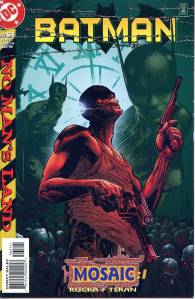
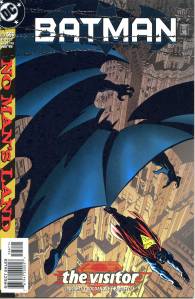
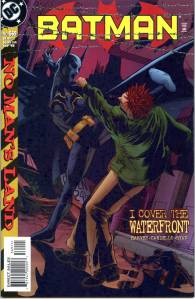
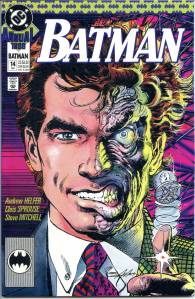
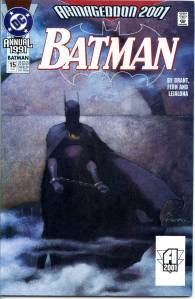
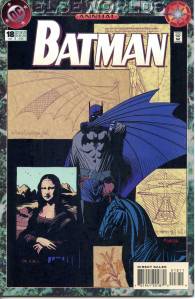
Writer Dennis O’Neil and artist Neal Adams had their first collaboration on Batman on the story “The Secret of the Waiting Graves” in issue #395 (Jan. 1970). The duo, under the direction of Schwartz, would revitalize the character with a series of noteworthy stories reestablishing Batman’s dark, brooding nature and taking the books away from the campy look and feel of the 1966–68 ABCTV series. Comics historian Les Daniels observed that “O’Neil’s interpretation of Batman as a vengeful obsessive-compulsive, which he modestly describes as a return to the roots, was actually an act of creative imagination that has influenced every subsequent version of the Dark Knight.” Adams introduced the Man-Bat with writer Frank Robbins in Detective Comics #400 (June 1970). O’Neil and artist Bob Brown crafted Batman’s first encounter with the League of Assassins in Detective Comics #405 (Nov. 1970) and created Talia al Ghul in issue #411 (May 1971).
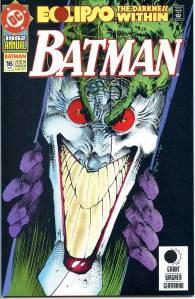
After publishing on a monthly schedule throughout its run, Detective Comics became a bi-monthly book from issues #435 (June–July 1973) to #445 (Feb.-March 1975). Issues #438 (Dec. 1973-Jan. 1974) to #445 (Feb.–March 1975) of the series were in the 100 Page Super Spectacular format. O’Neil and artist Dick Giordano created the Batman supporting character Leslie Thompkins in the story “There Is No Hope in Crime Alley” appearing in issue #457 (March 1976). Writer Steve Englehart and artist Marshall Rogers produced an acclaimed run of Batman stories in Detective Comics #471–476 (Aug. 1977 – April 1978), and provided one of the definitive interpretations that influenced the 1989 Batman movie and would be adapted for the 1990s animated series. The Englehart and Rogers pairing, was described in 2009 by comics writer and historian Robert Greenberger as “one of the greatest” creative teams to work on the Batman character. In their story “The Laughing Fish”, the Joker is brazen enough to disfigure fish with a rictus grin, then expects to be granted a federal trademark on them, only to start killing the bureaucrats who try to explain to him that obtaining such a claim on a natural resource is legally impossible. Writer Len Wein and Rogers co-created the third version of the supervillain Clayface in Detective Comics #478 (July–Aug. 1978). The original Katherine Kane also known as “Batwoman” was killed in the lead story in issue #485 (Aug.–Sept. 1979) by the League of Assassins.
Groo was one of the first widely successful creator-owned comics, one of the few successful humorous comic books (outside Archie Comics) during its time, and one of the longest-running collaborations in comic book history. In 2011 IGN ranked Groo 100th in the “Top 100 comic books heroes”.
Aragonés and Evanier negotiated a deal with Epic Comics, an imprint of Marvel Comics, for that company to take care of publication while preserving creator rights. This resulted in the longest run of Groo the Wanderer with 120 issues. In 1994, with Marvel facing financial difficulties, the title switched to Image Comics and was retitled Groo. (In the first issue Groo remarks “The marvels of the world are but images before me.”)
When Image in turn faced legal problems after publishing twelve issues, the title switched to Dark Horse Comics in 1998. Dark Horse is not publishing the title as a regular series, but is periodically releasing new material and reprints as mini-series and collections.
The series centers around the fictional town of Buckaroo, Oregon, which has produced sixteen of the United States’ worst serial killers. Its most recent creation is Edward Charles Warren, otherwise known as “Nailbiter” due to his predilection for chewing off his victim’s nails and part of their flesh. By the series’s start Warren has been caught by FBI agent Charles Carroll, however Carroll has since gone missing, leaving it up to his friend and NSA agent Nicholas Finch to search for him. Nicholas decides to start his search in Buckaroo, where he begins to question why the small town has produced so many murderers.
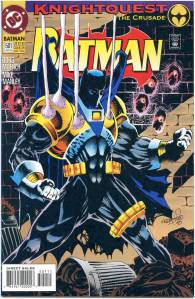
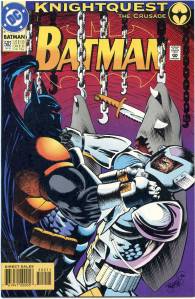
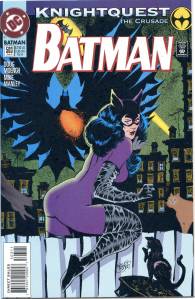
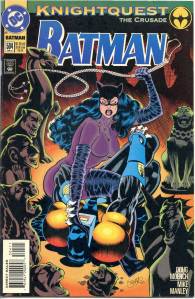
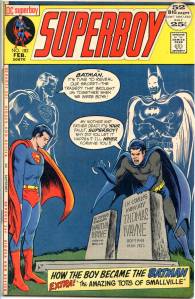
By 1964, sales of Batman titles had fallen drastically. Bob Kane noted that, as a result, DC was “planning to kill Batman off altogether”. In response to this, editor Julius Schwartz was assigned to the Batman titles. He presided over drastic changes, beginning with 1964’s Detective Comics #327 (May 1964), which was cover-billed as the “New Look”. Schwartz introduced changes designed to make Batman more contemporary, and to return him to more detective-oriented stories. He brought in artist Carmine Infantino to help overhaul the character. The Batmobile was redesigned, and Batman’s costume was modified to incorporate a yellow ellipse behind the bat-insignia. The space aliens, time travel, and characters of the 1950s such as Batwoman, Ace, and Bat-Mite were retired. Bruce Wayne’s butler Alfred was killed off (though his death was quickly reversed) while a new female relative for the Wayne family, Aunt Harriet, came to live with Bruce Wayne and Dick Grayson.
Batman #168 CGC 7.0 Off-White to White Pages $129Batman #180 FN+ $45Batman #201 VG- $18Batman #213 VF $89
With a civilian life as a married man, the Spider-Man of the 1990s was different from the superhero of the previous three decades. McFarlane left the title in 1990 to write and draw a new series titled simply Spider-Man. His successor, Erik Larsen, penciled the book from early 1990 to mid-1991. After issue #350, Larsen was succeeded by Mark Bagley, who had won the 1986 Marvel Tryout Contest and was assigned a number of low-profile penciling jobs followed by a run on New Warriors in 1990. Bagley penciled the flagship Spider-Man title from 1991 to 1996.
Issues #361-363 (April–June 1992) introduced Carnage, a second symbiote nemesis for Spider-Man. The series’ 30th-anniversary issue, #365 (Aug. 1992), was a double-sized, hologram-cover issue with the cliffhanger ending of Peter Parker’s parents, long thought dead, reappearing alive. It would be close to two years before they were revealed to be impostors, who are killed in #388 (April 1994), scripter Michelinie’s last issue. His 1987–1994 stint gave him the second-longest run as writer on the title, behind Stan Lee.
Star Wars: Legacy is set over 126 years after the film Return of the Jedi. The comics feature Cade Skywalker, a descendant of Luke Skywalker, who was trained as a Jedi, but abandoned the order. He apprenticed himself to the pirate Rav and lives among bounty hunters, smugglers and pirates. Cade also dropped his last name. The series begins with an attack on the Jedi Temple and the overthrow of the Galactic Alliance by the One Sith order.
After a great and furious struggle, Cade and his friends manage to kill the evil Sith emperor, Darth Krayt. However, even without their leader, the Sith remain a powerful danger.