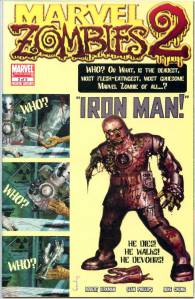
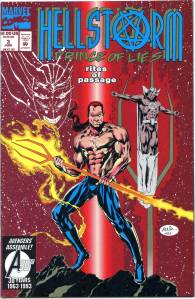
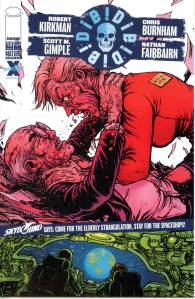
Forty years have passed and the zombies have come back home after eating just about everything else in the universe. Yum yum! What awaits them back on Earth, though, is beyond anything even these shambling monstrosities could have conceived! This is a new series featuring the amazing, irreverent take on the Marvel characters that became last year’s unexpected smash hit. They’re back and more stomach-churning than ever! The smash hit series is back, daring to ask: “Whose stomach are you in?”
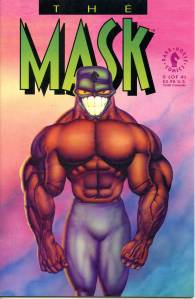
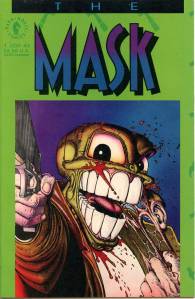
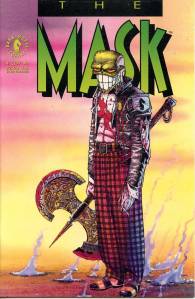
The base concept of The Mask was created by Mike Richardson in 1982. It first saw life as a single sketch he drew in 1985 for APA-5, an amateur press publication created by writer Mark Verheiden. After starting Dark Horse Comics, Richardson pitched his concept to Marvel Comics comic book writer/artist Mark Badger. The outcome was the Masque strip, that ran in the early issues of Dark Horse Presents. Badger’s strips became increasingly political, and Richardson ended the strip in order to bring the character back to his original concept.
Artist Chris Warner was hired to revamp the character based on Richardson’s original APA-5 drawing and created the definitive look for the character, that was given a new launch in 1989 in the pages of Dark Horse’s Mayhem anthology. Aspiring writer John Arcudi and artist Doug Mahnke were hired to create the new adventures, which became the first very popular use of the character, “a combination of Tex Avery and The Terminator“. The Mask stories from Mayhem #1-4 were later collected as the 1991 issue The Mask #0 and in a trade paperback collection as well.
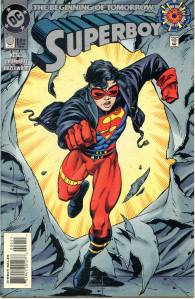
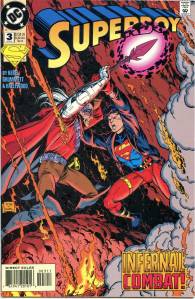
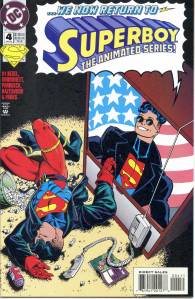
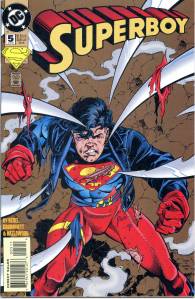
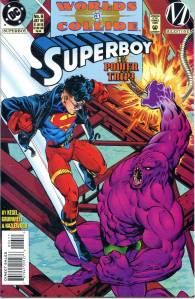
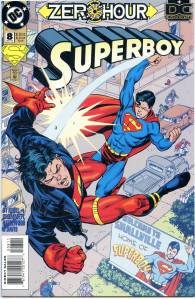
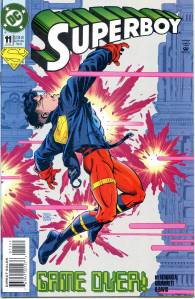
This series featured the clone of Superman and his adventures as part of Cadmus. In Superboy (vol. 4) #1 (February 1994), the new Superboy settled in Hawaii with his supporting cast, becoming Hawaii’s resident superhero for the next four years until Superboy (vol. 4) #48 (February 1998). Starting in Superboy (vol. 4) #56 (November 1998), Superboy returned “home” when he began working for Cadmus. In Superboy (vol. 4) #59 (February 1999), Superman gave Superboy the Kryptonian name of Kon-El. After leaving Cadmus and living on his own for a brief time in Metropolis, Kon-El went to live with Jonathan and Martha Kent in Smallville, where he adopted a secret identity as their nephew (and Clark’s cousin) Conner Kent.
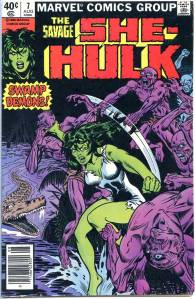
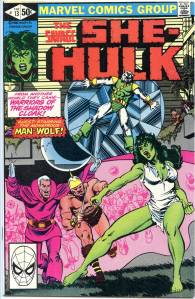
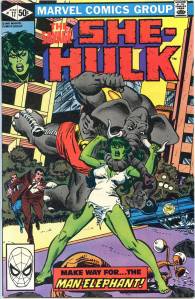
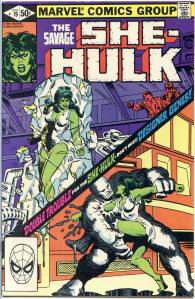
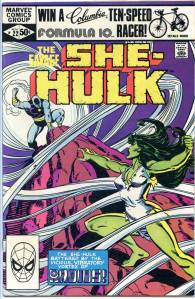
Jennifer Walters, the cousin of Bruce Banner (Hulk), is the small and somewhat shy daughter of Los Angeles County Sheriff William Morris Walters and Elaine (née Banner) Walters (who died in a car crash when Jennifer was seventeen). Operatives of Nicholas Trask, a crime boss who had crossed paths with her father, shot and seriously wounded her on a day that Bruce Banner happened to be in town for a visit. Since no other donors with her blood type were available, Banner provided his own blood for a transfusion; as they already shared the same blood type and DNA, his radioactive blood, combined with her anger transformed Jennifer into the green-skinned She-Hulk when the mobsters tried to finish her off at the hospital.
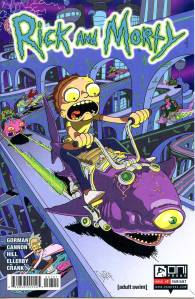
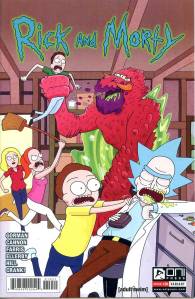
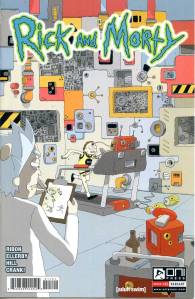
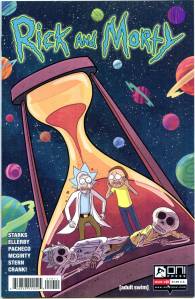
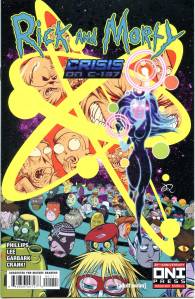
On April 1, 2015, a Rick and Morty comic book adaptation debuted with its first monthly issue, entitled “BAM!” The series is written by Zac Gorman and illustrated by CJ Cannon.[71] Artist Tom Fowler wrote a multi-issue story arc that began in March 2016. Using the television series’ established premise of alternate timelines, the comic book expressly features the Rick and Morty (and supporting cast) of a different timeline, allowing the comics to tell stories without conflicting with the canon of the show.
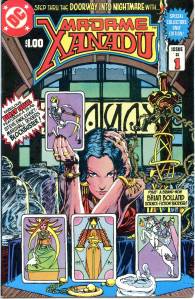
Step thru the doorway into nightmare with Madame Xanadu in the 25-page “Dance For Two Demons.” Script by Steve Englehart, art by Marshall Rogers. Madame Xanadu centerfold by Michael W. Kaluta. Plus: A disease that transforms and corrupts is explored in the 7-page science fiction tale “Falling Down to Heaven…” Script by J.M. DeMatteis, art by Brian Bolland. Cover by Michael W. Kaluta.
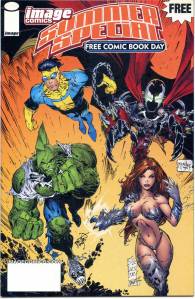
Cover by Todd McFarlane, Erik Larsen, Marc Silvestri and BATT. Free Comic Book Day 2004. Contains: “The Curse of Spawn”, “Witchblade First Strike” by Robert Place Napton with art by Francis Manapul, “Invincible” by Robert Kirkman with art by Ryan Ottley, “Savage Dragon Power Shortage” by Erik Larson.
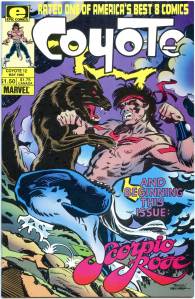
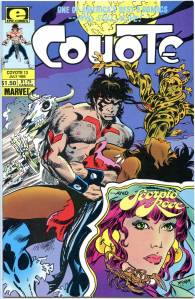
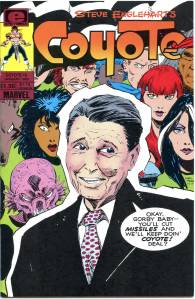
The characters first appeared in Eclipse Magazine #2-8. It would later be reprinted in a color trade paperback, I Am Coyote. Afterwards, a new comic book series started at Marvel ComicsEpic Comics line, that ran 16 issues. It was notable for the first published work of Todd McFarlane. According to Epic editor-in-chief Archie Goodwin, artist Steve Leialoha‘s departure after issue #2 caused deadline problems that the series never fully recovered from, leading to its early cancellation.
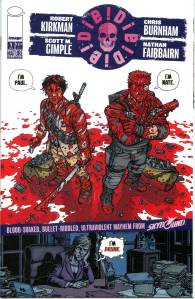
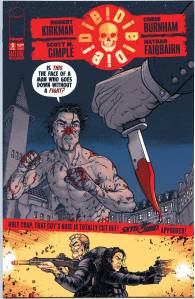
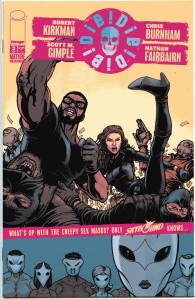
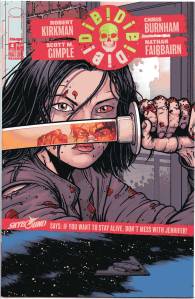
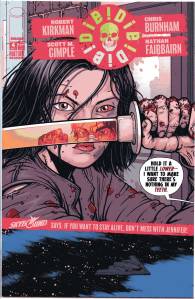
Die!Die!Die! was created and is written by Robert Kirkman with co-writer Scott M. Gimple, artist Chris Burnham and colorist Nathan Fairbairn. It is a blood-soaked, no holds barred, action-packed, irreverent story that fans won’t be able to rip their eyes from. We live in an evil world where evil people do evil stuff all the time and Die!Die!Die! lifts the veil on a secret cabal within the United States government that influences world matters through targeted assassination.