Steve Gerber’s posthumous Man-Thing story “The Screenplay of the Living Dead Man”, with art by Kevin Nowlan, originally planned as a 1980s graphic novel before being left uncompleted by the artist, was revived in the 2010s and appeared as a three-issue miniseries cover-titled The Infernal Man-Thing (Early Sept.-Oct. 2012). The story was a sequel to Gerber’s “Song-Cry of the Living Dead Man” in Man-Thing #12 (Dec. 1974).
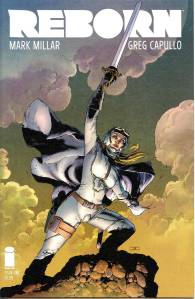
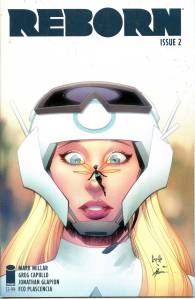
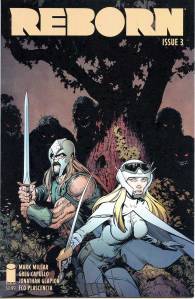
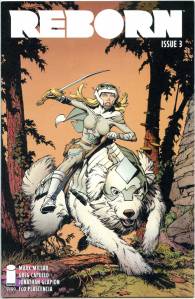
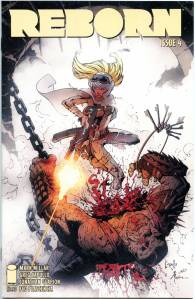
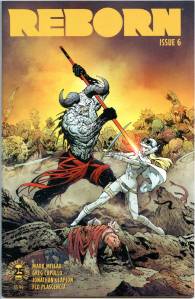
Mark Millar & Greg Capullo join forces to create the smash hit sci-fi / fantasy story: REBORN. Where do you go when you die? Not heaven or hell; somewhere else. Somewhere you have to fight to survive. Somewhere the people from the past are waiting for you—the good and the bad.
Amazing Spider-Man reverted completely to its original numbering for #500 (Dec. 2003).Mike Deodato, Jr. penciled the series from mid-2004 until 2006. That year Peter Parker revealed his Spider-Man identity on live television in the company-crossover storyline “Civil War“, in which the superhero community is split over whether to conform to the federal government’s new Superhuman Registration Act. This knowledge was erased from the world with the event of the four-part, crossover story arc, “One More Day“, written partially by J. Michael Straczynski and illustrated by Joe Quesada, running through The Amazing Spider-Man #544-545 (Nov.-Dec. 2007), Friendly Neighborhood Spider-Man #24 (Nov. 2007) and The Sensational Spider-Man #41 (Dec. 2007), the final issues of those two titles. Here, the demonMephisto makes a Faustian bargain with Parker and Mary Jane, offering to save Parker’s dying Aunt May if the couple will allow their marriage to have never existed, rewriting that portion of their pasts. This story arc marked the end of Straczynski’s tenure as writer.
The first series in the line explores the adventures of Will Byers (Noah Schnapp) after he was transported to the horrific extra-dimensional Upside Down at the beginning of season 1. Viewers only saw Will reappear in that season’s finale when he was finally found by his mother Joyce (Winona Ryder), but obviously a lot happened in the interim. This four-issue Stranger Things miniseries — written by Jody Houser, illustrated by Stefano Martino, inked by Keith Champagne, colored by Lauren Affe, and lettered by Nate Piekos — will finally give fans a look at what happened to Will in the Upside Down.
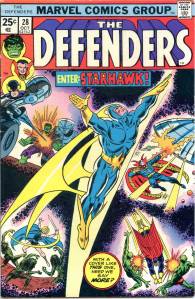
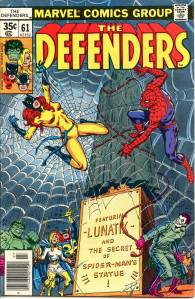
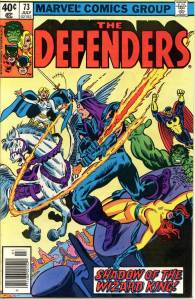
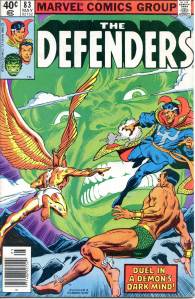
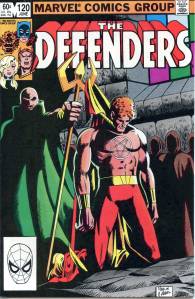
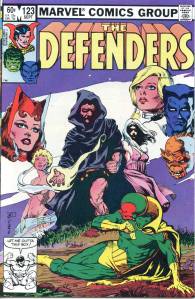
The Defenders had a rotating line-up from 1972 until 1986, with Dr. Strange and the Hulk being more or less constant members along with a number of other mainstays such as Valkyrie, Nighthawk, Hellcat, the Gargoyle, Beast, the Son of Satan and Luke Cage, and a large number of temporary members. The publication was retitled near the end of the run as The New Defenders but featured none of the original members and only Valkyrie, the Beast and the Gargoyle of the former long-term members. The concept was modified in the 1993–95 series Secret Defenders, in which Dr. Strange assembled different teams for each individual mission. Later, the original team were reunited in a short-lived series by Kurt Busiek and Erik Larsen. In the 2000s, Marvel published a new miniseries featuring the classic line-up. Writer Matt Fraction and artist Terry Dodson launched a new Defenders series in December 2011.
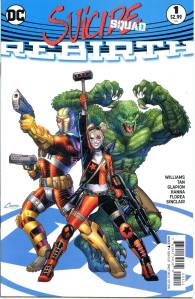
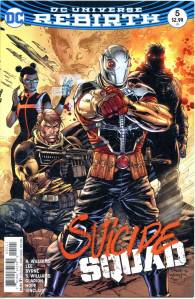
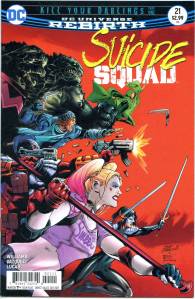
Using the end of the New 52 initiative as a launching point, DC Comics began a second relaunch of its entire line of titles called DC Rebirth in 2016. Suicide Squad (vol. 5) #1 (August 2016) was the debut bimonthly relaunch of the team’s comic book title which consisted of Amanda Waller, Deadshot, Rick Flag, Captain Boomerang, Harley Quinn, Killer Croc, Katana & Enchantress. The Suicide Squad was given a new look, reflecting the team’s appearance in the DC Extended Universe.
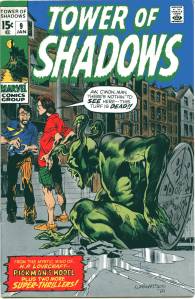
Designed to compete with DC Comics‘ successful launches of House of Mystery and House of Secrets,[2]Tower of Shadows, like its companion comic Chamber of Darkness, sold poorly despite the roster of artists featured. After its first few issues, the title, published bimonthly, began including reprints of “pre-superhero Marvel” monster stories and other SF/fantasy tales from Marvel’s 1950s and early 1960s predecessor, Atlas Comics. After the ninth issue, the title changed to Creatures on the Loose, and the comic became a mix of reprints and occasional sword and sorcery/SF series.
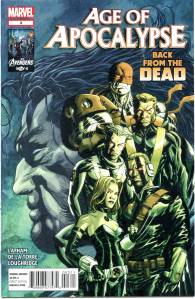
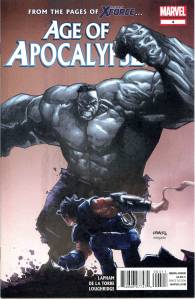
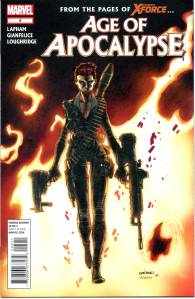
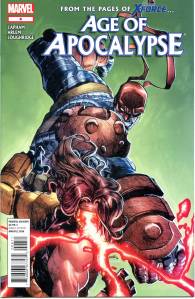
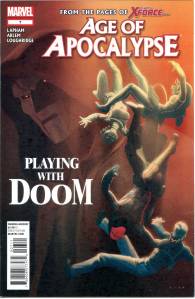
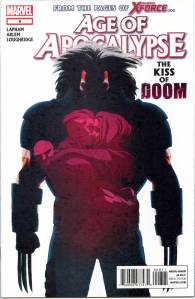
Jean Grey and Sabretooth return to Earth 616. Weapon X and his Black Legion attack the last human city where Weapon X slays both Magneto and Rogue, leaving Jean Grey and Sabretooth the last two X-Men alive. Jean telepathically nudges clones of the Scarlet Witch to recreate the Decimation and remove all mutants’ powers across the globe. However, this was only successful within a radius of 12 feet, so Jean Grey and Sabretooth are both left de-powered. The human coalition distracts Weapon X with a bomb long enough for the group to escape as the city explodes behind them. Harper Simons joins with the human team, the X-Terminated. Others who work with the X-Terminated are Doctor Moreau and Bolivar Trask.
When the children of Archer’s Peak—a sleepy town in the heart of America—begin to go missing, everything seems hopeless. Most children never return, but the ones that do have terrible stories—impossible details of terrifying creatures that live in the shadows. Their only hope of finding and eliminating the threat is the arrival of a mysterious stranger, one who believes the children and claims to be the only one who sees what they can see. Her name is Erica Slaughter. She kills monsters. That is all she does, and she bears the cost because it must be done.
Something is Killing the Children #11 NM $5
Something is Killing the Children #12 NM $5
Something is Killing the Children #19 NM $4
Something is Killing the Children #22B NM $5
Something is Killing the Children #22C NM $5
Something is Killing the Children #24 NM $4
Something is Killing the Children #25 NM $4
Something is Killing the Children #25 B NM $5
Book of Slaughter #1 Virgin Variant NM $12
Book of Butcher #1 Virgin Variant NM $9
Something is Killing the Children #28 Battle Damage Variant NM $29