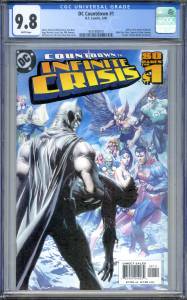
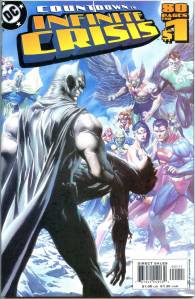
Infinite Crisis (2005)

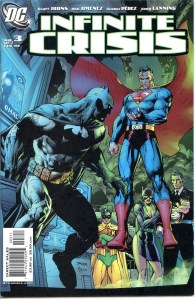
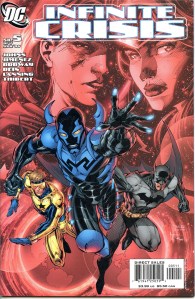
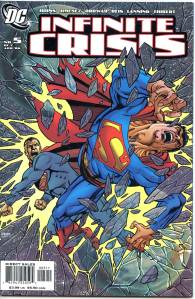
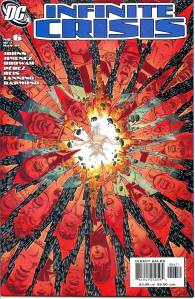
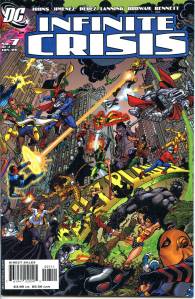
“Infinite Crisis” is a 2005–2006 comic book storyline published by DC Comics, consisting of an eponymous, seven-issue comic book limited series written by Geoff Johns and illustrated by Phil Jimenez, George Pérez, Ivan Reis, and Jerry Ordway, and a number of tie-in books. The main miniseries debuted in October 2005, and each issue was released with two variant covers: one by Pérez, and one by Jim Lee and Sandra Hope.

The series storyline was a sequel to DC’s 1985 limited series Crisis on Infinite Earths, which “rebooted” much of the DC continuity in an effort to fix 50 years of contradictory character history. It revisited characters and concepts from that earlier Crisis, including the existence of DC’s Multiverse. Some of the characters featured were alternate versions of comic icons such as an alternate Superman named Kal-L, who came from a parallel universe called Earth-Two. A major theme was the nature of heroism, contrasting the often dark and conflicted modern-day heroes with memories of “lighter” and ostensibly more noble and collegial heroes of American comic books’ earlier days.
Marvel Tales – Atlas (1949)

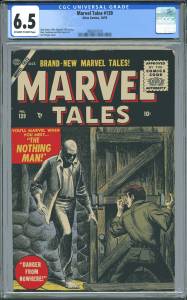
The first Marvel Tales was the direct continuation of the superhero anthology Marvel Mystery Comics, published by Marvel Comics‘ initial iteration, Timely Comics. This series ran through issue #92 (cover-dated June 1949). Beginning with issue #93 (Aug. 1949), it became Marvel Tales, an anthology of horror, fantasy, and science fiction stories. The bulk of this series was published under the company name Atlas Comics.
Marvel Tales included among its contributors writer and editor-in-chief Stan Lee and such comics artists as Golden Age veterans Harry Anderson, Carl BurgosBill EverettFred KidaMike SekowskySyd Shores, and Ogden Whitney, and, early in their careers, Dick AyersGene ColanTony DiPretaMort DruckerRuss HeathBernard KrigsteinJoe ManeelyJoe Sinnott, and Basil Wolverton, among others. Issue #147 featured one of Steve Ditko‘s first stories for Marvel, “The Vanishing Martians”. The series ran 67 issues under the new title, through #159 (Aug. 1957). It ended because of the collapse of Atlas’s distributor, American News Company, and the subsequent restructuring that limited the number of comics the company could publish in a month.

An issue of Marvel Tales was included in a display of covers representative of the “Crime, Horror & Weird Variety” at the April 1954 hearings of the United States Senate Subcommittee on Juvenile Delinquency.

Strangers in Paradise V3 (1996)

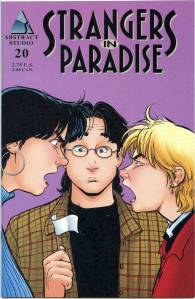
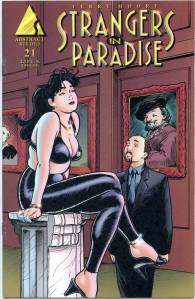
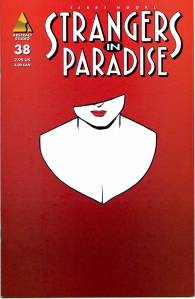
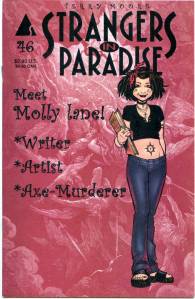
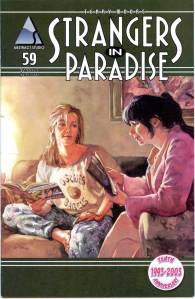
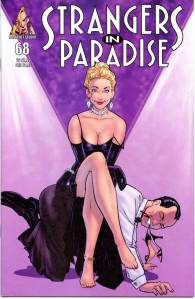
Strangers in Paradise is the entertaining and poignant look at the relationship of two young women and the twists and turns that life throws at them. Francine and Katchoo are high-school best friends who are reunited when Francine comes back to town after years away from her hometown. David is their new friend entangled in their complicated lives. From creepy ex-boyfriends and insensitive bosses to the reality of AIDS and underworld prostitution, you never know what will come up next – but you can always count on laughing and crying at the same time.

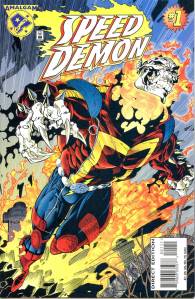
Amalgam Comics (1996)

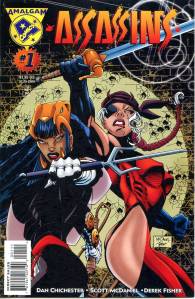
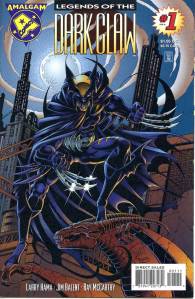
On two separate occasions – April 1996 and June 1997 – Marvel and DC co-published issues under the Amalgam Comics imprint. The issues were presented as if the imprint had existed for decades, with stories and editorial comments referring to a fictional history stretching back to the Golden Age of Comics, including retcons and reboots. For example, they referred to Secret Crisis of the Infinity Hour (an amalgamation of Marvel’s Secret Wars, DC’s Crisis on Infinite Earths, Marvel’s The Infinity Gauntlet, and DC’s Zero Hour), which featured the well-known cover of Crisis on Infinite Earths #7, but with Super-Soldier holding his sidekick’s body, instead of Superman holding Supergirl. Several issues included fake letter columns to provide the illusion of background to the stories, with the “fans'” hometowns formed by amalgamating the names of existing cities.

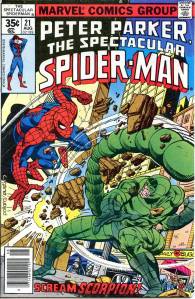
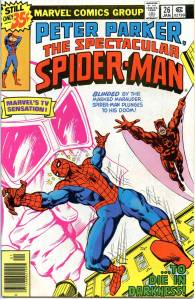
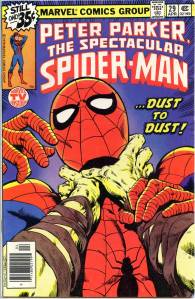
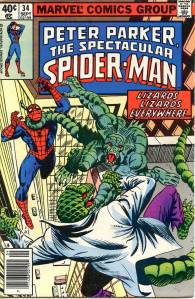
Spectacular Spider-Man V1 (1976)

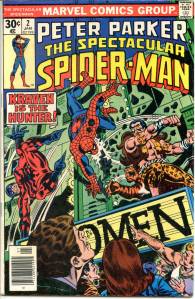
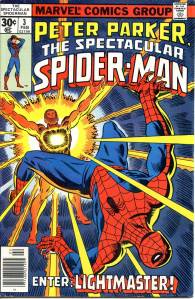
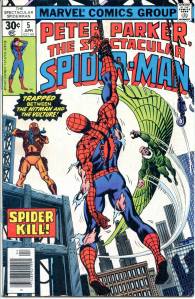
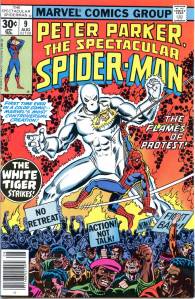
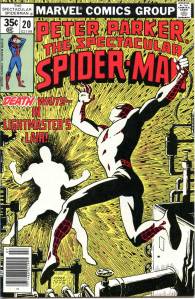
 Peter Parker, The Spectacular Spider-Man debuted on December 1976. Shortened to simply The Spectacular Spider-Man with #134 (Jan. 1988), this was the second Amazing Spider-Man monthly comic-book spin-off series, after Marvel Team-Up, which also featured Spider-Man. The monthly title ran 264 issues (including a #-1 issue) until November 1998.

The series was launched by writer/editor Gerry Conway and artist Sal Buscema and Mike Esposito. Buscema drew the title until mid-1978. After Buscema’s departure, a succession of artists (including Mike Zeck, Jim Mooney, Ed Hannigan and Greg LaRocque) penciled the series for approximately five years. Frank Miller, who would later become the artist on Daredevil, first drew the character in Peter Parker, The Spectacular Spider-Man #27.

Gideon Falls (2018)

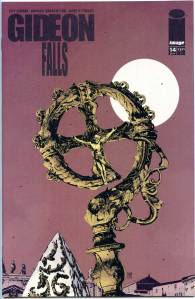
Jeff Lemire set out to create an intelligent horror story, not one driven by gore, but by exploring the nature of evil. Sorrentino described the central character, Norton Sinclair, as inheriting the worst from himself and Lemire—nihilism from Sorrentino and obsession from Lemire. Norton is based off a character Lemire originally created in 1996 for a short film during film school in Toronto. The Black Barn from the series was somewhat inspired by the Black Lodge from Twin Peaks, though Lemire assures readers he’s going somewhere very different with the concept. The story came from two separate stories that weren’t working on their own, but finally clicked when Lemire put them together.

Challengers of the Unknown (1960’s)

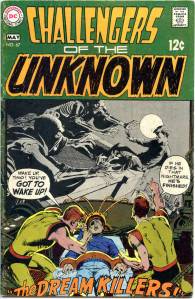
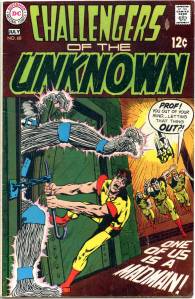
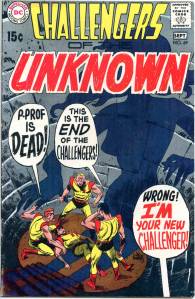
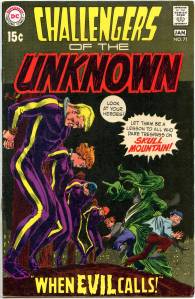
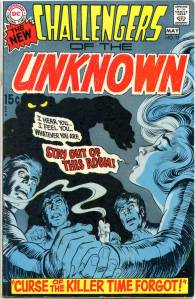
The Challengers of the Unknown is a fictional group of adventurers appearing in comic books  published by DC Comics. The quartet of adventurers explored paranormal occurrences while facing several fantastic menaces. The characters were created by Joe Simon and JJack Kirby during the end of their company, Mainline Comics. Following the end of the Challengers comic, DC has revived the characters in different incarnations over the years. Some have claimed that Kirby reworked the basic concept of the series with Stan Lee in 1961 to create The Fantastic Four, the first creation that marked the rise of Marvel Comics.

Grendel – Red, White & Black (2002)

The second Grendel anthology, in the tradition of the multiple Eisner Award-winning Grendel: Black, White, & Red. Each written by the Devil’s acclaimed creator, Matt Wagner, these short stories are vignettes of the devious misdeeds of Hunter Rose, the first incarnation of Grendel. The tales are illustrated in stark black, white, and blood red by some of the top talents in comics, including Zander Cannon, Andy Kuhn, Ashley Wood, Tom Fowler, Mike Huddleston, Cliff Chiang, John K. Snyder, and more.


Unity (1992)

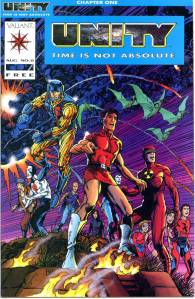
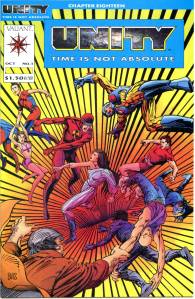
Unity is a company-wide crossover published by Valiant Comics in 1992, featuring all of their ongoing superhero titles at the time. This includes the RenegadesMagnus, Robot FighterRaiShadowmanSolar, Man of the AtomTurok, and X-O Manowar. The crossover also introduced new books for Archer & Armstrong and Eternal Warrior. The central antagonist is Mothergod, who attempts to rewrite reality and restore her original universe. This conflict leads to Valiant heroes of both the 21st Century and the 41st Century coming together for the first time.

Batman: The Killing Joke (1988)

Batman: The Killing Joke is a 1988 DC Comics one-shot graphic novel featuring the characters Batman and the Joker written by Alan Moore and illustrated by Brian BollandThe Killing Joke provides an origin story for the supervillain the Joker, loosely adapted from the 1951 story “The Man Behind the Red Hood!“, which was written by Batman co-creator Bill Finger. The Joker’s origin is presented via flashback, while simultaneously depicting his attempt to drive Jim Gordon insane and Batman’s desperate attempt to stop him.

Created by Moore, Bolland, and Higgins as their own take on the Joker’s source and psychology, the story became famous for its origin of the Joker as a tragic character; a family man and failed comedian who suffered “one bad day” that finally drove him insane. Moore stated that he attempted to show the similarities and contrasts between Batman and the Joker. The story’s effects on the mainstream Batman continuity also included the shooting and paralysis of Barbara Gordon (a.k.a. Batgirl), an event that eventually leads her to develop the identity of Oracle, secret data broker for the DC Universe‘s superhero community and leader of the superhero team Birds of Prey.