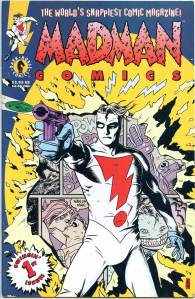
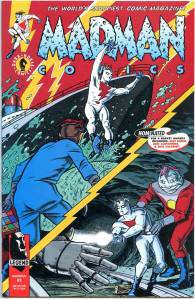
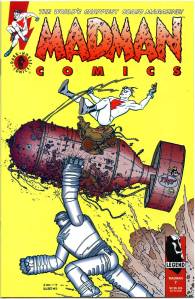
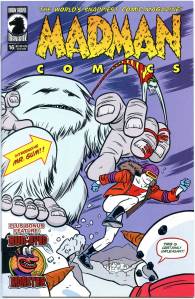
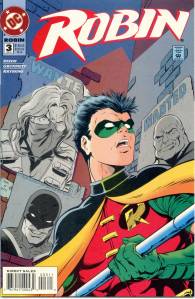
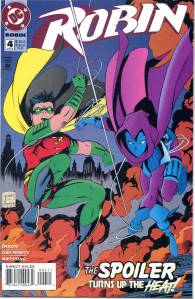
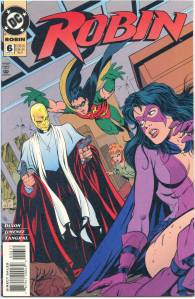
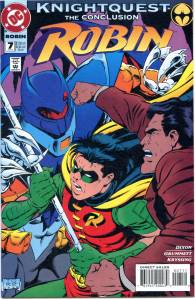
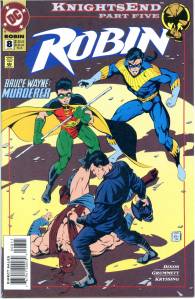
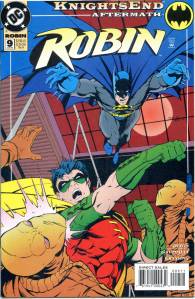
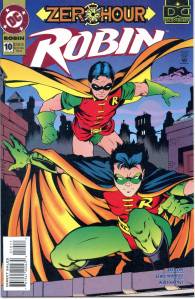
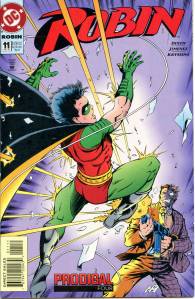
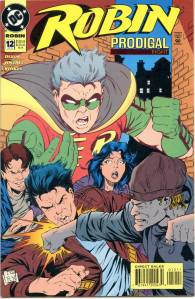
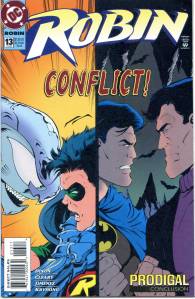
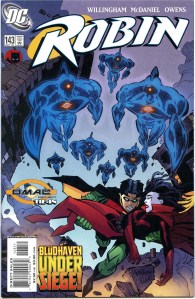
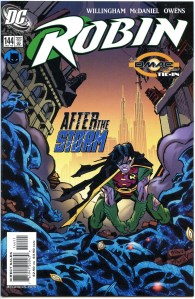
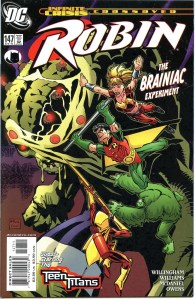
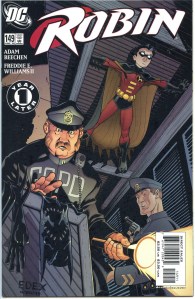
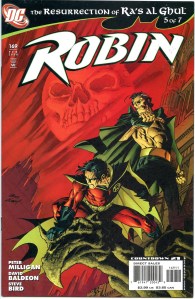
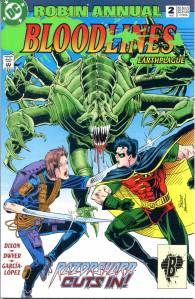
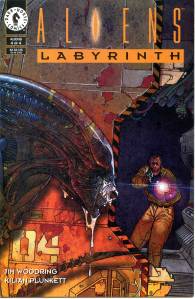
This is it! The all-new, all-exciting, bimonthly continuing series makes its triumphant return to the racks! Thrilling stories, brilliant art — this is the one, folks! The comic-book event of the decade! In fact, this is the comic-book series you’ll be telling your grandkids about.
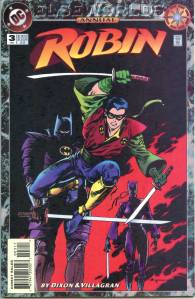
In 1993, the success of the three Robin miniseries led to the ongoing Robin series which ran 183 issues until 2009 and helped his transition from sidekick to a superhero in his own right. In 2004 storylines, established DC Comics character Stephanie Brown became the fourth Robin for a short while before the role reverted to Tim Drake. Batman’s son Damian Wayne then succeeds Drake as Robin in the 2009 story arc “Battle for the Cowl“, until his death in 2013 story. Following the 2011 continuity reboot “The New 52“, Tim Drake is revised as having assumed the title Red Robin out of deference to the deceased Jason Todd; Jason Todd, as he exists today, operates as the Red Hood and has been slowly repairing his relationship with Batman; Dick Grayson is Nightwing, and later fakes his death to become an undercover operative; and Stephanie Brown is introduced anew as Spoiler once again in the pages of Batman Eternal (2014).
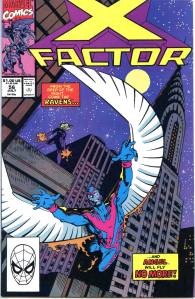
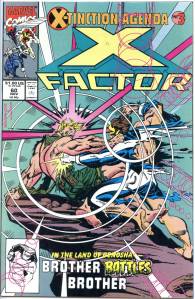
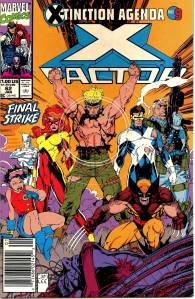
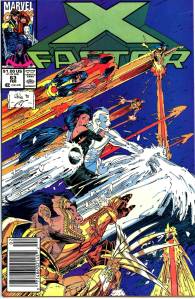
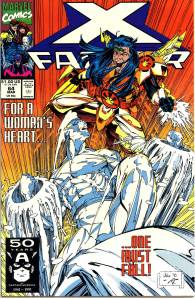
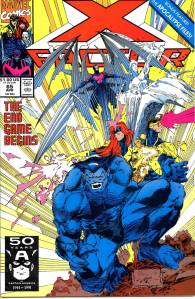
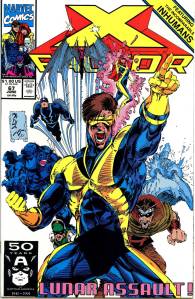
In the last major storyline of the first X-Factor series, published in early 1991, Apocalypse kidnaps Nathan Summers, sensing that he would grow up to be a powerful mutant and possible threat. X-Factor rescue Nathan from Apocalypse’s lunar base, but find him infected with a “techno-organic” virus that cannot be treated. A clan of rebels from the future, known as the Askani, send a representative to the present time to bring Nathan 2,000 years into the future to be treated. Fully grown, he returns to the 20th century as the antihero, Cable.
X-Factor, the X-Men, and several minor characters team up to fight the telepathic Shadow King in another crossover event, The Muir Island Saga. Afterward, the original members of X-Factor rejoin the X-Men and several characters from various X-Men-related series become founding members of a new X-Factor.
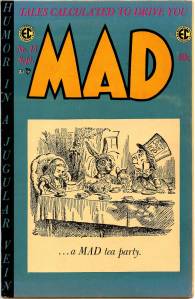
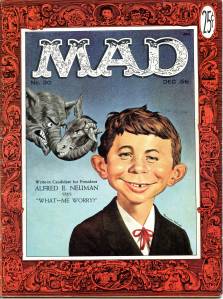
MAD is an American humor magazine founded in 1952 by editor Harvey Kurtzman and publisher William Gaines, launched as a comic book before it became a magazine. It was widely imitated and influential, affecting satirical media as well as the cultural landscape of the 20th century, with editor Al Feldstein increasing readership to more than two million during its 1974 circulation peak. As of January 2017, Mad has published 544 regular issues, as well as hundreds of reprint “Specials,” original material paperbacks, compilation books and other print projects.
mad #15 FN+ $150Mad #30 (1956) 1st Full Alfred E. Neuman cover FN-VF $195Mad #30 FN-VF $195 back cover
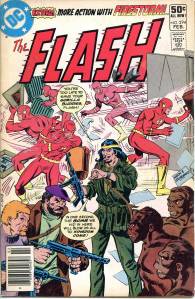
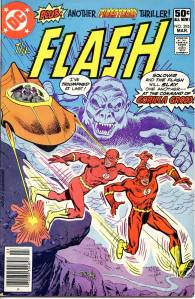
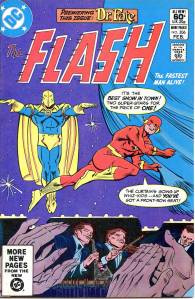
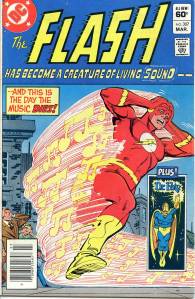
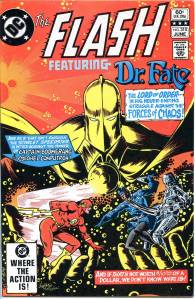
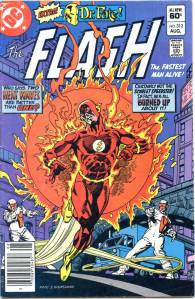
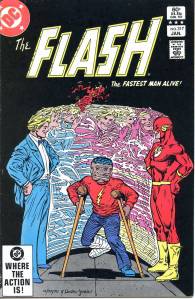
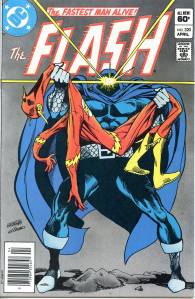
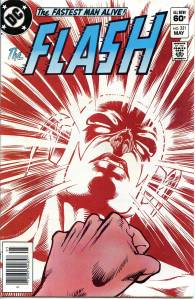
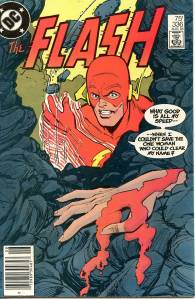
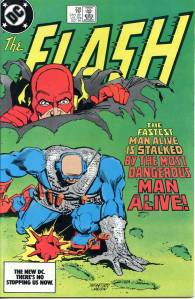
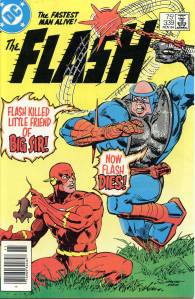
Barry Allen’s adventures continued in his own title until the event of Crisis on Infinite Earths. The Flash ended as a series with issue #350. Allen’s life had become considerably confused in the early 1980s, and DC elected to end his adventures and pass the mantle on to another character. Allen died heroically in Crisis on Infinite Earths #8 (1985). Thanks to his ability to travel through time, he would continue to appear occasionally in the years to come.
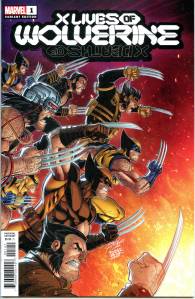
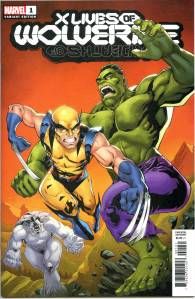
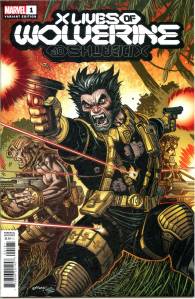
The mutant best known as Wolverine has lived many lives under many identities and in many places, but never before has the fate of the future been so entwined with the past! Fan-favorite eras of Wolverine’s saga are explored anew, along with never-before-seen episodes as Logan must travel to various points in time to prevent the death of a key figure in mutant history. But these LIVES are only one side of the story…
X Lives of Wolverine #1D Variant NM $7X Lives of Wolverine #1E Variant NM $6X Lives of Wolverine #1H Variant NM $6X Lives of Wolverine #2 NM $5X Lives of Wolverine #3 NM $5X Lives of Wolverine #4 NM $5X Lives of Wolverine #5 NM $5
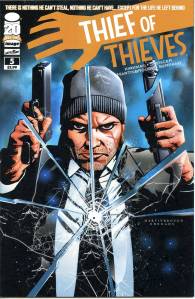
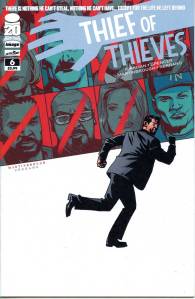
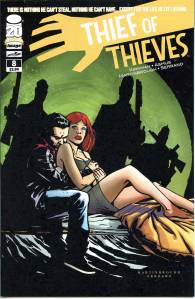
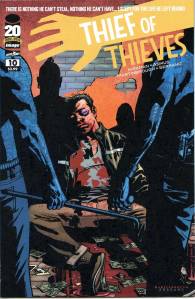
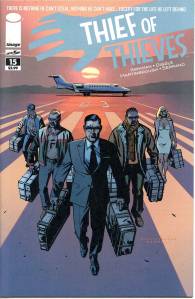
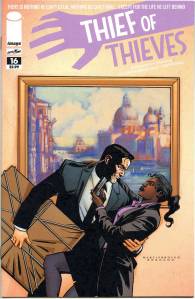
Thief of Thieves is a monthly comic book series published by Image Comics‘ Skybound imprint which premiered in 2012. Created by Robert Kirkman, the comic centers on Conrad Paulson, a highly successful thief who quits the business and begins a new life stealing from other thieves. The series will feature a rotation of writers, including Nick Spencer on the first story arc, and art by Shawn Martinbrough. The first three issues sold out upon release, and a television series based on the comic is in development at AMC.
Thief of Thieves #2 NM $9Thief of Thieves #3 NM $7Thief of Thieves #4 NM $6Thief of Thieves #5 NM $6Thief of Thieves #6 NM $5Thief of Thieves #7 NM $5Thief of Thieves #8 NM $4Thief of Thieves #10 NM $4Thief of Thieves #11 NM $4Thief of Thieves #12 NM $4Thief of Thieves #14 NM $4Thief of Thieves #15 NM $4Thief of Thieves #16 NM $4Thief of Thieves #17 NM $4Thief of Thieves #18 NM $4Thief of Thieves #19 NM $4Thief of Thieves #28 NM $4
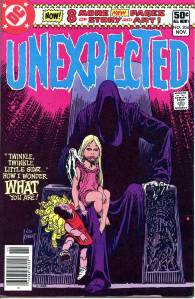
In 1979, The Unexpected converted to the Dollar Comics format and incorporated House of Secrets and The Witching Hour. Each “Unexpected” story would always include the word in its last panel. After the merge, this was only true of the Unexpected section; there would then be complete, ad-free issues of The Witching Hour, hosted by its witches, and The House of Secrets, hosted by Abel. The Witching Hour feature was alternated with Doorway to Nightmare starring Madame Xanadu, which appeared in issues #190, 192, 194, and 195.
Comics-artist contemporary John Severin recalled in an interview conducted in the early 2000s that in the late 1950s, Kirby had approached him to be partners on a syndicated, newspapercomic strip “set in Europe during World War Two; the hero would be a tough, cigar-chomping sergeant with a squad of oddball GIs — sort of an adult Boy Commandos“, referring to a 1940s wartime “kid gang” comics series Kirby had co-created for DC Comics.
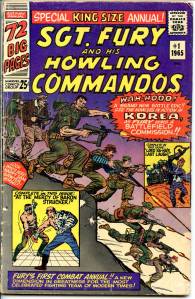
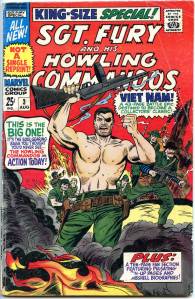
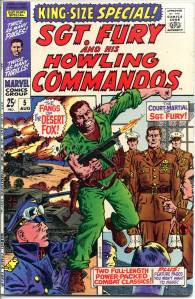
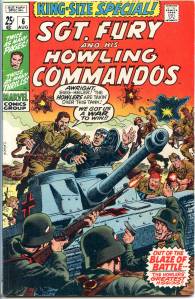
Sgt. Fury and his Howling Commandos followed an elite special unit, the First Attack Squad, nicknamed the “Howling Commandos”, which was stationed in a military base in England to fight missions primarily, but not exclusively, in the European theatre of World War II. Under Captain “Happy Sam” Sawyer, Fury was the cigar-chomping noncom who led the racially and ethnically integrated unit, unusual for the time.
Sgt. Fury and his Howling Commandos Annual #1 G-VG $9Sgt. Fury and HIs Howling Commandos King-Size Special #3 VG $12Sgt. Fury and his Howling Commandos King-Size Special #5 VG-F $8Sgt. Fury and his Howling Commandos King-Size Special #6 F $12
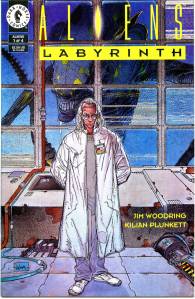
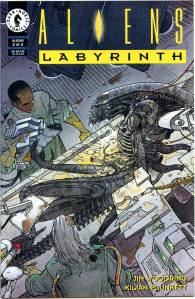
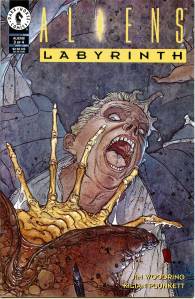
Rabbits, mice, and monkeys have long been the guinea pigs of choice for research scientists everywhere, and since the practice began, it has outraged the general public. So when Colonel Doctor Paul Church switches from animals to Aliens, the public ends their protests and instead praises the good doctor… until his research assistants begin to die of mysterious causes. Only then do they ask the important question: What else is the kind of man who can torture Aliens capable of?
High above earth, aboard space station Innominata, something horrible is happening. And this time, the Aliens are the victims.