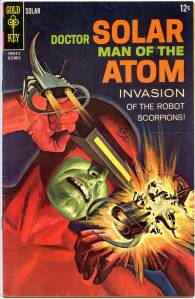
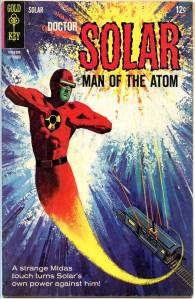
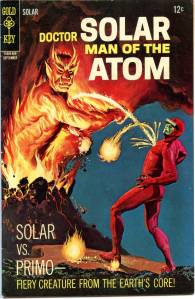
Doctor Solar Man of the Atom – Gold Key (1962)

Doctor Solar premiered in issue #1 of Doctor Solar, Man of the Atom in Summer 1962 (cover date October 1962) in the first batch of comics released by Gold Key, with Solar being Gold Key’s first original character. Though Gold Key did not have as large a distribution network as Dell Comics, the Gold Key comics stood out on the newsstand shelves due to their cover art and a 12 cent price (Dell Comics sold for 15 cents). The first two issues of Solar appeared with cover paintings by Richard M. Powers; beyond the second issue the cover paintings were done by George Wilson. The interior artwork in the first several issues also had unique features: the superhero, Dr. Solar, did not have a costume until the fifth issue, rectangular word balloons and no black holding line around each panel. Following from practise of Dell Comics, and thanks to Western Publishing’s reputation of publishing other children-friendly books, Doctor Solar, Man of the Atom was able to be distributed without the Comics Code Authority symbol. The original creative team of writer Paul S. Newman and artist Bob Fujitani lasted until issue #5 when Frank Bolle took over the art work. With the exception of issue #7 written by Otto Binder, Newman wrote the comic book until issue #10 when Dick Wood took over for the remainder of the series. Other artists that contributed included Mel Crawford, Win Mortimer, Alden McWilliams (issues #20-23), Ernie Colón (issues #24-26), José Delbo (issue #27).
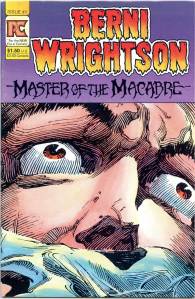
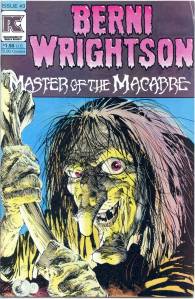
Berni Wrightson: Master of the Macabre (1983)

Berni Wrightson Master of the Macabre was created by Bruce Jones with the full cooperation of the master himself. Originally published by Pacific Comics, it reprints Wrightson’s early horror stories, some of which appear here in color for the first time. The series ended with issue #4 but was briefly continued when it was picked up by Eclipse, which published issue #5.

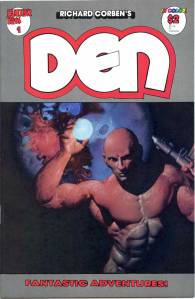
Den (1988)

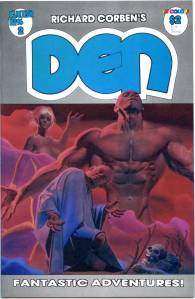
Among the stories Richard Corben had drawn for Heavy Metal he continued the saga of his most famous creation, Den which had begun in the short film Neverwhere (Neil Gaiman used the same title, Neverwhere, later, but the two creations have nothing in common) and a short story in the underground publication Grim Wit No. 2. The saga of Den is a fantasy series about the adventures of a young underweight nerd who travels to Neverwhere, a universe taking inspirational nods from Robert E. Howard‘s Hyborian AgeEdgar Rice Burroughs‘s Barsoom and H. P. Lovecraft‘s horror dimensions. There, the boy becomes an enormously endowed nude muscleman who has erotic adventures in a world of outrageous dangers, hideous monsters, and buxom nude women who lustfully throw themselves at him. This story was adapted in a highly abridged form in the animated film Heavy Metal, where Den was voiced by John Candy in an abbreviated adaptation that involved Corben himself that he felt was satisfactory.

From 1986–1994 Corben operated his own publishing imprint, Fantagor Press. Among the titles Fantagor published were DenDen SagaHorror in the DarkRip in Time, and Son of Mutant World. Fantagor went out of business after the 1994 contraction of the comics industry.

Grimjack (1984)

Grimjack is the main character of a comic book originally published by the American company First ComicsJohn Ostrander and Timothy Truman are credited as co-creators of the character, although Ostrander had been developing Grimjack with artist Lenin Delsol before Truman’s arrival on the project according to Ostrander’s own text piece in Grimjack #75. In that same essay, the writer also revealed having initially conceived the character to be the star of a series of prose stories, set in a post-apocalyptic Chicago.

Popeye (1936)

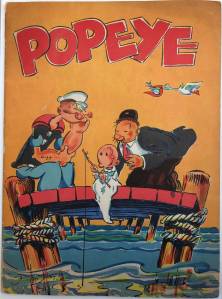
Popeye Story book published in 1936 by King Features. Full color, oversized format 9 1/4-in. x 13-in. Bound in linen-like material. Published before the Feature Book series

Batman / Grendel (1993)

A two-part Batman/Grendel crossover, Devil’s Riddle and Devil’s Masque, was written and drawn by Wagner and colored by Wagner at the time of the Comico series, but was delayed by Comico’s bankruptcy. It was finally published by DC in 1993.

The story assumes that Hunter Rose and Batman live in the same fictional universe and are contemporaries. Bored with Argent the wolf and the NYPD, Hunter Rose comes to Gotham City to challenge the city’s protector to stop him before he commits an audacious crime. Hunter Rose becomes increasingly impressed with Batman but is still able to pull off his crime. However, Batman’s interference proves to be more trouble than he expected and Grendel winds up unintentionally endangering the life of a child and indirectly causing the death of a person he did not consider an enemy. Grendel and Batman’s final battle ends with the assassin just barely escaping Gotham, his arm broken by the Dark Knight in the process.

Although this story can be seen as out of continuity, Hunter Rose is depicted with a broken arm in the “Devil’s Advocate” short, featured inGrendel: Black, White, & Red.

Lady Death: Between Heaven and Hell (1995)

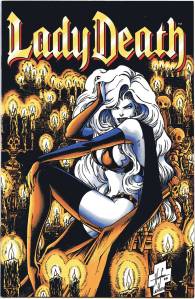
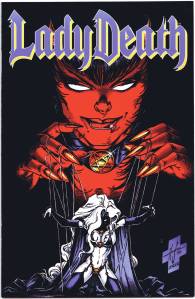
Lady Death has reigned in Hell for 400 years when an unseen attacker torments her dreams and twists her realm while she is  awake. He foe is the demonic Purgatori and she has a thrist for the blood of gods and immortals. She is a master deceiver and it take all lady Death’s cunning to bring out her foe so that they might battle face to face. But things are not as they seem and the pair are in fact puppets of a greater deceiver. Old friends and and enemies clash in this epic tale.

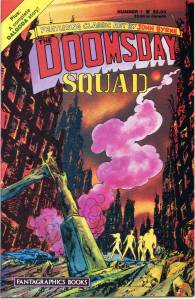
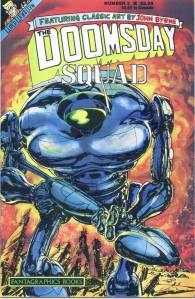
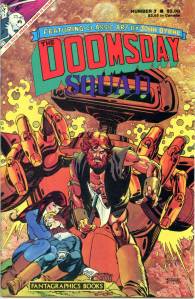
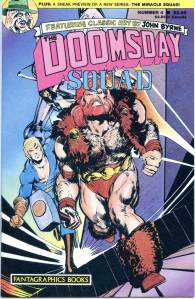
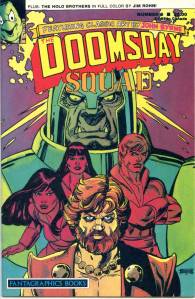
Doomsday Squad (1986)

All six original Doomsday + 1 stories plus the two-part Charlton Bullseye story were reprinted as the Fantagraphics comic-book series The Doomsday Squad #1–7 (Aug. 1986 – June 1987), with new covers by Byrne (#1–2), Neal Adams (#4), and Gil Kane (the remainder). This series included a new backup feature each issue, including “Dalgoda” by writer Jan Strnad and artist Dennis Fujitake, “Keif Llama” by writer-artist Matt Howarth, “Captain Jack” by writer Mike Kazaleh and artist Marc Schirmeister as well as Usagi Yojimbo by Stan Sakai and Lloyd Llewellyn by Daniel Clowes.

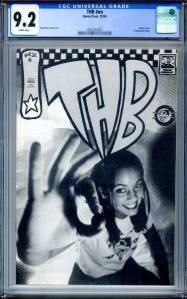
THB (1994)

Paul Pope introduced THB in 1994, the same year he began work for Kodansha, Japan’s best-known manga publisher. Pope eventually developed the manga Supertrouble for Kodansha, which mined the “cutie-pie” girl adventure vein that THB exists in. Pope has self-published some of his work through his own Horse Press, with other work such as One-Trick Ripoff coming from Dark Horse Comics and Heavy Liquid and 100% published under DC ComicsVertigo imprint.

Pope’s work combines the precision and romance of the European artists he studies with the energy and page design of the manga tradition. His storytelling narratives continue to mature with well-paced, deftly-shaded combinations of science fiction, hardboiled crime stories and the Romeo and Juliet archetype. Pope’s two protagonist types are the silent, lanky outsider male of One-Trick Ripoff, Escapo and Heavy Liquid, or the resourceful, aggressive, humorous young teenage girls of THB.

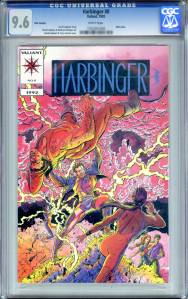
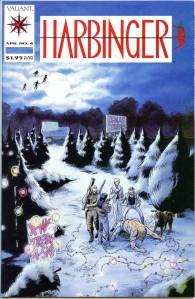
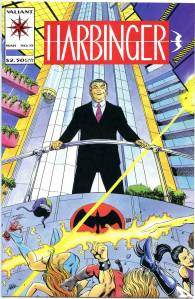
Harbinger V1 (1992)

Harbinger is a series published by Valiant Comics about a group of teenage super-powered outcasts known as Harbingers.

Harbinger initially featured writing and art by Jim Shooter and David Lapham. After Acclaim Entertainment purchased the rights to the Valiant catalog for $65 million in 1994, the characters were rebooted in Harbinger: Acts of God to make them more easily adaptable to video games. They continued to appear in many Valiant titles, most prominently the Unity 2000 series. Harbinger was one of the best selling Valiant titles with total sales in all languages of over five million comics.