Superman (Golden Age)

The major event many cite as marking the beginning of the Golden Age was the 1938 debut of Superman in Action Comics #1, published by the predecessor of modern-day DC Comics. The creation of Superman made comic books into a major industry. Some date the start to earlier events in the 1930s: The Overstreet Comic Book Price Guide‘s regular publication The Golden Age Quarterly lists comic books from 1933 onwards (1933 saw the publication of the first comic book in the size that would subsequently define the format); some historians, such Roger Sabin, date it to the publication of the first comic books featuring entirely original stories rather than re-prints of comic strips from newspapers (1935) by the company that would become DC Comics.

Giant Size Creatures/Werewolf (1974)

The Werewolf by Night character (birth name Jacob Russoff, legal name Jacob Russell, nicknamed Jack) first appeared in Marvel Spotlight #2 (Feb. 1972) and was based on an idea by Roy Thomas. The series name was suggested by Stan Lee and the debut story was crafted by Gerry Conway and Mike Ploog. The character made additional appearances in Marvel Spotlight #3 and #4 and then graduated to his own eponymous series in September 1972. Jack Russell co-starred with Tigra in Giant Size Creatures #1 (July 1974), which was the first appearance of Greer Grant as Tigra instead of the Cat. That series was retitled Giant-Size Werewolf with its second issue.

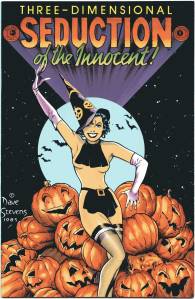
Seduction of the Innocent (1985)

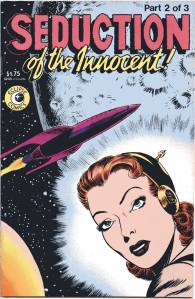
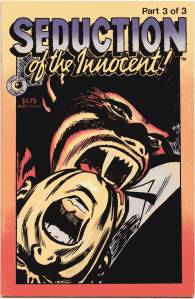
In homage to the great pre-Code horror comics, Eclipse Comics presented its own Seduction of the Innocent, reprinting classics from now-forgotten National Comics and Toby Publishing.

Before Watchmen: Dr. Manhattan (2012)

The story explores the different universes that Doctor Manhattan alias Jon Osterman simultaneously perceives. It also adds a notable new element to Osterman’s backstory by revealing him to be a half-Jewish German immigrant who escaped with his father from the Third Reich to America; in the original Watchmen series, he was not implied to be anything other than American. It debuted to positive reviews.

Star Wars: Darth Maul (2017)

Darth Maul’s time as apprentice to Darth Sidious has long been cloaked in shadows, but at last his tale of revenge will be reveled. From writer Cullen Bunn and artist Luke Ross comes a tale of rage unleashed as Darth Maul prepares for his first encounter with the Jedi.

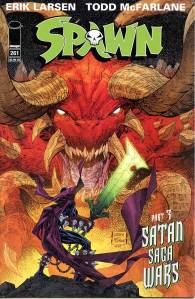
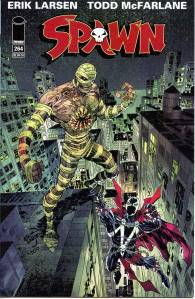
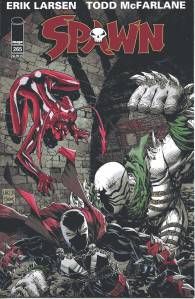
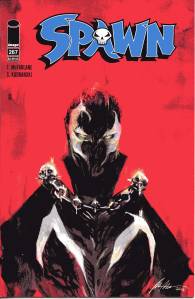
Spawn (2010’s)

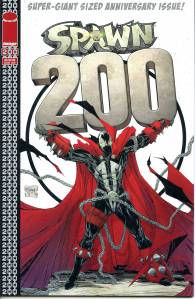
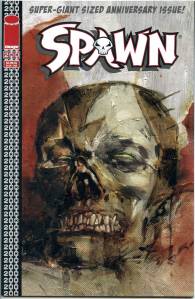
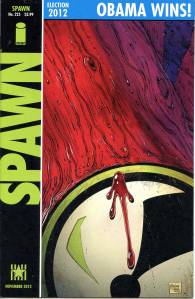
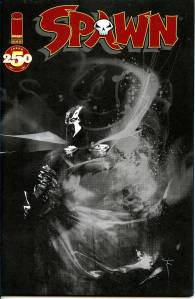
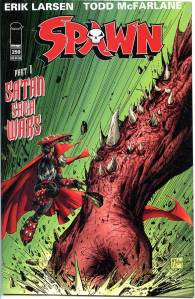
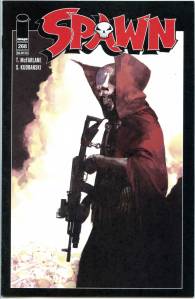
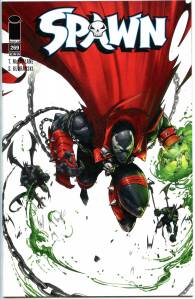
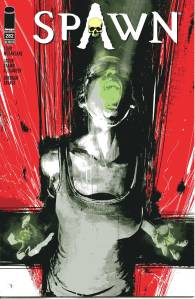
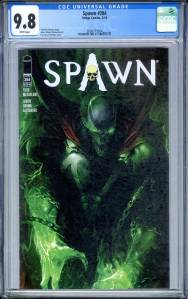
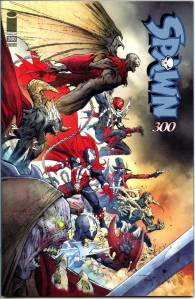
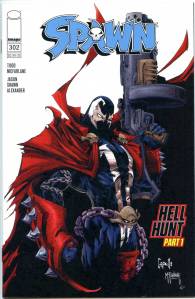
By issue #191 in May 2009, with estimated sales of 19,803 copies, Spawn had dropped below Top 100 titles sold monthly to comic shops as reported by Diamond Comic Distributors. As of August 2010 Spawn no longer was ranked in the top 300 sales figures chart reported by Diamond Comic Distributors. On the day of its release in 2011, issue #200 sold out. This issue featured work by Greg Capullo, David Finch, Michael Golden, Jim Lee, Rob Liefeld, Marc Silvestri, Danny Miki, and Ashley Wood. A second printing was released the next month. Despite its remarkable sales, it received a negative review from IGN.

Blade: The Vampire-Hunter (1994)

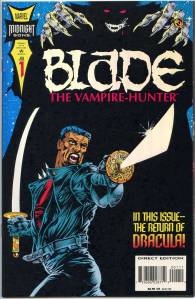
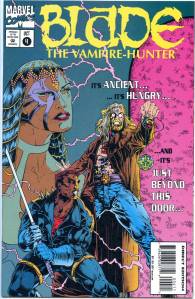
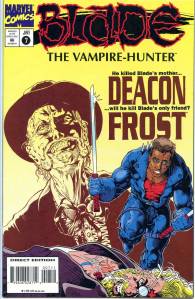
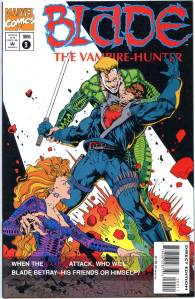
Following the cancellation of Nightstalkers, Blade debuted in his first color-comics series, Blade: The Vampire Hunter #1–10 (July 1994 – April 1995), written by Ian Edginton (with the last two issues by Terry Kavanagh) and penciled by Doug Wheatley.

Predator vs Judge Dredd vs Aliens (2016)

Predator vs Judge Dredd vs Aliens was a co-publication with IDW and 2000 AD. The ultimate science-fiction crossover pits the legendary lawman Judge Dredd against the universe’s supreme hunters, the Predators, as they both try to survive an onslaught by the galaxy’s ultimate killing machines, the Aliens! Written by Eisner Award–winning, NYT best-selling Chew creator John Layman! Covers by Eisner Award winner Glenn Fabry!

Batman/ Judge Dredd – Judgement on Gotham (1991)

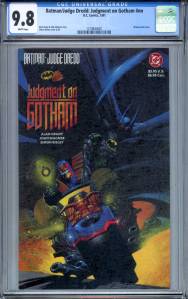
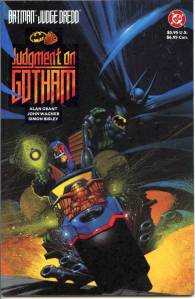
Judge Death makes a dimensional jump to Gotham City, murdering two lovers and a police officer. Batman defeats Death, who flees in spirit form. Among the remains of his host body, Batman finds a dimensional jump belt that he accidentally activates, transporting him to Mega-City One, where is confronted by Mean Machine Angel. As Mean Machine attacks Batman, they are both confronted by Judge Dredd. Mean Machine flees to Gotham using the belt, then wanders into the city looking for Judge Death.

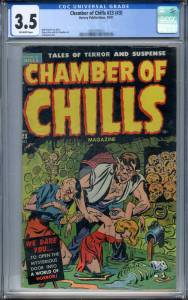
Chamber of Chills (1951)

The first Chamber of Chills was a 10-cent horror anthology published bimonthly by Harvey Publications that ran 26 issues (cover-dated June 1951 – Dec. 1954).

Artists included Bob PowellLee Elias, Rudy Palais, Howard Nostrand, and Warren Kremer. Issue #7 is mentioned in Dr. Fredric Wertham‘s 1954 indictment of comic books Seduction of the Innocent (p. 389). Chamber ceased publication following the Senate Subcommittee on Juvenile Delinquency hearings of 1954. Harvey Comics then began concentrating on titles for young children, including Little Dot and Richie Rich.

Chamber of Chills was formerly Blondie Comics, taking over that comic’s numbering with issue #21. After issue #24 (Dec. 1951), the numbering was reset to #1. Chamber of Chills became Chamber of Clues with the February 1955 issue, and ceased publication two issues later, the last cover-dated April 1955.