
The Unkillables were a group of villains trying to survive the Anti-Living and were first led by Vandal Savage until his death. They later escaped to Bludhaven where the heroes led by Jim Gordon joined them.
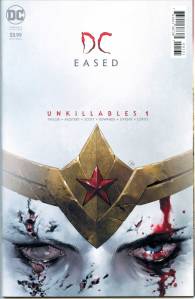
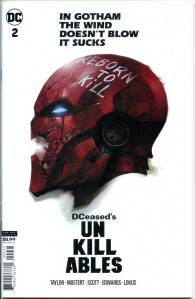
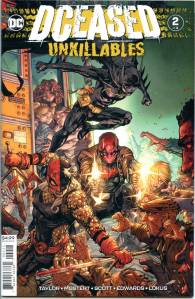
The Unkillables were a group of villains trying to survive the Anti-Living and were first led by Vandal Savage until his death. They later escaped to Bludhaven where the heroes led by Jim Gordon joined them.
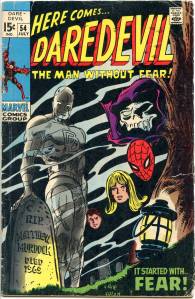
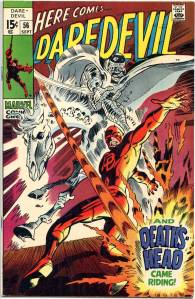
Daredevil debuted in Marvel Comics‘ Daredevil #1 (cover date April 1964), created by writer-editor Stan Lee and artist Bill Everett, with character design input from Jack Kirby, who devised Daredevil’s billy club. When Everett turned in his first-issue pencils extremely late, Marvel production manager Sol Brodsky and Spider-Man co-creator Steve Ditko inked a large variety of different backgrounds, a “lot of backgrounds and secondary figures on the fly and cobbled the cover and the splash page together from Kirby’s original concept drawing”.
Writer and comics historian Mark Evanier has concluded (but cannot confirm) that Kirby designed the basic image of Daredevil’s costume, though Everett modified it. The character’s original costume design was a combination of black, yellow, and red, reminiscent of acrobat tights. Wally Wood, known for his 1950s EC Comics stories, penciled and inked issues #5–10, introducing Daredevil’s modern red costume in issue #7.
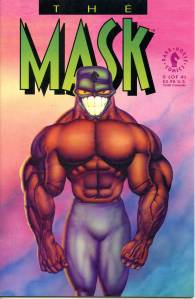
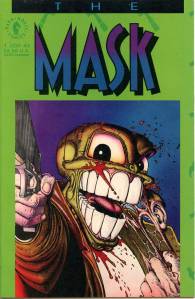
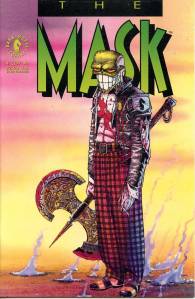
The base concept of The Mask was created by Mike Richardson in 1982. It first saw life as a single sketch he drew in 1985 for APA-5, an amateur press publication created by writer Mark Verheiden. After starting Dark Horse Comics, Richardson pitched his concept to Marvel Comics comic book writer/artist Mark Badger. The outcome was the Masque strip, that ran in the early issues of Dark Horse Presents. Badger’s strips became increasingly political, and Richardson ended the strip in order to bring the character back to his original concept.
Artist Chris Warner was hired to revamp the character based on Richardson’s original APA-5 drawing and created the definitive look for the character, that was given a new launch in 1989 in the pages of Dark Horse’s Mayhem anthology. Aspiring writer John Arcudi and artist Doug Mahnke were hired to create the new adventures, which became the first very popular use of the character, “a combination of Tex Avery and The Terminator“. The Mask stories from Mayhem #1-4 were later collected as the 1991 issue The Mask #0 and in a trade paperback collection as well.
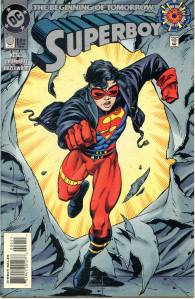
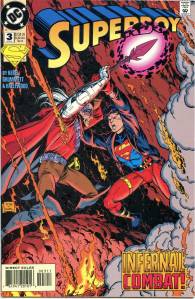
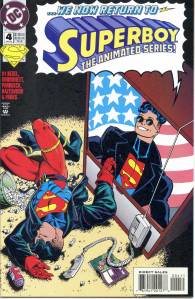
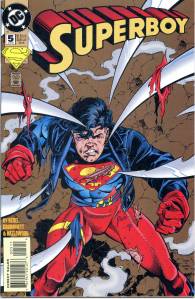
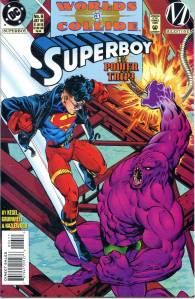
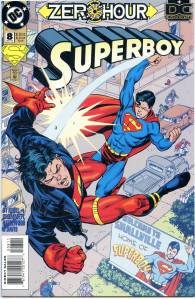
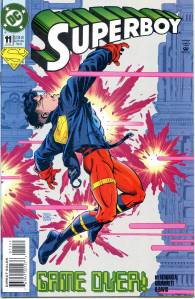
This series featured the clone of Superman and his adventures as part of Cadmus. In Superboy (vol. 4) #1 (February 1994), the new Superboy settled in Hawaii with his supporting cast, becoming Hawaii’s resident superhero for the next four years until Superboy (vol. 4) #48 (February 1998). Starting in Superboy (vol. 4) #56 (November 1998), Superboy returned “home” when he began working for Cadmus. In Superboy (vol. 4) #59 (February 1999), Superman gave Superboy the Kryptonian name of Kon-El. After leaving Cadmus and living on his own for a brief time in Metropolis, Kon-El went to live with Jonathan and Martha Kent in Smallville, where he adopted a secret identity as their nephew (and Clark’s cousin) Conner Kent.
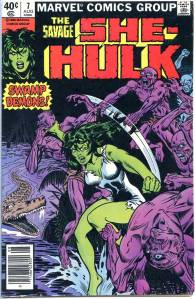
Jennifer Walters, the cousin of Bruce Banner (Hulk), is the small and somewhat shy daughter of Los Angeles County Sheriff William Morris Walters and Elaine (née Banner) Walters (who died in a car crash when Jennifer was seventeen). Operatives of Nicholas Trask, a crime boss who had crossed paths with her father, shot and seriously wounded her on a day that Bruce Banner happened to be in town for a visit. Since no other donors with her blood type were available, Banner provided his own blood for a transfusion; as they already shared the same blood type and DNA, his radioactive blood, combined with her anger transformed Jennifer into the green-skinned She-Hulk when the mobsters tried to finish her off at the hospital.





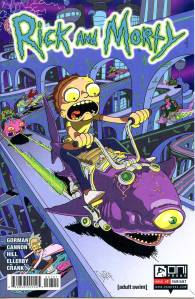
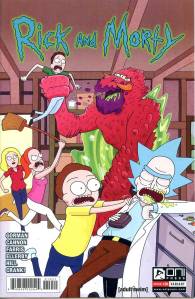
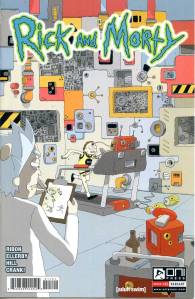
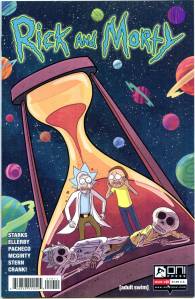
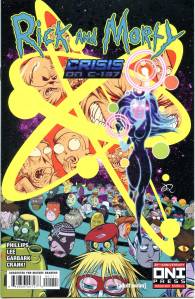
On April 1, 2015, a Rick and Morty comic book adaptation debuted with its first monthly issue, entitled “BAM!” The series is written by Zac Gorman and illustrated by CJ Cannon.[71] Artist Tom Fowler wrote a multi-issue story arc that began in March 2016. Using the television series’ established premise of alternate timelines, the comic book expressly features the Rick and Morty (and supporting cast) of a different timeline, allowing the comics to tell stories without conflicting with the canon of the show.


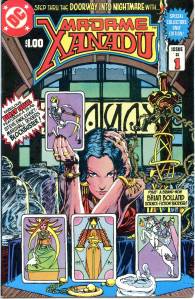
Step thru the doorway into nightmare with Madame Xanadu in the 25-page “Dance For Two Demons.” Script by Steve Englehart, art by Marshall Rogers. Madame Xanadu centerfold by Michael W. Kaluta. Plus: A disease that transforms and corrupts is explored in the 7-page science fiction tale “Falling Down to Heaven…” Script by J.M. DeMatteis, art by Brian Bolland. Cover by Michael W. Kaluta.
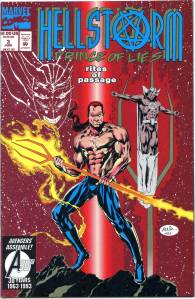
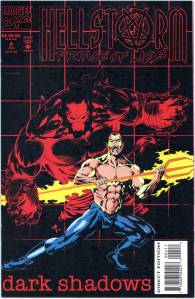
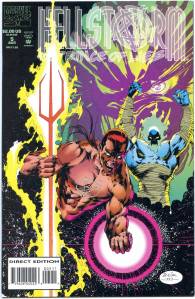
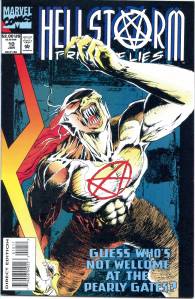
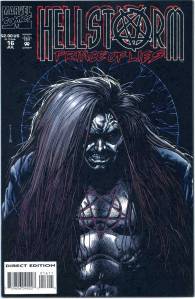
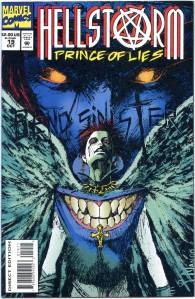
Hellstorm, the son of Satan in his second own ongoing series. Masterminded by Warren Ellis. In this series Hellstorm delves deep into the darkness.




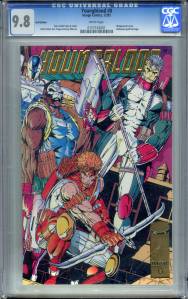
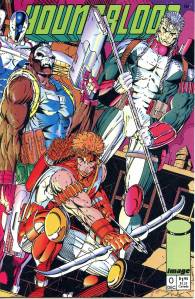
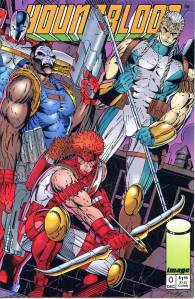
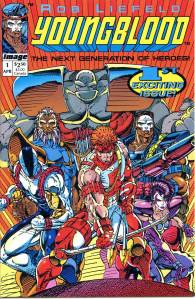
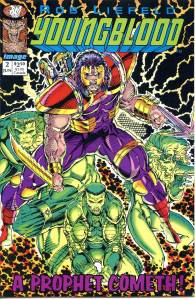
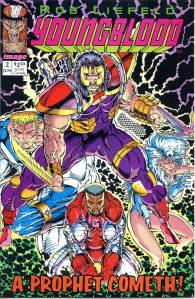
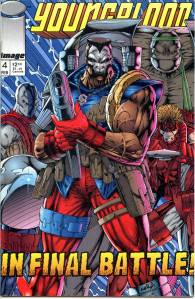
Youngblood is a superhero team that starred in their self-titled comic book, created by writer/artist Rob Liefeld. The team made its debut as a backup feature in the 1987 one-shot Megaton Explosion #1 before later appearing in 1992 in its own ongoing series as the flagship publication for Image Comics. Youngblood was originally published by Image Comics, and later by Awesome Entertainment. Upon Rob Liefeld’s return to Image Comics, it was revived in 2008 and again in 2012.
Youngblood was a high-profile superteam sanctioned and overseen by the United States government. Youngblood’s members include Shaft, a former FBI agent who uses a high-tech bow; Badrock, a teenager transformed into a living block of stone; Vogue, a Russian fashion model with purple-and-chalk-white skin; and Chapel, a government assassin.
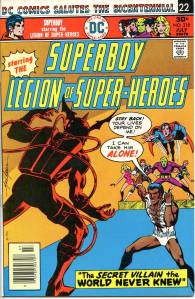
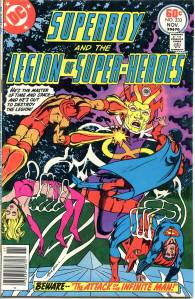
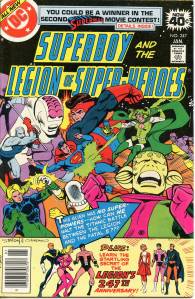
Superboy became Superboy starring the Legion of Super-Heroes with issue #197 (August 1973). Crafted by Bates and Cockrum, the feature proved popular and saw such events as the wedding of Bouncing Boy and Duo Damsel in Superboy #200 (Feb 1974). Cockrum was replaced on art by Mike Grell as of issue #203 (August 1974) which featured the death of Invisible Kid. With #231 (September 1977), the book’s title officially changed to Superboy and the Legion of Super-Heroes and also became a “giant-size” title. At this point, the book was written by longtime fan Paul Levitz and drawn by James Sherman, although Gerry Conway frequently wrote as well. Saturn Girl and Lightning Lad were married in All-New Collectors’ Edition #C-55 (1978), a treasury-sized special written by Levitz and drawn by Grell. In #241–245 (July–December 1978) Levitz and Sherman (and then Joe Staton) produced what was at that time the most ambitious Legion storyline: “Earthwar“, a galactic war between the United Planets and the Khunds, with several other villains lurking in the background. During this period, Karate Kid was spun off into his own 20th Century-based self-titled series, which lasted 15 issues. Levitz left the book, to be replaced full-time by Gerry Conway.
Superboy departed from the Legion due to a plot of a villain, and the book was renamed simply Legion of Super-Heroes starting with issue #259 (January 1980). Editor Jack C. Harris hired Steve Ditko as guest artist on several issues, a decision which garnered a mixed reaction from the title’s readership. Jimmy Janes became the regular artist in a lengthy tale by Conway (and later Roy Thomas) involving Ultra Boy’s disappearance during a mission, and his long odyssey to rejoin the team. This story told the tale of the Legionnaire Reflecto (only glimpsed during the “Adult Legion” stories in Adventure Comics), featured villainy by the Time Trapper and Grimbor the Chainsman, and saw Superboy rejoin the team.






 EHT Comics