In response to the restrictions imposed by the Comics Code Authority, DC began a new science-fiction series in 1956. The series featured artwork by Murphy Anderson, Gil Kane, and many others, with stories by John Broome, Gardner Fox, and additional writers. It was an anthology comic for many years, publishing a variety of science fiction stories. The series featured Space Ranger as of issue #40 and running through #82 (April–May 1964) Other features included the “Green Glob” (issues #85–98, 100, 102, 103) and “Automan” (issues #91, 94, 97). The series’ last issue as Tales of the Unexpected was #104 (December 1967–January 1968). As of issue #105 (February–March 1968), the title was shortened to The Unexpected.
Tag: Silver Age
Batman (1960’s)
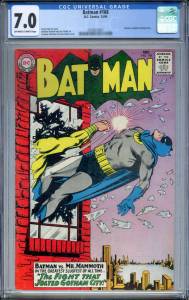
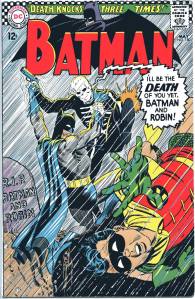
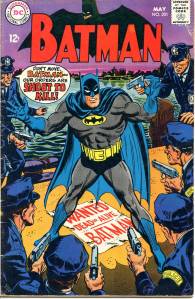
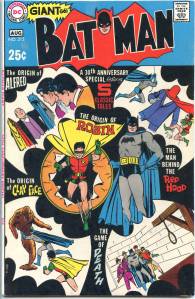
By 1964, sales of Batman titles had fallen drastically. Bob Kane noted that, as a result, DC was “planning to kill Batman off altogether”. In response to this, editor Julius Schwartz was assigned to the Batman titles. He presided over drastic changes, beginning with 1964’s Detective Comics #327 (May 1964), which was cover-billed as the “New Look”. Schwartz introduced changes designed to make Batman more contemporary, and to return him to more detective-oriented stories. He brought in artist Carmine Infantino to help overhaul the character. The Batmobile was redesigned, and Batman’s costume was modified to incorporate a yellow ellipse behind the bat-insignia. The space aliens, time travel, and characters of the 1950s such as Batwoman, Ace, and Bat-Mite were retired. Bruce Wayne’s butler Alfred was killed off (though his death was quickly reversed) while a new female relative for the Wayne family, Aunt Harriet, came to live with Bruce Wayne and Dick Grayson.
Challengers of the Unknown (1960’s)
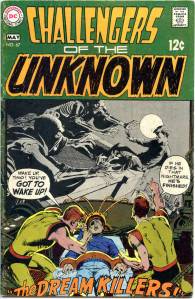
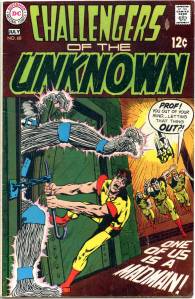
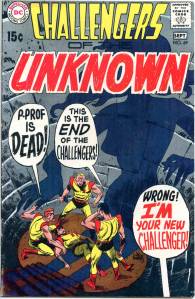
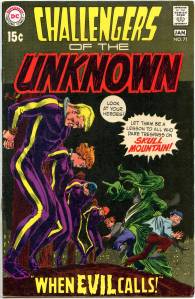
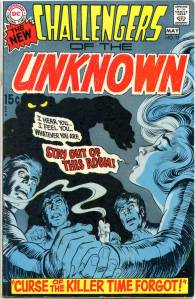
The Challengers of the Unknown is a fictional group of adventurers appearing in comic books published by DC Comics. The quartet of adventurers explored paranormal occurrences while facing several fantastic menaces. The characters were created by Joe Simon and JJack Kirby during the end of their company, Mainline Comics. Following the end of the Challengers comic, DC has revived the characters in different incarnations over the years. Some have claimed that Kirby reworked the basic concept of the series with Stan Lee in 1961 to create The Fantastic Four, the first creation that marked the rise of Marvel Comics.
Justice League of America (Silver Age)
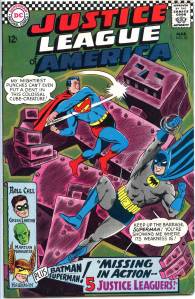
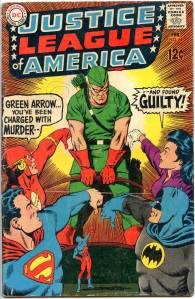
The initial Justice League lineup included seven of DC Comics’ superheroes who were regularly published at that time: Superman, Batman, Aquaman, Flash, Green Lantern, Martian Manhunter, and Wonder Woman. Rarely featured in most of the stories, Superman and Batman did not even appear on the cover most of the time. Three of DC’s other surviving or revived characters, Green Arrow, the Atom, and Hawkman were added to the roster over the next four years.
The title’s early success was indirectly responsible for the creation of the Fantastic Four. In his autobiography Stan Lee relates how in 1961, during a round of golf, DC publisher Jack Liebowitz mentioned to Marvel-Timely owner Martin Goodman how well DC’s new book (Justice League) was selling. Later that day Goodman, a publishing trend-follower aware of the JLA’s strong sales, told Lee, his comics editor, to come up with a team of superheroes for Marvel.
Archie’s Mad House (1959)
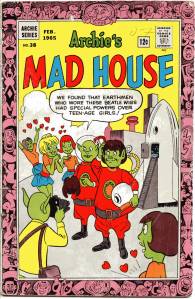
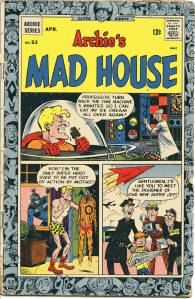
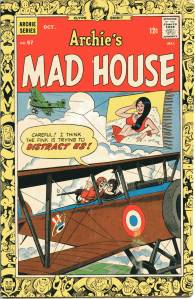
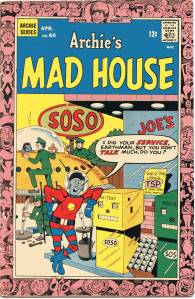
The first 18 issues featured the “Archie gang” in stories that were a bit more “off the wall” than the normal Archie series. The idea was to produce stories that made no sense. The title Mad House was written as two words instead of one to suggest a false connection to MAD Magazine and recapture its success. Beginning with issue 19, the Archie gang was dropped (though it was still called Archie’s Mad House), and the title began featuring monsters, space stories and other wacky short stories. The gags in the comics often parodied the latest fads and popular culture. For a time, it would focus on stories with what were intended to be one-off characters. There were, however, exceptions to this rule. Characters becoming popular enough would appear again.
DC Special (1968)
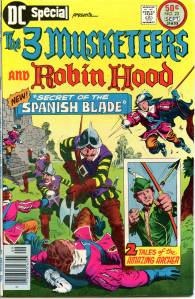
DC Special was a comic book anthology series published by DC Comics originally from 1968 to 1971; it resumed publication from 1975 to 1977. For the most part, DC Special was a theme-based reprint title, mostly focusing on stories from DC’s Golden Age; at the end of its run it published a few original stories. Issue #4 featured many supernatural characters and writer Mark Hanerfeld and artist Bill Draut crafted the first appearance of Abel, who later became (along with his brother Cain) a major character in Neil Gaiman‘s The Sandman. Paul Levitz and Joe Staton finished the series with a Justice Society of America story which revealed the team’s origin.
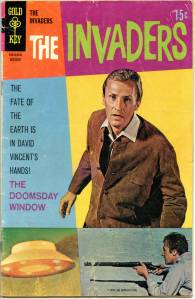
The Invaders (1967)
Comic book version of the 1960s TV series about one man’s crusade to convince people that an advance guard of alien creatures had infiltrated the world’s population and were preparing to conquer Earth.
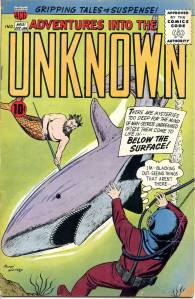
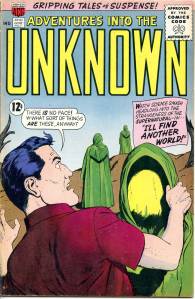
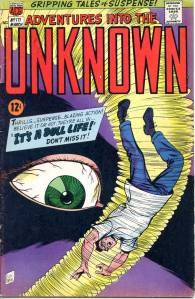
Adventures into the Unknown (1960’s)
Adventures Into the Unknown was best known as the medium’s first ongoing horror-comics title. Published by the American Comics Group, initially under the imprint B&I Publishing, it ran 174 issues (cover-dated Fall 1948 – Aug. 1967). The first two issues, which included art by Fred Guardineer and others, featured horror stories of ghosts, werewolves, haunted houses, killer puppets, and other supernatural beings and locales. The premiere included a seven-page abridged adaptation of Horace Walpole‘s seminal gothic novel The Castle of Otranto, by an unknown writer and artist Al Ulmer.
Unlike many American horror comics of the Golden Age, it weathered the public criticism of the early 1950s and survived the aftermath of the Senate Subcommittee on Juvenile Delinquency hearings of April and June 1954 when the comics industry attempted self-regulation with a highly restrictive Comics Code.
Four Color (1939-1962)
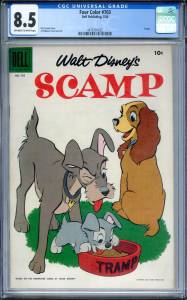
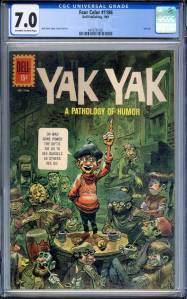
Four Color, also known as Four Color Comics and One Shots, was a long-running American comic book anthology series published by Dell Comics between 1939 and 1968. The title is a reference to the four basic colors used when printing comic books (cyan, magenta, yellow and black at the time).
More than 1,000 issues were published, usually with multiple titles released every month. An exact accounting of the actual number of unique issues produced is difficult because occasional issue numbers were skipped and a number of reprint issues were also included. Nonetheless, the Overstreet Comic Book Price Guide lists well over 1,000 individual issues, ending with #1354. It currently holds the record for most issues produced of an American comic book; its nearest rivals, Action Comics and Detective Comics, ended their initial runs in 2011 at 904 issues and 881 issues, respectively. The first 25 issues are known as “series 1”; after they were published, the numbering began again and “series 2” began. Four Color published many of the first comics featuring characters licensed from Walt Disney.
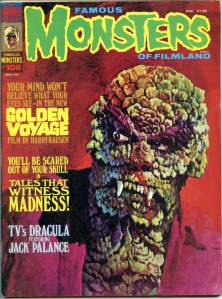
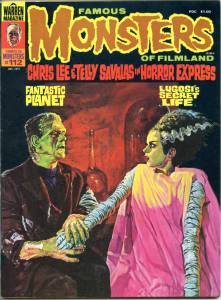
Famous Monsters of Filmland (1958)
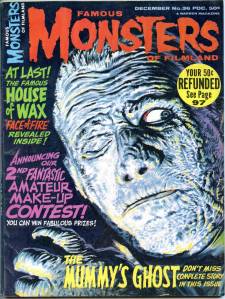
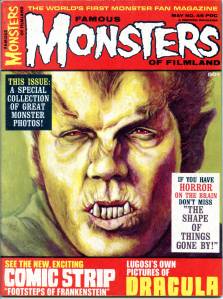
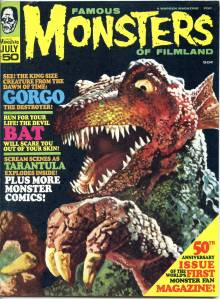
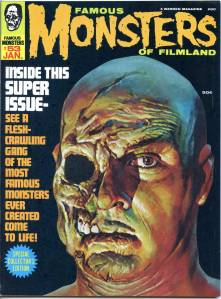
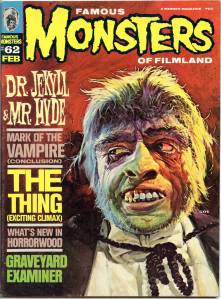
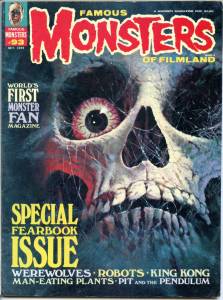
Famous Monsters of Filmland was originally conceived as a one-shot publication by Warren and Ackerman, published in the wake of the widespread success of the Shock Theater package of old horror movies syndicated to American television in 1957. But the first issue, published in February 1958, was so successful that it required a second printing to fulfill public demand. Its future as part of American culture was immediately obvious to both men. The success prompted spinoff magazines such as Spacemen, Favorite Westerns of Filmland, Screen Thrills Illustrated, Creepy, Eerie, and Vampirella.