Iron Man left two lives behind when he vanished, but can he avoid his former mistakes in his new one? The armored Avenger takes on Hydra, Heralds and the Hulk – and the eyes of the Marvel Universe are upon him in the form of Loki, the Watcher and Onslaught himself! Featuring Doc Samson and… or rather as …the Abomination! Plus: Rebel O’Reilly, later of Thunderbolts fame!
Tag: Marvel
Iron Man V7 (2020)
Tony Stark is looking to restart his engine. He decides he’s going back to basics, putting away his high-tech toys and high-profile image so he can get his hands dirty again. It’s time to dig into the guts of real machines, put on some old-fashioned metal and fly.
But can he really lay that Stark-sized ego down? Life isn’t that simple, something that old friends and frustrating foes are quick to point out. If you strip down a billionaire to his bolts, does he run solid or just overheat?
Tony’s going to find out once a threat to the entire universe rears its head from the past. As he suits up again, Tony remains sure of one thing: he’s still IRON MAN down to his flesh and blood core.
2001: A Space Odyssey (1976)
Shortly after the publication of the treasury edition, Kirby continued to explore the concepts of 2001 in a monthly comic book series of the same name, the first issue of which was dated December 1976. In this issue, Kirby followed the pattern established in the film. Once again the reader encounters a prehistoric man (“Beast-Killer”) who gains new insight upon encountering a monolith as did Moon-Watcher in the film. The scene then shifts, where a descendant of Beast-Killer is part of a space mission to explore yet another monolith. When he finds it, this monolith begins to transform the astronaut into a star child, called in the comic a “New Seed”.
Issues #1-6 of the series replay the same idea with different characters in different situations, both prehistoric and futuristic. In #7 (June 1977), the comic opens with the birth of a New Seed who then travels the galaxy witnessing the suffering that men cause each other. While the New Seed is unable or unwilling to prevent this devastation, he takes the essence of two doomed lovers and uses it to seed another planet with the potential for human life.
In issue #8 (July 1977), Kirby introduces Mister Machine, who is later renamed Machine Man. Mister Machine is an advanced robot designated X-51. All the other robots in the X series go on a rampage as they achieve sentience and are destroyed. X-51, supported by both the love of his creator Dr. Abel Stack and an encounter with a monolith, transcends the malfunction that destroyed his siblings. After the death of Dr. Stack, X-51 takes the name Aaron Stack and begins to blend into humanity. Issues #9 and 10, the final issues of the series, continue the story of X-51 as he flees destruction at the hands of the Army.
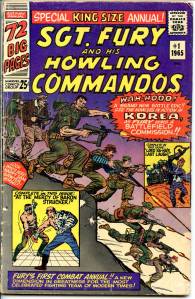
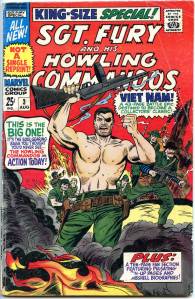
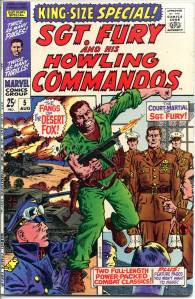
Sgt. Fury and his Howling Commandos (1963)
Comics-artist contemporary John Severin recalled in an interview conducted in the early 2000s that in the late 1950s, Kirby had approached him to be partners on a syndicated, newspaper comic strip “set in Europe during World War Two; the hero would be a tough, cigar-chomping sergeant with a squad of oddball GIs — sort of an adult Boy Commandos“, referring to a 1940s wartime “kid gang” comics series Kirby had co-created for DC Comics.
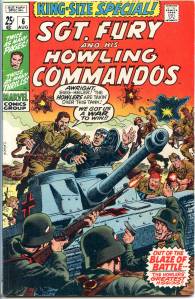
Sgt. Fury and his Howling Commandos followed an elite special unit, the First Attack Squad, nicknamed the “Howling Commandos”, which was stationed in a military base in England to fight missions primarily, but not exclusively, in the European theatre of World War II. Under Captain “Happy Sam” Sawyer, Fury was the cigar-chomping noncom who led the racially and ethnically integrated unit, unusual for the time.
Moon Knight V1 (1980)
Moon Knight received his first ongoing series in 1980, with Doug Moench and Bill Sienkiewicz as its main creative team. The character received an expanded origin story in issue #1, which also introduced several recurring characters as well as recurring enemy Bushman. The series depicted several characters who doubted the moon god Khonshu was real and believed Marc Spector only experienced a hallucination while near death. It was never explained why other characters, such as Spector’s lover Marlene, concluded this when there was no other explanation for Marc’s spontaneous recovery from his wounds and a death-like state and when it was well known by this time that many gods of myth in the Marvel Universe (such as Thor and Zeus) were real, living entities from other dimensions and planets.
After early sales were good, Marvel made the Moon Knight series a flagship title available in comic shops starting with issue #15. The companion mini-series Moon Knight: Special Edition reprinted the Hulk and Marvel Preview Moon Knight stories in color and standard comic format, as opposed to their original magazine format. Sienkiewicz left the series after issue #30, though he continued to contribute covers until the series ended with issue #38.
Amazing Spider-Man V1 (2010’s)
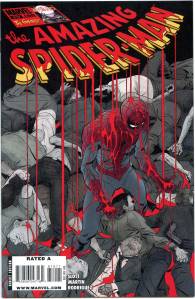
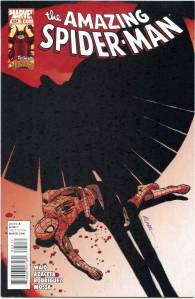
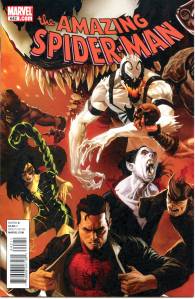
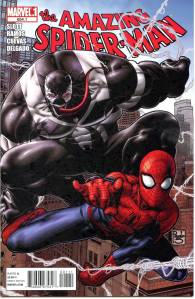
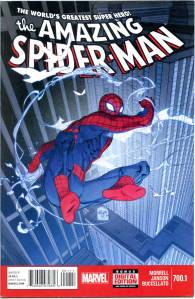
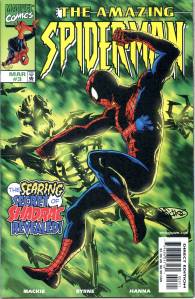
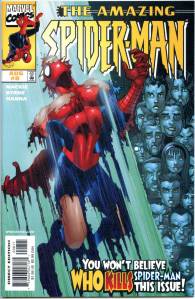
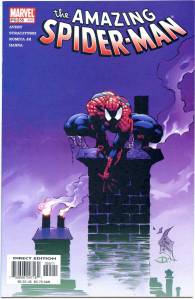
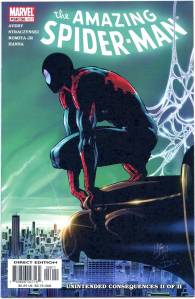
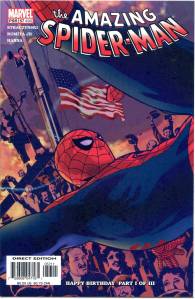
Mark Waid scripted the opening of “The Gauntlet” storyline in issue No. 612. The Gauntlet story was concluded by Grim Hunt (No. 634-637) which saw the resurrection of long-dead Spider-Man villain, Kraven the Hunter. The series became a twice-monthly title with Dan Slott as sole writer at issue No. 648, launching the Big Time storyline. Eight additional pages were added per issue. Big Time saw major changes in Spider-Man/Peter Parker’s life, Peter would start working at Horizon Labs and begin a relationship with Carlie Cooper (his first serious relationship since his marriage to Mary Jane), Mac Gargan returned as Scorpion after spending the past few years as Venom, Phil Urich would take up the mantle of Hobgoblin, and the death of J. Jonah Jameson’s wife, Marla Jameson. Issues 654 and 654.1 saw the birth of Agent Venom, Flash Thompson bonded with the Venom symbiote, which would lead to Venom getting his own series Venom (volume 2). Starting in No. 659 and going to No. 655, the series built-up to the Spider-Island event which officially started in No. 666 and ended in No. 673. Ends of the Earth was the next event that ran from No. 682 through No. 687. This publishing format lasted until issue No. 700, which concluded the “Dying Wish” storyline, in which Parker and Doctor Octopus swapped bodies, and the latter taking on the mantle of Spider-Man when Parker apparently died in Doctor Octopus’ body. The Amazing Spider-Man ended with this issue, with the story continuing in the new series The Superior Spider-Man.] Despite The Superior Spider-Man being considered a different series to The Amazing Spider-Man, the first 33 issue run goes towards the legacy numbering of The Amazing Spider-Man acting as issues 701-733. In December 2013, the series returned for five issues, numbered 700.1 through 700.5, with the first two written by David Morrell and drawn by Klaus Janson.
Marvel Premiere (1970’s)
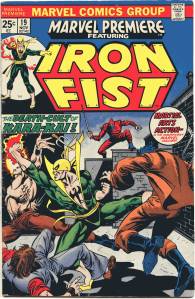
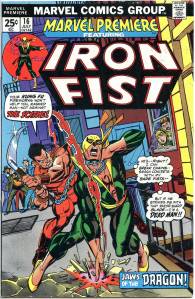
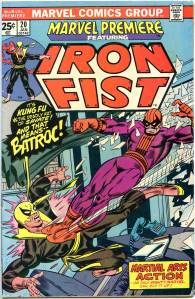
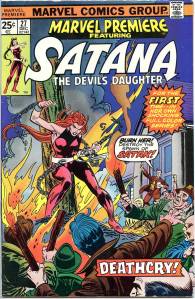
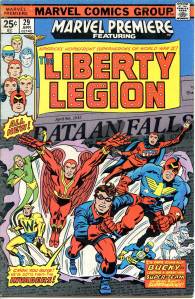
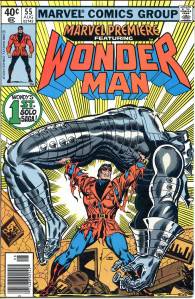
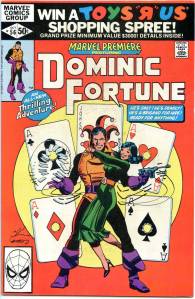
Marvel Premiere ran for 61 issues from April 1972 to August 1981. The series introduced new characters and reintroduced characters who no longer had their own titles. Writer Roy Thomas and penciler Gil Kane significantly revamped Him as the allegorical Messiah Adam Warlock in Marvel Premiere #1 (April 1972). Iron Fist first appeared in issue #15, written by Roy Thomas and drawn by Gil Kane. Other introductions include the Legion of Monsters, the Liberty Legion, Woodgod, the 3-D Man, and the second Ant-Man (Scott Lang). The series also featured the first comic book appearance of rock musician Alice Cooper. Later in the title’s run, Marvel Premiere was used to finish stories of characters who had lost their own series including the Man-Wolf in issues #45-46 and the Black Panther in issues #51-53.
Deadpool V2 (2008)
In 2008, a new Deadpool ongoing series written by Daniel Way with artist Paco Medina began as a Secret Invasion tie-in. In the first arc, the character is seen working with Nick Fury to steal data on how to kill the Skrull queen Veranke. Norman Osborn steals the information that Deadpool had stolen from the Skrulls, and subsequent stories deal with the fallout from that. Writer Daniel Way explained, “the first thing Osborn does to try and take care of the situation is to bring in a hired gun to take Deadpool down, which would be Tiger-Shark. That would be the standard thing to do, but of course everything about Deadpool is non-standard. So it goes completely awry and Norman has to get more serious about things.” The story also sees the return of Bob, Agent of HYDRA; “I don’t want the book to become ‘Deadpool and Friends’ so characters will drift in and out, but Bob was someone I definitely wanted to bring in. It just had to be at the perfect moment and when I was putting this storyline together that moment presented itself.”
X-Men (Silver Age)
Early X-Men issues introduced the original team composed of Cyclops, Marvel Girl, Beast, Angel and Iceman among a few others, their archenemy Magneto and his Brotherhood of Evil Mutants featuring Mastermind, Quicksilver, Scarlet Witch, and Toad. The comic focused on a common human theme of good versus evil and later included storylines and themes about prejudice and racism, all of which have persisted throughout the series in one form or another. The evil side in the fight was shown in human form and under some sympathetic beginnings via Magneto, a character who was later revealed to have survived Nazi concentration camps only to pursue a hatred for normal humanity. His key followers, Quicksilver and the Scarlet Witch, were Romani. Only one new member of the X-Men was added, Mimic/Calvin Rankin, but soon left due to his temporary loss of power.
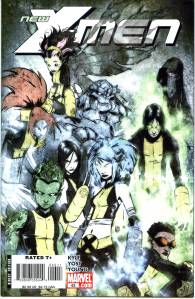
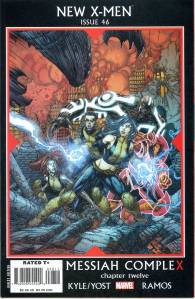
The title lagged in sales behind Marvel’s other comic franchises. In 1969, writer Roy Thomas and illustrator Neal Adams rejuvenated the comic book and gave regular roles to two recently introduced characters: Havok/Alex Summers (who had been introduced by Roy Thomas before Adams began work on the comic) and Lorna Dane, later called Polaris (created by Arnold Drake and Jim Steranko). However, these later X-Men issues failed to attract sales and Marvel stopped producing new stories with issue #66, later reprinting a number of the older comics as issues #67–93.
Avengers V2 – Heroes Reborn (1996)
During the “Heroes Reborn” event, many of the Avengers together with the Fantastic Four and others, died trying to stop the psychic entity Onslaught, although it was revealed that Franklin Richards preserved those heroes in a pocket universe. Believing the main team to be gone, the Black Widow disbanded the Avengers, and only butler Edwin Jarvis remained to tend to the Mansion.
The previous continuity of the Marvel Universe was set aside as the heroes were “reborn” in the pocket universe created by Franklin Richards to save his parents and their friends, while the “Heroes Reborn” line ended and the heroes returned to the prime Marvel Universe. This restoration also undid recent changes to the team members such as the Wasp being mutated into an insectoid form, Hawkeye being rendered deaf, and Stark being replaced by his teenage self, attributed to Franklin’s childish perception recreating the heroes in the manner he was more familiar with.