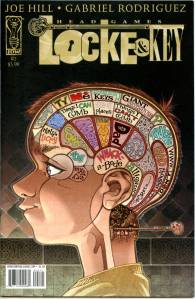
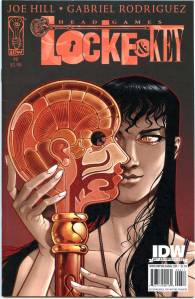
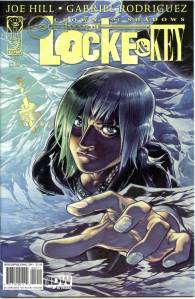
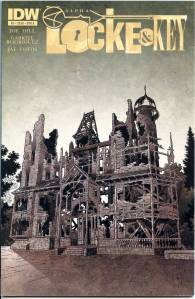
Following their father’s gruesome murder in a violent home invasion, the Locke children return to his childhood home of Keyhouse in secluded Lovecraft, Massachusetts. Their mother, Nina, is too trapped in her grief—and a wine bottle—to notice that all in Keyhouse is not what it seems: too many locked doors, too many unanswered questions. Older kids Tyler and Kinsey aren’t much better. But not youngest son Bode, who quickly finds a new friend living in an empty well and a new toy, a key, that offers hours of spirited entertainment. But again, all at Keyhouse is not what it seems, and not all doors are meant to be opened. Soon, horrors old and new, real and imagined, will come ravening after the Lockes and the secrets their family holds.
Tag: Iron Age
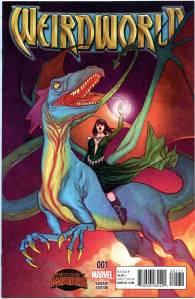
Weirdworld (2015)
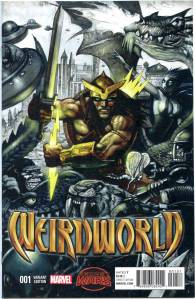
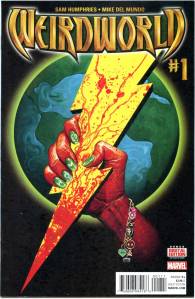
As part of the 2015 Secret Wars storyline, a series titled Weirdworld starring Arkon was released in June 2015 which featured other characters like Morgan le Fay of Earth-15238, Skull the Slayer, a variation of Jennifer Kale from Earth-11234 that is the Queen of Weirdworld’s Man-Things, and characters from The Saga of Crystar. Weirdworld is featured on the map of the storyline’s version of Battleworld as a floating island composed of fragments from many alternate reality magical realms like Polemachus, Crystalium, Klarn, and the original Weirdworld. By the end of the miniseries, Weirdworld manifested on Earth-616 in the Bermuda Triangle.
Incredible Hulk V1 (1990’s)
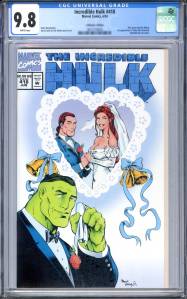
The 1990s saw the Green Hulk return. In issue #377 (Jan. 1991), the Hulk was revamped in a storyline that saw the personalities of Banner, Grey Hulk, and Savage Hulk confront Banner’s past abuse at the hands of his father Brian and a new “Guilt Hulk” persona. Overcoming the trauma, the intelligent Banner, cunning Grey Hulk, and powerful Savage Hulk personalities merge into a new single entity possessing the traits of all three. The Hulk also joined the Pantheon, a secretive organization of superpowered individuals. His tenure with the organization brought the Hulk into conflict with a tyrannical alternate future version of himself called the Maestro in the 1993 Future Imperfect miniseries, who rules over a world where many heroes are dead.
Nita Hawes Nightmare Blog (2021)
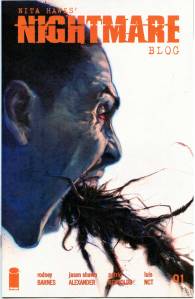
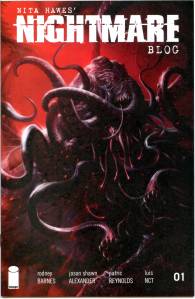
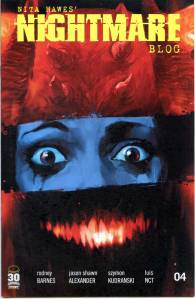
Jimmy Sangster might have left Maryland for the vampire-infested city of “Killadelphia,” but there is still untold evil lurking the streets of Baltimore. The demon Corson has surfaced from the underworld to possess a once-wronged man, and his vengeance will come at the cost of humanity’s despair! But Jimmy’s former lover Nita Hawes—a woman with demons of her own—has begun a quest to root the evil out of her city. Guided by the ghost of her dead brother, she must come to terms with her own past, lest she join her brother in a state worse than death!
Legends (1986)
Legends served mainly as a launching pad for several new comic series, including the latter-day Flash title, Keith Giffen and J. M. DeMatteis‘ comedy/action take on the Justice League, and the villain-based black ops Suicide Squad. The series also saw the post-Crisis introduction into the DC Universe of Captain Marvel (who was spun off in the miniseries Shazam!: The New Beginning) as well as Wonder Woman, who had been rebooted by DC Comics at the same time Legends was being published.
The Stand (2008)
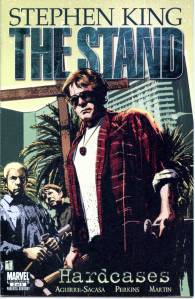
based on Stephen King’s 1978 novel of the same name. Based on the 1990 Complete & Uncut version of the novel, the comic adaptation was written by Roberto Aguirre-Sacasa with art by Mike Perkins and Laura Martin. Its thirty-one issues, divided into six story arcs, completed the telling of the unabridged novel. Stephen King served as Creative and Executive Director of the project.
Infinite Crisis (2005)
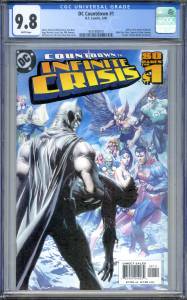
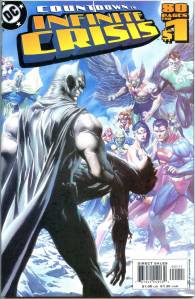
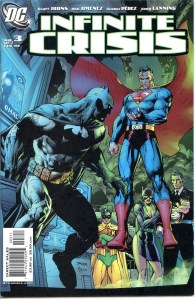
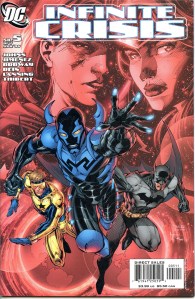
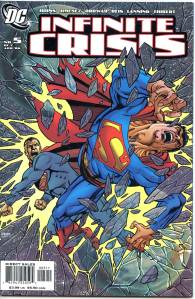
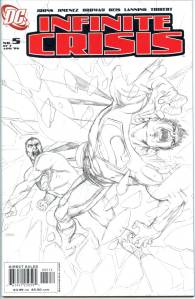
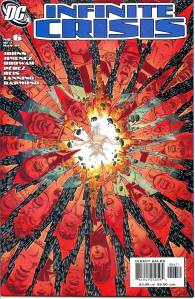
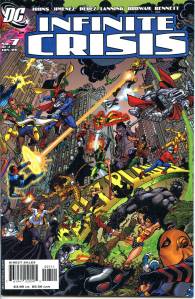
“Infinite Crisis” is a 2005–2006 comic book storyline published by DC Comics, consisting of an eponymous, seven-issue comic book limited series written by Geoff Johns and illustrated by Phil Jimenez, George Pérez, Ivan Reis, and Jerry Ordway, and a number of tie-in books. The main miniseries debuted in October 2005, and each issue was released with two variant covers: one by Pérez, and one by Jim Lee and Sandra Hope.
The series storyline was a sequel to DC’s 1985 limited series Crisis on Infinite Earths, which “rebooted” much of the DC continuity in an effort to fix 50 years of contradictory character history. It revisited characters and concepts from that earlier Crisis, including the existence of DC’s Multiverse. Some of the characters featured were alternate versions of comic icons such as an alternate Superman named Kal-L, who came from a parallel universe called Earth-Two. A major theme was the nature of heroism, contrasting the often dark and conflicted modern-day heroes with memories of “lighter” and ostensibly more noble and collegial heroes of American comic books’ earlier days.
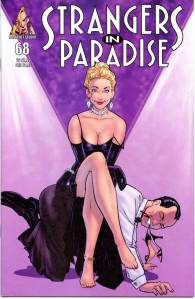
Strangers in Paradise V3 (1996)
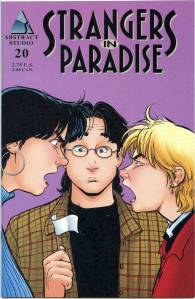
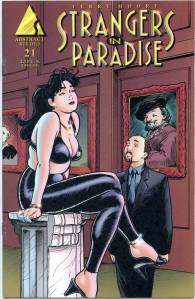
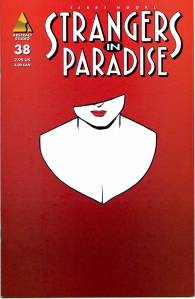
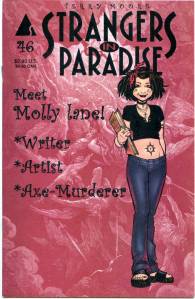
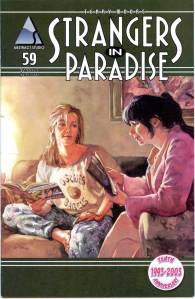
Strangers in Paradise is the entertaining and poignant look at the relationship of two young women and the twists and turns that life throws at them. Francine and Katchoo are high-school best friends who are reunited when Francine comes back to town after years away from her hometown. David is their new friend entangled in their complicated lives. From creepy ex-boyfriends and insensitive bosses to the reality of AIDS and underworld prostitution, you never know what will come up next – but you can always count on laughing and crying at the same time.
Amalgam Comics (1996)
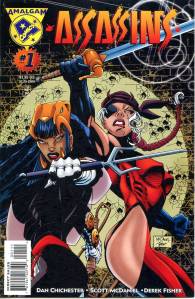
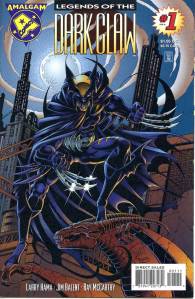
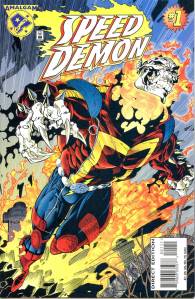
On two separate occasions – April 1996 and June 1997 – Marvel and DC co-published issues under the Amalgam Comics imprint. The issues were presented as if the imprint had existed for decades, with stories and editorial comments referring to a fictional history stretching back to the Golden Age of Comics, including retcons and reboots. For example, they referred to Secret Crisis of the Infinity Hour (an amalgamation of Marvel’s Secret Wars, DC’s Crisis on Infinite Earths, Marvel’s The Infinity Gauntlet, and DC’s Zero Hour), which featured the well-known cover of Crisis on Infinite Earths #7, but with Super-Soldier holding his sidekick’s body, instead of Superman holding Supergirl. Several issues included fake letter columns to provide the illusion of background to the stories, with the “fans'” hometowns formed by amalgamating the names of existing cities.
Batman: The Killing Joke (1988)
Batman: The Killing Joke is a 1988 DC Comics one-shot graphic novel featuring the characters Batman and the Joker written by Alan Moore and illustrated by Brian Bolland. The Killing Joke provides an origin story for the supervillain the Joker, loosely adapted from the 1951 story “The Man Behind the Red Hood!“, which was written by Batman co-creator Bill Finger. The Joker’s origin is presented via flashback, while simultaneously depicting his attempt to drive Jim Gordon insane and Batman’s desperate attempt to stop him.
Created by Moore, Bolland, and Higgins as their own take on the Joker’s source and psychology, the story became famous for its origin of the Joker as a tragic character; a family man and failed comedian who suffered “one bad day” that finally drove him insane. Moore stated that he attempted to show the similarities and contrasts between Batman and the Joker. The story’s effects on the mainstream Batman continuity also included the shooting and paralysis of Barbara Gordon (a.k.a. Batgirl), an event that eventually leads her to develop the identity of Oracle, secret data broker for the DC Universe‘s superhero community and leader of the superhero team Birds of Prey.