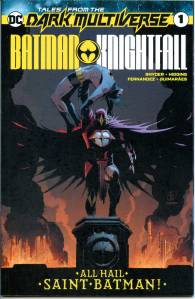
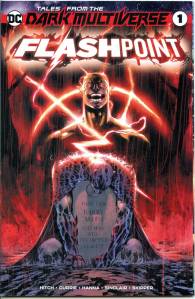
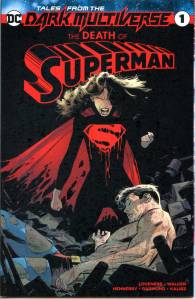
Tales from the Dark Multiverse is an American superhero/anthology comic book limited series published by DC Comics, beginning on October 16, 2019. The series takes some of the most famous events in the DC Universe and puts a twist on them.
Following the Source Wall being shattered at the end of Dark Nights: Metal, the mysterious watcher known as Tempus Fuginaut (introduced in Sideways) begins trying to recruit several “heroes” from across the Dark Multiverse in the wake of a coming crisis.
Tales from the Dark Multiverse – Batman Knightfall NM $6Tales from the Multiverse – Crisis on Infinite Earths NM $6Tales from the Dark Multiverse – Flashpoint NM $6Tales from the Dark Multiverse – Batman Hush NM $6Tales From the Dark Multiverse Infinite Crisis #1 NM $6Tales from the Dark Multiverse – Dark Nights Metal NM $6Tales From the Dark Multiverse The Death of Superman #1 NM $6Tales from the Dark Multiverse – Wonder Woman War of the Gods NM $6
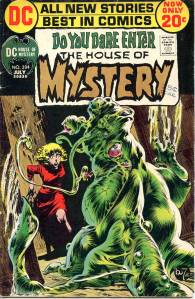
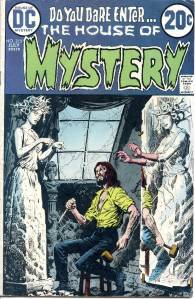
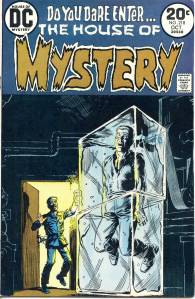
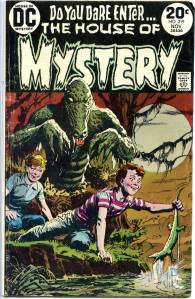
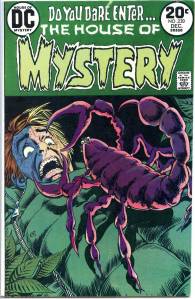
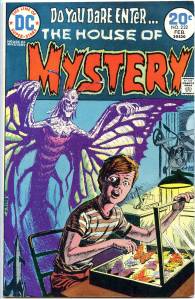
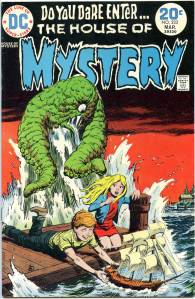
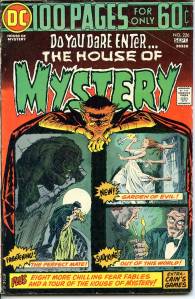
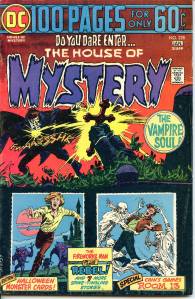
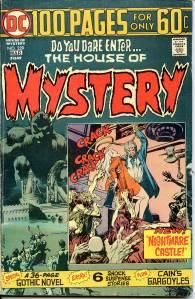
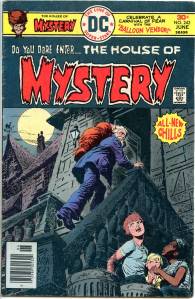
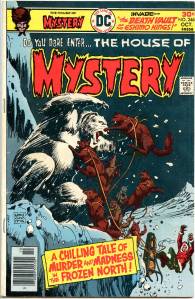
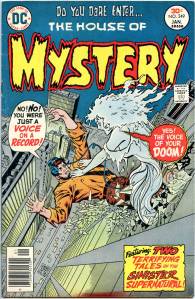
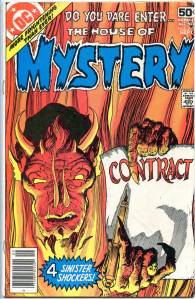
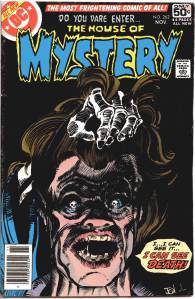
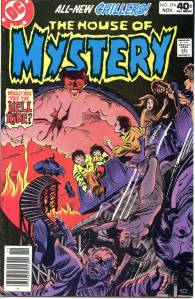
With issue #174, EC Comics veteran Joe Orlando was hired by DC to take over as editor of House of Mystery. As the Comics Code Authority was now being challenged by both DC and Marvel over content restrictions, the series returned to its overt horror themes. The first issue under Orlando would be a reprint issue of old horror/suspense stories, as the new direction would truly begin with #175 (July–August 1968). The issue would introduce a new figure to the series, Cain, the “able care taker” of the House of Mystery who would introduce nearly all stories that would run in the series before its cancellation. Cain would also host the spin-off humor series Plop! and later become a recurring character in Blue Devil and The Sandman.
Artist Bernie Wrightson‘s first professional comic work was the story “The Man Who Murdered Himself” which appeared in issue #179 (March–April 1969)
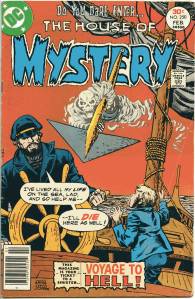
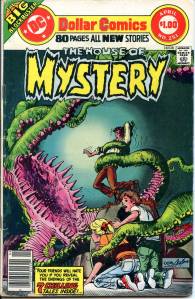
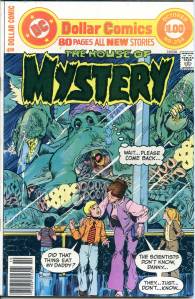
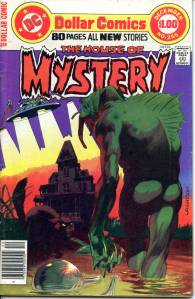
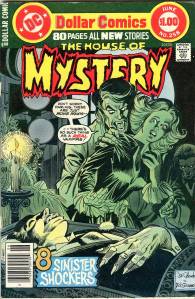
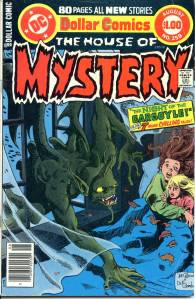
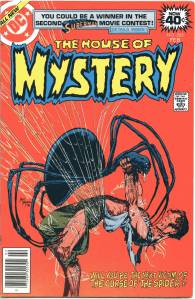
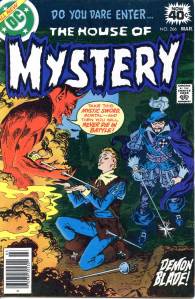
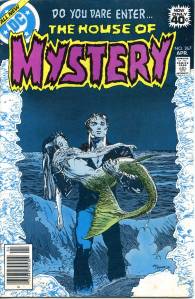
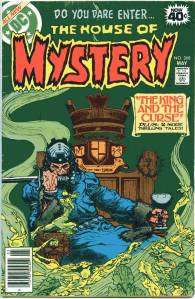
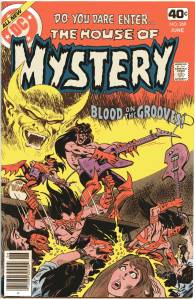
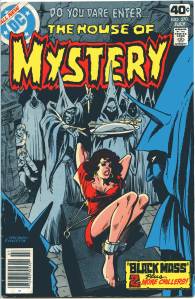
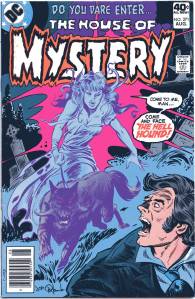
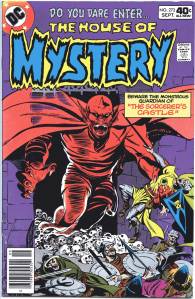
House of Mystery was in the Dollar Comics format for issues #251 (March–April 1977) to #259 (July–August 1978). House of Mystery featured stories by writers T. Casey Brennan (#260, 267, 268 and 274) and Scott Edelman (#257, 258, 260, 264, 266, 270, 272, 273). Orlando’s tenure as editor ended with #257 (March–April 1978).
House of Mystery #199 VG+ $14House of Mystery #204 FN $18House of Mystery #209 FN $24House of Mystery #215 FN+ $14House of Mystery #218 FN-VF $16House of Mystery #219 VG $8House of Mystery #220 FN+ $12House of Mystery #222 VF- $12House of Mystery #223 VF- $12House of Mystery #224 VG+ $14House of Mystery #226 VG+ $14House of Mystery #228 FN+ $24House of Mystery #229 FN $19House of Mystery #240 FN-VF $13House of Mystery #242 VG-FN $10House of Mystery #244 FN-VF $15House of Mystery #246 VG-FN $10House of Mystery #249 VG $5House of Mystery #250 FN-VF $10The House of Mystery #251 FN $11The House of Mystery #252 FN+ $12The House of Mystery #254 VF $16The House of Mystery #255 FN- $8House of Mystery #258 VF- $16The House of Mystery #259 FN+ $10House of Mystery #260 VG+ $7House of Mystery #262 FN $8House of Mystery #263 VF $6House of Mystery #265 FN- $6House of Mystery #266 VF-NM $10House of Mystery #267 VF+ $8House of Mystery #268 VG-FN $5House of Mystery #269 VF- $5House of Mystery #270 FN $6House of Mystery #271 VF- $5House of Mystery #272 FN $5House of Mystery #273 VF-NM $12House of Mystery #274 VF $6
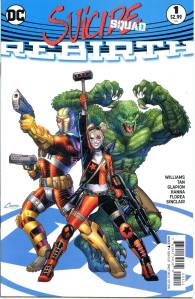
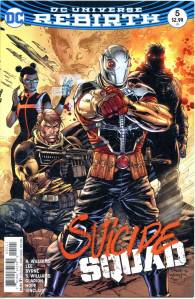
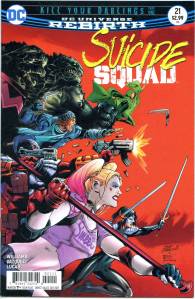
Using the end of the New 52 initiative as a launching point, DC Comics began a second relaunch of its entire line of titles called DC Rebirth in 2016. Suicide Squad (vol. 5) #1 (August 2016) was the debut bimonthly relaunch of the team’s comic book title which consisted of Amanda Waller, Deadshot, Rick Flag, Captain Boomerang, Harley Quinn, Killer Croc, Katana & Enchantress. The Suicide Squad was given a new look, reflecting the team’s appearance in the DC Extended Universe.
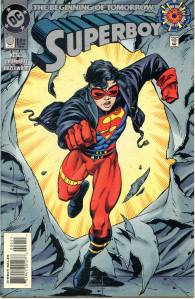
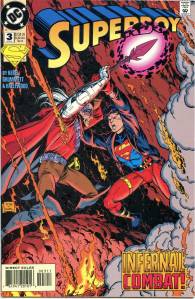
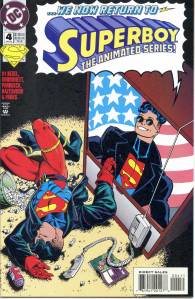
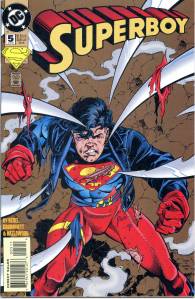
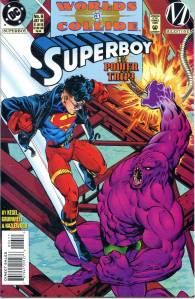
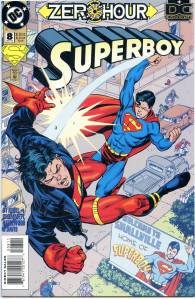
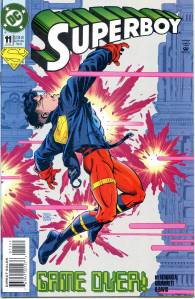
This series featured the clone of Superman and his adventures as part of Cadmus. In Superboy (vol. 4) #1 (February 1994), the new Superboy settled in Hawaii with his supporting cast, becoming Hawaii’s resident superhero for the next four years until Superboy (vol. 4) #48 (February 1998). Starting in Superboy (vol. 4) #56 (November 1998), Superboy returned “home” when he began working for Cadmus. In Superboy (vol. 4) #59 (February 1999), Superman gave Superboy the Kryptonian name of Kon-El. After leaving Cadmus and living on his own for a brief time in Metropolis, Kon-El went to live with Jonathan and Martha Kent in Smallville, where he adopted a secret identity as their nephew (and Clark’s cousin) Conner Kent.
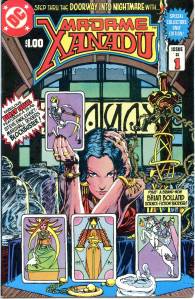
Step thru the doorway into nightmare with Madame Xanadu in the 25-page “Dance For Two Demons.” Script by Steve Englehart, art by Marshall Rogers. Madame Xanadu centerfold by Michael W. Kaluta. Plus: A disease that transforms and corrupts is explored in the 7-page science fiction tale “Falling Down to Heaven…” Script by J.M. DeMatteis, art by Brian Bolland. Cover by Michael W. Kaluta.
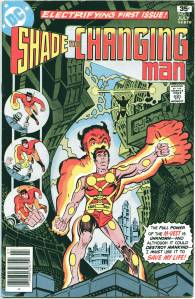
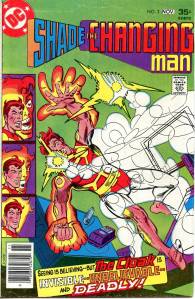
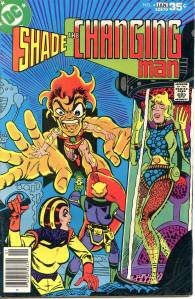
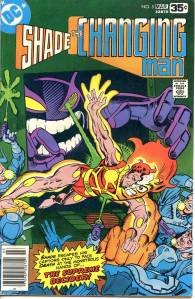
Shade, the Changing Man told the story of a fugitive from the militant planet Meta in another dimension. Shade (whose full name is Rac Shade) was powered by a stolen “M-vest” (or Miraco-Vest, named for its inventor) which protected him with a force field and enabled him to project the illusion of becoming a large grotesque version of himself. The character was the first Ditko had created, or helped to create, for a mainstream publisher for many years. Prior to rejoining DC Comics, Ditko had worked on characters such as his Mr. A. title. Shade was very much a return to mainstream superheroics, although Shade indicated no particular connection with the DC Universe (although the letters columns stated that there is no reason it could not be shown to be there). Michael Fleisher scripted the series based on Ditko’s plotting and art.
The major event many cite as marking the beginning of the Golden Age was the 1938 debut of Superman in Action Comics #1, published by the predecessor of modern-day DC Comics. The creation of Superman made comic books into a major industry. Some date the start to earlier events in the 1930s: The Overstreet Comic Book Price Guide‘s regular publication The Golden Age Quarterly lists comic books from 1933 onwards (1933 saw the publication of the first comic book in the size that would subsequently define the format); some historians, such Roger Sabin, date it to the publication of the first comic books featuring entirely original stories rather than re-prints of comic strips from newspapers (1935) by the company that would become DC Comics.
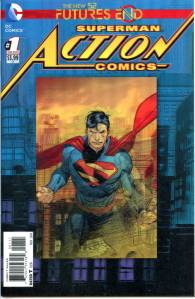
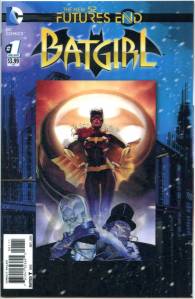
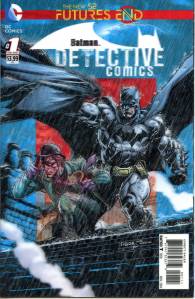
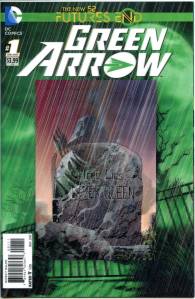
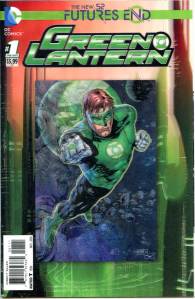
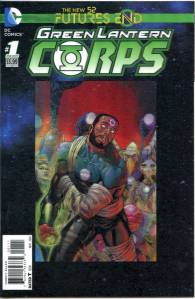
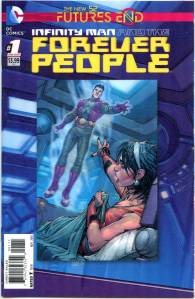
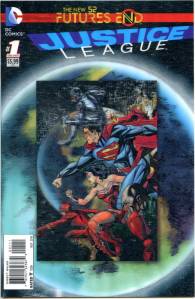
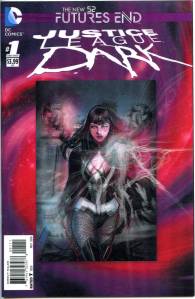
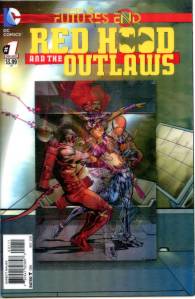
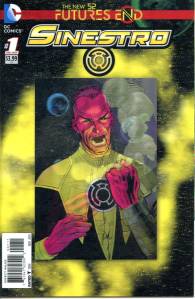
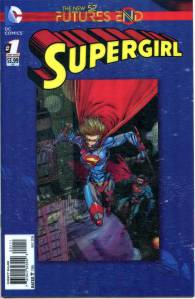
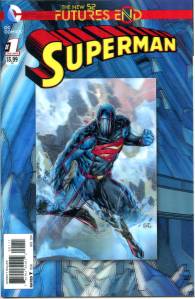
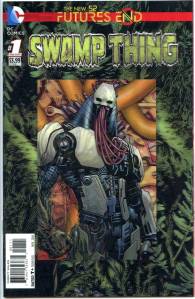
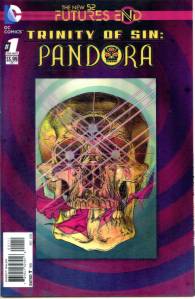
In February 2014, DC announced that as part of the celebration of The New 52’s third anniversary, all ongoing titles published in September 2014 feature stories that tie in to The New 52: Futures End. DiDio stated “One of the things we wanted to do was not just look at it through the lens of the weekly series, but also take a month and flash forward, and see what the potential futures of all our characters might be in that month. So in that month, you’ll get a chance to see where, in the next five years, our characters might finish up or might end up being.” He added that like the “Villains Month” event in September 2013, these titles also feature 3Dlenticular covers, in addition to the 2D ones, saying, “The covers now will also have the ability to have a ‘flicker’ effect. That means that the images change and show the transformation going on… There is a level of change that is taking place with our characters during the course of this story.”
Futures End – Action Comics #1 NM $4
Futures End – Batgirl NM $8
Futures End – Constantine #1 NM $6
Futures End Detective Comics #1 NM $4
Futures End – Green Arrow #1 NM $4
Futures End – Green Lantern #1 NM $4
Futures End – Green Lantern Corps #1 NM $4
Futures End Infinity Man and the Forever People #1 NM $4
DC 100 Page Super Spectacular was published by DC Comics from 1971 through 1973, featuring only reprints initially and later including new stories. The “100 Page” count included both sides of the front and back covers as pages. Each numbered issue appearing under this title featured a wrap-around cover with all editorial content and no advertisements. Versions after late 1973 included advertisements.