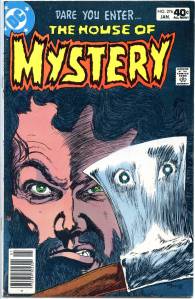
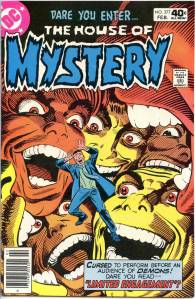
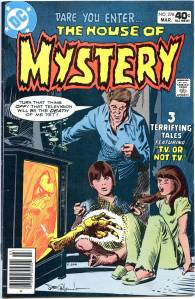
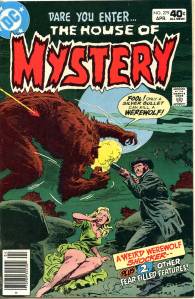
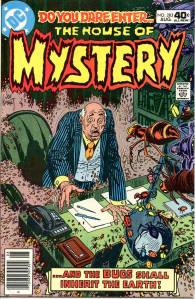
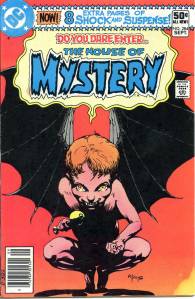
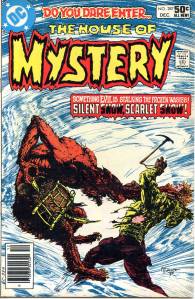
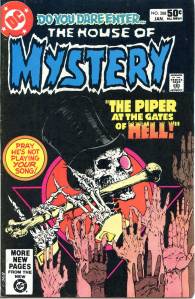
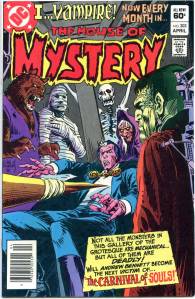
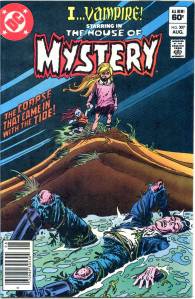
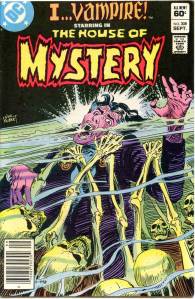
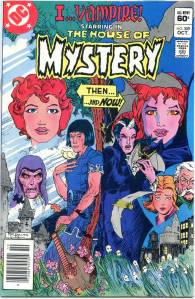
Karen Berger became editor of the series with #292 (May 1981), her first for DC Comics. Under Berger, the series experimented with long-form storylines in the popular I…Vampire serial created by writer J. M. DeMatteis. “I… Vampire” revolved around the heroic vampire, Andrew Bennett, who sought to defeat his nemesis and former lover Mary, the Queen of Blood. This series began in #290 (March 1981) and would last until #319 (August 1983), two issues before the title ended with #321 (October 1983).
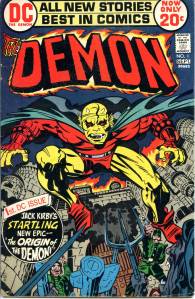
The Demon was created by Jack Kirby. The titular character, named Etrigan, is a demon from Hell who, despite his violent tendencies, usually finds himself allied to the forces of good, mainly because of the alliance between the heroic characters of the DC Universe and Jason Blood, a human to whom Etrigan is bound.
Jack Kirby created the Demon in 1972 when his Fourth World titles were cancelled.According to Mark Evanier, Kirby had no interest in horror comics, but created Etrigan in response to a demand from DC for a horror character. Kirby was annoyed that the first issue sold so well that DC required him to remain on it and abandon the Fourth World titles before he was done with them. Etrigan was inspired by a comic strip of Prince Valiant in which the titular character dressed as a demon. Kirby gave his creation the same appearance as Valiant’s mask.
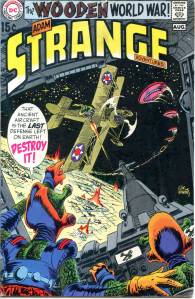
Initially a science fiction anthology title with some continuing features starring SF protagonists, the series became a supernatural-fantasy title beginning with issue #202, for which it received a new logo. Deadman’s first appearance in Strange Adventures #205, written by Arnold Drake and drawn by Carmine Infantino, included the first known depiction of narcotics in a story approved by the Comics Code Authority. The “Deadman” feature served as an early showcase for the artwork of Neal Adams.
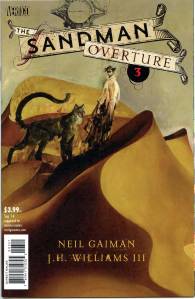
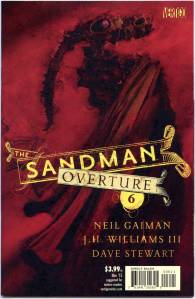
To commemorate the twenty-fifth anniversary of The Sandman, Gaiman wrote a new tale involving the battle that had exhausted Morpheus prior to the beginning of the original story. Written by Gaiman and with art by J. H. Williams III, Overture tells the previously hinted story of Dream’s adventure prior to Preludes and Nocturnes, which had exhausted him so much that it made Burgess’ actions capable of capturing him. The limited series had six issues. Issue #1 was released on October 30, 2013, and although it was planned to have a bi-monthly release schedule, issue 2 was delayed until March 2014, which Gaiman explained was “mostly due to the giant signing tour I was on from June, and me not getting script written on the tour, with knock-on effects”. Special editions were released approximately a month after the original editions, which contain interviews with the creative team, alongside rare artwork.
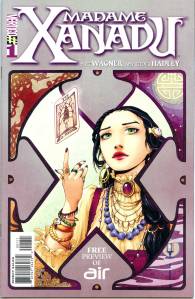
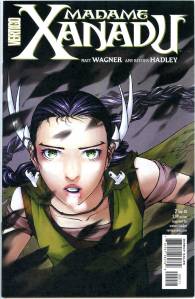
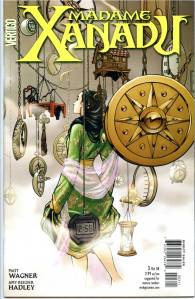
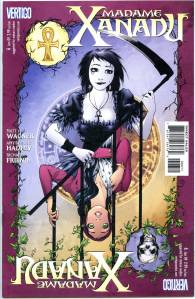
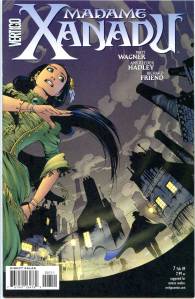
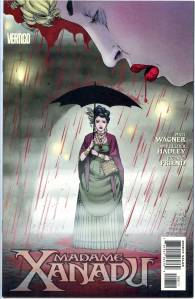
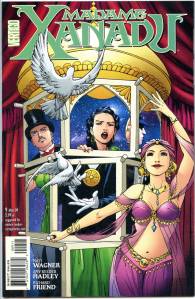
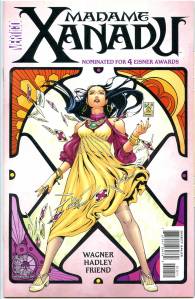
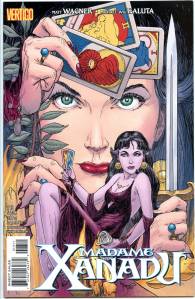
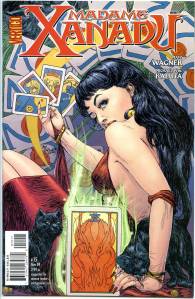
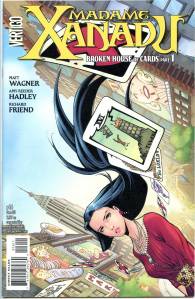
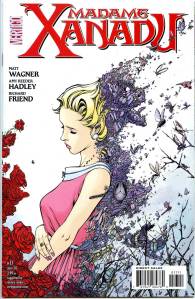
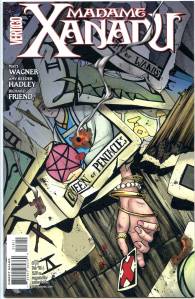
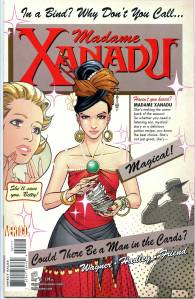
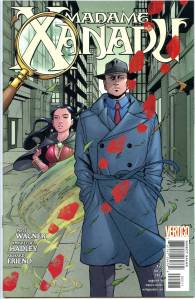
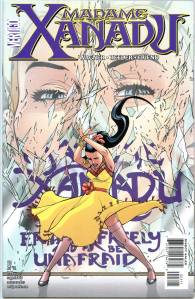
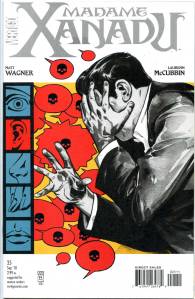
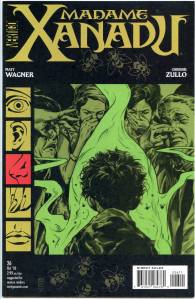
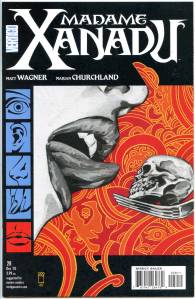
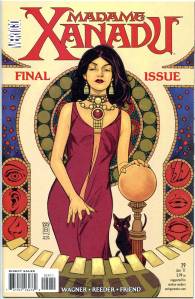
Madame Xanadu eventually got her own ongoing solo book when Matt Wagner and Amy Reeder Hadley teamed up for it in 2008, followed by more Wagner stories with artwork by many other equally amazing artists. The series went for 29 issues, exploring key moments in Xanadu’s very long life and centering in on the details of her magical powers more than any story had before. After the first couple arcs, most of the issues revolved around Xanadu’s actions at the margins of DC’s superhero community in the ‘40s, which makes the run a must-read for fans of DC’s Golden Age.
In her solo series, we discovered that Xanadu’s given name was Nimue Inwudu, and she was the third sibling after Morgan le Fay and the Lady of the Lake in Celtic mythology. They were descendants of the survivors of the destruction of Atlantis known as the homo magi, and thus all possessed inherent magical skills. After a particularly ill-fated affair with Merlin, she traveled the world and gained her immortality by besting Death in a card game.
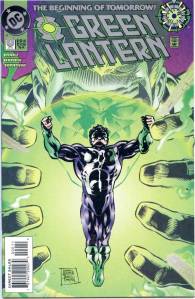
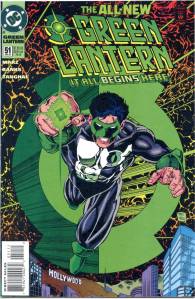
Green Lantern would know a number of revivals and cancellations. Its title would change to Green Lantern Corps at one point as the popularity rose and waned. During a time there were two regular titles, each with a Green Lantern, and a third member in the Justice League. A new character, Kyle Rayner, was created to become the feature while Hal Jordan first became the villain Parallax, then died and came back as the Spectre.
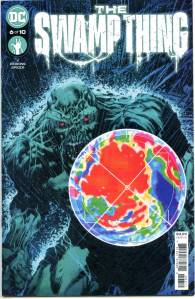
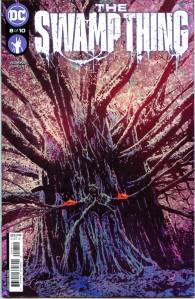
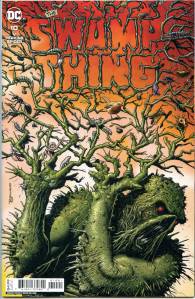
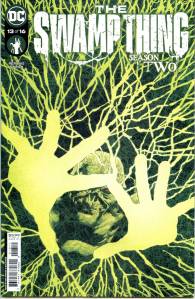
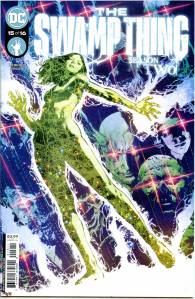
Swamp Thing returns in a new series that stars Levi Kamei as the next Guardian of the Green. Unable to control his transformation into the monstrous Swamp Thing, Levi is thrust into the harsh, unforgiving mystery of grisly murders committed by a supernatural desert legend. Levi must revisit past events in his homeland of India and face the deadly reality of a ravenous new villain in order to comprehend what he is truly, and horrifyingly, becoming.
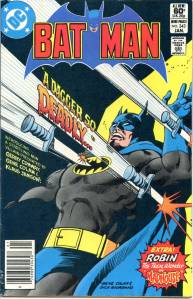
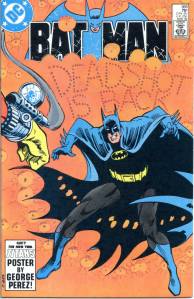
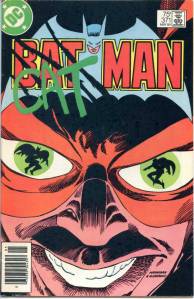
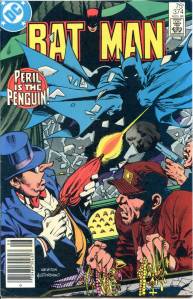
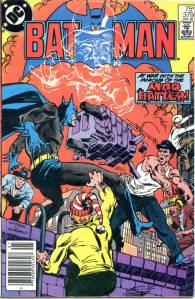
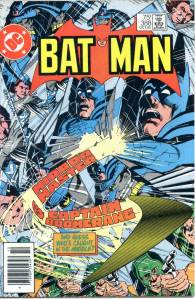
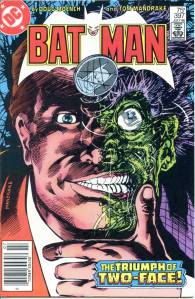
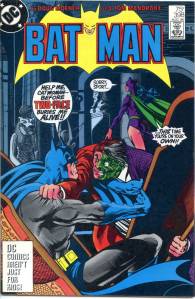
Frank Miller‘s limited series The Dark Knight Returns (February–June 1986), which tells the story of a 55-year old Batman coming out of retirement in a possible future, reinvigorated the character. The Dark Knight Returns was a financial success and has since become one of the medium’s most noted touchstones. The series also sparked a major resurgence in the character’s popularity.
That year Dennis O’Neil took over as editor of the Batman titles and set the template for the portrayal of Batman following DC’s status quo-altering miniseries Crisis on Infinite Earths. O’Neil operated under the assumption that he was hired to revamp the character and as a result tried to instill a different tone in the books than had gone before. One outcome of this new approach was the “Year One” storyline in Batman #404–407 (February–May 1987), in which Frank Miller and artist David Mazzucchelli redefined the character’s origins. Writer Alan Moore and artist Brian Bolland continued this dark trend with 1988’s 48-page one-shotBatman: The Killing Joke, in which the Joker, attempting to drive Commissioner Gordon insane, cripples Gordon’s daughter Barbara, and then kidnaps and tortures the commissioner, physically and psychologically.
The Batman comics garnered major attention in 1988 when DC Comics created a 900 number for readers to call to vote on whether Jason Todd, the second Robin, lived or died. Voters decided in favor of Jason’s death by a narrow margin of 28 votes (see Batman: A Death in the Family). The following year saw the release of Tim Burton‘s Batman feature film, which firmly brought the character back to the public’s attention, grossing millions of dollars at the box office, and millions more in merchandising.
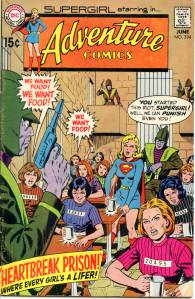
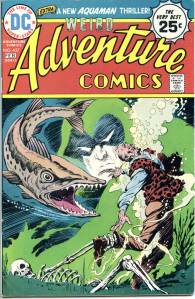
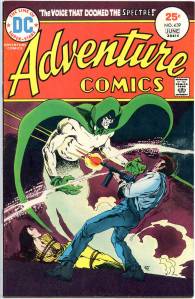
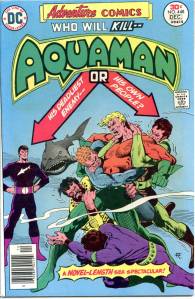
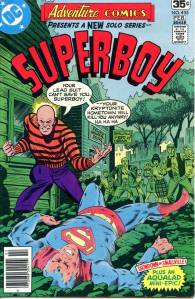
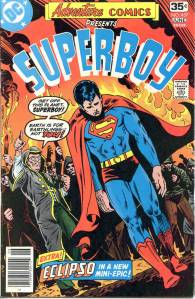
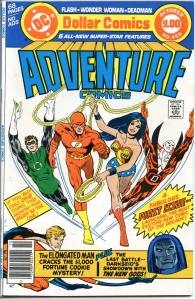
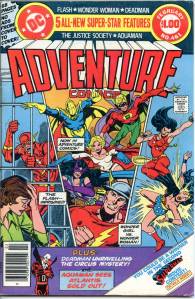
In the late 70’s conventional superheroes returned to the book, beginning behind the Spectre, first a three-issue run of Aquaman (issues #435–437, an early assignment for Mike Grell) and then a newly drawn 1940s Seven Soldiers of Victory script (issues #438–443). Aquaman was promoted to lead (issues #441–452), and backing him up were three-part story arcs featuring the Creeper (#445–447), the Martian Manhunter (#449–451), bracketed by issue-length Aquaman leads. He was awarded his own title and Superboy (#453–458) took over Adventure with Aqualad (#453–455) and Eclipso (#457–458) backups. Following this was a run as a Dollar Comic format giant-sized book (issues #459–466), including such features as the resolution of Return of the New Gods (cancelled in July–August 1978), “Deadman“, and the “Justice Society of America“.
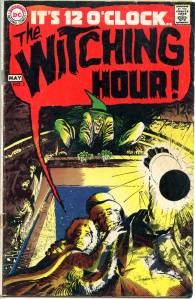
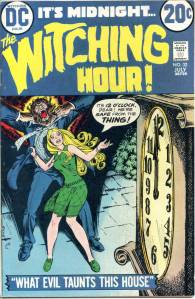
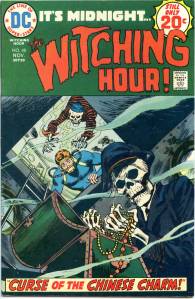
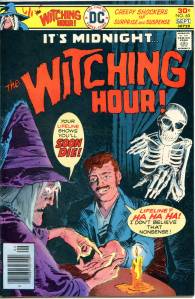
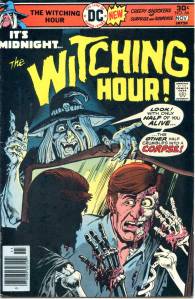
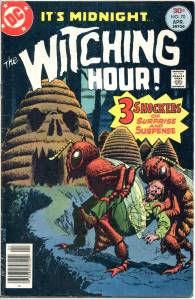
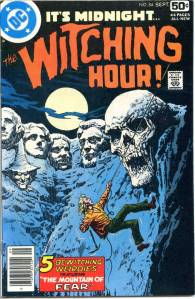
The series was published for 85 issues from February–March 1969 to October 1978. Its tagline was “It’s 12 o’clock… The Witching Hour!” and was changed to “It’s midnight…” from issue #14 onwards. The series was originally edited by Dick Giordano, who was replaced by Murray Boltinoff with issue #14.Nick Cardy was the cover artist for The Witching Hour for issues #1–6, 11–12, 15–16, 18–52, and 60. Stories in the comic were “hosted” and introduced by three witches, Morded, Mildred, and Cynthia.












































 EHT Comics