DC 100 Page Super Spectacular was published by DC Comics from 1971 through 1973, featuring only reprints initially and later including new stories. The “100 Page” count included both sides of the front and back covers as pages. Each numbered issue appearing under this title featured a wrap-around cover with all editorial content and no advertisements. Versions after late 1973 included advertisements.
Tag: DC
Nightwing V4 – Rebirth (2016)
Following the erasure of the knowledge regarding his secret identity from most of the world in the final issue of Grayson, Dick went back to the Nightwing identity in the DC Rebirth era solo series, and the costume’s colors were changed back to the traditional black and blue. At the start of the series (rebirth) Nightwing is still a member of the Court of Owls (after Robin War) and he goes on missions around the world for the Court. They give him a partner named “Raptor” and like Nightwing he wears a costume, but he is much more violent than Dick and multiple times Dick has to try to stop him from killing. Throughout the story arc, Dick must work as an undercover agent but also has to keep his morals and not kill even if the Court tells him to.
Dark Nights: Death Metal (2020)
“Dark Nights: Death Metal” is the sequel to 2017’s Dark Nights: Metal and concludes Scott Snyder‘s run in DC Comics; he stated “Everything is coming back, we want to pay it forward. The Omega Titans, Barbatos, the Forge, it’s all coming back. Everything you read, our goal is to reward. All of it culminates in like a year in like a “Metal” event.”[1] “Death Metal” not only concludes the three-year spanning Dark Multiverse narrative that began with “Dark Nights: Metal”, but will bring an end to the New 52 and DC Rebirth continuities that began with 2011’s “Flashpoint” storyline.
In April 2020 during an interview on DC Daily, Snyder assured that the purpose of “Death Metal” is to unify every storyline from mainline DC Universe comic books, including the standalone stories
The Brave and the Bold V1 (1970’s)
The title was the first to feature Neal Adams‘ version of Batman, generating fan interest that led to Adams’ style defining the modern Batman image to this day. In addition, Adams updated Green Arrow‘s visual appearance by designing a new costume for the character in issue #85 (Aug.–Sept 1969). The primary artist for the second half of the run was Jim Aparo, starting with #98 (October–November 1971). Haney frequently disregarded continuity by scripting stories which contradicted DC’s canon or by writing major heroes in an out-of-character fashion. Issue #100 (Feb.–March 1972) featured Batman and “4 Famous Co-Stars” (Green Lantern, Green Arrow, Black Canary, and Robin) in a story by Haney and Aparo. Issues #112 (April–May 1974) to #117 (Feb.–March 1975) of the series were in the 100 Page Super Spectacular format.
World’s Finest (1960’s)
World’s Finest was initially a 96 page quarterly anthology, featuring various DC characters – always including Superman and Batman – in separate stories. Comics historian Les Daniels noted that “Pairing Superman and Batman made sense financially, since the two were DC’s most popular heroes.” When superheroes fell out of vogue in the early 1950s, DC shortened the size of the publication to that of the rest of its output, leaving only enough space for one story; this led to Superman and Batman appearing in the same story together starting with World’s Finest Comics #71 (July 1954). The series continued to feature Superman and Batman team-ups until issue #197. Noted Batman artist Neal Adams first drew the character in an interior story in “The Superman-Batman Revenge Squads” in issue #175 (May 1968).
The Shadow V1 (1973)
During the mid-1970s, DC Comics published an “atmospheric interpretation” of the character by writer Dennis O’Neil and artist Michael Kaluta in a 12-issue series (Nov. 1973 – Sept. 1975). Kaluta drew issues 1–4 and 6 and was followed by Frank Robbins and then E. R. Cruz. Attempting to be faithful to both the pulp-magazine and radio-drama character, the series guest-starred fellow pulp fiction hero the Avenger in issue #11.
Mystery in Space – Silver Age
“Menace of the Robot Raiders!” (Mystery In Space #53, October 1959) featured one of the most enduring and fondly remembered space heroes of the next ten years, Adam Strange, in a 10-page tale which led to the best known period for the Mystery In Space title. Adam Strange had begun in a three-issue run in Showcase #17 (November–December 1958), and although DC considered that those issues had not sold sufficiently to warrant granting him his own title, his return a year later in Mystery In Space#53 was to last an impressive 42 appearances over the next seven years. The Adam Strange space opera tales were crafted by Gardner Fox in the best Flash Gordon tradition, with the hero caught between two planets and a love a galaxy away, giant menacing robots, dust devils, perils on two worlds, and distinctive art by Carmine Infantino and Murphy Anderson who drew almost all issues until #92 (June 1964). A number of these stories are considered among the finest of the 1960s, including the full-issue tale “The Planet That Came to a Standstill!” (Mystery In Space #75, May 1962), which won comic fandoms Alley Award for the “Best Book-Length Story” of 1962, and was fairly unusual for the time inasmuch as it featured a cross-over with other major DC characters, the Justice League of America.
Superman V2 (1987)
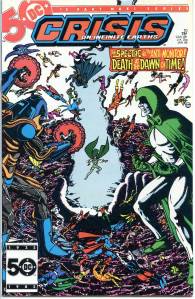
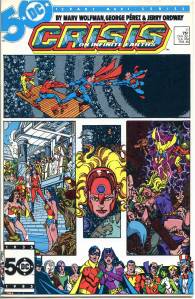
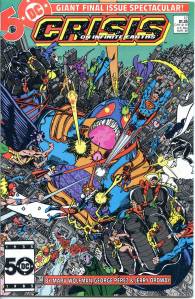
This series was launched after John Byrne revamped the Superman character in 1986 in The Man of Steel limited series, introducing the post-Crisis on Infinite Earths version of the Superman character.
After that limited series, Action Comics returned to publication and Superman vol. 2, #1 was published. The original Superman series (volume 1) became The Adventures of Superman starting with issue #424. Superman vol. 2 continued publishing until April 2006 at which point DC restored The Adventures of Superman to its original title and canceled the second Superman series.
DC Vs. Vampires (2021)
The Justice League has long protected Earth from all manner of foreign and alien invaders over the years, always keeping a vigilant eye to the skies for the next threat. But what if the threat was already walking the Earth…hiding in plain sight…watching…waiting for their moment to strike…
Supergirl V1 (1972)
Supergirl starred in her first solo eponymous monthly series beginning in 1972 until October 1974, when her monthly title merged with Superman’s Girl Friend, Lois Lane, and Superman’s Pal Jimmy Olsen to produce a new title: then-highest DC selling series called The Superman Family, where she eventually became the steady lead story. Linda worked as a student advisor at New Athens Experimental School, before leaving for New York to follow a career in acting with daytime soap Secret Hearts.