Nightwing V4 – Rebirth (2016)

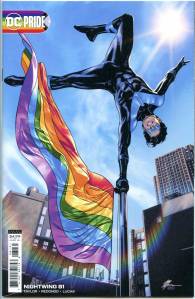
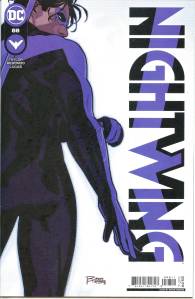
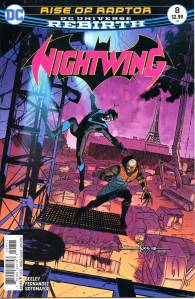
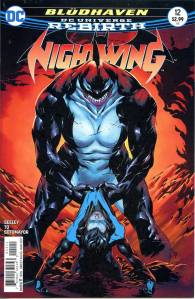
Following the erasure of the knowledge regarding his secret identity from most of the world in the final issue of Grayson, Dick went back to the Nightwing identity in the DC Rebirth era solo series, and the costume’s colors were changed back to the traditional black and blue. At the start of the series (rebirth) Nightwing is still a member of the Court of Owls (after Robin War) and he goes on missions around the world for the Court. They give him a partner named “Raptor” and like Nightwing he wears a costume, but he is much more violent than Dick and multiple times Dick has to try to stop him from killing. Throughout the story arc, Dick must work as an undercover agent but also has to keep his morals and not kill even if the Court tells him to.
 

Secret Wars (1984)

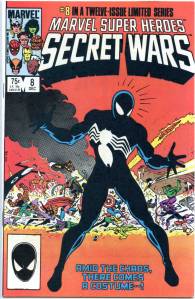
Marvel Super Heroes Secret Wars, commonly known as Secret Wars, is a twelve-issue comic book crossover limited series published from May 1984 to April 1985 by Marvel Comics. The series was written by Jim Shooter with art by Mike Zeck and Bob Layton. It was tied to the same-named toyline from Mattel.

In 2011, IGN listed Secret Wars as one of the best comic book events. Their writers found the action and goofiness of the story to be enjoyable. They also highlighted the impact it had on the Marvel Universe by introducing the symbiote and new characters. In 2011, Alex Zalben of MTV News ranked Secret Wars as the second biggest comic event ever; he praised its story and lasting effect.

Curse of the Spawn (1996)

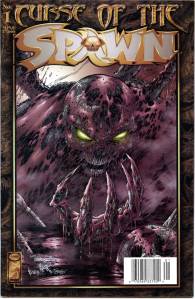
The first four issues of the series focuses on Daniel Llanso. His story is set some 400 years in the future in an apocalyptic world some time after Armageddon where the Devil Phlegethonyarre has his servant, Abaddon the Angel of the Bottomless Pit and their Undead Army of Nightmares (Necro-Soldiers, Zombies powered by Hell’s Darklight) dominate and hunt all humans.
The rest of the Curse of the Spawn issues focuses around related characters from the main Spawn series, like Jessica PriestSam and TwitchThe Angel Abdiel and Angela, Hatchet a Zombie Spawn, and other tales of other hell throughout the comics timelines.

Some of these stories include; An angel named Abdiel sent to spy on Malebolgia is tricked and banished from heaven, A Greek boy named Raenius, who was killed by Zeus (the god) and resurrected as a Hellspawn, who kills Zeus with the gorgon Medusa by his side.

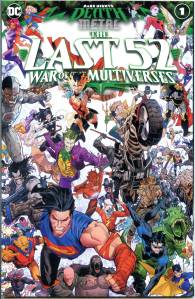
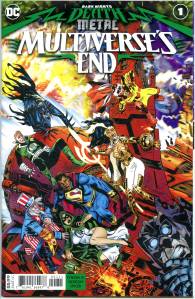
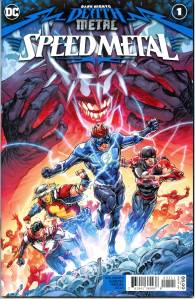
Dark Nights: Death Metal (2020)

“Dark Nights: Death Metal” is the sequel to 2017’s Dark Nights: Metal and concludes Scott Snyder‘s run in DC Comics; he stated “Everything is coming back, we want to pay it forward. The Omega Titans, Barbatos, the Forge, it’s all coming back. Everything you read, our goal is to reward. All of it culminates in like a year in like a “Metal” event.”[1] “Death Metal” not only concludes the three-year spanning Dark Multiverse narrative that began with “Dark Nights: Metal”, but will bring an end to the New 52 and DC Rebirth continuities that began with 2011’s “Flashpoint” storyline.

In April 2020 during an interview on DC Daily, Snyder assured that the purpose of “Death Metal” is to unify every storyline from mainline DC Universe comic books, including the standalone stories

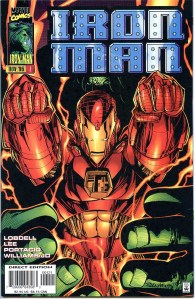
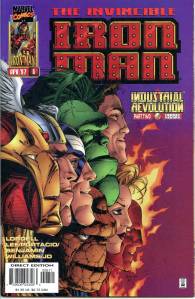
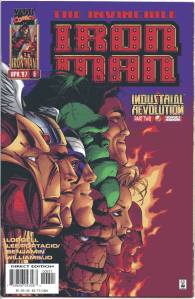
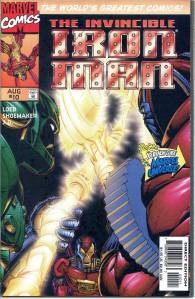
Iron Man V2 – Heroes Reborn (1996)

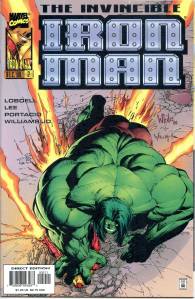
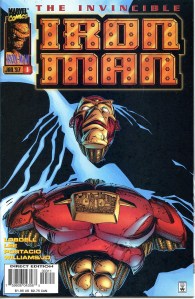
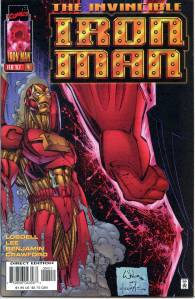
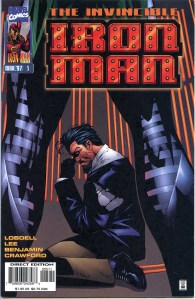
Iron Man left two lives behind when he vanished, but can he avoid his former mistakes in his new one? The armored Avenger takes on Hydra, Heralds and the Hulk – and the eyes of the Marvel Universe are upon him in the form of Loki, the Watcher and Onslaught himself! Featuring Doc Samson and… or rather as …the Abomination! Plus: Rebel O’Reilly, later of Thunderbolts fame!

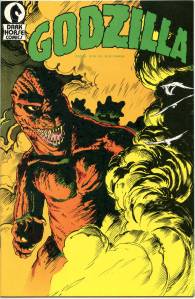
Godzilla – Dark HOrse (1989)

In 1987, Dark Horse Comics acquired the rights to Godzilla and for the next 12 years published various comic books and trade paperbacks based on the character. These ran the gamut from back-up stories in anthology titles, to one-shots, to miniseries, to an ongoing series, as well as various reprints in the trade paperback format.

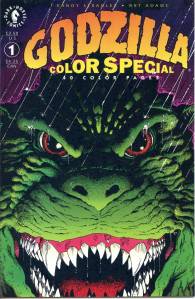
In 1992, an illustration of Godzilla (provided by Arthur Adams) was published in San Diego Comic Con Comics #1. Also that same year the one-shot issue Godzilla Color Special #1 was published. It would be reprinted as simply Dark Horse Classics: Godzilla #1 in 1998.

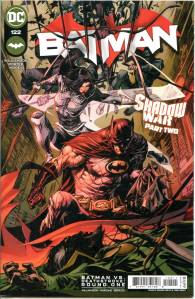
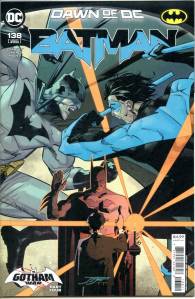
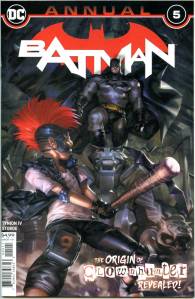
Batman V3 (2020’s)

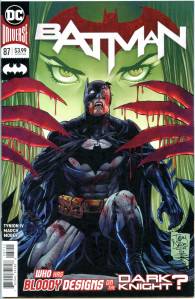
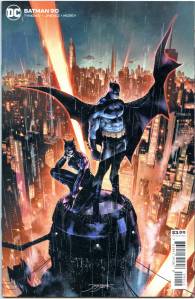
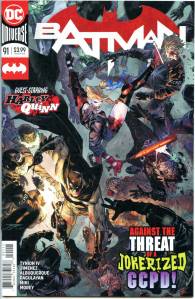
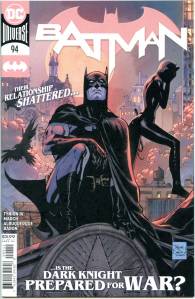
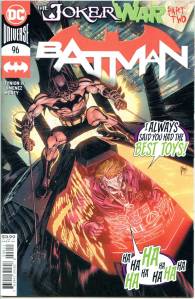
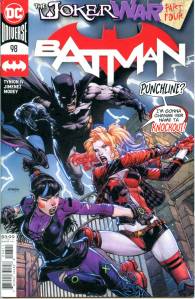
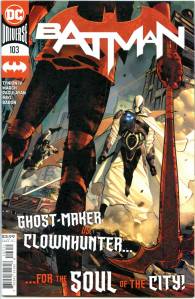
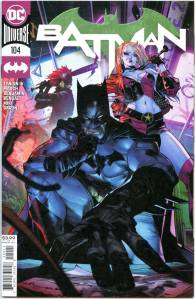
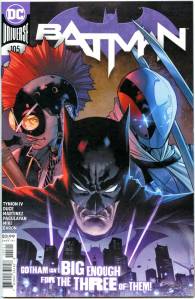
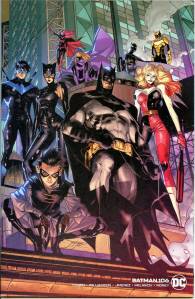
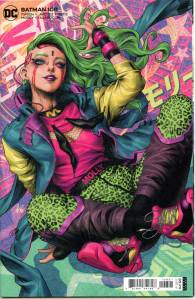
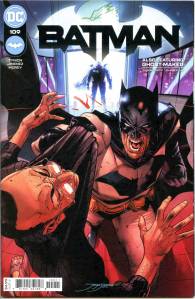
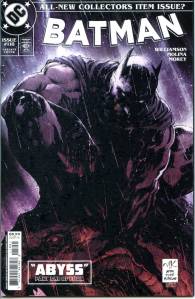
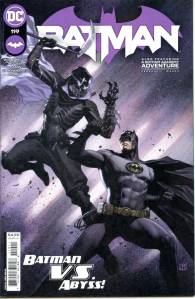
DC Comics ended the DC Rebirth branding in December 2017, opting to include everything under a larger DC Universe banner and naming. The continuity established by DC Rebirth continues across DC’s comic book titles, including volume 1 of Detective Comics and volume 3 of Batman.

After the conclusion of Batman (vol. 3) #85 a new creative team consisting of James Tynion IV with art by Tony S. Daniel and Danny Miki replaced Tom King, David Finch and Mikel Janín.

James Tynion IV & Jorge Jimenez continued the series in 2021.

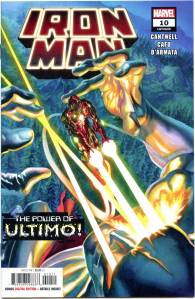
Iron Man V7 (2020)

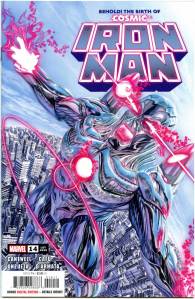
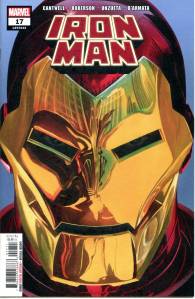
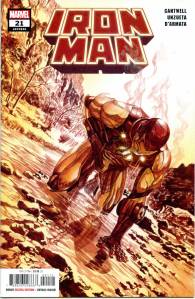
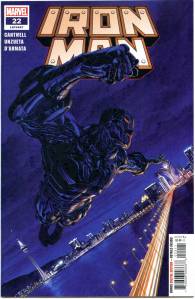
Tony Stark is looking to restart his engine. He decides he’s going back to basics, putting away his high-tech toys and high-profile image so he can get his hands dirty again. It’s time to dig into the guts of real machines, put on some old-fashioned metal and fly.

But can he really lay that Stark-sized ego down? Life isn’t that simple, something that old friends and frustrating foes are quick to point out. If you strip down a billionaire to his bolts, does he run solid or just overheat?

Tony’s going to find out once a threat to the entire universe rears its head from the past. As he suits up again, Tony remains sure of one thing: he’s still IRON MAN down to his flesh and blood core.

Voodoo (1997)

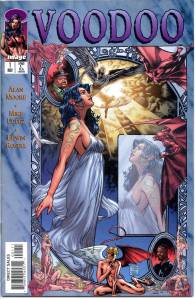
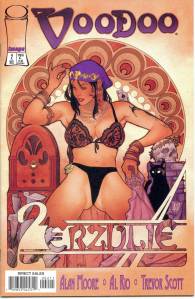
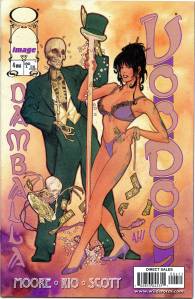
When former WildCATs member Voodoo decides to return to her roots, she reaches a crossroads in New Orleans. The nice gentleman who offers to get her a job as an exotic dancer isn’t quite what he seems…but then again, neither is Priscilla.


The Brave and the Bold V1 (1970’s)

The title was the first to feature Neal Adams‘ version of Batman, generating fan interest that led to Adams’ style defining the modern Batman image to this day. In addition, Adams updated Green Arrow‘s visual appearance by designing a new costume for the character in issue #85 (Aug.–Sept 1969). The primary artist for the second half of the run was Jim Aparo, starting with #98 (October–November 1971). Haney frequently disregarded continuity by scripting stories which contradicted DC’s canon or by writing major heroes in an out-of-character fashion. Issue #100 (Feb.–March 1972) featured Batman and “4 Famous Co-Stars” (Green Lantern, Green Arrow, Black Canary, and Robin) in a story by Haney and Aparo. Issues #112 (April–May 1974) to #117 (Feb.–March 1975) of the series were in the 100 Page Super Spectacular format.