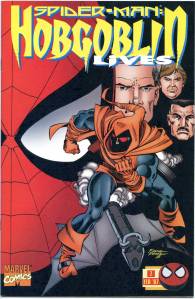
Roger Stern was unhappy with the Hobgoblin’s civilian identity revelation was Leeds and wrote the three-issue miniseries Spider-Man: Hobgoblin Lives in 1997, with the retcon that Kingsley was the original Hobgoblin while Leeds was brainwashed into serving as a fall guy, Macendale is killed off, and Kingsley returned. According to Stern, initially he had not known how to resolve the situation of having two Hobgoblins, and it was at the suggestion of the editorial staff that Kingsley kill Macendale and return to operating as the Hobgoblin.
Tag: Comic
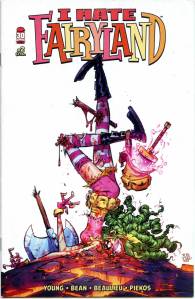
I Hate Fairyland V2 (2022)
Gert is more jaded than ever when she discovers the secret behind the mystery man offering her a mission he doesn’t think she can refuse. Eisner Award-winning writer Skottie Young and artist Brett Bean continue the triumphant return of I HATE FAIRYLAND!
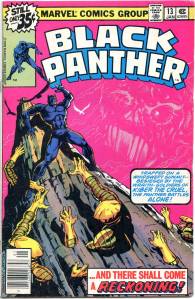
The Black Panther V1 (1977)
Though popular with college students, the overall sales of Jungle Action were low, and Marvel relaunched the Black Panther in a self-titled series, bringing in the character’s co-creator Jack Kirby—newly returned to Marvel after having decamped to rival DC Comics for a time— as writer, penciler, and editor. However, Kirby wanted to work on new characters and was unhappy at being assigned a series starring a character he had already worked with extensively. He left the series after only 12 issues and was replaced by Ed Hannigan (writer), Jerry Bingham (penciler), and Roger Stern(editor). Black Panther ran 15 issues (Jan. 1977 – May 1979). Due to the series’s cancellation, the contents of what would have been Black Panther#16-18 were published in Marvel Premiere #51-53.
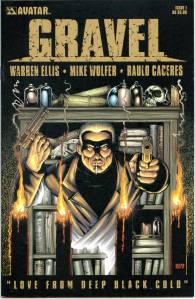
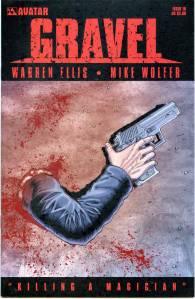
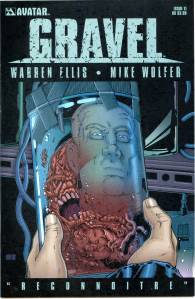
Gravel (2008)
The mad mind of Warren Ellis is once again unleashed on combat magician William Gravel, this time on a full-color, on-going monthly series! Magic. Everyone thought that he was dead, including the Minor Seven, the secret enclave of Britain’s Occult Detectives. But Combat Magician William Gravel is very much alive and looking for the answers to how and why his place in the Minor Seven was filled by another and what the secret society is doing with the Sigsand Manuscript, an ancient supernatural text of unparalleled power. In a quiet, country cottage, Gravel will find the first clues to the Sigsand’s location and in the darkness of the cottage’s basement, a disturbing, unnatural thing that slithered into our dimension by the power of the ancient tome…
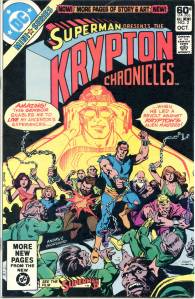
Krypton Chronicles (1981)
A three-issue miniseries entitled The Krypton Chronicles, published in 1981, tells of Superman researching his roots when, as Clark Kent, he was assigned to write an article about Superman’s family by an assignment editor impressed with the television miniseries Roots. To do so, he and Supergirl travel to Kandor, where they learn the history of the El family.
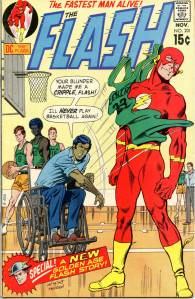
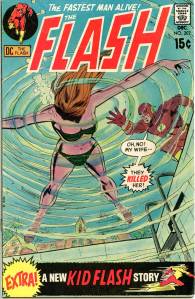
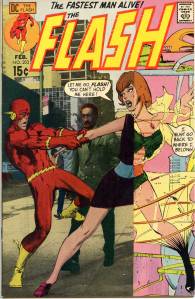
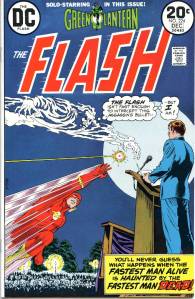
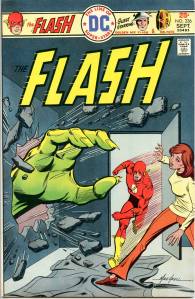
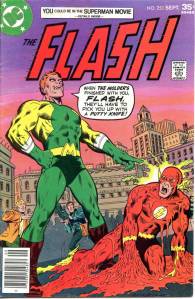
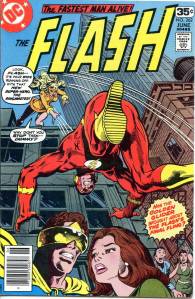
The Flash (1970’s)
In 1956, DC Comics successfully revived superheroes, ushering in what became known as the Silver Age of comic books. Rather than bringing back the same Golden Age heroes, DC rethought them as new characters for the modern age. The Flash was the first revival, in the aptly named tryout comic book Showcase #4 (Oct. 1956).
This new Flash was Barry Allen, a police scientist who gained super-speed when bathed by chemicals after a shelf of them was struck by lightning. He adopted the name The Flash after reading a comic book featuring the Golden Age Flash. After several more appearances in Showcase, Allen’s character was given his own title, The Flash, the first issue of which was #105 (resuming where Flash Comics had left off).
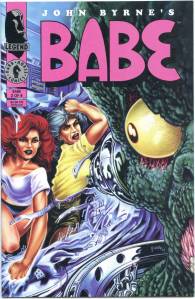
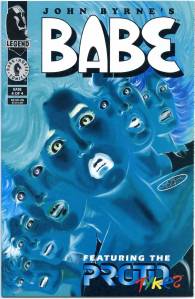
Babe (1994)
Babe was set in the same universe as Hellboy, The Torch of Liberty, and Danger Unlimited. In the first issue, Babe, a super-strong woman, appears to Ralph Rowan, with no memory of where she came from, how she ended up on the beach, where her force comes from, or why nothing hurts her. In issues #2 and #3, she is snatched up by aliens, and teams up with guest The Blonde Bombshell (former partner of Torch of Liberty). After escaping the alien spacecraft in issue #3, Babe and company come back to Earth along with the survivors of a mysterious plane crash, who have some strange connection to Babe. Issue #3 also feature the first appearance of John Byrne’s creation, the Prototykes. Babe’s origin is finally revealed in issue #4, which features the Prototykes again, and Babe’s final showdown with villain Gideon Longshadow.
A 2-issue mini-series titled Babe 2 followed in 1995. Babe 2 finds Babe battling the Shrewmanoid, and also features a guest appearance by Abe Sapien.
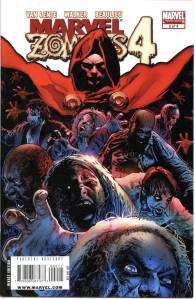
Marvel Zombies 4 (2009)
Marvel Zombies 4 is a four-issue limited series published over the summer of 2009, and features characters from Marvel’s horror comics (Man-Thing, Morbius the Living Vampire, Werewolf by Night, and Mephisto among others).
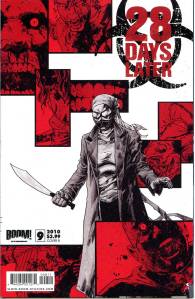
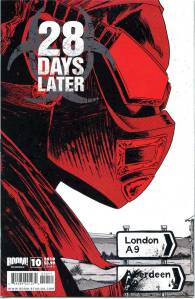
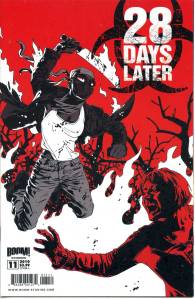
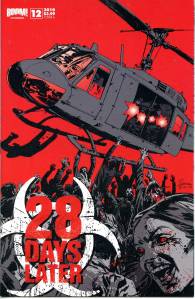
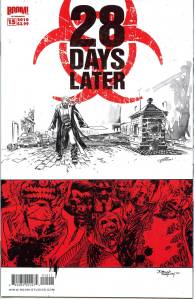
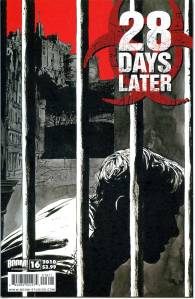
28 Days Later (2009)
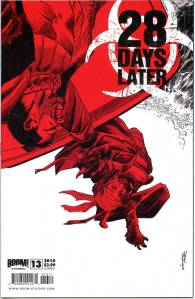
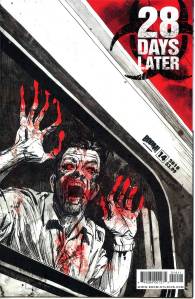
The series follows on from the events of 28 Days Later, initially taking place in the gap between it and the sequel, 28 Weeks Later, much like the graphic novel 28 Days Later: The Aftermath, and as such references the upcoming American NATO occupation. Issues 22, 23 and 24 directly reference events from the second movie, and takes place in the same time frame, ending with the Rage Virus spreading into mainland Europe.
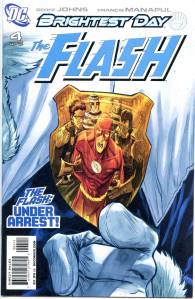
Flash V3 (2010)
Barry Allen is back on the road in this 12 issue series that proceeds the Flash: Rebirth. Ready to go, and tying into the arc of the Brightest Day, Barry begins his journey by regaining his old position at the Central City Police Department’s crime lab and returning to memory lane by hitting the books to finally uncover his mothers true murderer.