Vampire Tales (1973)

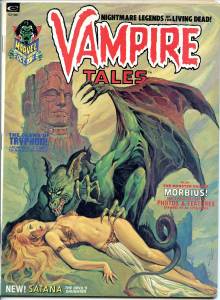
Vampire Tales ran 11 issues cover-dated 1973 to June 1975. With sister titles including Dracula Lives, Monsters Unleashed and Tales of the Zombie, it was published by Marvel Comics‘ parent company, Magazine Management, and related corporations, under the brand emblem Marvel Monster Group. Published b-monthly, the magazine cost 75 cents.

The magazine starred Morbius the Living Vampire, in a feature written primarily by Don McGregor, with pencilers including Pablo Marcos, Rich Buckler, Tom Sutton, and Mike Vosburg, and later by writer Doug Moench, with artist Sonny Trinidad. The vampire hunter Blade starred in two stories by writer Marv Wolfman and artist Tony DeZuniga, in issues #8-9 (Dec. 1974 – Feb. 1975). Steve Gerber contributed a Morbius story to issue #1 (Aug. 1973) and a story starring Lilith, Dracula’s daughter, to issue #6 (Aug. 1974).

Issue #2 (Oct. 1973) introduced Satana, the Devil’s Daughter, in a four-page teaser by writer-editor Roy Thomas and artist John Romita Sr.; and detective Hodiah Twist and his assistant Conrad Jeavons, created by Don McGregor and penciler Carlos Garzon.
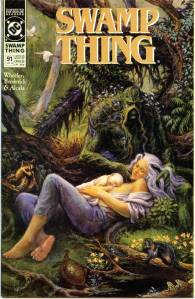
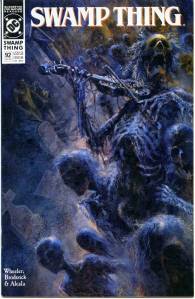
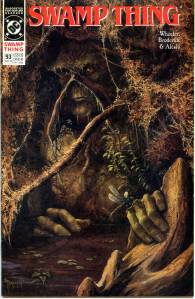
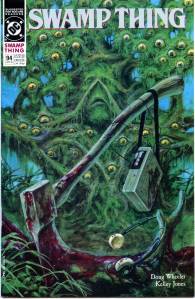
Swamp Thing (1990’s)

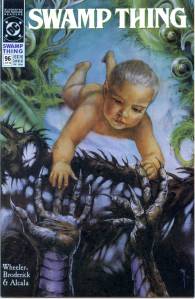
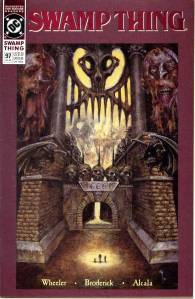
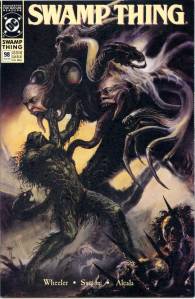
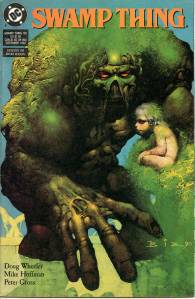
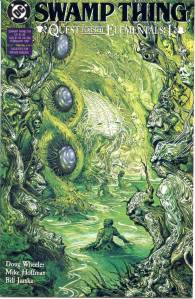
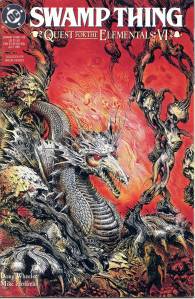
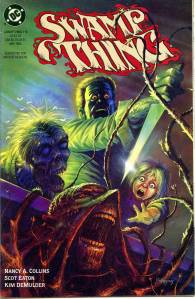
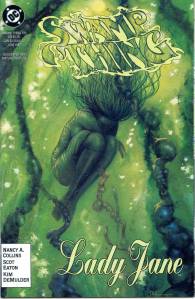
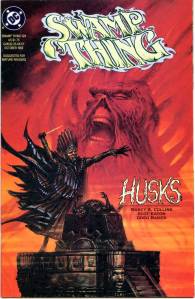
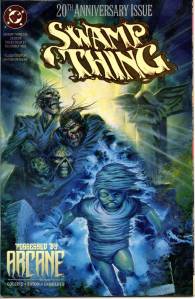
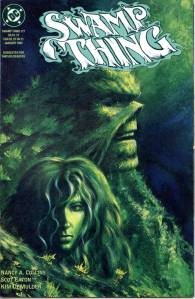
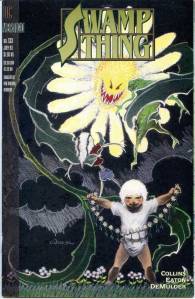
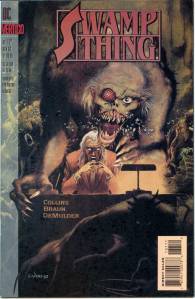
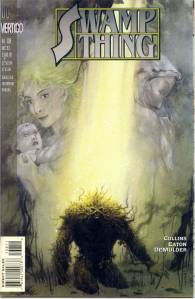
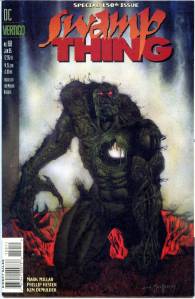
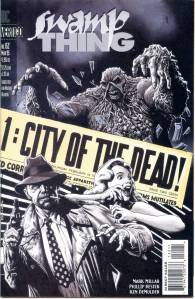
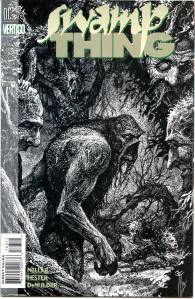
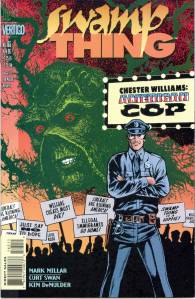
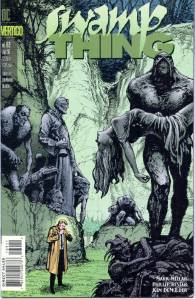
In 1991 DC sought to revive interest in Swamp Thing by bringing horror writer Nancy A. Collins on board to write the series. Starting with Swamp Thing Annual #6, Collins moved on to write Swamp Thing (vol. 2) #110–138, dramatically overhauling the series by restoring the pre-Alan Moore tone and incorporating a new set of supporting cast members into the book. Collins resurrected Anton Arcane, along with the Sunderland Corporation, as foils for the Swamp Thing. Her stories tended to be ecologically based and at one point featured giant killer flowers.

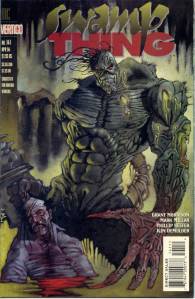
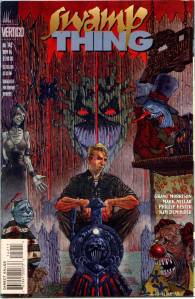
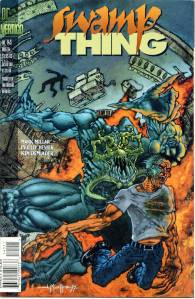
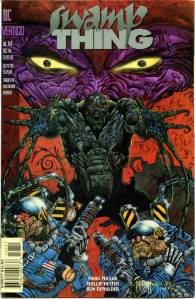
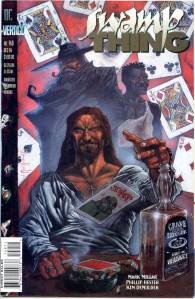
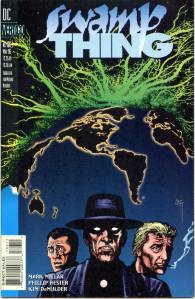
With issue #140 (March 1994), the title was handed over to Grant Morrison for a four-issue story arc, co-written by the then-unknown Mark Millar. As Collins had destroyed the status quo of the series, Morrison sought to shake the book up with a four-part storyline which had the Swamp Thing plunged into a nightmarish dreamworld scenario where he was split into two separate beings: Alec Holland and the Swamp Thing, which was now a mindless being of pure destruction. Millar then took over from Morrison with issue #144, and launched what was initially conceived as an ambitious 25-part storyline where the Swamp Thing would be forced to go upon a series of trials against rival elemental forces. Millar brought the series to a close with issue #171 in a finale where the Swamp Thing becomes the master of all elemental forces, including the planet.

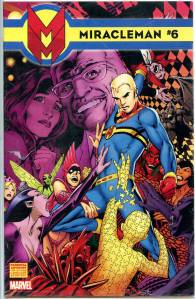
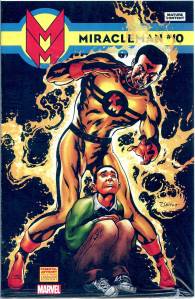
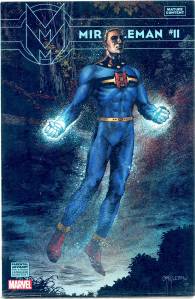
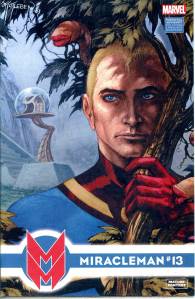
Miracleman – Marvel (2014)

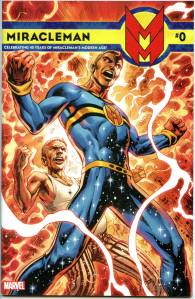
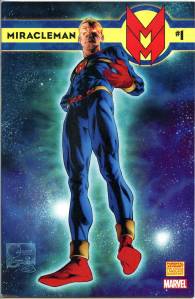
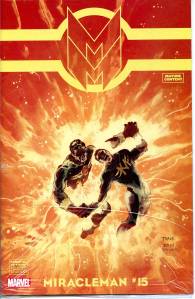
At New York Comic Con 2013, Marvel announced that they had solidified their rights to Miracleman and that Neil Gaiman would finish the story he had started 25 years earlier. The series is being reprinted in a giant-sized format, with each issue containing a reprint of the corresponding issue of the Eclipse Comics series, reprints of select Mick Anglo Marvelman stories, and non-fiction material such as essays, photos, and Marvelman design sketches. The first issue, reprinting the recolored and relettered stories from Warrior #1 & 2/Miracleman #1, was released on January 15, 2014.

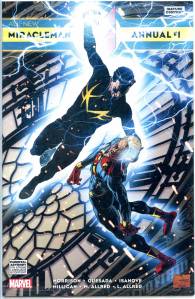
The reprints continued, collecting remastered and recolored work of the original run, with hardcover collections following, and in September 2014 the first new Miracleman material under the Marvel Comics banner was announced. Featuring a ‘lost’ story by Grant Morrison that he wrote in the 1980s, and drawn by Joe Quesada, it will be joined by a brand new story by Peter Milligan and Mike Allred.

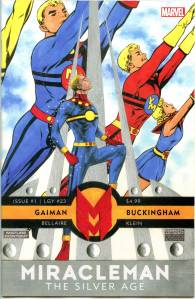
The reprints proceed through #16 when the series was retitled Miracleman: The Golden Age which reprinted issues 17-22. Miracleman by Gaiman & Buckingham: The Silver Age issues 1 to 3 were announced for release in 2017.

Voltron: Defender of the Universe – Revelations (2003)

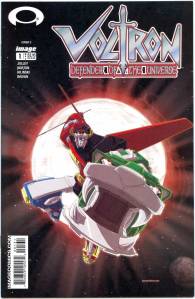
In the far future, with the galaxy divided between interstellar superpowers on the brink of war, a desperate officer of the Earth-based Galactic Union sends five maverick pilots on a bizarre mission: bring back the legendary war machine called Voltron. Journeying to the distant planet Arus, Keith, Lance, Sven, Hunk and Pidge discover the first clue in the centuries old mystery – a clue in the shape of a huge mechanical lion.

Space Ghost (2005)

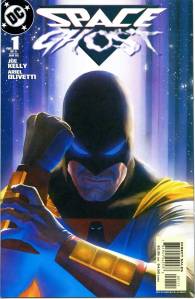
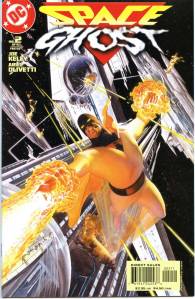
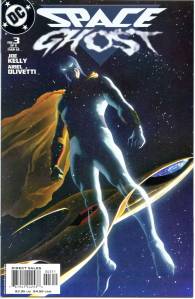
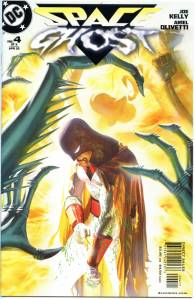
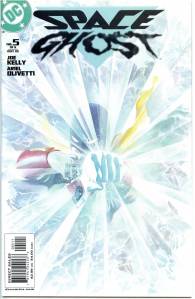
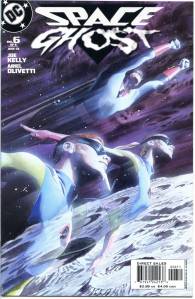
The origin of Space Ghost. Six issue mini-series written by Joe Kelly. Painted covers by Alex Ross. Learn how Space Ghost got his power bands and why he protects the galaxy from evil! Witness the tragic circumstances that led to his donning a cowl and his first battle with archnemesis Zorak!
Tales from Harrow County (2022)

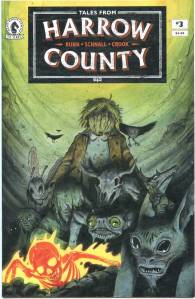
The spinoff series Tales from Harrow County was initially announced as a way to tell stories with different main characters from many different time periods of Harrow County. Misfit City artist Naomi Franquiz drew the first miniseries, Death’s Choir, with Bernice as the protagonist. Emily Schnall later joined the Tales from Harrow County team for the second arc.

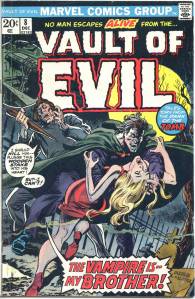
Vault of Evil (1973)

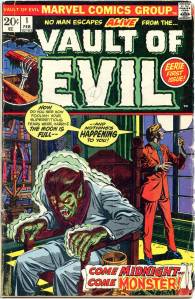
In the early 1970s, horror was hot once again, and Marvel filled that demand with a number of titles, including  Chamber of Chills, Supernatural Thrillers, Crypt of Shadows, and Fear. Like many of these, Vault of Evil relied on reprint material from its 1950s precursor, Atlas comics.

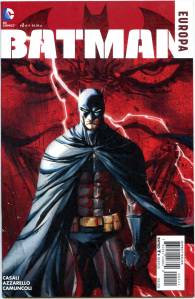
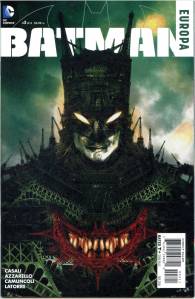
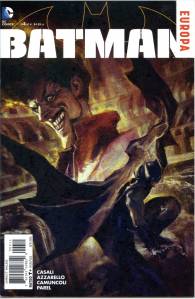
Batman: Europa (2015)

The impossible has happened and Batman is on the verge of being taken down by an enemy he cannot defeat: a virus for which there is no cure! And the only hope for his salvation is The Joker! Who infected Batman, what does The Clown Prince of Crime know, and how will The Dark Knight get that information? Together, the enemies crisscross Europe, desperate to find answers before time runs out. Co Conceived by Writers Matteo Casali and Brian Azzarello, this 4 Issue Miniseries event will feature art by top talents over layouts by Artist Giuseppe Camuncoli, with the first issue penciled and inked Jim Lee.

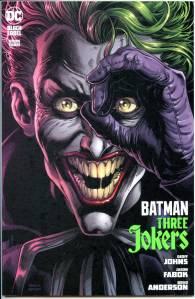
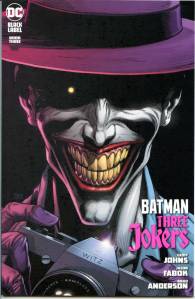
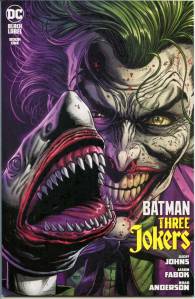
Batman: Three Jokers (2020)

Batman: Three Jokers is a spiritual successor to Batman: The Killing Joke and Batman: A Death in the Family. The three-issue storyline was written by Geoff Johns and illustrated by Jason Fabok and Brad Anderson, began in August and concluded in October 2020. In Three Jokers, Batman, Batgirl and Red Hood follow a lead on the Joker, who appears to have been three different men all along.


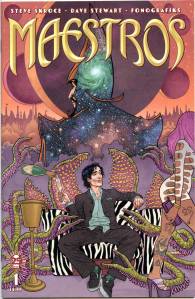
Maestro (2018)

The Maestro and his entire royal family have been murdered. Now, his banished son from Earth will inherit the Wizard King’s throne along with a spell that turns its user into GOD. With enemies everywhere, will this Orlando-born millennial be able to keep his new magic kingdom?