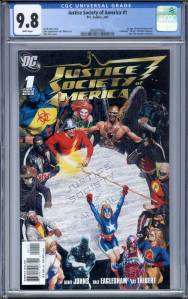
On December 6, 2006, a new series was launched with the creative team of Geoff Johns (writer), Dale Eaglesham (pencils), and Alex Ross (cover art). The beginning of the new series showed JSA veterans the Flash, Green Lantern, and Wildcat choosing members of the new generation of superheroes to train. Continuing a major theme from the previous JSA title, this new series focused on the team being the caretakers of the superhero legacy from one generation to the next.
Justice Society of America #1 CGC 9.8 White Pages $89
Justice Society of America V3 #1 VF-NM $9
Justice Society of America V3 #5 NM $5
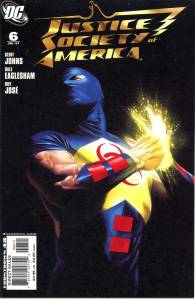
Justice Society of America #6 NM $5
Justice Society of America #8 NM- $3
Justice Society of America V3 #9 NM $5
Justice Society of America #11 VF+ $2
Justice Society of America V3 #11 NM $4
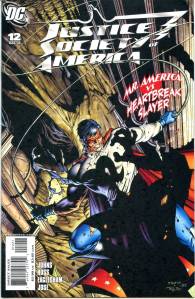
Justice Society of America V3 #12 NM $4
Justice Society of America V3 #13 NM $4
Justice Society of America V3 #14 NM $4
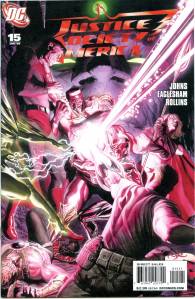
Justice Society of America V3 #15 NM $4
Justice Society of America V3 #16 NM $4
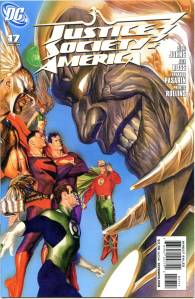
Justice Society of America #17 NM $4
Justice Society of America V3 #17 NM $4
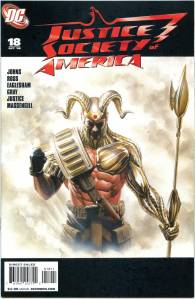
Justice Society of America #18 NM $4
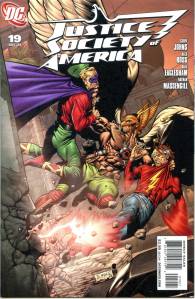
Justice Society of America V3 #19 NM $4
Justice Society of America V3 #20 NM $4
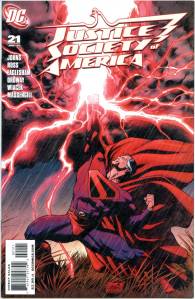
Justice Society of America #21 NM $4
Justice Society of America V3 #21 VF-NM $2
Justice Society of America V3# 22 NM- $3
Justice Society of America V3 #25 NM- $3
Justice Society of America V3 #26 NM $4
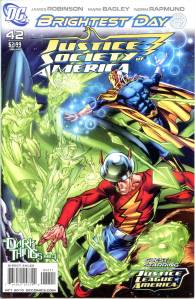
Justice Society of America V3 #42 NM $4
Justice Society of America Kingdom Come Special – Superman VF-NM $6
With only two witches left, one of them takes her own life rather than fall prey to her enemies. With her dying breath, she summons Dawn, the Goddess of the earth, of birth and rebirth, and protector of the witches. Lucifer, prince of lies, and Ahura-Mazda, master of Heaven, may try to bar her path with treachery and swords, but neither Heaven nor Hell is safe from Dawn’s quest for answers – and for bloody vengeance.
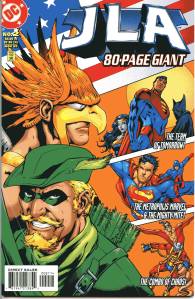
The low sales of the various Justice League spinoff books by the mid-1990s prompted DC to revamp the League as a single team (all the various branch teams were disbanded) on a single title. A Justice League of America formed in the September 1996 limited seriesJustice League: A Midsummer’s Nightmare by Mark Waid and Fabian Nicieza. In 1997, DC Comics launched a new Justice League series titled JLA, written by Grant Morrison with art by Howard Porter and inker John Dell. Morrison stayed as writer for the series through issue #41, though several issues had fill-in writers. JLA #18-#21 and #33 were written by Mark Waid. Mark Millar, Devin Grayson and Mark Waid, and J.M. DeMatteis wrote issues #27, #32 and #35 respectively.
This series, in an attempt at a “back-to-basics” approach, used as its core the team’s original and most famous seven members (or their successors): Superman, Batman, Wonder Woman, Aquaman, Flash (Wally West), Green Lantern (Kyle Rayner), and the Martian Manhunter. Additionally, the team received a new headquarters, the “Watchtower“, based on the Moon. JLA quickly became DC’s best-selling title, a position it enjoyed off and on for several years.
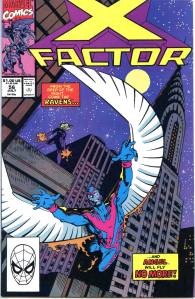
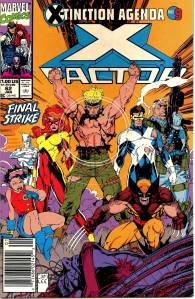
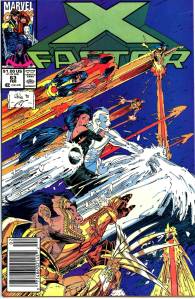
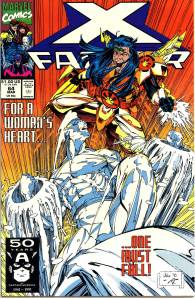
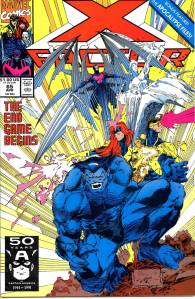
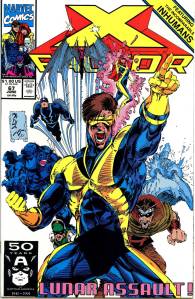
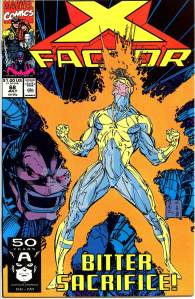
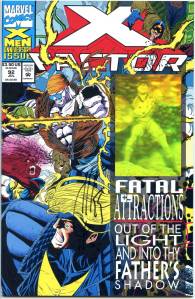
In the last major storyline of the first X-Factor series, published in early 1991, Apocalypse kidnaps Nathan Summers, sensing that he would grow up to be a powerful mutant and possible threat. X-Factor rescue Nathan from Apocalypse’s lunar base, but find him infected with a “techno-organic” virus that cannot be treated. A clan of rebels from the future, known as the Askani, send a representative to the present time to bring Nathan 2,000 years into the future to be treated. Fully grown, he returns to the 20th century as the antihero, Cable.
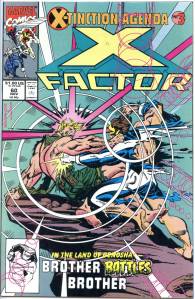
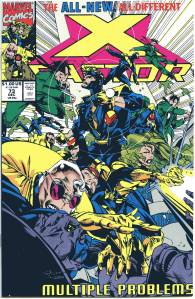
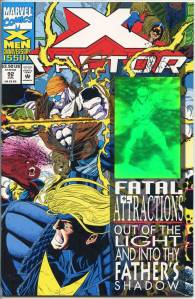
X-Factor, the X-Men, and several minor characters team up to fight the telepathic Shadow King in another crossover event, The Muir Island Saga. Afterward, the original members of X-Factor rejoin the X-Men and several characters from various X-Men-related series become founding members of a new X-Factor.
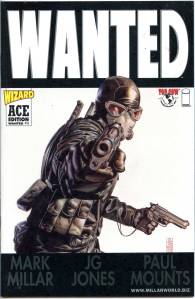
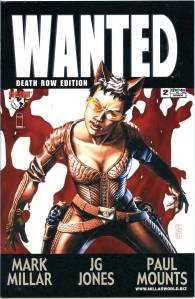
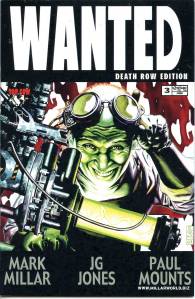
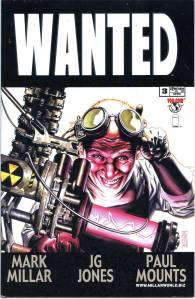
As with Superman: Red Son, Millar claims that the concept for the series occurred to him when he was a child. In this case, it came to him after his brother told him that there were no superheroes any more because they had all disappeared after a great war with their respective supervillains. It was modified from a pitch by Millar for a Secret Society of Super-Villains series.
1986, the year of the aforementioned war in which the supervillains took over and made their world “darker and grittier”, has real world significance to the world of comic books. It marks the publication of Batman: The Dark Knight Returns, Watchmen, and the completion of the 1985-86 Crisis on Infinite Earths series.
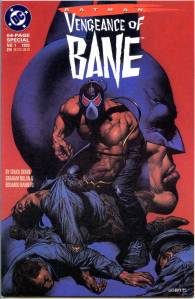
Chuck Dixon, Doug Moench and Graham Nolan created the character of Bane for the Knightfall storyline. Both Dixon and Moench wrote the character’s first appearance in Vengeance of Bane, with art by Graham Nolan. They developed the concept of Bane after an initial idea by Batman editor Dennis O’Neil.
O’Neil had previously created Bane’s birthplace of Santa Prisca in The Question and the drug Venom in the storyline of the same name (published in the pages of Legends of the Dark Knight #16–20, and later reprinted as a trade paperback). In the pages of Azrael, O’Neil introduced Bane’s perception of Venom as both an addiction and the weakness responsible for his earlier defeats.
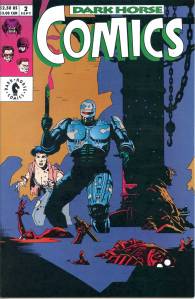
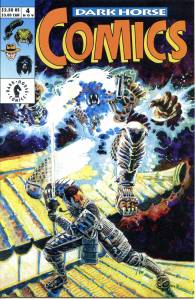
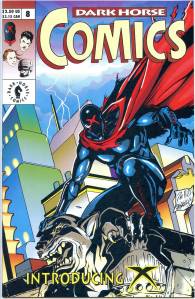
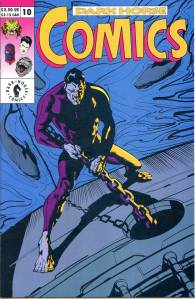
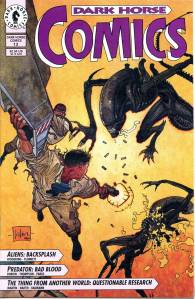
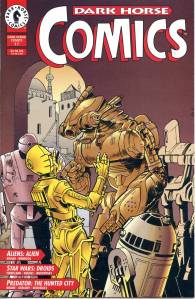
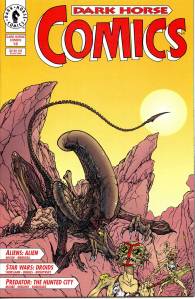
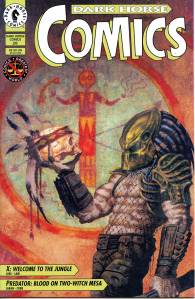
This monthly, color anthology from 1992 featured some of the hottest properties and creators anywhere. Many of the storylines presented in the pages of Dark Horse Comics have spun off into their own monthly series.
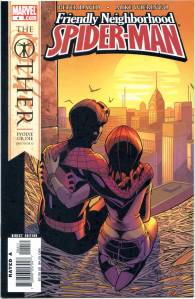
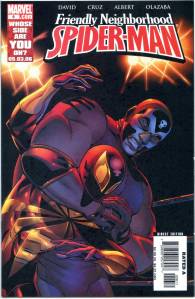
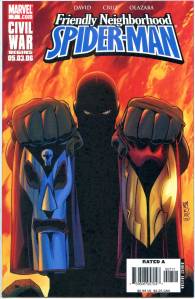
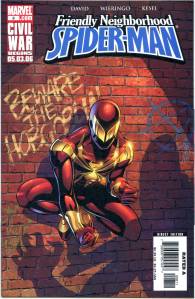
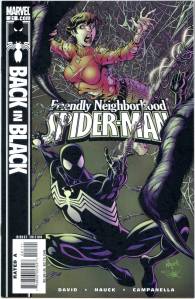
The title is derived from a trademark self-referential comment often made by Spider-Man (as in “just another service provided by your friendly neighborhood Spider-Man!”). The series began in October 2005 and was primarily written by Peter David. Friendly Neighborhood Spider-Man was canceled after issue #24, part 2 of J. Michael Straczynski and Joe Quesada‘s controversial “One More Day” storyline. Kurt Busiek has revealed that in 1995 he originally suggested “Friendly Neighborhood Spider-Man” as the title of the series which was eventually published as Untold Tales of Spider-Man.
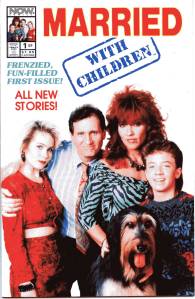
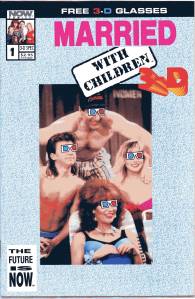
Married… with Children was adapted into a comic book series by NOW Comics starting in 1990. Featuring all the characters you know and love — Al Bundy, Peggy Bundy, Bud Bundy, Kelly Bundy, Snake Face, Greg Miller, Dean Keller and Suzy!
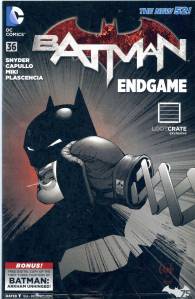
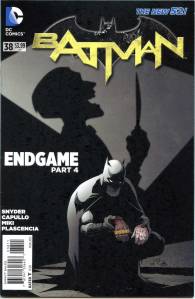
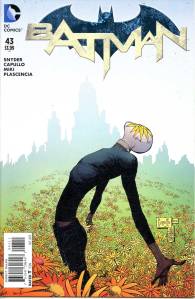
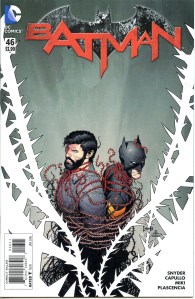
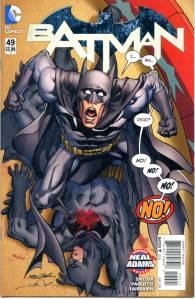
Since the beginning of The New 52, Scott Snyder has been the writer of the flagship Batman title. His first major story arc was “Night of the Owls“, where Batman confronts the Court of Owls, a secret society that has controlled Gotham for centuries. The second story arc was “Death of the Family“, where the Joker returns to Gotham and simultaneously attacks each member of the Batman family. The third story arc was “Batman: Zero Year“, which redefined Batman’s origin in The New 52. It followed Batman #0, published in June 2012, which explored the character’s early years. The final storyline before the Convergence (2015) event was Endgame, depicting the supposed final battle between Batman and the Joker when he unleashes the deadly Endgame virus onto Gotham City. The storyline ends with Batman and the Joker’s supposed deaths. Starting with #41, Commissioner James Gordon takes over Bruce’s mantle as a new, state-sanctioned, mecha Batman, debuting in the Free Comic Book Day special comic Divergence. However, Bruce Wayne is soon revealed to be alive, albeit now suffering almost total amnesia of his life as Batman and only remembering his life as Bruce Wayne through what he has learned from Alfred. Bruce Wayne finds happiness and proposes to his girlfriend, Julie, but Mr. Bloom heavily injures Jim Gordon and takes control of Gotham City and threatens to destroy the city by energizing a particle reactor to create a “strange star” to swallow the city. Bruce Wayne discovers the truth that he was Batman and after talking to a stranger who smiles a lot (it is heavily implied that this is the amnesic Joker) he forces Alfred to implant his memories as Batman, but at the cost of his memories as the reborn Bruce Wayne. He returns and helps Jim Gordon defeat Mr. Bloom and shut down the reactor. Gordon gets his job back as the commissioner, and the government Batman project is shuttered.










































 EHT Comics