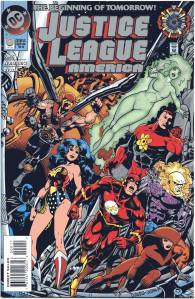
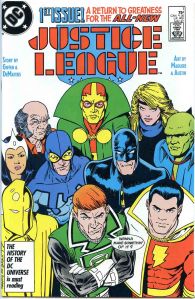
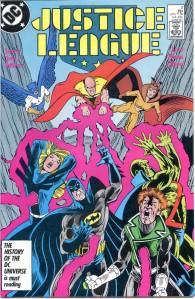
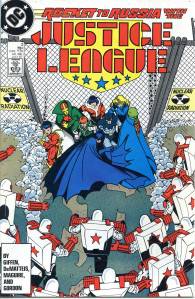
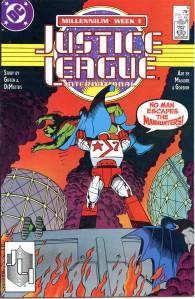
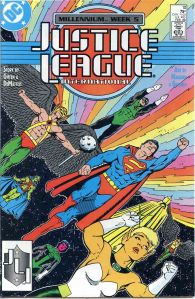
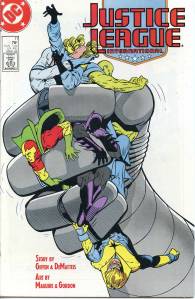
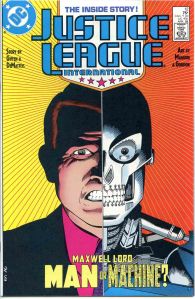
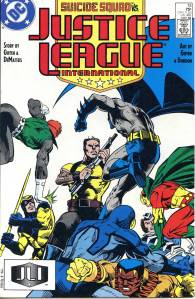
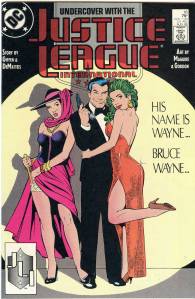
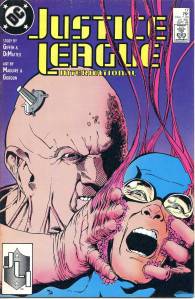
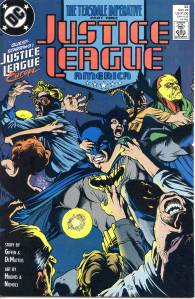
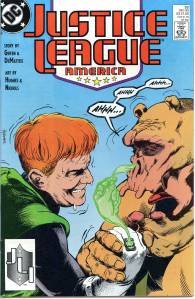
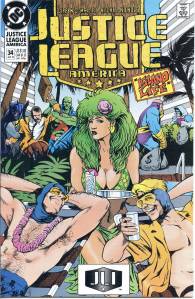
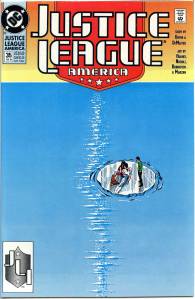
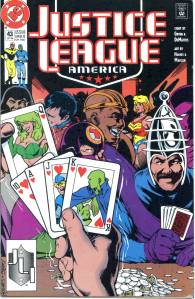
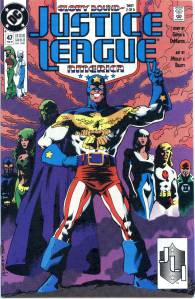
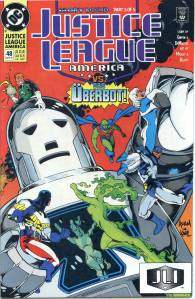
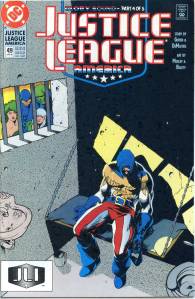
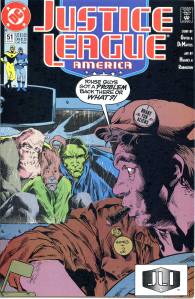
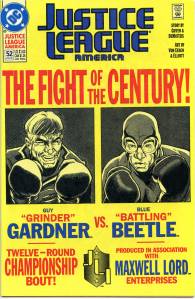
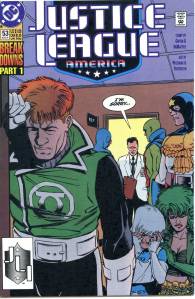
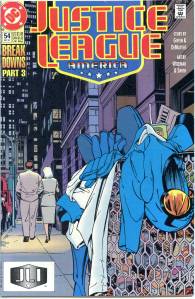
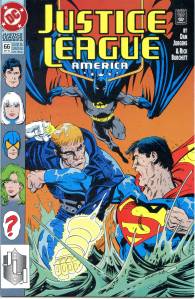
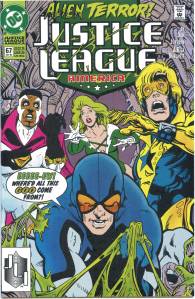
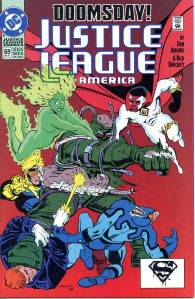
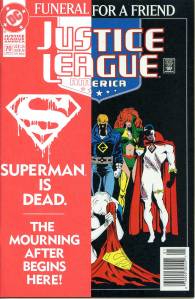
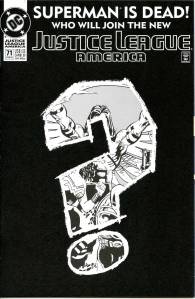
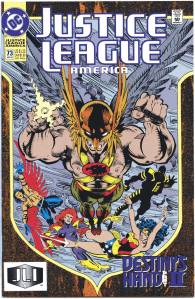
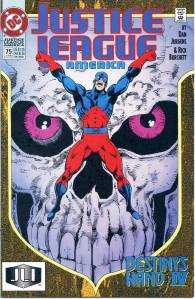
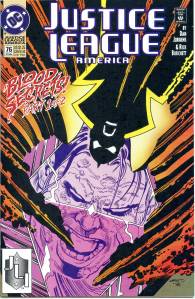
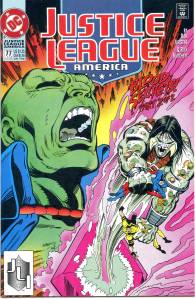
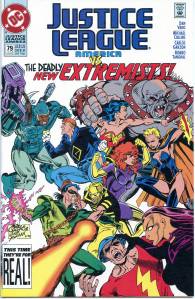
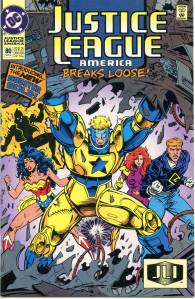
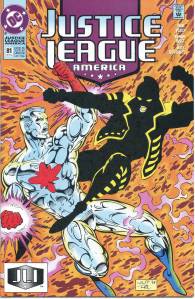
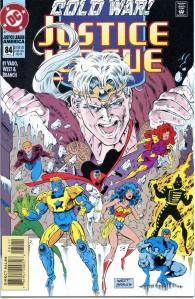
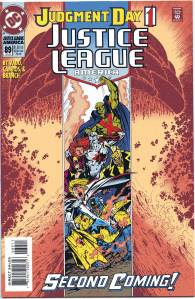
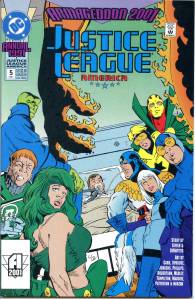
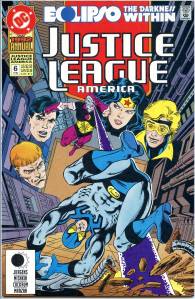
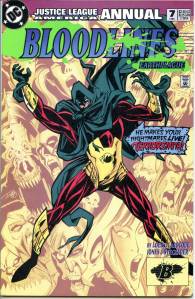
The 1986 company-wide crossover “Legends” concluded with the formation of a new Justice League. The new team was dubbed “Justice League” then “Justice League International” (JLI) and was given a mandate with less of an American focus. The new series, written by Keith Giffen and J. M. DeMatteis with art by Kevin Maguire (and later Adam Hughes), added quirky humor to the team’s stories. In this incarnation, the membership consisted partly of heroes from Earths that, prior to their merging in the Crisis on Infinite Earths, were separate. The Giffen/DeMatteis team worked on Justice League for five years and closed out their run with the “Breakdowns” storyline in 1991 and 1992. The series’ humorous tone and high level of characterization proved very popular.
Justice League #0 NM- $3Justice League #1 VF+ $8Justice League #2 NM- $5Justice League #2 VF+ $3Justice League #3 NM $6Justice League #5 VF+ $4Justice League #6 VF+ $3Justice League #9 NM- $3Justice League #10 NM $4Justice League #11 NM $4Justice League #12 NM $4Justice League #13 NM $4Justice League #16 NM $4Justice League #17 NM- $3Justice League #18 NM $26Justice League #19 NM $14Justice League #20 NM $9Justice League #21 NM $6Justice League #22 NM $4Justice League #23 NM $4Justice League #24 NM $4Justice League #25 NM $4Justice League #26 NM $4Justice League #27 NM $4Justice League #28 NM $4Justice League #29 NM $4Justice League #30 NM- $3Justice League #31 NM $9Justice League #32 NM $5Justice League #33 NM $4Justice League #34 NM $6Justice League #35 NM $4Justice League #36 NM $4Justice League #37 NM $4Justice League #38 NM $4Justice League #39 NM $4Justice League #40 NM $5Justice League #41 NM $4Justice League #42 NM $4Justice League #43 NM $4Justice League #47 NM $4Justice League #48 NM $4Justice League #49 NM $4Justice League #50 NM $4Justice League #51 NM- $3Justice League #52 NM- $3Justice League #53 NM $4Justice League #54 NM $4Justice League #56 NM $5Justice League #57 NM $4Justice League #59 NM $4Justice League #60 NM $4Justice League #61 NM $5Justice League #62 NM $4Justice League #63 NM $4Justice League #64 NM $4Justice League #65 NM $4Justice League #66 NM $4Justice League #67 NM $4Justice League #69 NM $9Justice League #70 NM $4Justice League #71 NM $3Justice League #73 NM $4Justice League #75 NM $4Justice League #76 NM $5Justice League #77 NM- $4Justice League #79 NM $4Justice League #80 NM $4Justice League #81 NM $4Justice League #84 NM $4Justice League #89 NM $4Justice League #92 NM $3Justice League Annual #5 NM $4Justice League Annual #6 NM $4Justice League Annual #7 NM $4
Strange Tales switched to superheroes during the Silver Age of Comic Books, retaining the sci-fi, suspense and monsters as backup features for a time. Strange Tales‘ first superhero, in 12- to 14-page stories, was the Fantastic Four‘s Human Torch, Johnny Storm, beginning in #101 (Oct. 1962). Here, Johnny still lived with his elder sister, Susan Storm, in fictional Glenview, Long Island, New York, where he continued to attend high school and, with youthful naivete, attempted to maintain his “secret identity” (later retconned to reveal that his friends and neighbors knew of his dual identity from Fantastic Four news reports, but simply played along).
The title became a “split book” with the introduction of sorcerer Doctor Strange, by Lee and artist Steve Ditko. This 9- to 10-page feature debuted in #110 (July 1963), and after an additional story and then skipping two issues returned permanently with #114. Ditko’s surrealistic mystical landscapes and increasingly head-trippy visuals helped make the feature a favorite of college students, according to Lee himself. Eventually, as co-plotter and later sole plotter, in the “Marvel Method“, Ditko would take Strange into ever-more-abstract realms, which yet remained well-grounded thanks to Lee’s reliably humanistic, adventure/soap opera dialog. Adversaries for the new hero included Baron Mordo introduced in issue #111 (Aug. 1963) and Dormammu in issue #126 (Nov. 1964). Clea, who would become a longtime love interest for Doctor Strange, was also introduced in issue #126.
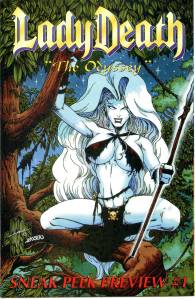
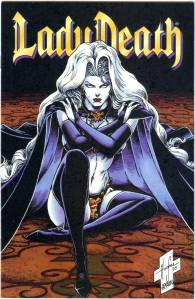
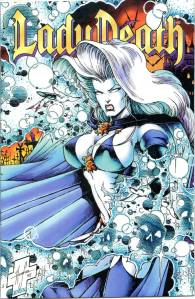
Lady Death, once the ruler of Hell falls prey to a band of barbaric pirates when the goddess Vandala sends her on an odyssey into the unknown, where her powers are at their weakest. Vandala forces Lady Death into acts of heroism, such as defeating the evil angel Agony, and the murderous siblings, Macabre and Malady. Meanwhile, Lucifer attempts to regain the throne of Hell by resurrecting his mighty warrior, Asteroth, and sending him on Lady Death’s trail.
Lady Death – The Odyssey Sneak Preview #1 NM $5Lady Death – The Odyssey #1 NM $12Lady Death – The Odyssey #3 NM $6Lady Death – The Odyssey #4 NM $6
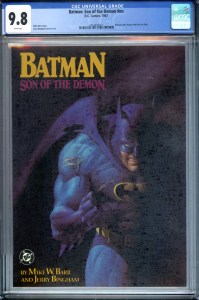
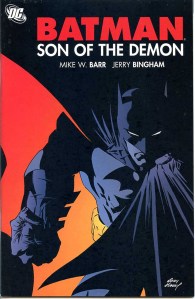
Although it was deemed to be non-canon, Grant Morrison used this story in the 4-issue story “Batman and Son” in 2006. DC Comics published a new printing of Batman: Son of the Demon in 2006 featuring new cover art by Andy Kubert for the first time in standard comic book size with a cover price of $5.99 US, tying in with the “Batman and Son” arc.
Batman Son of the Demon CGC 9.8 White Pages $295Batman Son of the Demon 2006 NM $19
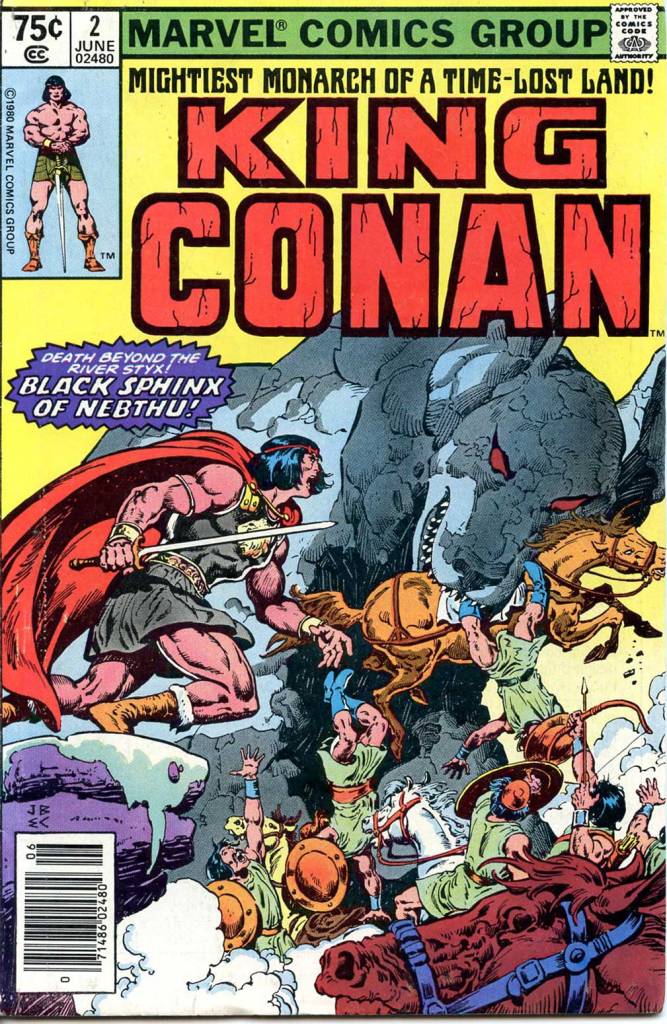
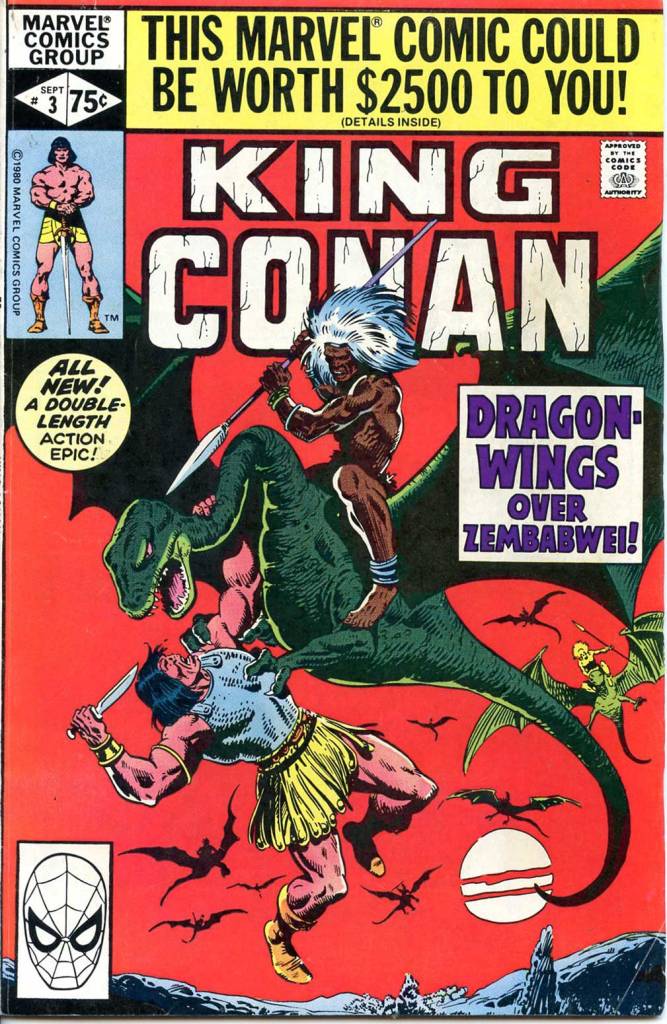
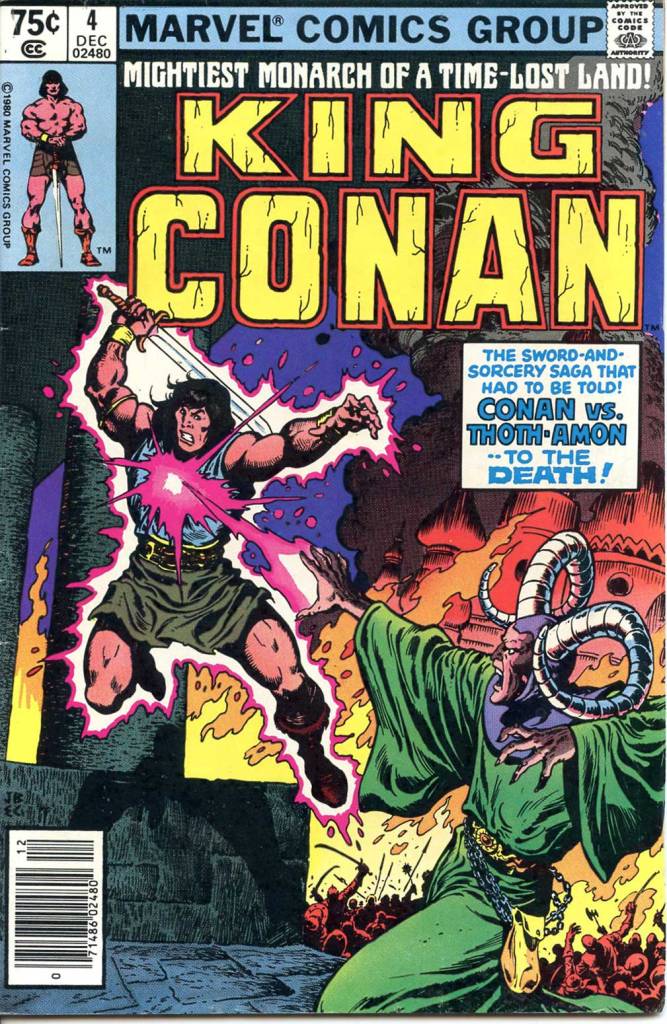
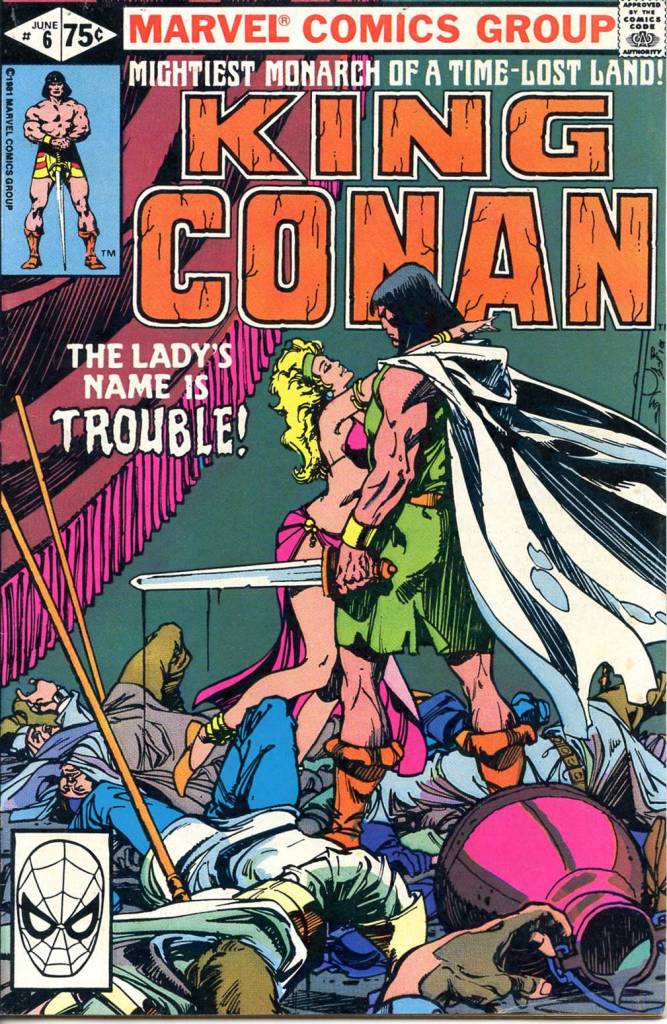
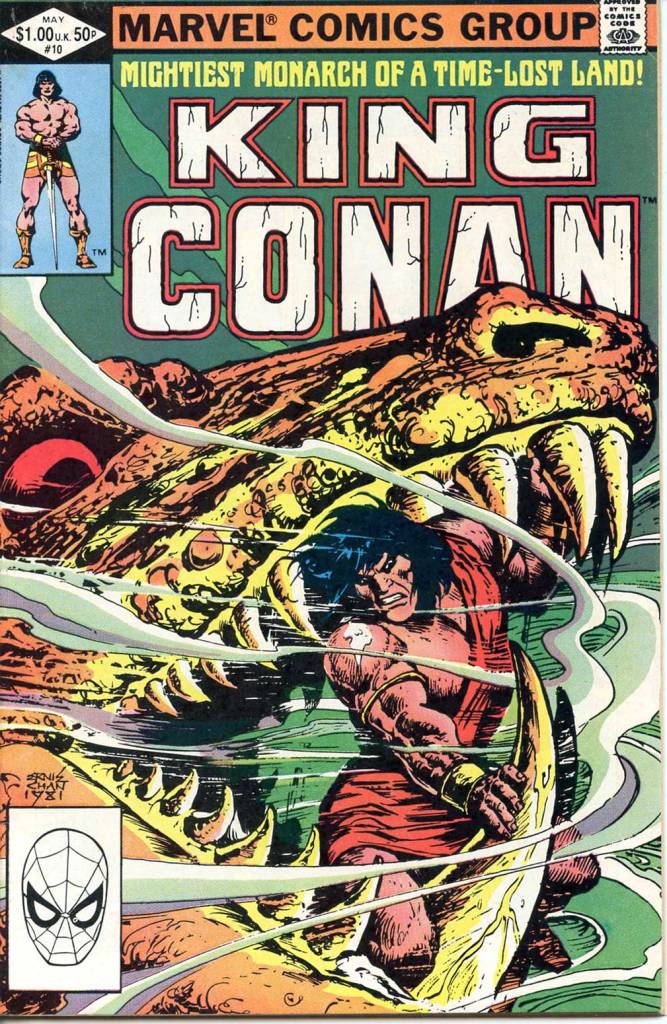
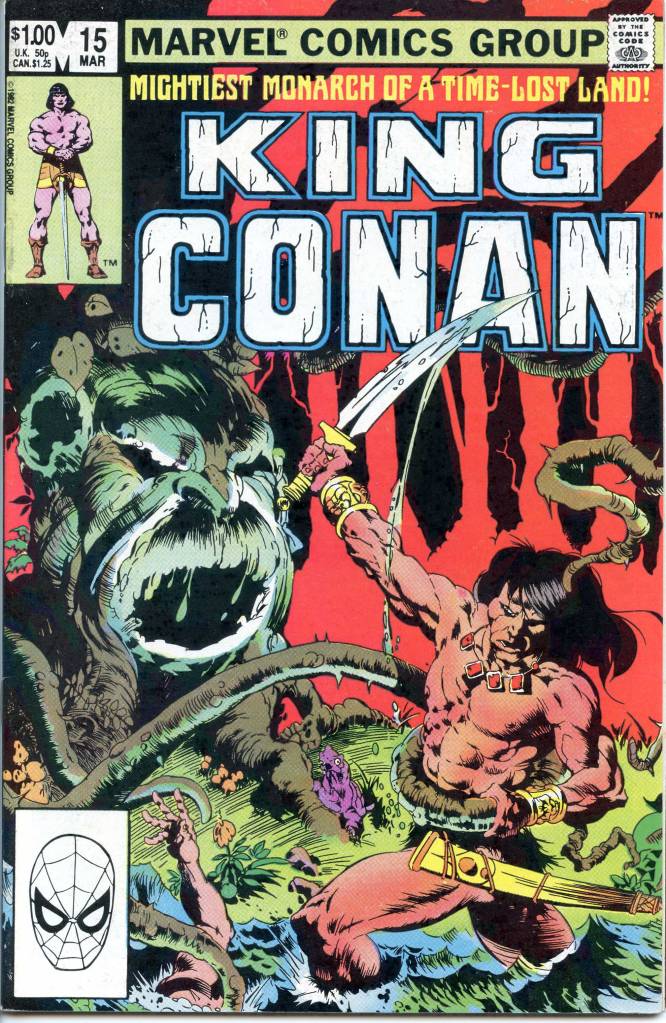
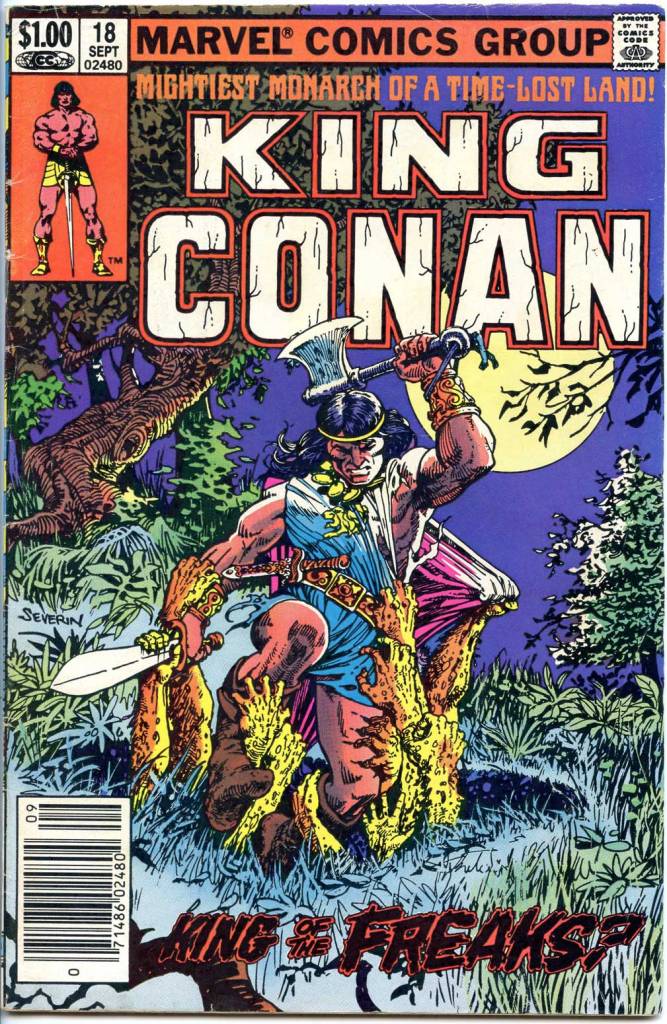
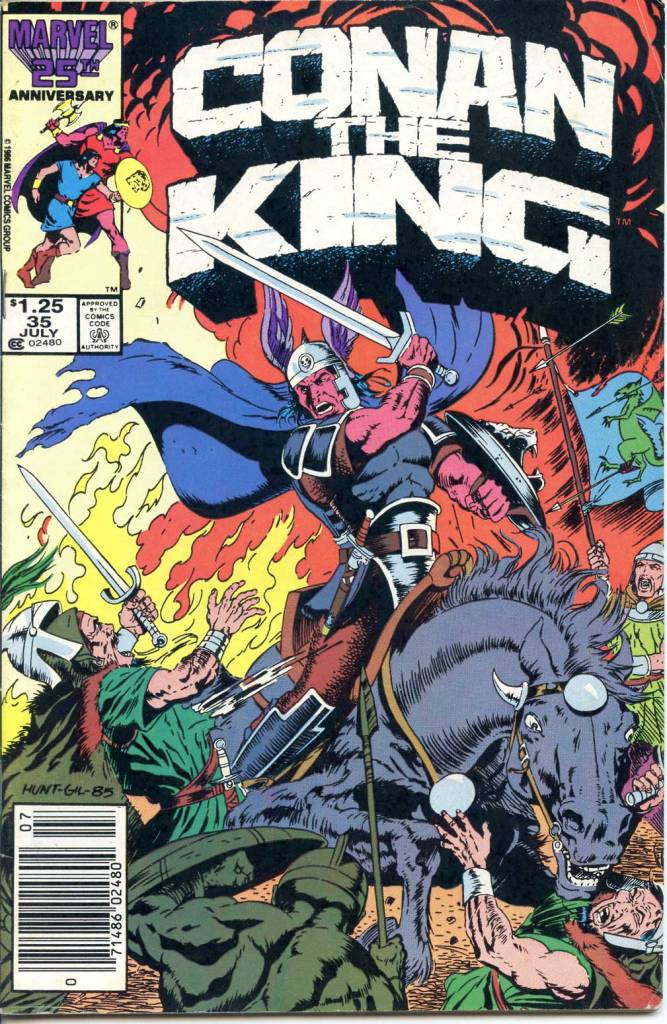
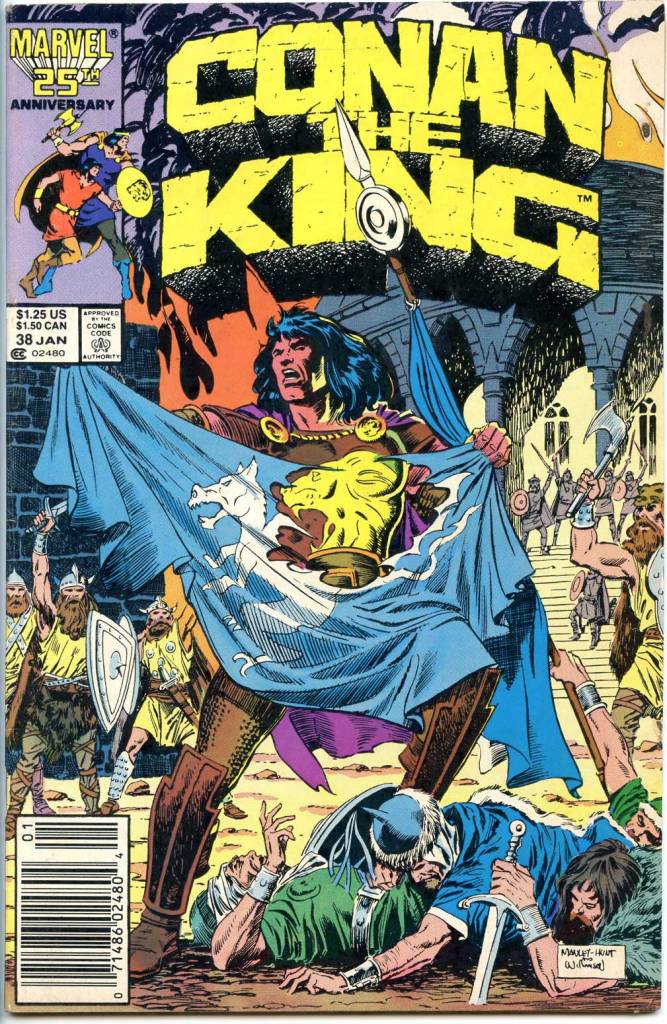
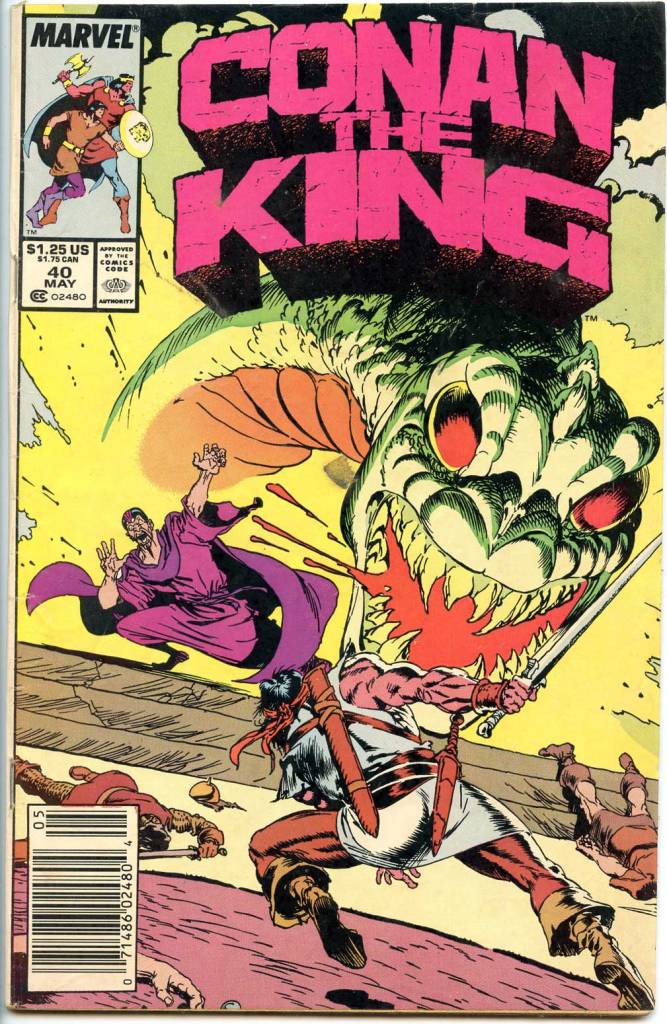
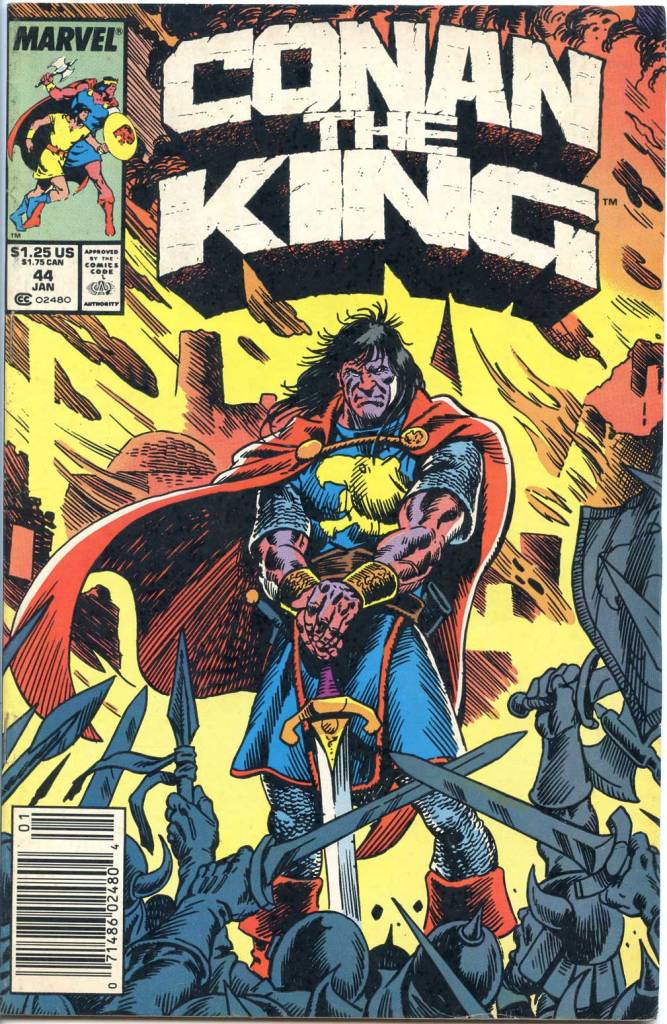
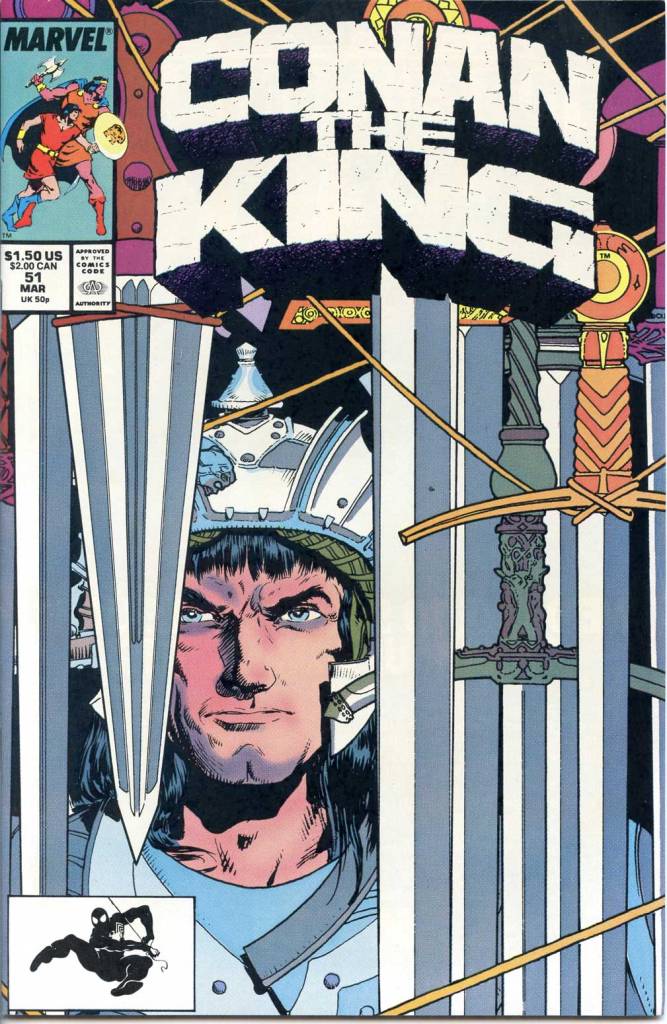
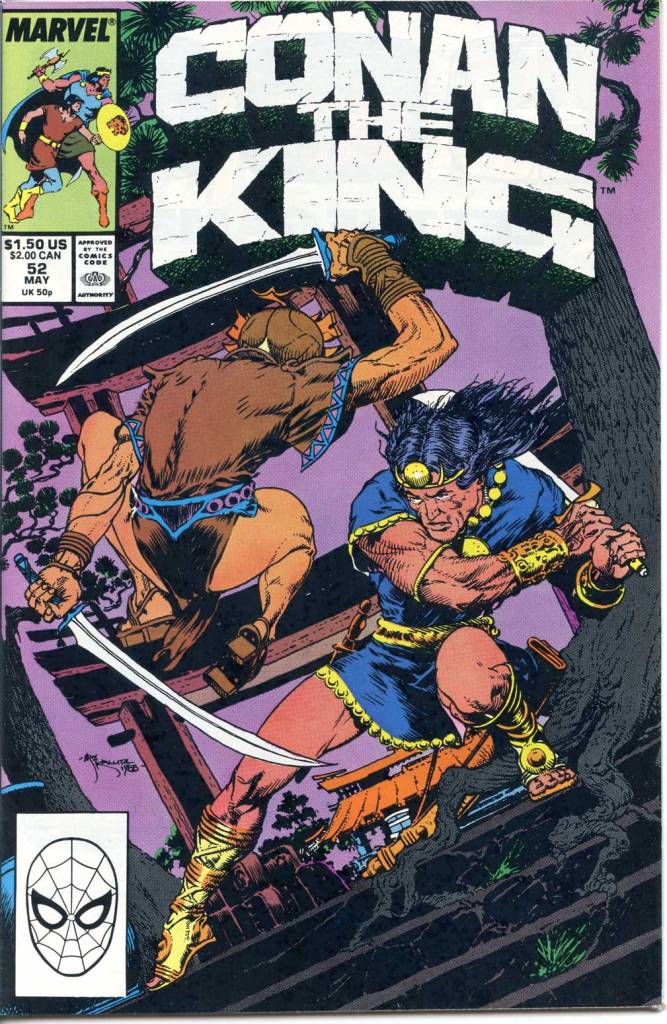
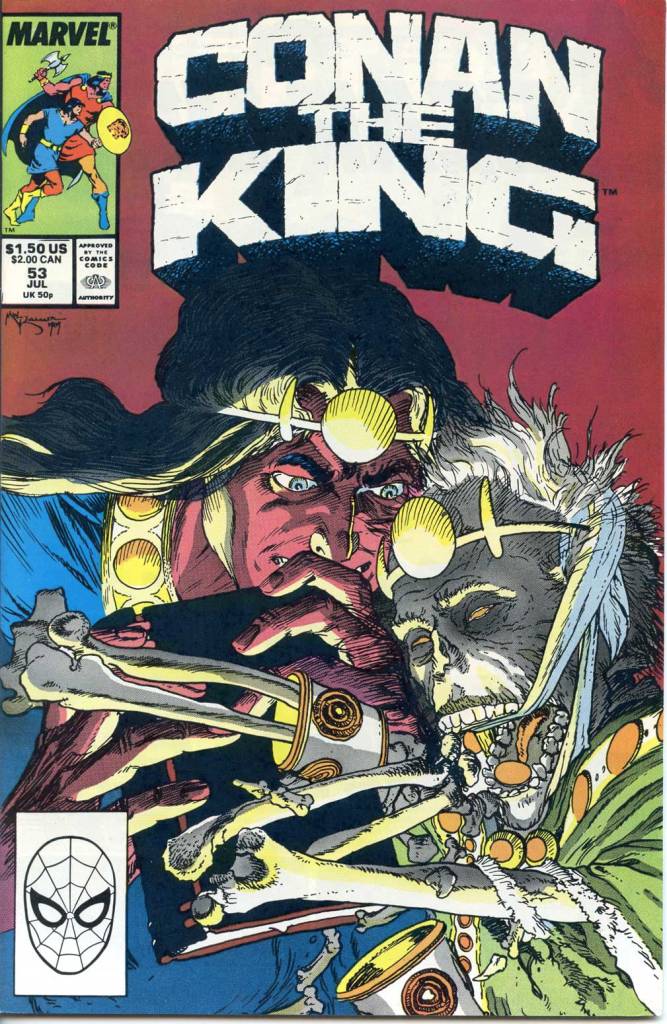
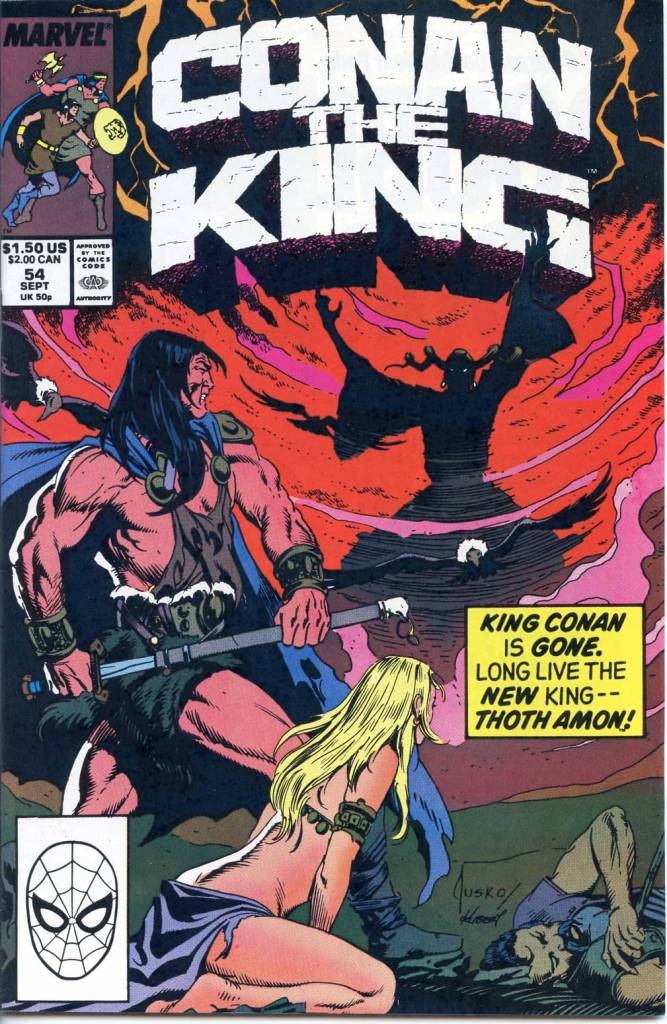
King Conan #2 VF $4King Conan #3 VF $3King Conan #4 F-VF $2King Conan #6 VF $4King Conan #10 VF-NM $5King Conan #15 VF $5King Conan #18 F+ $2Conan the KIng #35 VF- $4Conan the King #38 F+ $2Conan the King #40 F+ $2Conan the King #44 F+ $2Conan the King #51 NM $8Conan the King #52 NM- $7Conan the King #53 NM $11Conan the King #54 NM $12
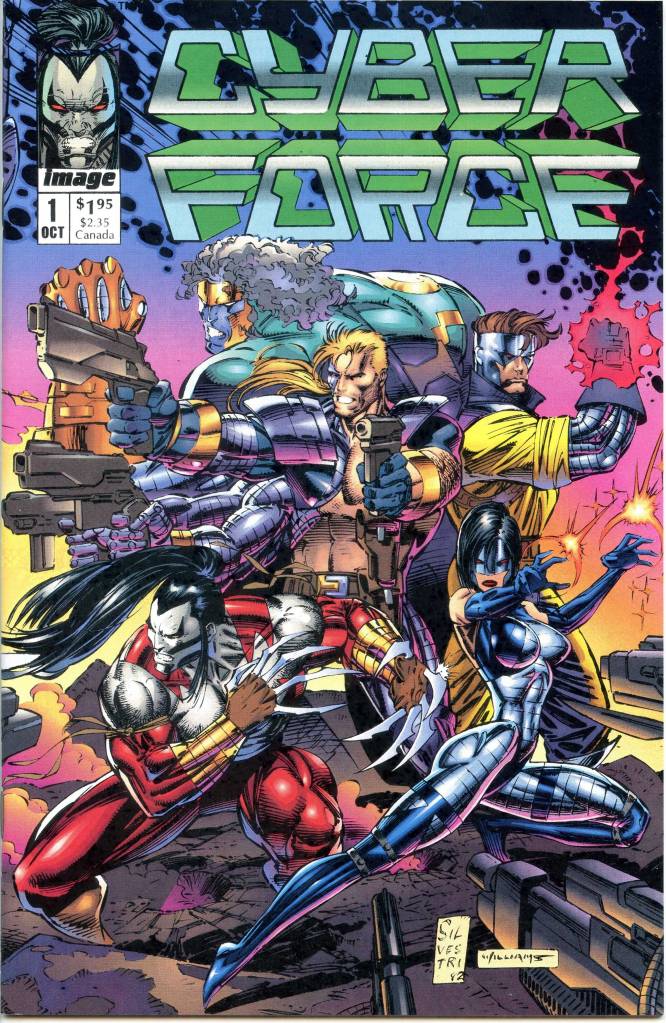
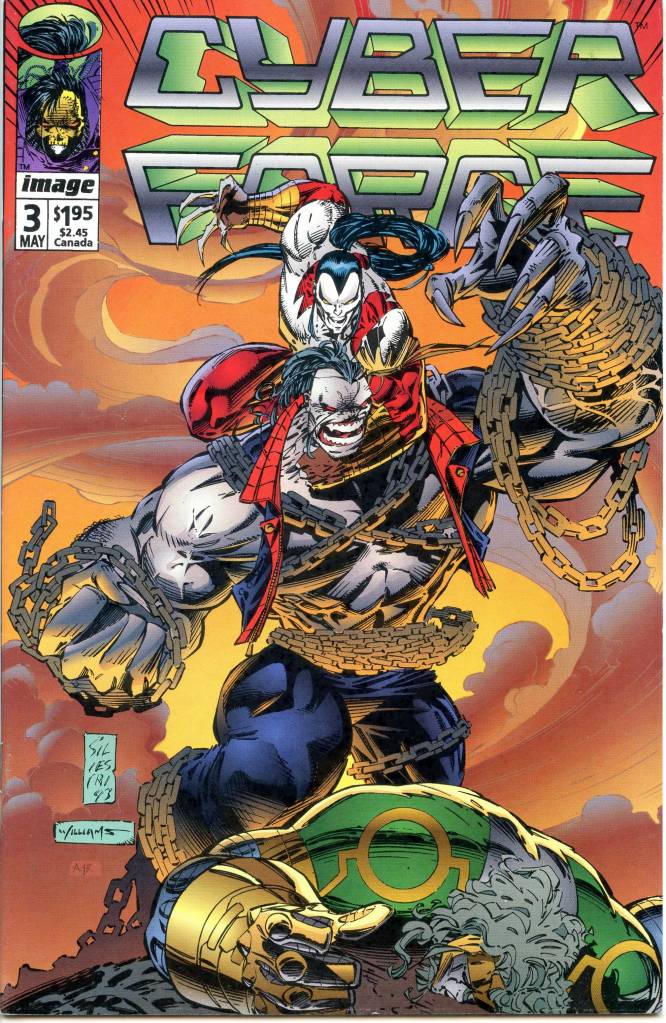
The first story titled “Tin Men of War”, follows Carin Taylor, a mutant otherwise known as Velocity as she attempts to escape the forces of Cyberdata, a corrupt mega-corporation. Her attempts to evade Cyberdata’s task force, led by her sister, Cassandra Taylor a.k.a. “Ballistic” bring her into contact with the Cyber Force, a group of cybernetically enhanced mutant escapees from Cyberdata, consisting of Stryker, Cyblade, Heatwave, Impact and Ripclaw. After Velocity is rescued, the team explains to her that they were created by Cyberdata to enhance their mutant abilities, turning them into super-soldiers known as S.H.O.C.s (Special Hazardous Operation Cyborgs), but they escaped and formed Cyber Force, making it their mission to bring down Cyberdata for good.
Cyber Force – Mini #1 NM $5Cyber Force – Mini #3 NM $4
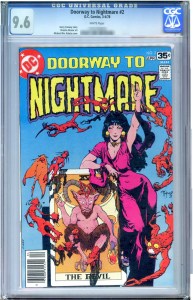
Doorway to Nightmare, introduced in 1978, was the last of the DC “Mystery” line of titles in the 1970s that became the forerunner of Vertigo. It did not have a consistent creative team—the intent was to create writer-artist pairings that had never occurred before, except for the cover art of Michael William Kaluta. Madame Xanadu, the star of the series, was not a host but an active participant, albeit never the main character in her stories.
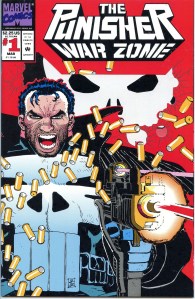
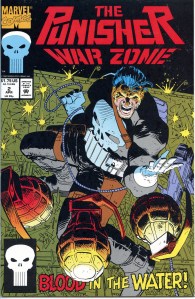
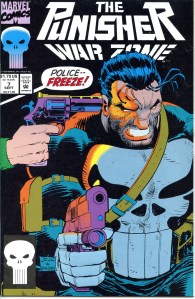
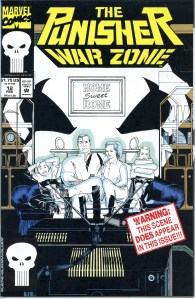
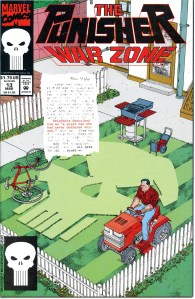
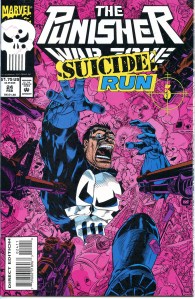
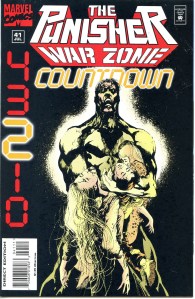
Punisher War Zone ran for 41 issues with two 64-page annuals. Multiple writers contributed to this series during its three-year run from 1992 to 1995. The series served mainly as a vehicle for longtime Marvel artist John Romita, Jr., who had returned to Marvel after a lengthy hiatus from drawing a monthly title. In 2009, Marvel published a 6-issue limited series under the same title. The storyline was called “The Resurrection of Ma Gnucci“.
Punisher War Zone #1 NM $5Punisher War Zone #2 NM $3Punisher War Zone #7 NM $5Punisher War Zone #12 NM $3Punisher War Zone #13 NM $3Punisher War Zone #24 NM $3Punisher War Zone #25 NM $4Punisher War Zone #37 NM $8Punisher War Zone #40 NM $8Punisher War Zone #41 NM $18
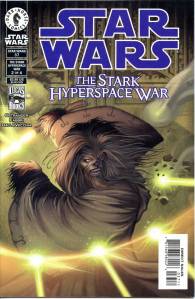
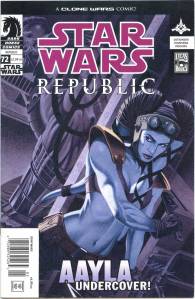
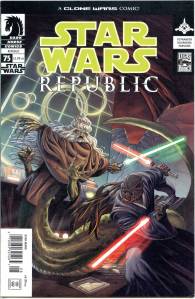
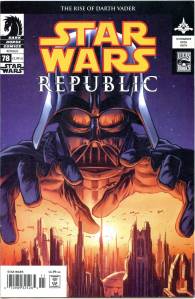
Published by Dark Horse Comics from 1998 to February 2006, the series was originally titled simply Star Wars, but acquired its Republic title at issue 46. The entire series comprises 83 issues. After issue 83, the series was replaced by Star Wars: Dark Times, which continued the Republic numbering on its inside covers. The Republic series is one of a number of comic book series set in the Star Wars Expanded Universe.
The events in Star Wars: Republic are set in roughly the same fictional timeframe as the Star Wars film prequel trilogy. Character development builds on the films, including appearances by more prominent characters such as Mace Windu and Yoda, as well as peripheral characters such as Ki-Adi-Mundi and Quinlan Vos.
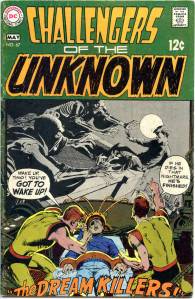
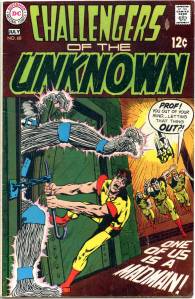
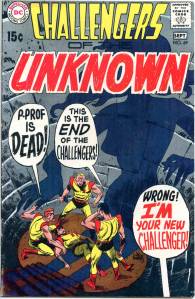
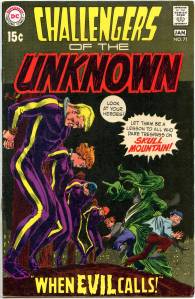
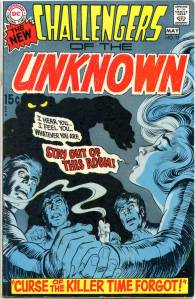
The Challengers of the Unknown is a fictional group of adventurers appearing in comic books published by DC Comics. The quartet of adventurers explored paranormal occurrences while facing several fantastic menaces. The characters were created by Joe Simon and JJack Kirby during the end of their company, Mainline Comics. Following the end of the Challengers comic, DC has revived the characters in different incarnations over the years. Some have claimed that Kirby reworked the basic concept of the series with Stan Lee in 1961 to create The Fantastic Four, the first creation that marked the rise of Marvel Comics.
Challengers of the Unknown #67 FN- $9Challengers of the Unknown #68 FN+ $14Challengers of the Unknown #69 FN-VF $12Challengers of the Unknown #71 VF- $14Challengers of the Unknown #73 VF- $14


























 EHT Comics