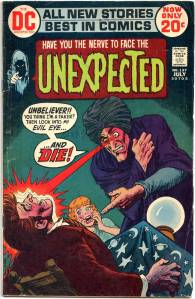
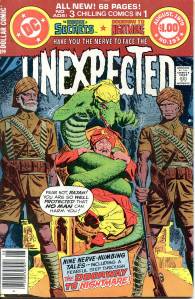
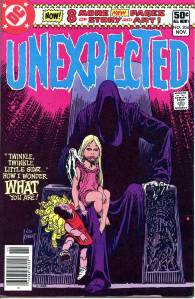
In 1979, The Unexpected converted to the Dollar Comics format and incorporated House of Secrets and The Witching Hour. Each “Unexpected” story would always include the word in its last panel. After the merge, this was only true of the Unexpected section; there would then be complete, ad-free issues of The Witching Hour, hosted by its witches, and The House of Secrets, hosted by Abel. The Witching Hour feature was alternated with Doorway to Nightmare starring Madame Xanadu, which appeared in issues #190, 192, 194, and 195.
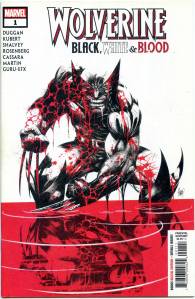
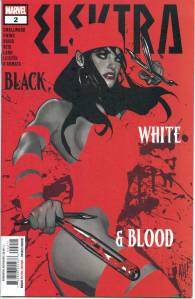
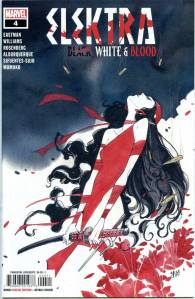
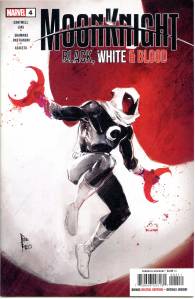
Centers around a specific Marvel character or group, exploring different facets of their history, personalities, and adventures and features a rotating cast of all-star creators, with art entirely colored in white, black and red. Often structured as anthologies, featuring multiple short stories by various creators within each issue.
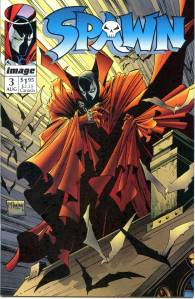
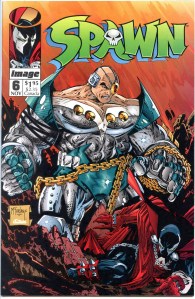
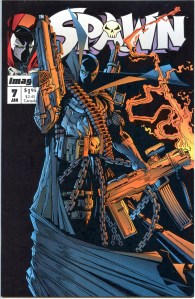
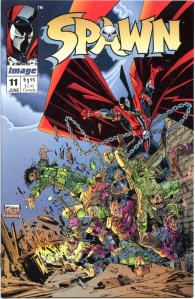
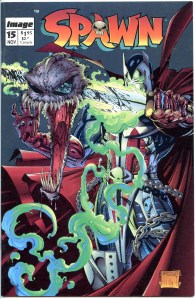
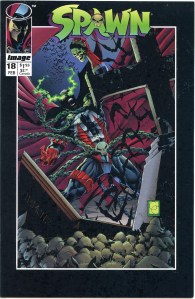
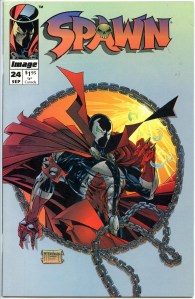
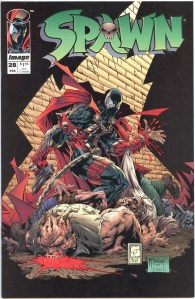
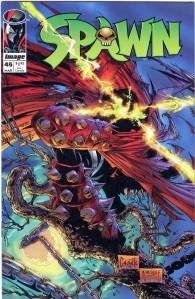
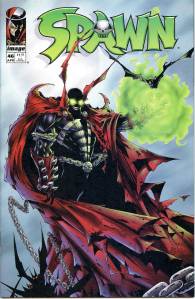
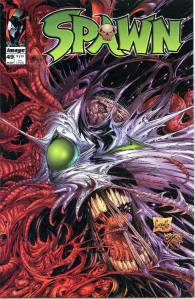
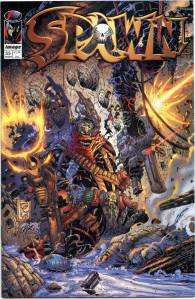
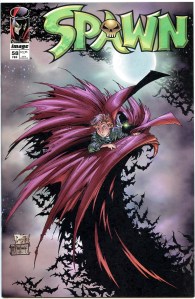
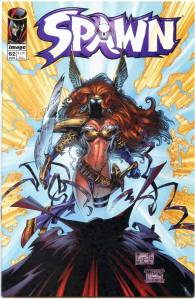
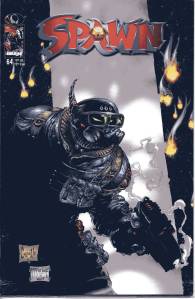
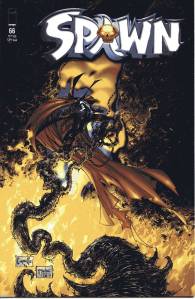
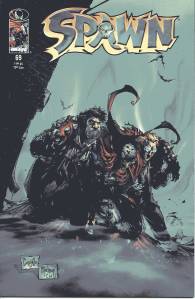
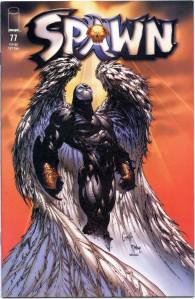
Spawn enjoyed considerable popularity upon its initial release in the 1990s. Comic book collecting was enjoying a marked upswing at the time, fueled by the speculator boom looking for the next hot book that would jump in value after its release. McFarlane had enjoyed superstar status among comic fans with his work on Spider-Man, which had featured McFarlane’s name prominently as both writer and artist. McFarlane’s subsequent break with Marvel and the formation of Image Comics was seen by many as a sea-change event, changing the very way in which comics were produced. Wizard, on May 2008, rated “The Launch of Image Comics” as No.1 in the list of events that rocked the Comic Industry from 1991 to 2008.
The first issue of Spawn was very popular with sales of 1.7 million copies. During Spawn’s second year of publication, Wizard noted that “The top dog at Image is undoubtedly Todd McFarlane’s Spawn, which, without the added marketing push of fancy covers, polybagged issues, or card inserts has become the best-selling comic on a consistent basis that is currently being published. Sales slumped around the time of Spawn #25, but by Spawn #45 it was again a consistently strong seller.
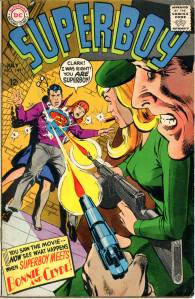
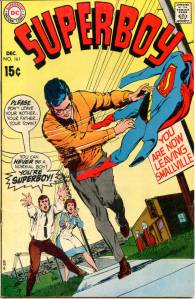
Four years after his debut, Superboy became only the sixth DC superhero to receive his own comic book when Superboy #1 (March–April 1949) was published. The series became the first new DC superhero title to succeed since World War II. Superboy saw the debuts of the first Superbaby story, (about Clark’s adventures as a super-powered toddler), and of Clark’s two closest friends: Lana Lang, who also serves as a romantic interest for Superboy; and Pete Ross, who later discovers and helps protect Clark’s secret identity. Other notable stories to appear in Superboy include the story of the first Bizarro and the first appearances of Legion of Super-Heroes members Mon-El and Ultra Boy.
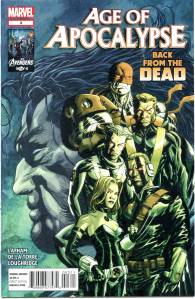
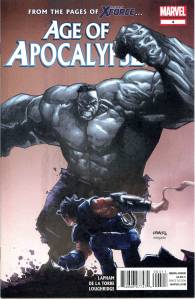
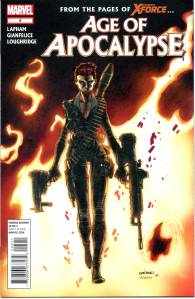
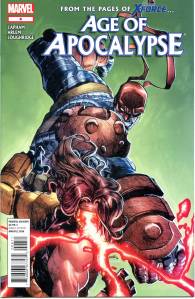
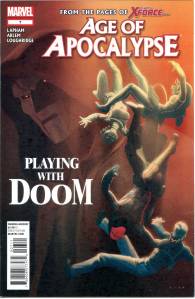
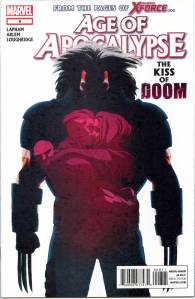
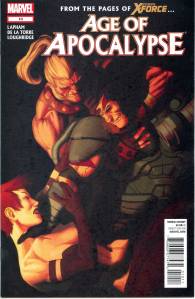
Jean Grey and Sabretooth return to Earth 616. Weapon X and his Black Legion attack the last human city where Weapon X slays both Magneto and Rogue, leaving Jean Grey and Sabretooth the last two X-Men alive. Jean telepathically nudges clones of the Scarlet Witch to recreate the Decimation and remove all mutants’ powers across the globe. However, this was only successful within a radius of 12 feet, so Jean Grey and Sabretooth are both left de-powered. The human coalition distracts Weapon X with a bomb long enough for the group to escape as the city explodes behind them. Harper Simons joins with the human team, the X-Terminated. Others who work with the X-Terminated are Doctor Moreau and Bolivar Trask.
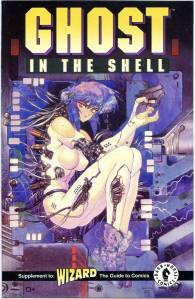
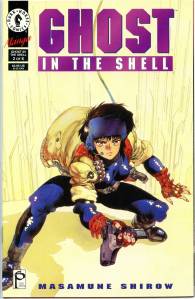
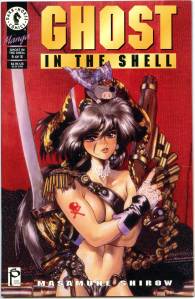
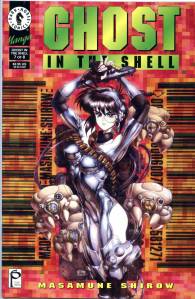
In this cyberpunk iteration of a possible future, computer technology has advanced to the point that many members of the public possess cyberbrains, technology that allows them to interface their biological brain with various networks. The level of cyberization varies from simple minimal interfaces to almost complete replacement of the brain with cybernetic parts, in cases of severe trauma. This can also be combined with various levels of prostheses, with a fully prosthetic body enabling a person to become a cyborg. The heroine of Ghost in the Shell, Major Motoko Kusanagi, is such a cyborg, having had a terrible accident befall her as a child that ultimately required that she use a full-body prosthesis to house her cyberbrain. This high level of cyberization, however, opens the brain up to attacks from highly skilled hackers, with the most dangerous being those who will hack a person to bend to their whims.
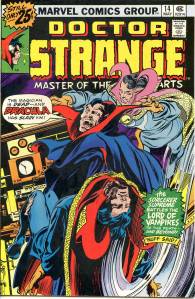
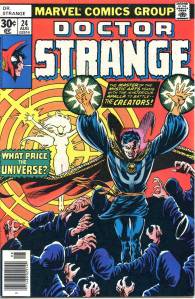
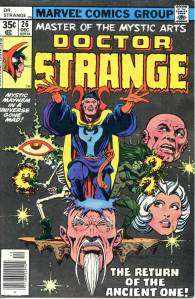
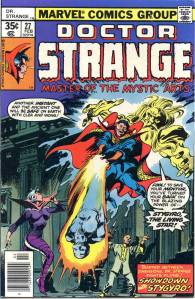
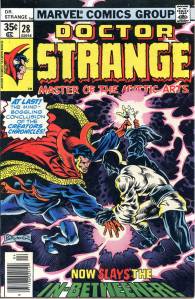
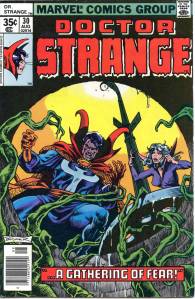
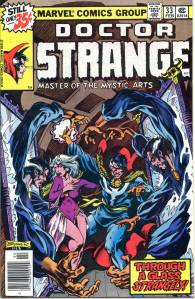
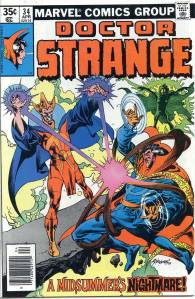
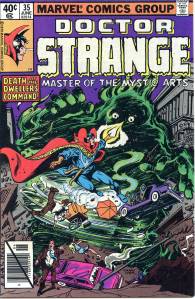
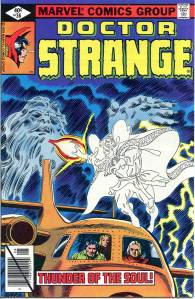
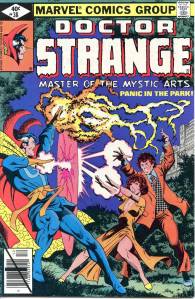
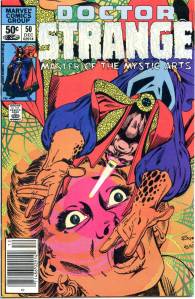
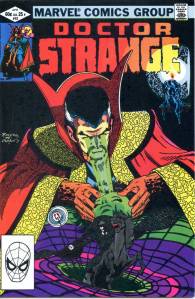
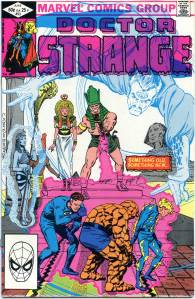
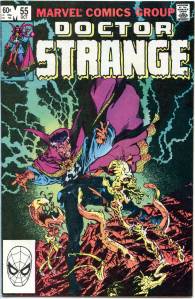
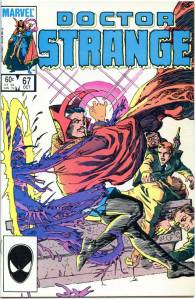
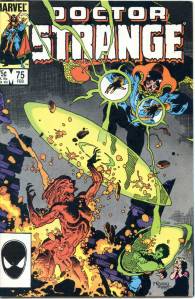
Doctor Strange: Master of the Mystic Arts, also known as Doctor Strange vol. 2, ran 81 issues (June 1974-February 1987). Doctor Strange #14 featured a crossover story with The Tomb of Dracula #44, another series which was being drawn by Gene Colan at the time.In Englehart’s final story, he sent Dr. Strange back in time to meet Benjamin Franklin. In 2010, Comics Bulletin ranked Englehart’s work on Doctor Strange with artists Brunner and Colan ninth on its list of the “Top 10 1970s Marvels.”
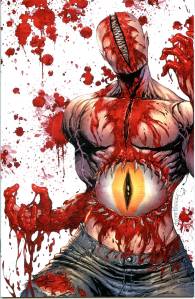
When the children of Archer’s Peak—a sleepy town in the heart of America—begin to go missing, everything seems hopeless. Most children never return, but the ones that do have terrible stories—impossible details of terrifying creatures that live in the shadows. Their only hope of finding and eliminating the threat is the arrival of a mysterious stranger, one who believes the children and claims to be the only one who sees what they can see. Her name is Erica Slaughter. She kills monsters. That is all she does, and she bears the cost because it must be done.
Something is Killing the Children #11 NM $5
Something is Killing the Children #12 NM $5
Something is Killing the Children #19 NM $4
Something is Killing the Children #22B NM $5
Something is Killing the Children #22C NM $5
Something is Killing the Children #24 NM $4
Something is Killing the Children #25 NM $4
Something is Killing the Children #25 B NM $5
Book of Slaughter #1 Virgin Variant NM $12
Book of Butcher #1 Virgin Variant NM $9
Something is Killing the Children #28 Battle Damage Variant NM $29
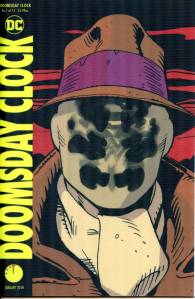
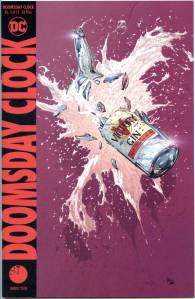
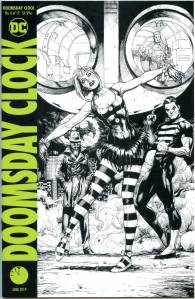
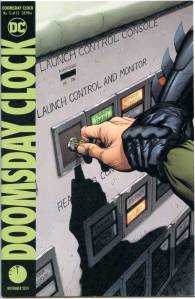
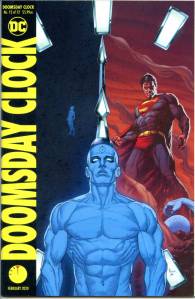
Doomsday Clock is part of the DC Rebirth initiative, and it continues the narrative that was established with the 2016 one-shot DC Universe: Rebirth Special, the 2017 crossover event “The Button” and other related stories. It is a follow-up to the 1986–1987 miniseries Watchmen by Alan Moore, Dave Gibbons and John Higgins, and it introduces that story’s characters into the DC Universe, alongside a few original characters created for the book. Although Dan DiDio (then DC’s co-publisher) confirmed that it is a sequel to that miniseries, Johns originally declined to characterize it as such, viewing it as a standalone story, saying, “It is something else. It is Watchmen colliding with the DC Universe.”


































































 EHT Comics