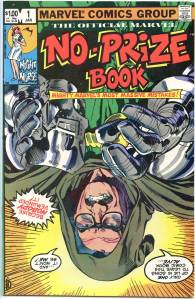
In late 1982 (cover dated January 1983), Marvel published a humorous one-shot comic featuring some of their most notorious goofs. Subtitled “Mighty Marvel’s Most Massive Mistakes”, the book was organized and spearheaded by Jim Owsley and had a cover which was deliberately printed upside-down. In the comic’s story Lee, with the help of artists Bob Camp and Vince Colletta, exposes and pokes fun at typos, misspellings and other errors.
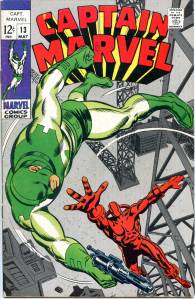
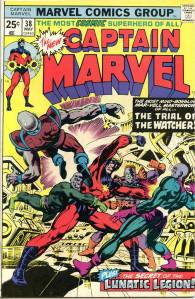
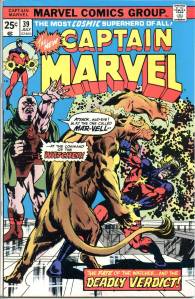
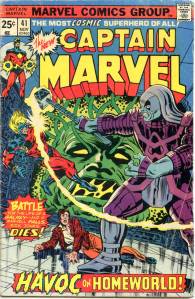
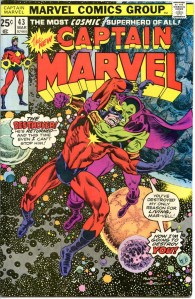
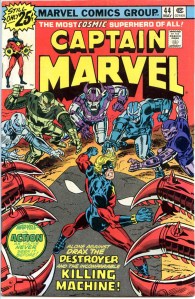
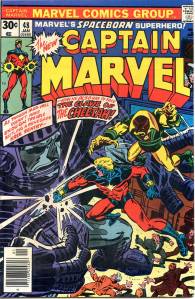
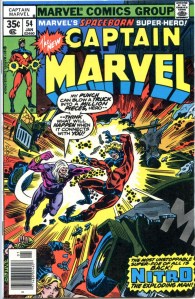
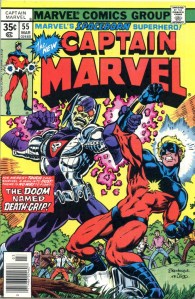
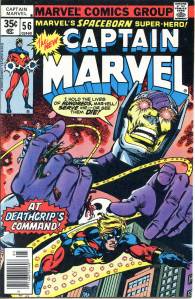
The first Captain Marvel was created by Stan Lee and Gene Colan in Marvel Super-Heroes #12 (December 1967). This character is an alien military officer, Captain Mar-Vell of the Kree Imperial Militia, who is sent to observe the planet Earth as it is developing technology to travel into space. Mar-Vell eventually wearies of his superiors’ malign intent and allies himself with Earth, and the Kree Empire brands him a traitor. From then on, Mar-Vell fights to protect Earth from all threats.
He was later revamped by Roy Thomas and Gil Kane. Having been exiled to the Negative Zone by the Supreme Intelligence, the only way Mar-Vell can temporarily escape is to exchange atoms with Rick Jones by means of special wristbands called Nega-Bands. He is also given superpowers and his Kree military uniform is replaced with a form fitting costume.
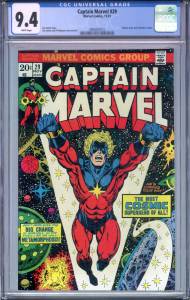
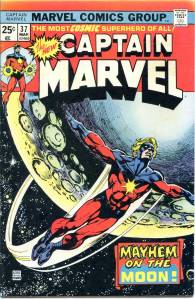
With the title’s sales still flagging, Marvel allowed Jim Starlin to conceptually revamp the character, although his appearance was little changed. Mar-Vell is freed from the Negative Zone and becomes a cosmic champion, the “Protector of the Universe” appointed by the cosmic entity Eon. Together, Mar-Vell and Rick continue to battle against evil, most notably battling the Death-worshipping Thanos. Mar-Vell became a close ally of the Titans, and one of their number, Elysius, became his lover.
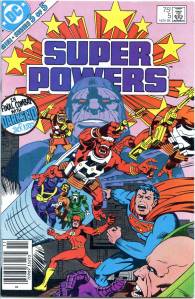
Once the line was on the market, a vigorous merchandising campaign took place, with DC Comics and Kenner striving for the Super Powers logo to become ubiquitous. DC Comics produced three comic book mini-series featuring characters from the toyline, one during each year of the toyline’s existence. The first series of comics in 1984 was plotted by Jack Kirby, who also provided covers, and went on to pencil the second series. (These two series were collected and reprinted in 2013 in The Jack Kirby Omnibus Vol. 2, in 2018 in Super Powers by Jack Kirby, and in 2019 in DC Universe: Bronze Age Omnibus by Jack Kirby). The third and final series was penciled by Carmine Infantino.
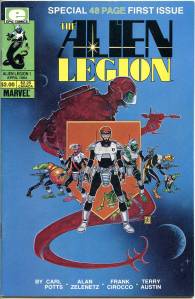
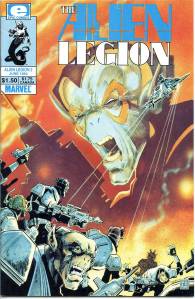
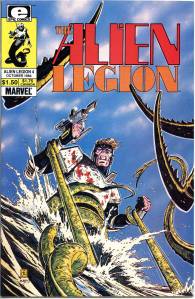
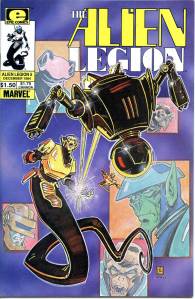
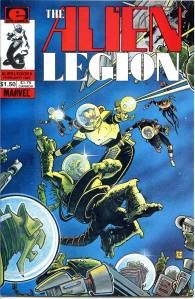
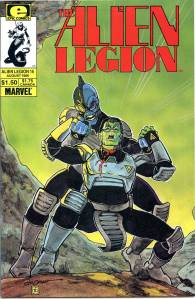
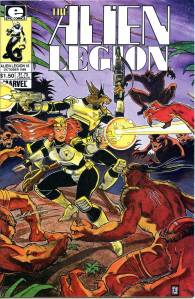
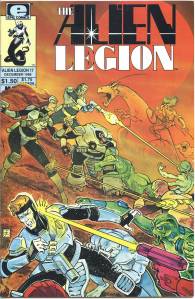
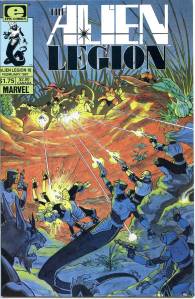
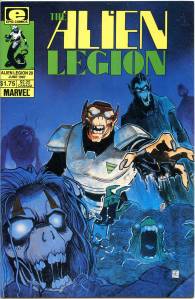
The franchise debuted with Marvel/Epic Comics’ The Alien Legion #1-20 (cover-dated April 1984 – June 1987). The 18-issue Alien Legion (Oct. 1987 – Aug. 1990), minus the “The”, followed, generally scripted by Chuck Dixon and penciled by Larry Stroman. Afterward came the three-issue Dixon-Stroman miniseries Alien Legion: On The Edge (Nov. 1990 – Jan. 1991); the two-issue Dixon-Stroman Alien Legion: Tenants of Hell (1991); the one-shot cover-titled Alien Legion: Grimrod and copyrighted Alien Legion: Jugger Grimrod (Aug. 1992), by Dixon and artist Mike McMahon; the single-issue Alien Legion: Binary Deep (Sept. 1993), by Dixon and Argentine artist Enrique Alcatena; and the three-issue miniseries Alien Legion: One Planet at a Time (April–July 1993), by Dixon and penciler Hoang Nguyen.
Additionally, Marvel/Epic published two spinoffs: Marvel Graphic Novel #25 (cover-titled Marvel Graphic Novel: The Alien Legion), released in 1986 and containing the story “A Grey Day To Die” by writers Potts and Zelenetz, penciler Cirocco, and the first series’ regular inker, Terry Austin; and the one-shot crossover with another series Law Dog and Grimrod: Terror at the Crossroads (1993)
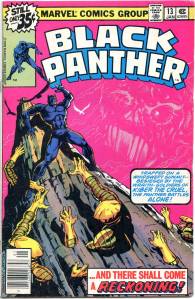
Though popular with college students, the overall sales of Jungle Action were low, and Marvel relaunched the Black Panther in a self-titled series, bringing in the character’s co-creator Jack Kirby—newly returned to Marvel after having decamped to rival DC Comics for a time— as writer, penciler, and editor. However, Kirby wanted to work on new characters and was unhappy at being assigned a series starring a character he had already worked with extensively. He left the series after only 12 issues and was replaced by Ed Hannigan (writer), Jerry Bingham (penciler), and Roger Stern(editor). Black Panther ran 15 issues (Jan. 1977 – May 1979). Due to the series’s cancellation, the contents of what would have been Black Panther#16-18 were published in Marvel Premiere #51-53.
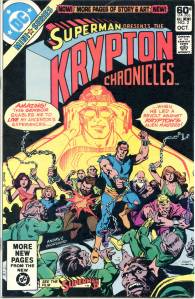
A three-issue miniseries entitled The Krypton Chronicles, published in 1981, tells of Superman researching his roots when, as Clark Kent, he was assigned to write an article about Superman’s family by an assignment editor impressed with the television miniseries Roots. To do so, he and Supergirl travel to Kandor, where they learn the history of the El family.
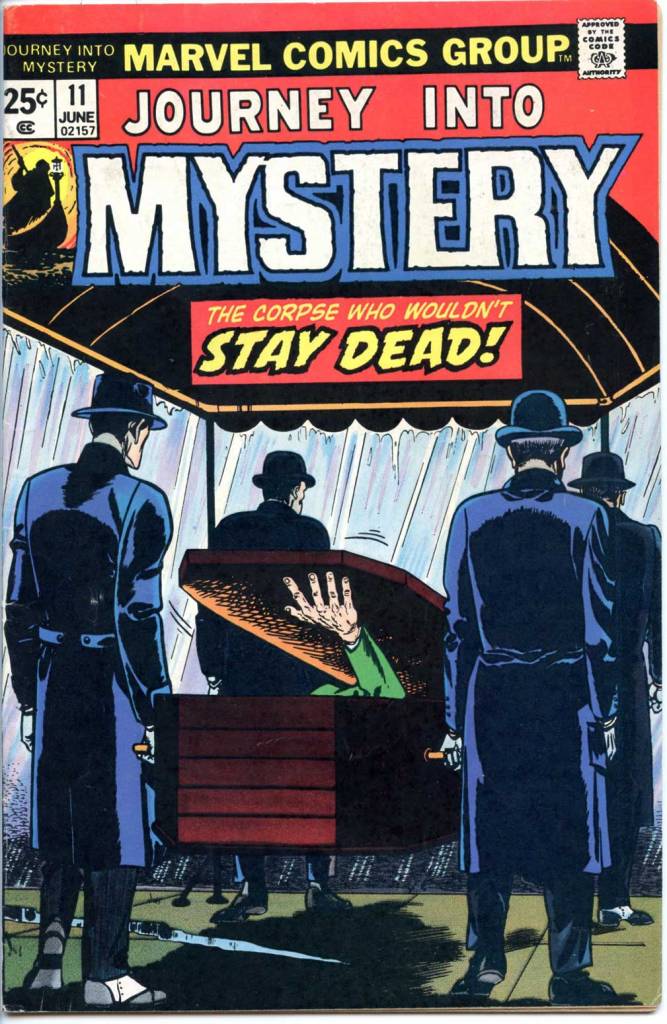
A second Journey into Mystery ran 19 issues (October 1972 – October 1975). The title was one of four launched by Marvel Comics editor-in-chief Roy Thomas to form a line of science fiction and horroranthologies with more thematic cohesiveness than the company’s earlier attempts that decade,which had included the series Chamber of Darkness and Tower of Shadows. Whereas those titles generally presented original stories, these new books would instead adapt genre classics and other stories. With the four titles’ debuts set to be staggered over the course of four months, Marvel premiered Journey into Mystery vol. 2 (October 1972), Chamber of Chills (November 1972), Supernatural Thrillers (December 1972), and, with a late start, Worlds Unknown (May 1973).
Man-Bat was the second ongoing comic series featuring a Batman villain, the first one being Joker (Volume 1). Man-Bat started publication in 1975, but was prematurely cancelled after the second issue by DC Comics Publisher, Carmine Infantino. The Man-Bat stories featured in this series were later moved as back-up features on Detective Comics (Volume 1) and later Batman Family (Volume 1).
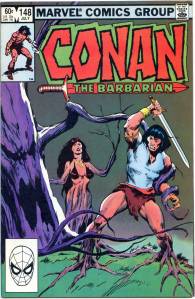
Marvel Comics introduced a fairly faithful version of Conan in 1970 with Conan the Barbarian, written by Roy Thomas with art initially by Barry Windsor-Smith, then John Buscema and Ernie Chan (aka Ernie Chua). The highly successful Conan the Barbarian series spawned the more adult, black-and-white Savage Sword of Conan in 1974, by Thomas, Buscema, and Alfredo Alcala. Savage Sword of Conan soon became one of the most popular comic series in the 1970s.
The Marvel Conan stories were also adapted as a newspaper comic strip which appeared daily and Sunday from September 4, 1978, to April 12, 1981. Originally written by Roy Thomas and illustrated by John Buscema, the strip was continued by several different Marvel artists and writers.
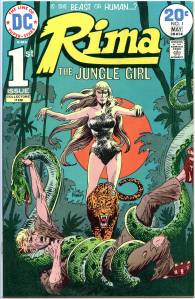
Rima starred in a seven-issue comic book series, DC Comics‘ Rima the Jungle Girl (May 1974 – May 1975), adapted by DC writer-editor Robert Kanigher with artwork by penciler–inkerNestor Redondo and covers by Joe Kubert. A variation of the character debuted in a six-issue DC Comics limited series May 2010 to Mar 2011 First Wave, written by Eisner Award–winning writer Brian Azzarello.