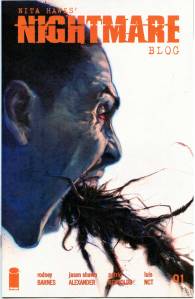
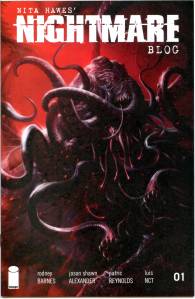
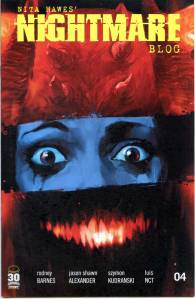
Jimmy Sangster might have left Maryland for the vampire-infested city of “Killadelphia,” but there is still untold evil lurking the streets of Baltimore. The demon Corson has surfaced from the underworld to possess a once-wronged man, and his vengeance will come at the cost of humanity’s despair! But Jimmy’s former lover Nita Hawes—a woman with demons of her own—has begun a quest to root the evil out of her city. Guided by the ghost of her dead brother, she must come to terms with her own past, lest she join her brother in a state worse than death!
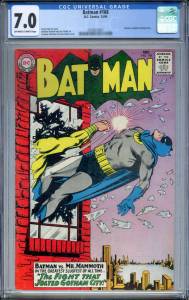
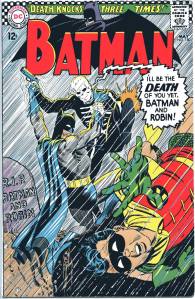
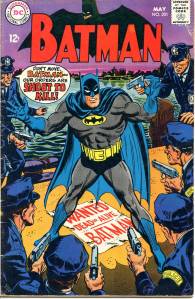
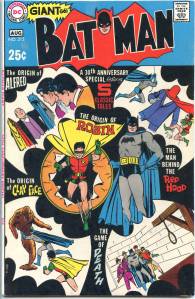
By 1964, sales of Batman titles had fallen drastically. Bob Kane noted that, as a result, DC was “planning to kill Batman off altogether”. In response to this, editor Julius Schwartz was assigned to the Batman titles. He presided over drastic changes, beginning with 1964’s Detective Comics #327 (May 1964), which was cover-billed as the “New Look”. Schwartz introduced changes designed to make Batman more contemporary, and to return him to more detective-oriented stories. He brought in artist Carmine Infantino to help overhaul the character. The Batmobile was redesigned, and Batman’s costume was modified to incorporate a yellow ellipse behind the bat-insignia. The space aliens, time travel, and characters of the 1950s such as Batwoman, Ace, and Bat-Mite were retired. Bruce Wayne’s butler Alfred was killed off (though his death was quickly reversed) while a new female relative for the Wayne family, Aunt Harriet, came to live with Bruce Wayne and Dick Grayson.
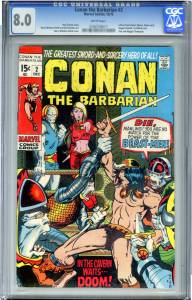
Marvel Comics introduced a fairly faithful version of Conan in 1970 with Conan the Barbarian, written by Roy Thomas with art initially by Barry Windsor-Smith, then John Buscema and Ernie Chan (aka Ernie Chua). The highly successful Conan the Barbarian series spawned the more adult, black-and-white Savage Sword of Conan in 1974, by Thomas, Buscema, and Alfredo Alcala. Savage Sword of Conan soon became one of the most popular comic series in the 1970s.
The Marvel Conan stories were also adapted as a newspaper comic strip which appeared daily and Sunday from September 4, 1978, to April 12, 1981. Originally written by Roy Thomas and illustrated by John Buscema, the strip was continued by several different Marvel artists and writers.
The series begins with Diego turning 13, that being the rite of passage the series’ title alludes to. Antón uses the occasion to impart on Diego “important lessons in leadership” and “cautionary tales he has heard about the undoing of three legendary men.”
Eightball is an alternative comic book series written and drawn by Daniel Clowes. The first issue was published by Fantagraphics Books in 1989, soon after the end of Clowes’s previous comic series, Lloyd Llewellyn. It has consistently been among the best-selling independently authored comics.
Legends served mainly as a launching pad for several new comic series, including the latter-day Flash title, Keith Giffen and J. M. DeMatteis‘ comedy/action take on the Justice League, and the villain-based black ops Suicide Squad. The series also saw the post-Crisis introduction into the DC Universe of Captain Marvel (who was spun off in the miniseries Shazam!: The New Beginning) as well as Wonder Woman, who had been rebooted by DC Comics at the same time Legends was being published.
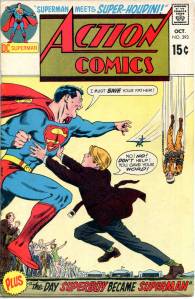
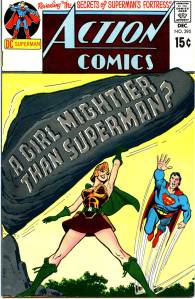
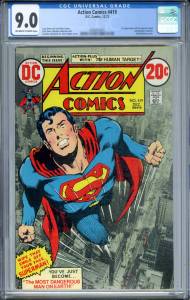
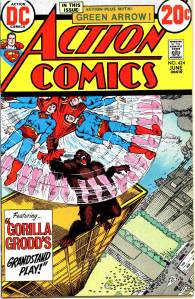
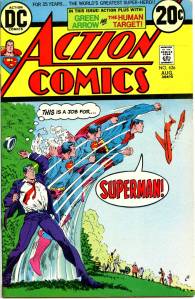
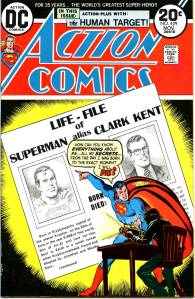
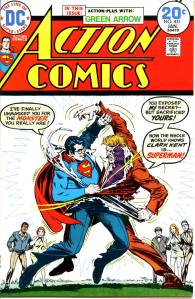
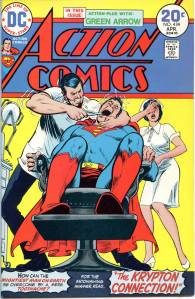
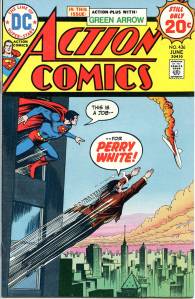
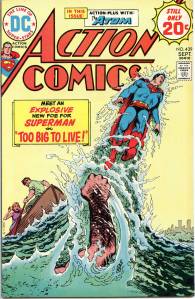
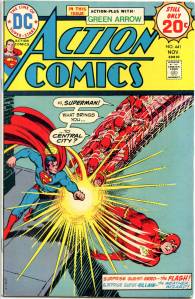
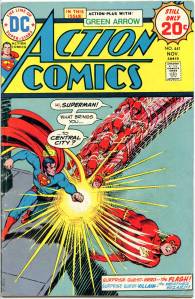
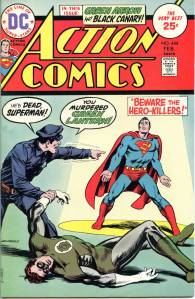
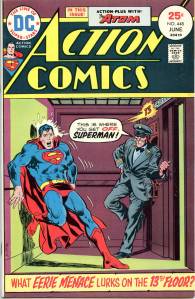
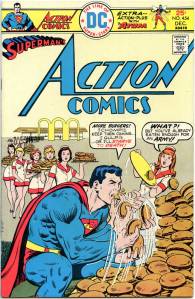
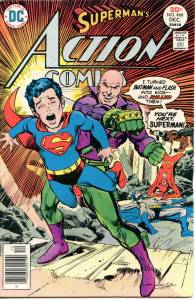
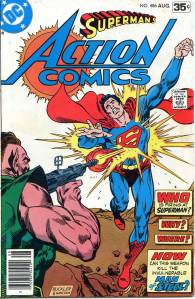
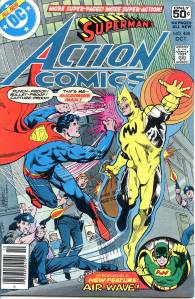
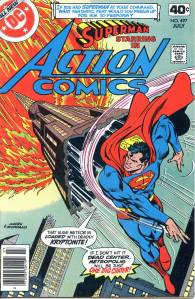
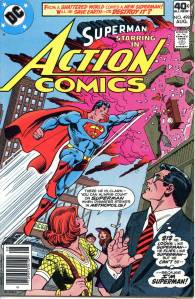
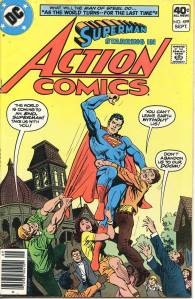
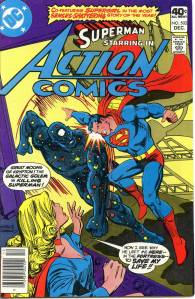
Mort Weisinger retired from DC in 1970 and his final issue of Action Comics was issue #392 (September 1970). Murray Boltinoff became the title’s editor until issue #418. Metamorpho was the backup feature in issues #413-418 after which the character had a brief run as the backup in World’s Finest Comics. Julius Schwartz became the editor of the series with issue #419 (December 1972) which also introduced the Human Target by Len Wein and Carmine Infantino in the back-up feature. Green Arrow became a backup feature in #421 and ran through #458, initially rotating with the Human Target and the Atom. Between issues #423 (April 1973) and #424 (June 1973), the series jumped ahead by one month due to DC’s decision to change the cover dates of its publishing line.
A new version of the Toyman was created by Cary Bates and Curt Swan in issue #432 (February 1974). Martin Pasko wrote issue #500 (October 1979) which featured a history of the Superman canon as it existed at the time and was published in the Dollar Comics format.
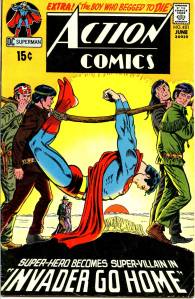
Action Comics #393 FN $6
Action Comics #395 NM- $20
Action Comics #396 FN- $5
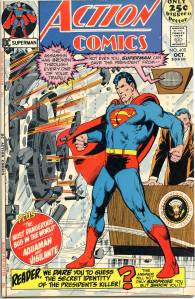
Action Comics #401 VF $18
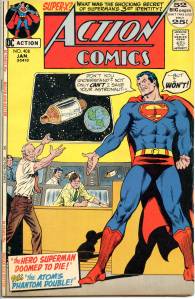
Action Comics #404 VG-FN $9
Action Comics #405 VF+ $28
Action Comics #408 VF- $28
Action Comics #410 VG $7
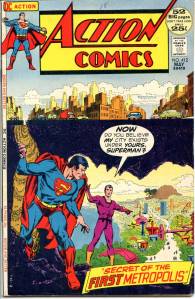
Action Comic #412 FN $4
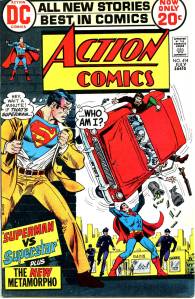
Action Comics #414 NM- $10
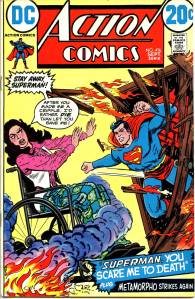
Action Comics #416 NM- $10
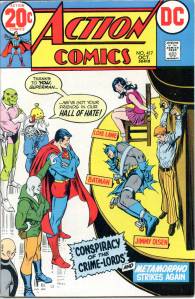
Action Comics #417 FN-VFN $8
Action Comics #419 CGC 9.0 Off-White to White Pages $249
The series was launched with an April 1985 cover dated issue by writer Louise Simonson and penciller Greg LaRocque and featured the return of Spider-Man’s alien black costume, which attempted to rebond with Peter Parker. Peter managed to rid himself of the costume again using church bells and the alien was presumed to have died after that. The first issue featured a cover painting by artist Charles Vess.
In issue #18 (September 1986), Peter Parker is pushed in front of an oncoming train. He thinks to himself that this should not have happened, as his spider-sense would have warned him of the danger. Writer David Michelinie has said that he wrote this as the first “teaser” appearance of the characterVenom, whom he was planning to introduce at a later date. Venom is an amalgam of reporter Eddie Brock and the alien costume. The costume could nullify Spider-Man’s spider-sense, and this was the first clue of a puzzle that Michelinie was planning to weave to introduce Venom.
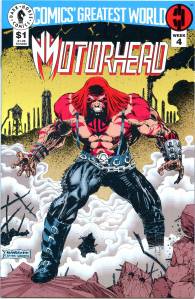
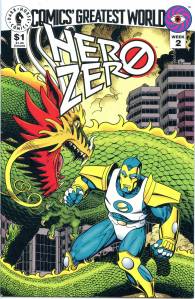
Comics’ Greatest World was created by Team CGW. Originally conceived in 1990, it took three years for the line to be released, which led to an industry-wide perception that it was created to capitalize on the speculator mania of the early 1990s. When the mania ended, most of the titles were canceled. Ghost, one of the imprint’s more unorthodox titles, managed to survive the longest. It was canceled twice, first in early 1998, before being revived later that year and canceled again after a run of just less than two years.
All Comics’ Greatest World titles took place in a shared universe. Most of the action centered on four cities in a slightly skewed version of America: Arcadia, Golden City, Steel Harbor, and the Cinnibar Flats area of Nevada, home of an interdimensional rift called the “Vortex”.
The series started off with a story in Dark Horse Comics before kicking off in four weekly limited series, introducing the cities and characters. These were followed by several short-lived series, one-shots, and mini-series. Only a few titles lasted very long.
Around April 1995, the imprint was renamed “Dark Horse Heroes”. With the name change, the use of the city logos was also dropped.
Comics Greatest World – Arcadia NM $8
Comics Greatest World – Cinnabar Flats NM $8
Comics Greatest World – Golden City NM $8
Comics Greatest World – Steel Harbor NM $8
Comics’ Greatest World Arcadia Week #1 X Limited Edition NM $6
Comics’ Greatest World Arcadia Week #1 X NM $4
Comics’ Greatest World Arcadia Week #2 Pit Bulls NM $2
Comics’ Greatest World Arcadia Week #3 Ghost NM $3
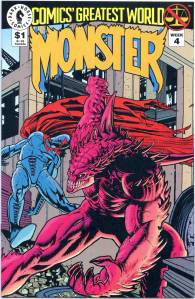
Comics’ Greatest World Arcadia Week #4 Monster NM $2
Comics Greatest World Golden City Week #1 Rebel Limited Edition NM $6
Comics Greatest World Golden City Week #1 Rebel NM $2
Comics Greatest World Golden City Week #2 Mecha NM $2
Comics Greatest World Golden City Week #3 Titan NM $2
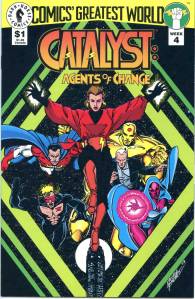
Comics Greatest World Golden City Week #4 Catalyst NM $2






















 EHT Comics