Four Color (1939-1962)

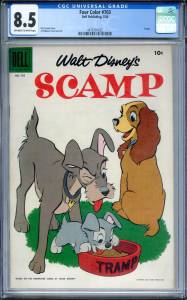
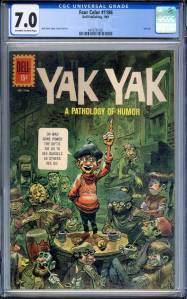
Four Color, also known as Four Color Comics and One Shots, was a long-running American comic book anthology series published by Dell Comics between 1939 and 1968. The title is a reference to the four basic colors used when printing comic books (cyan, magenta, yellow and black at the time).

More than 1,000 issues were published, usually with multiple titles released every month. An exact accounting of the actual number of unique issues produced is difficult because occasional issue numbers were skipped and a number of reprint issues were also included. Nonetheless, the Overstreet Comic Book Price Guide lists well over 1,000 individual issues, ending with #1354. It currently holds the record for most issues produced of an American comic book; its nearest rivals, Action Comics and Detective Comics, ended their initial runs in 2011 at 904 issues and 881 issues, respectively. The first 25 issues are known as “series 1”; after they were published, the numbering began again and “series 2” began. Four Color published many of the first comics featuring characters licensed from Walt Disney.

X-Men Unlimited: X-Men Green (2022)

When a young X-Man breaks the laws of Krakoa and takes a life, it’s up to Wolverine to track down his former student and take her down… But Nature Girl is tired of standing by while humanity destroys her home. Can even Logan quell her fury? Find out as a good girl breaks bad to save the planet!

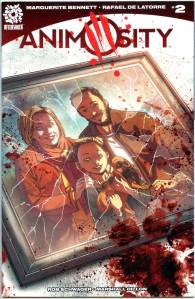
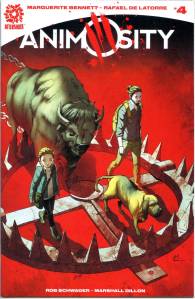
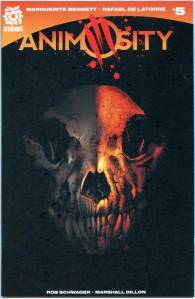
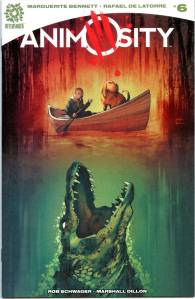
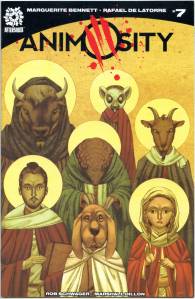
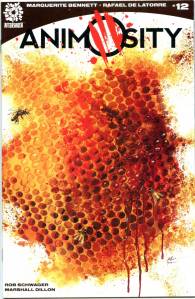
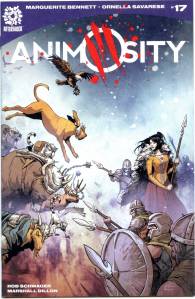
Animosity(2016)

One day, the Animals woke up. They started thinking. They started talking. They started taking revenge. Now, a dog and his girl are trying to get away–out of New York City, and all the way to San Francisco, to the only person who might be able to protect and save her. A new kind of road trip, a new kind of black comedy, and a new kind of coming-of-age.

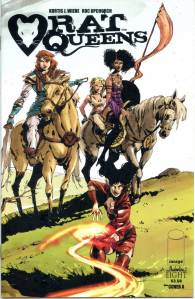
Rat Queens (2013)

The eponymous “Rat Queens” are a rambunctious party of adventurers in a medieval fantasy setting. They comprise the rockabilly elven mage Hannah, the hipster dwarven warrior Violet who shaved her beard before it became cool, the atheist human cleric Dee, who hails from a family of Lovecraftian monster cultists, and the hippie halfling (here called “smidgen”) thief Betty, whose idea of a hearty meal is a bag of drugs and candy. They were later joined by Braga, a transgender Orc warrior.

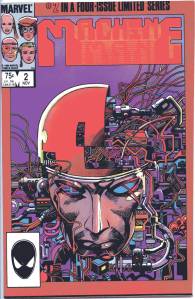
Machine Man V2 (1984)

In October 1984 – January 1985, the Machine Man title was resurrected, in a four-issue miniseries written by Tom DeFalco with art by Herb Trimpe (breakdowns only, issues #1-3) and Barry Windsor-Smith (finishes only, issues #1-3 & full art for issue #4), with Windsor-Smith also coloring the entire miniseries & co-plotting issue #4 with DeFalco. This series turned out to be one of the most popular of all the Machine Man titles, tying with previous continuity, but with the action set in the distant cyberpunk future of 2020, starting with Machine Man’s reassembly.

The miniseries was first reprinted as a 96 page trade paperback in 1988 (ISBN 0-07135-458-6), with brand new cover art by Barry Windsor-Smith.

The miniseries was republished again in 1994 as two double-size books, with the name Machine Man 2020. Characters from this alternate future have made appearances in other Marvel books, namely Arno Stark, the mercenary Iron Man 2020.

In 1990, Machine Man guest-starred in Iron Man Annual #11 (part of the “Terminus Factor” storyline). That story created strong hints that the 2020 Machine Man may turn out not to be the true X-51, but instead a duplicate created by Sunset Bain.

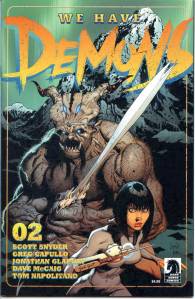
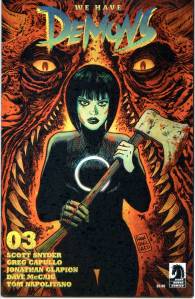
We Have Demons (2022)

Since the very dawn of man, legends have been told of the conflict between angel and demon-kind. Lam Lyle, a woman of science, dismissed these stories as just that–fiction. But when the loss of a loved one leads to the discovery of a hulking, benevolent demon named Hellvis, Lam realizes that her life is about to undergo a dire new direction. With a newfound partner and awesome powers now at her disposal, our hero suddenly finds herself thrust into a climactic war of good and evil with no less than the fate of the world hanging in the balance . . .

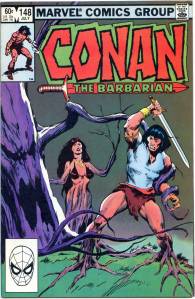
Conan V1 (1980’s)

Marvel Comics introduced a fairly faithful version of Conan in 1970 with Conan the Barbarian, written by Roy Thomas with art initially by Barry Windsor-Smith, then John Buscema and Ernie Chan (aka Ernie Chua). The highly successful Conan the Barbarian series spawned the more adult, black-and-white Savage Sword of Conan in 1974, by Thomas, Buscema, and Alfredo AlcalaSavage Sword of Conan soon became one of the most popular comic series in the 1970s.

The Marvel Conan stories were also adapted as a newspaper comic strip which appeared daily and Sunday from September 4, 1978, to April 12, 1981. Originally written by Roy Thomas and illustrated by John Buscema, the strip was continued by several different Marvel artists and writers.

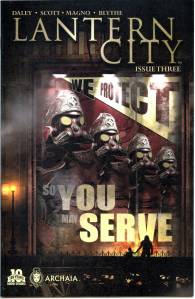
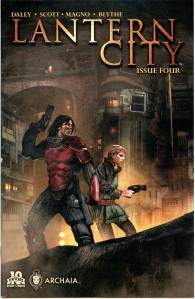
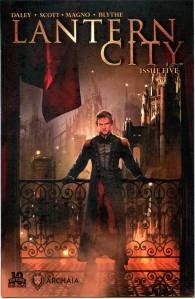
Lantern City (2015)

Sander Jorve is a reluctant hero shaped by a tough upbringing, trying to do his best for his family and a working-class revolution he supports. When asked by his wife’s brother, Kendal Kornick, to do the unthinkable and go undercover as a member of the Lantern City Guard, a relentless oppressive police force working for the Grey Empire, Sander must risk his family and his own identity for the chance to make a better world.

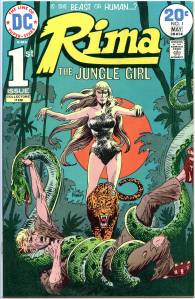
Rima the Jungle Girl (1974)

Rima starred in a seven-issue comic book series, DC Comics‘ Rima the Jungle Girl (May 1974 – May 1975), adapted by DC writer-editor Robert Kanigher with artwork by pencilerinker Nestor Redondo and covers by Joe Kubert. A variation of the character debuted in a six-issue DC Comics limited series May 2010 to Mar 2011 First Wave, written by Eisner Award–winning writer Brian Azzarello.

Gen 13: Ordinary Heroes (1996)

The relative calm for Fairchild of a trip to Princeton is broken up by Mr. Lynch’s emergency pick-up of the whole team in “Desolation Row.” Mr. Lynch explains the origins of the terrifying metamorph creature that’s consuming everything in its path in “The Love You Take…” Appearance by Hammersquad leader Rebecca Hawkins. Story & pencils by Adam Hughes. Inks by Mark Farmer.