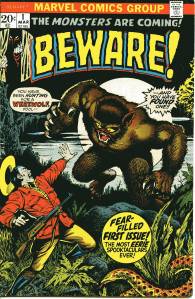
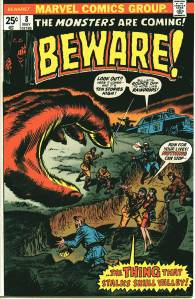
Beware was an 8 issues series that ran from March, 1973 to May, 1974. The series contained reprints of Atlas comics with new covers by Bill Everet, John Romita & Gil Kane The title continued as Tomb of Darkness with issue #9 in July of 1974.
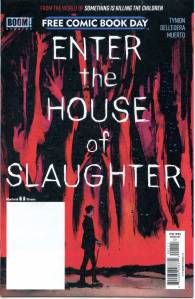
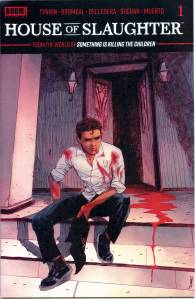
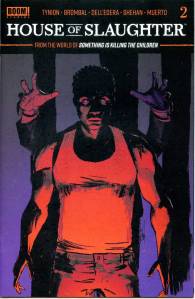
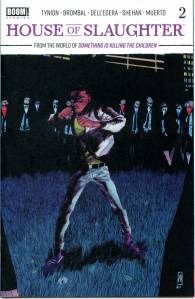
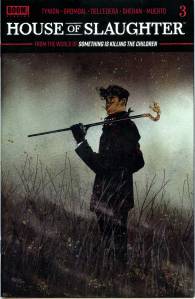
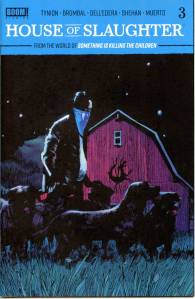
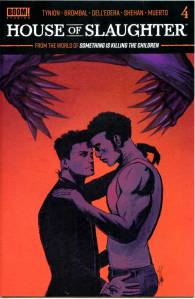
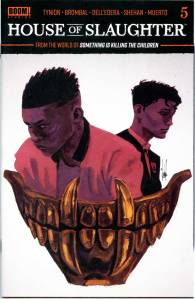
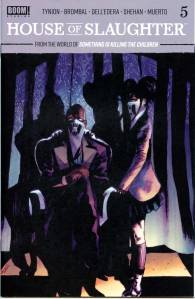
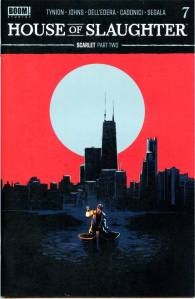
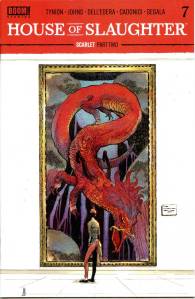
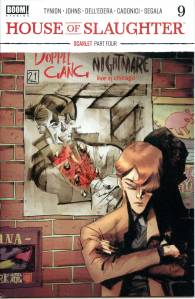
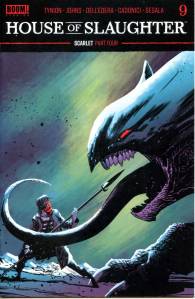
Discover the inner workings of the House of Slaughter in this new horror series exploring the secret history of the Order that forged Erica Slaughter into the monster hunter she is today. You know Aaron Slaughter as Erica’s handler and rival. But before he donned the black mask, Aaron was a teenager training within the House of Slaughter. Surviving within the school is tough enough, but it gets even more complicated when Aaron falls for a mysterious boy destined to be his competition.
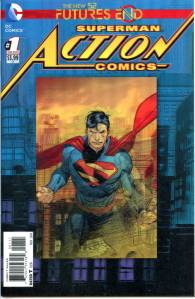
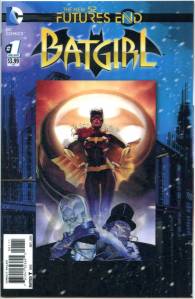
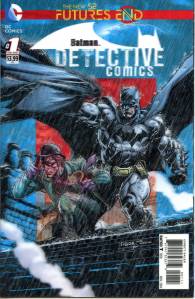
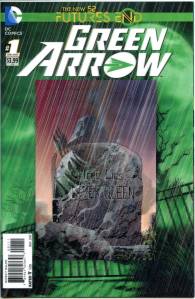
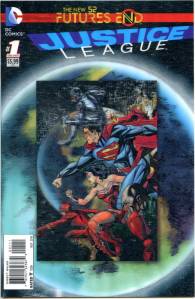
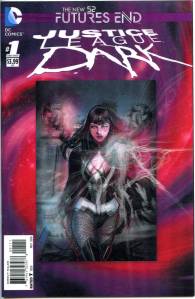
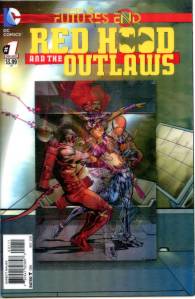
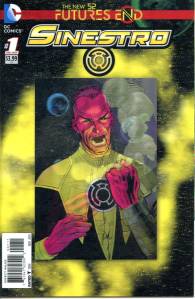
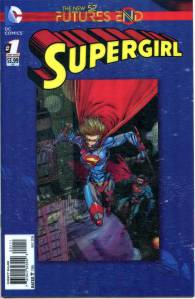
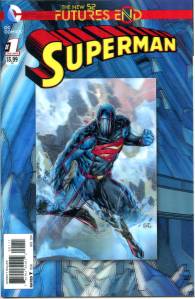
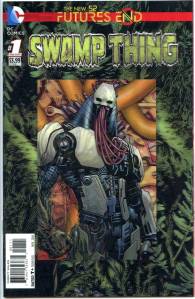
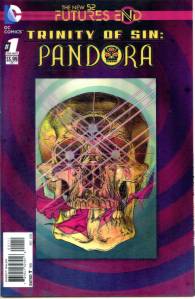
In February 2014, DC announced that as part of the celebration of The New 52’s third anniversary, all ongoing titles published in September 2014 feature stories that tie in to The New 52: Futures End. DiDio stated “One of the things we wanted to do was not just look at it through the lens of the weekly series, but also take a month and flash forward, and see what the potential futures of all our characters might be in that month. So in that month, you’ll get a chance to see where, in the next five years, our characters might finish up or might end up being.” He added that like the “Villains Month” event in September 2013, these titles also feature 3Dlenticular covers, in addition to the 2D ones, saying, “The covers now will also have the ability to have a ‘flicker’ effect. That means that the images change and show the transformation going on… There is a level of change that is taking place with our characters during the course of this story.”
Futures End – Action Comics #1 NM $4
Futures End – Batgirl NM $8
Futures End – Constantine #1 NM $6
Futures End Detective Comics #1 NM $4
Futures End – Green Arrow #1 NM $4
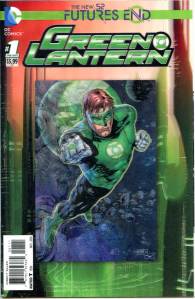
Futures End – Green Lantern #1 NM $4
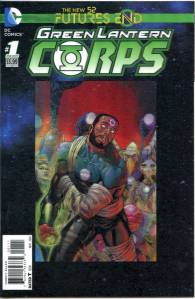
Futures End – Green Lantern Corps #1 NM $4
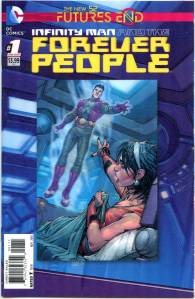
Futures End Infinity Man and the Forever People #1 NM $4
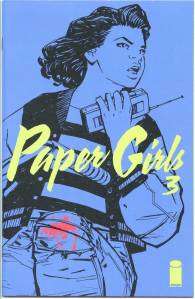
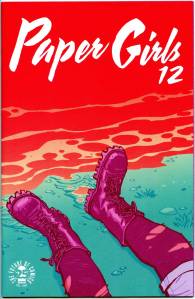
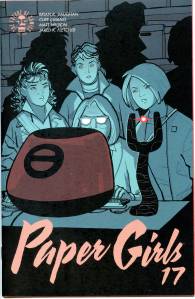
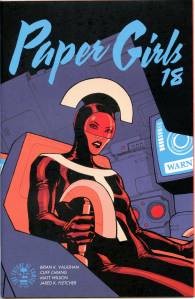
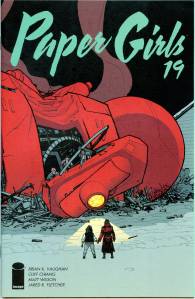
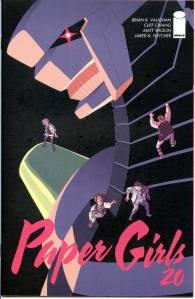
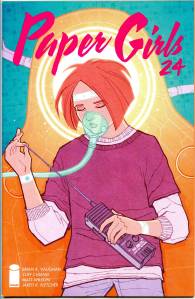
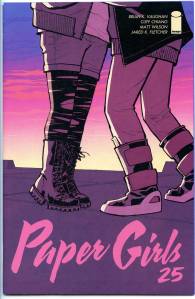
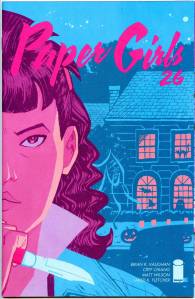
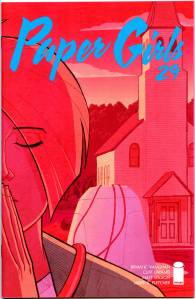
Paper Girls follows the story of four 12-year-old newspaper delivery girls (Erin, MacKenzie, KJ, and Tiffany) set in Stony Stream, a fictional suburb of Cleveland, Ohio. While out delivering papers on the morning after Halloween, the town is struck by an invasion from a mysterious force from the future. The girls become unwillingly caught up in the conflict between two warring factions of time-travelers.
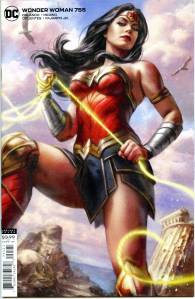
Following the 2016 DC Rebirth continuity relaunch, Wonder Woman’s outfit was redesigned to resemble the one worn in the film Batman v Superman: Dawn of Justice. This outfit is a red bustier with a gold eagle, a blue leather skirt with gold edges with two stars, and knee-high red boots with gold knee guards and accents. Her tiara once again is gold with a red star. She occasionally wears a red cape with a gold clasp and edges. She continues to wear this updated outfit in DC Universe, the continuity established after Rebirth.
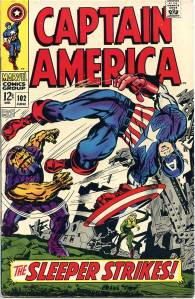
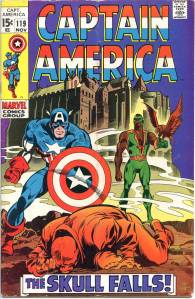
Tales of Suspense became Captain America with #100 (April 1968) This series — considered Captain America volume one by comics researchers and historians, following the 1940s Captain America Comics and its 1950s numbering continuation of Tales of Suspense — ended with #454 (Aug. 1996).
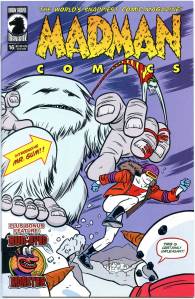
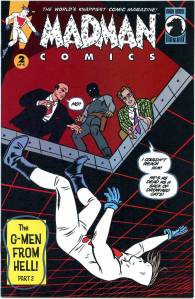
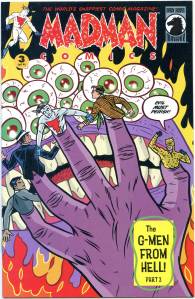
This is it! The all-new, all-exciting, bimonthly continuing series makes its triumphant return to the racks! Thrilling stories, brilliant art — this is the one, folks! The comic-book event of the decade! In fact, this is the comic-book series you’ll be telling your grandkids about.
During his two years on the title, Roger Stern augmented the backgrounds of long-established Spider-Man villains, and with Romita Jr. created the mysterious supervillain the Hobgoblin in #238-239 (March–April 1983) Fans engaged with the mystery of the Hobgoblin’s secret identity, which continued throughout #244-245 and 249-251 (Sept.-Oct. 1983 and Feb.-April 1984). One lasting change was the reintroduction of Mary Jane Watson as a more serious, mature woman who becomes Peter’s confidante after she reveals that she knows his secret identity. Stern wrote “The Kid Who Collects Spider-Man” in The Amazing Spider-Man #248 (January 1984), a story which ranks among his most popular.
David Michelinie took over as writer in #290 (July 1987) that led to the marriage of Peter Parker and Mary Jane Watson in Amazing Spider-Man Annual #21. The “Kraven’s Last Hunt” storyline by writer J.M. DeMatteis and artists Mike Zeck and Bob McLeod crossed over into The Amazing Spider-Man #293 and 294. Issue #298 (March 1988) was the first Spider-Man comic to be drawn by future industry star Todd McFarlane, the first regular artist on The Amazing Spider-Man since Frenz’s departure. McFarlane revolutionized Spider-Man’s look. His depiction – large-eyed, with wiry, contorted limbs, and messy, knotted, convoluted webbing – influenced the way virtually all subsequent artists would draw the character. McFarlane’s other significant contribution to the Spider-Man canon was the design for what would become one of Spider-Man’s most wildly popular antagonists, the supervillainVenom. Issue #299 (April 1988) featured Venom’s first appearance (a last-page cameo) before his first full appearance in #300 (May 1988). The latter issue featured Spider-Man reverting to his original red-and-blue costume.
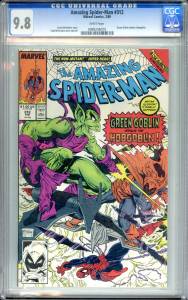
Other notable issues of the Michelinie-McFarlane era include #312 (Feb. 1989), featuring the Green Goblin vs. the Hobgoblin; and #315-317 (May–July 1989), with the return of Venom. In July 2012, Todd McFarlane’s original cover art for The Amazing Spider-Man #328 sold for a bid of $657,250, making it the most expensive American comic book art ever sold at auction.
Amazing Spider-Man #214 Newsstand CGC 9.8 White Pages $120


































 EHT Comics