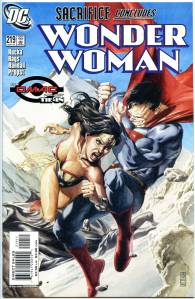
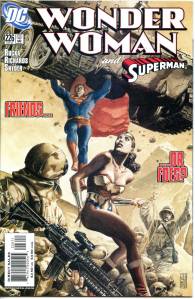
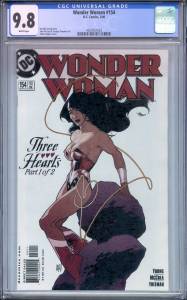
One of the events that led to Infinite Crisis was of Wonder Woman killing the villain Maxwell Lord in Wonder Woman Vol 2 #219. Maxwell Lord was mind-controlling Superman, who as a result was near to killing Batman. Wonder Woman tried to stop Superman, Lord (who was unable to mind control her) made Superman see her as his enemy Doomsday trying to kill Lois Lane. Superman then attacked Wonder Woman, and a vicious battle ensued. Buying herself time by slicing Superman’s throat with her tiara, Wonder Woman caught Lord in her Lasso of Truth and demanded to know how to stop his control over Superman. As the lasso forced the wearer to speak only the truth, Lord told her that the only way to stop him was to kill him. Left with no choice, Wonder Woman snapped Lord’s neck and ended his control over Superman. Unknown to her, the entire scene was broadcast live around every channel in the world by Brother Eye. The viewers were not aware of the entire situation, and saw only Wonder Woman murdering a Justice League associate. Wonder Woman’s actions put her at odds with Batman and Superman, as they saw Wonder Woman as a cold-blooded killer, despite the fact that she saved their lives.
Author: EHT Comics
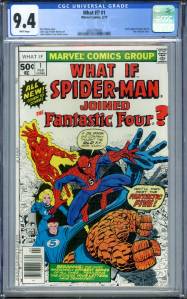
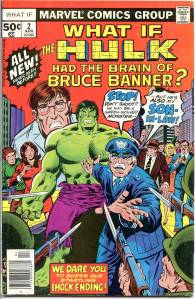
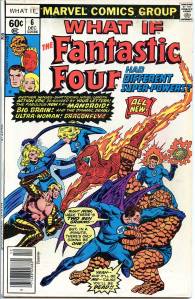
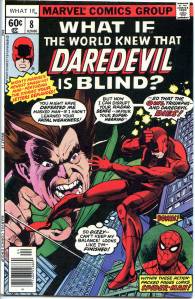
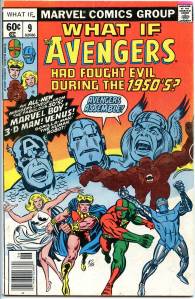
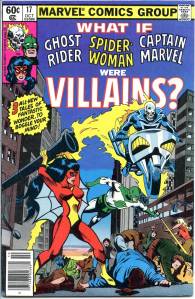
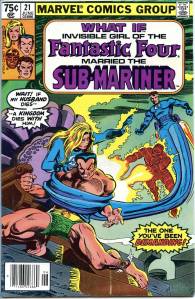
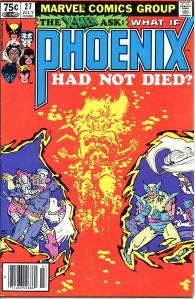
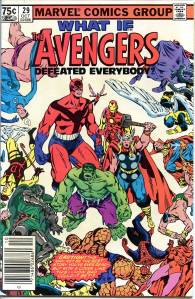
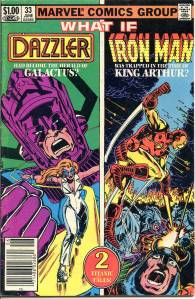
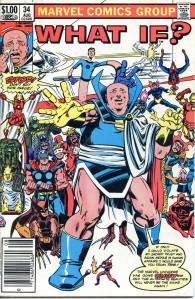
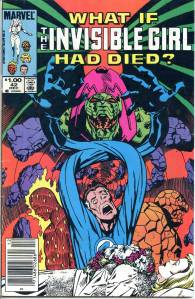
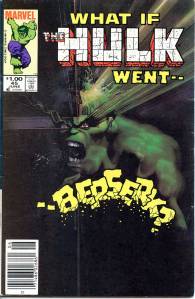
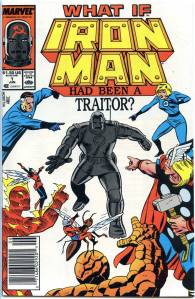
What If…? – V1 (1977)
What If, sometimes rendered as What If…?, is published by Marvel Comics whose stories explore how the Marvel Universe might have unfolded if key moments in its history hadn’t occurred as they did in mainstream continuity. What If comics have been published in eleven series (volumes).
The stories of the inaugural series (1977–1984) feature the alien Uatu the Watcher as a narrator. From the moon, Uatu, a member of an immortal race of “Watchers”, observes both the Earth and alternate realities. Most What If stories begin with Uatu describing an event in the mainstream Marvel Universe, then introducing a point of divergence in that event and then describing the consequences of the divergence. Uatu was used similarly in the second series (1989–1998) until a point where, in the Fantastic Four comic book, Uatu was punished for destroying another Watcher. This made the use of Uatu improbable so the character was phased out to its last appearance in issue #76. Without a framing device, the stories themselves became the focus.
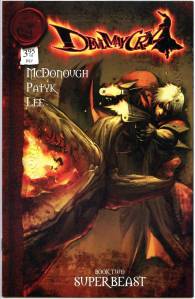
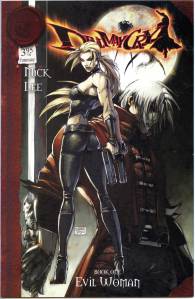
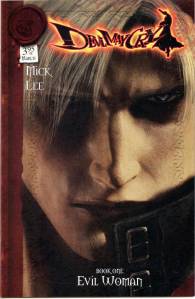
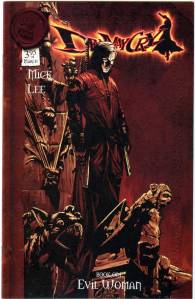
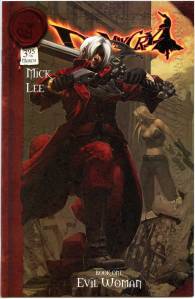
Devil May Cry (2004)
Devil May Cry is a comic adaptation of the first game, published by a Canadian publisher Dreamwave Productions in 2004. It was written by Brad Mick with art by Pat Lee, and additional cover images were provided by Michael Turner and Jae Lee. Three issues of the comics were released, but it was left unfinished when the company went bankrupt in 2005.
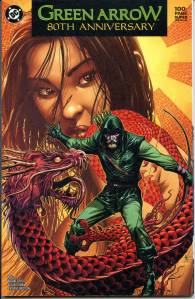
Green Arrow – 80th Anniversary (2021)
Celebrating the Emerald Archer’s 80th Anniversary! For the last eight decades Green Arrow has been one of the premier (and loudest) characters in the DCU, always at the forefront of where the superhero genre is headed. This over-sized anniversary issue follows in those footsteps, as an all-star lineup of Green Arrow creators, alongside some of the gifted creators of the modern era who have been inpsired by Oliver Queen, unite to pay tribute to the Battling Bowman. See what the past, present and future have in store for Oliver Queen, Black Canary, Connor Hawke, Arsenal, Red Arrow, Speedy, and more in this epic special!
Batman Versus Predator (1991)
Batman Versus Predator is a crossover featuring a duel between Batman and a member of the titular extraterrestrial race from the Predator film franchise. It was written by Dave Gibbons with art by Andy and Adam Kubert, and was published by DC Comics and Dark Horse Comics in 1991. Adam Kubert won an Eisner Award in 1992 for his contribution.
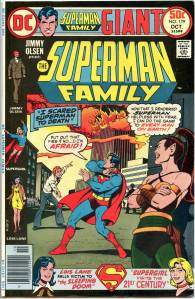
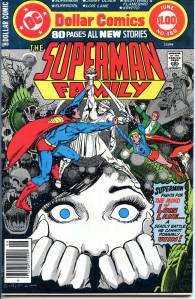
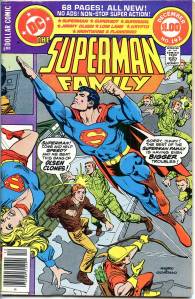
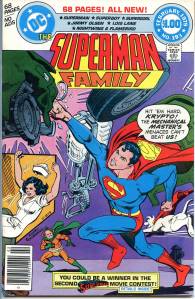
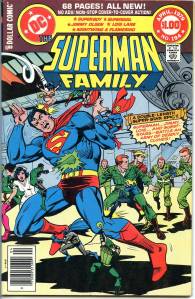
Superman Family (1970’s)
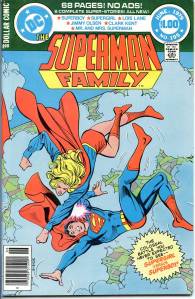
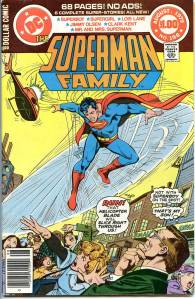
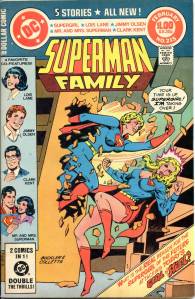
The Superman Family, was a DC Comics series which ran from 1974 to 1982 featuring stories starring supporting characters in the Superman comics. The Superman Family was an amalgamation of the titles Superman’s Girl Friend, Lois Lane and Superman’s Pal Jimmy Olsen, along with the first series of Supergirl. The first issue, #164, took its numbering from Jimmy Olsen, which had reached issue #163 and thus had the most issues published. Lois Lane ended at #137, while the newly launched Supergirl book had only made it to #10.
Black Cat V2 (2021)
In this second volume, MacKay and artist C.F. Villa took the Black Cat’s larcenous adventures into the realm of cosmic horror with an inaugural arc that tied into the King in Black event. After that arc came to a close in Black Cat #3, Black Cat #4 MacKay and artist Nina Vakueva reintroduce their protagonist’s ongoing war with New York City’s shadowy Thieves Guild and set up an arc that pays off on that long-form story that’s been building since 2019’s Black Cat #1.
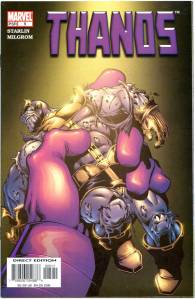
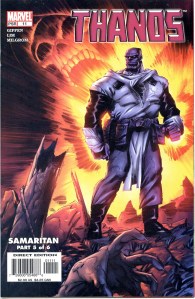
Thanos (2004)
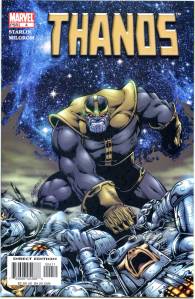
In 2004 Thanos received an eponymous title that ran for 12 issues. After defeating the Hunger, Thanos went to the frontline and gave himself up to the Omega Corps. After a panicked action from the corps they send him to the Kyln. On his way he killed a Skrull agent to give them a reason to imprisoned him. On Kyln, a priest told him about the prison while Thanos is watching the Crunch. When the Priest left, Death appeared and talked to him, telling him She loves him in her way, and that he hadn’t given her anything that she didn’t already have.
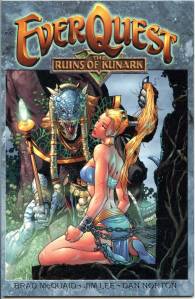
Everquest: The Ruins of Kunark (2001)
Journey to the land of Kunark alongside High Elven Princess Firiona Vie, as she and her comrades-in-arms must stop an unholy alliance. The great Elven Armies stand ready to defend the realm. But will they be enough to vanquish the rising darkness that threatens all of Norrath?
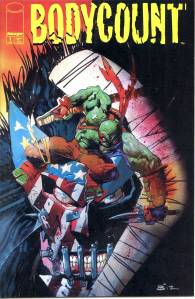
Bodycount (1996)
Kevin Eastman teamed up with Simon Bisley to spin a John Woo inspired story featuring Raphael and Casey Jones. Casey and Raphael find themselves caught up in the middle of an international family murder revenge assassination plot, complete with gangsters, thugs, agents, warriors and more……