
Spawn began a resurgence in popularity as the title approached its 300th issue, with the title once again becoming a fixture in Diamond’s Top 100. This 300th issue also made Spawn the longest-running independent comic book series of all time.


Spawn began a resurgence in popularity as the title approached its 300th issue, with the title once again becoming a fixture in Diamond’s Top 100. This 300th issue also made Spawn the longest-running independent comic book series of all time.
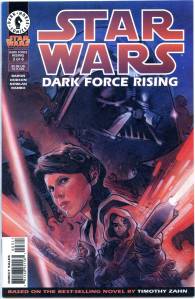
The dying Empire’s most cunning and ruthless warlord—Grand Admiral Thrawn—has taken command of the remnants of the Imperial fleet and launched a massive campaign aimed at the New Republic’s destruction. Meanwhile, Han and Lando Calrissian race against time to find proof of treason inside the highest Republic Council—only to discover instead a ghostly fleet of warships that could bring doom to their friends and victory to their enemies. Yet most dangerous of all is a new Dark Jedi, risen from the ashes of a shrouded past, consumed by bitterness…and scheming to corrupt Luke Skywalker to the Dark Side.
The 2016 DC Comics title relaunch Rebirth incorporates several elements (such as the costume, the setting and some characters) from the Supergirl television series. The DC Rebirth initiative undid the New 52’s modern recreations, bringing DC’s heroes back to their more classic iterations. Supergirl’s new series (Volume 7) was titled Supergirl: Rebirth, written by Steven Orlando. The first arc was pencilled by Brian Ching, who also redesigned Supergirl’s costume in reference to a more classic look.


Writer-editor Jonathan Hickman and artist/co-plotter Pepe Larraz created the Quiet Council of Krakoa in House of X #6 (October 2019). The Council appeared in many comics in the Dawn of X and Reign of X relaunches, creating and enforcing the laws of Krakoa; prosecuting and delivering judgement on mutants accused of breaking those laws.
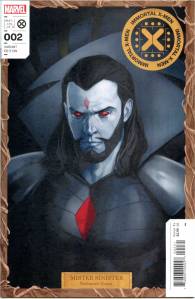
In March 2022, the council headlined Immortal X-Men as part of the Destiny of X relaunch. The series also served continuation of Inferno, vol. 2. It was written by Kieron Gillen and drawn by Lucas Werneck, building plot points for the event Sins of Sinister. After being briefly transformed into the Immoral X-Men limited series, Immortal X-Men continued from issue #11.


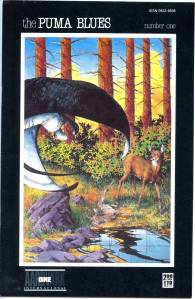
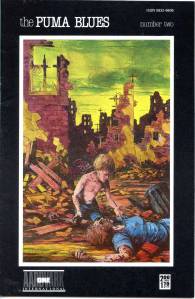
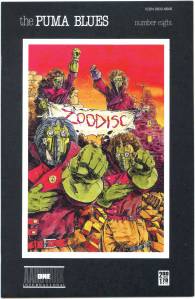
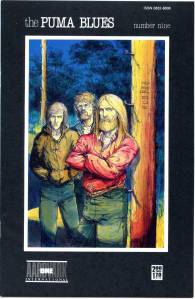
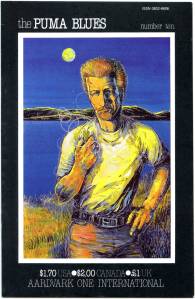
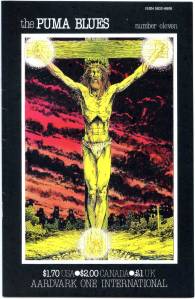
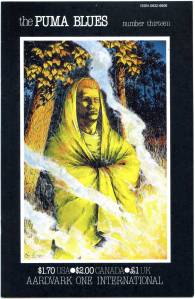
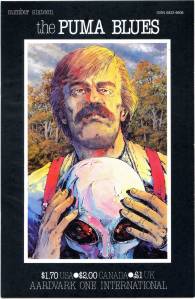
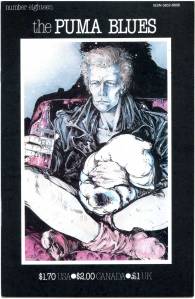
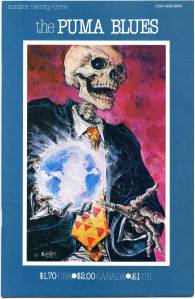
The Puma Blues was a comic book written by Stephen Murphy and drawn by Michael Zulli. It ran from June 1986 to the beginning of 1989, stretching over 23 regular issues and a single “half-issue” minicomic.
Published first by Aardvark One International and later by Mirage Studios, the story is set around the millennium. and follows Gavia Immer, a governmental fauna agent, as he goes through an existential dilemma while watching videos his father left for him after his death.
The comic book’s detailed artwork by Michael Zulli, which focused primarily on wildlife and nature, was superposed to a loose narrative with a druggy, dreamy, new age apocalyptic atmosphere. This de-structuralizing of the main narrative increased dramatically in later issues, with the second half of the series often taking the form of illustrated prose poetry within an associative narrative.











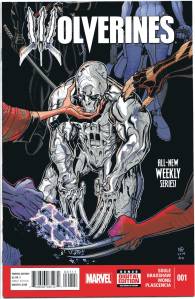
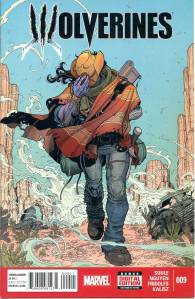
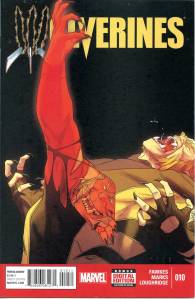
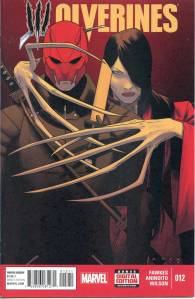
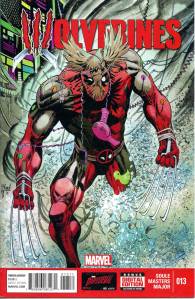
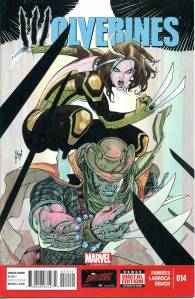
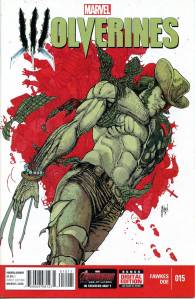
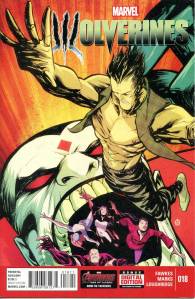
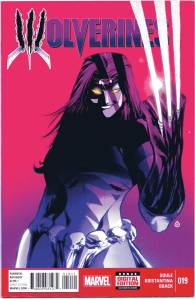
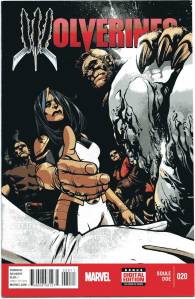
The aftermath of Wolverine’s death is explored in the series Wolverines. Sharp, Skel, Neuro, Endo, Junk, and the “Wolverines” (a team formed from the fallout of his death by Daken, Lady Deathstrike, Mystique, Sabretooth, and X-23) try to find Logan’s adamantium-covered body, which is taken by Mister Sinister. The group infiltrate Mister Sinister’s fortress to retrieve the body, but it is taken by the X-Men after a battle.


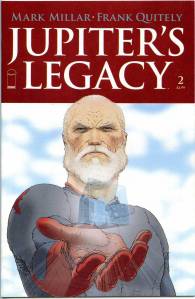
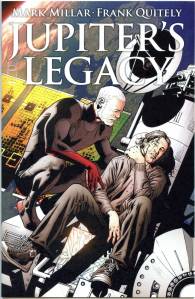
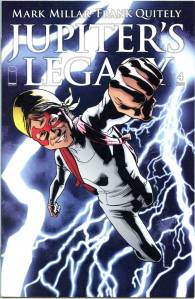
Jupiter’s Legacy is influenced by Star Wars, King Kong, Roman mythology and origin stories from the Golden Age of Comics. It is written as Millar’s treatise on superheroes’ connection to the American ideal. The first few issues of the opening story arc explores the generational conflict between a group of aging superheroes known as the Union, who used the powers they gained in 1932 for the betterment of mankind, in particular their leader, Sheldon Sampson (aka the Utopian), and their children, who are daunted by the prospect of living up to their parents’ legacy. Other conflicts and themes in the book include sociopolitical and economic differences among the older heroes and the end of capitalism, in the form of Sheldon’s differences with his brother, Walter, which were inspired by Millar’s reaction to the Great Recession.


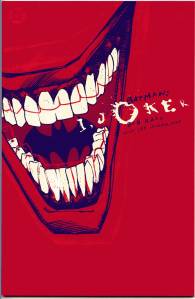
An Elseworlds tale! In the year 2083, the legend of the Batman sparks a strange and deadly religion based on the Dark Knight. As the annual death race between the religion’s leader and a group of sacrificial “lambs” surgically altered to resemble Batman’s greatest foes approaches, one would-be Joker tries to break the cycle and become the true inheritor of the heroic mantle of the Bat.
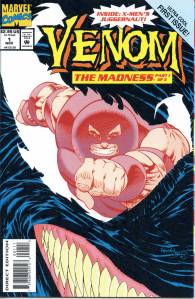
A three-part series published between November 1993 and January 1994, the series introduces attorney Beck as a love interest for Brock. When Beck pursues a lawsuit against Scarmore Industries for employees poisoned by a sentient liquid-mercury virus, Venom is injured trying to protect her from the Juggernaut‘s kidnap attempt. The symbiote is submerged and infected with the sentient virus (which heals Brock), bonding with the pair and introducing a third mind into their relationship. The virus drives Brock insane (causing him to murder a cleaning lady), and he is physically transported to the realm of insanity to confront its avatars: Paranoia, Dusk and the Necromancer. The symbiote overcomes the virus; Brock regains his senses, and Venom is returned to earth. Beck later insists on only being Brock’s friend, because his romantic feelings for her make him more violent.

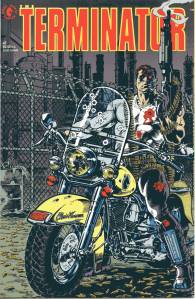
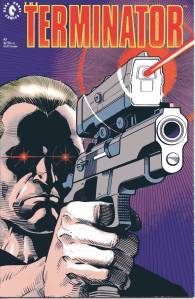
A nine-man Resistance cell led by Colonel Mary Randallassaults a fully functional Skynet network complex 6 months after John Connor destroyed the Master Control central node. Within this facility is an operational Time Displacement Chamber, greater in scope than the prototype discovered by John Connor. Their mission is to utilize the TDE to return to 1984 and eliminate Skynet by killing key individuals in the Cyberdyne Systems hierarchy.

 EHT Comics