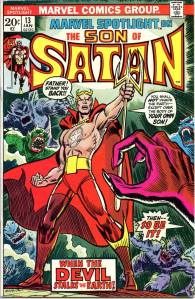
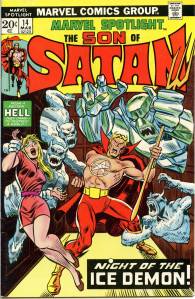
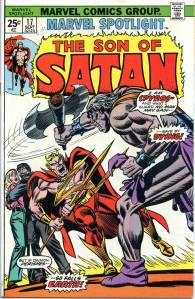
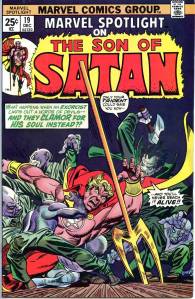
Encouraged by the success of Ghost Rider and The Tomb of Dracula, both of which starred occult characters, Stan Lee proposed a series starring Satan, to be titled The Mark of Satan. Editor Roy Thomas had reservations about this idea and suggested a series focusing on the son of Satan instead. (Due to an oversight, “The Mark of Satan” is mentioned in a blurb in Ghost Rider #1).
The character Daimon Hellstrom first appeared in Ghost Rider vol. 1, #1 (Sept. 1973), then was spun off into a feature, “Son of Satan”, in Marvel Spotlight #12–24 (Oct. 1973 – Oct. 1975). During the “Son of Satan” run, Marvel Spotlight was a controversial series, with numerous readers writing to object to the depictions of satanism and wiccanism as being either inaccurate or furthering the cause of evil. Nonetheless, sales were strong, prompting Marvel to launch the character into his own series, Son of Satan, written by John Warner. The character’s success faded soon after the series launch, and Son of Satan was cancelled with issue #7, though an unused fill-in was published as Son of Satan #8 (Feb. 1977).
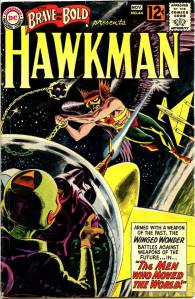
The first volume of the series ran for 200 issues from August/September 1955 to July 1983. Originally, The Brave and the Bold was an anthology series featuring adventure tales from past ages with characters such as the Silent Knight, the Viking Prince, the Golden Gladiator, and Robin Hood. With issue #25, the series was reinvented as a try-out title for new characters and concepts, starting with the Suicide Squad created by writer Robert Kanigher and artist Ross Andru. Gardner Fox and Joe Kubert created a new version of Hawkman in issue #34 (February–March 1961) with the character receiving his own title three years later.
What if “The Smoking Man” from X-Files was a real person, and his daughter found out what he did for a living? The daughter of an assassinated globalist kingpin breaks out of an internment camp and leads her fellow escaped prisoners in a battle against an elitist conspiracy of shadow governments, megabanks, and military juntas in this edgy and subversive thriller that channels Fight Club by way of Girl With The Dragon Tattoo.
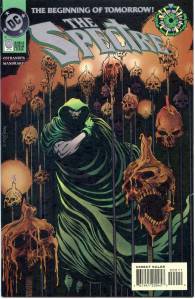
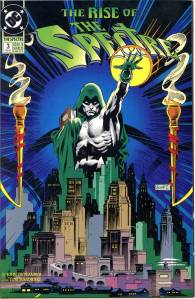
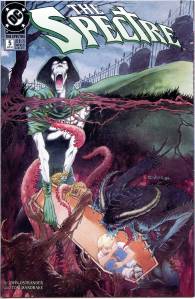
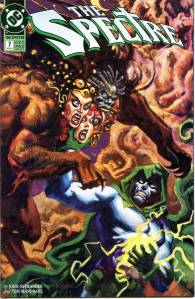
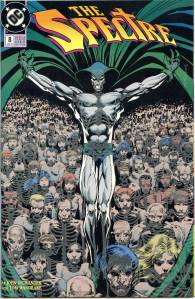
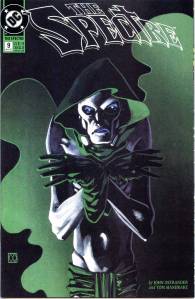
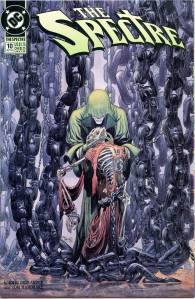
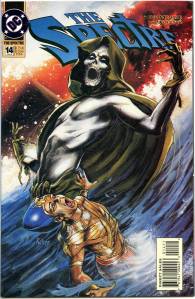
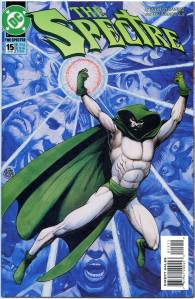
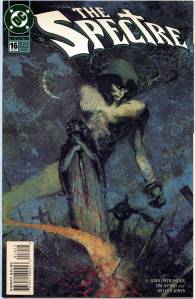
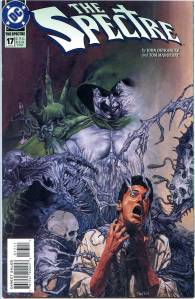
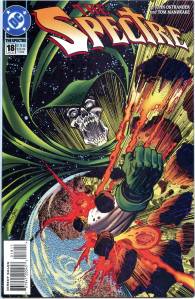
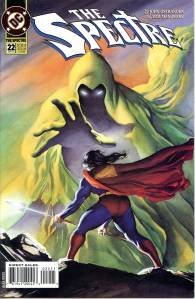
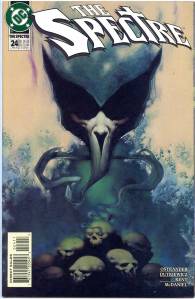
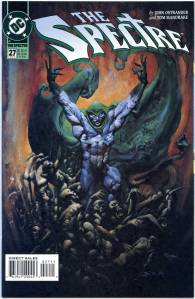
In 1992, the Spectre was again given his own series, this time written by writer and former theology student John Ostrander, who chose to re-examine the Spectre in his aspects as both the embodied Avenging Wrath of the Murdered Dead and as a brutal 1930s policeman.
Ostrander placed the Spectre in complex, morally-ambiguous situations that posed certain ethical questions, one example being: What vengeance should be wrought upon a woman who killed her abusive husband in his sleep?
Ostrander also added several new concepts into the Spectre’s history: He revealed that the Spectre was meant to exist as the embodiment of the Wrath of God, and Jim Corrigan was but the latest human spirit assigned to guide him while he existed on Earth. It was also shown that the Spectre was a fallen angel named Aztar who had participated in Lucifer‘s rebellion, but then repented, and that serving as the embodiment of God’s anger was its penance.
Furthermore, the Spectre was not the first embodiment of God’s anger, but was the replacement for the previously-minor DC character Eclipso. Ostrander chose to portray this as a distinction between the Spectre’s pursuit of vengeance and Eclipso’s pursuit of revenge. In a historical context, Eclipso was responsible for the biblical Flood, while the Spectre was the Angel of Death who slew the firstborn Egyptian children. Spectre and Eclipso have battled numerous times through history but neither entity can be fully destroyed.
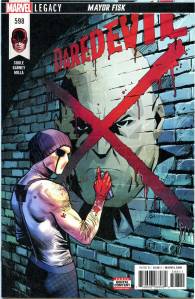
Following the release of Volume 5, Issue 28, much like with other Marvel series as part of the Marvel Legacy event, the Daredevil series official numbering was rebooted back to the original numbering which started with Issue 595 which was released on November 8, 2017, where Daredevil’s longtime nemesis the Kingpin became the Mayor of New York City and begins a campaign to make costumed vigilantes officially criminals. Although Murdock’s attempt to set up a sting operation results in his allies being arrested when the Kingpin turns this trap against him, Fisk’s legal manipulations work against him when he is attacked by the Hand, leaving Fisk in a coma and Murdock legally mayor of New York from his position as deputy mayor due to a loophole added by a prior administration that had not been amended, allowing Matt to take control of the city and release his fellow heroes to help him stop the Hand.
Talbot Engineering Inc. is under new management – and its brilliant chief scientist, Batya Zahn, will do just about anything to get her family off the icy moon where they’ve been conducting research on water conservation. But there’s more than glacial springs to find in this forgotten corner of the galaxy. When they discover an extraordinary organism buried in the ice, it doesn’t take long for tensions to heat up. What is hidden in the snow comes forth in the thaw – and no one will be welcoming this spring. But Zahn is not willing to give up her work to this unexpected threat without a fight, no matter what horrors emerge from the ice in the black of night.
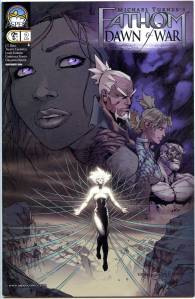
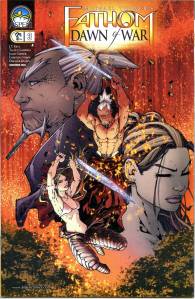
Fathom: Dawn of War bridges the gap between the original series and Fathom vol. 2. The story focuses on the Blue warrior Kiani, who is forced to side with the rebellious councilman Marqueses in order to save her master, Casque, from the clutches of human military scientists. Marqueses has engineered the situation in order to kidnap Casque and to secure the older warrior’s immense power for an offensive against the humans. Kiani tracks down Marqueses and saves Casque only to find he is part of the Black. The Black come for Casque, and he is forced to rejoin them, leaving Kiani angry and lost.
Dawn of War emphasizes Kiani’s loneliness and character development. It also introduces audiences further to the underwater world of the Blue.
Kong the Untamed is a comic book series published by DC Comics that ran for five issues. It was created in 1975 by writer Jack Oleck and artist Alfredo Alcala. The title character, Kong, is an intelligent caveman who is a direct descendant of Anthro, another DC Comics caveman character.
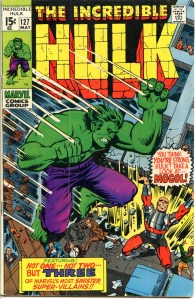
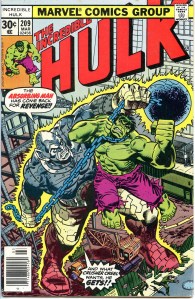
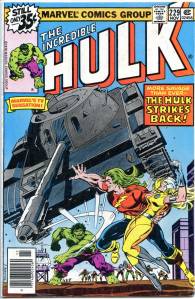
The 1970s saw Banner and Betty nearly marry in The Incredible Hulk #124 (Feb. 1970).Betty ultimately married Talbot in issue #158 (Dec. 1972).The Hulk also traveled to other dimensions, one of which had him meet empress Jarella, who used magic to bring Banner’s intelligence to the Hulk, and came to love him. It was during this period that the Hulk helped to form the Defenders.
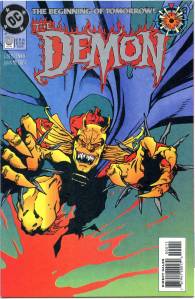
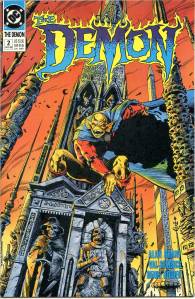
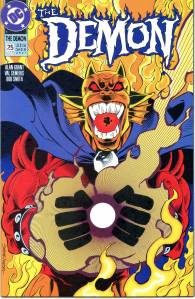
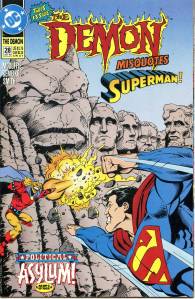
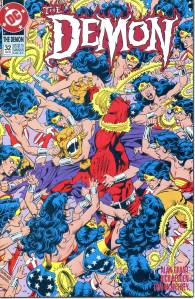
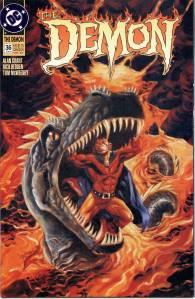
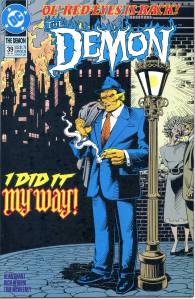
Etrigan the Demon first appeared in The Demon #1 (August 1972) and was created by Jack Kirby. He created the Demon when his Fourth World titles were cancelled. According to Mark Evanier, Kirby had no interest in horror comics, but created Etrigan in response to a demand from DC for a horror character. Kirby was annoyed that the first issue sold so well that DC required him to do sixteen issues and abandon the Fourth World titles before he was done with them.
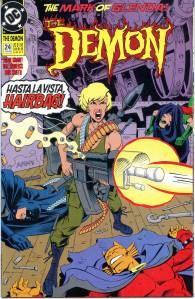
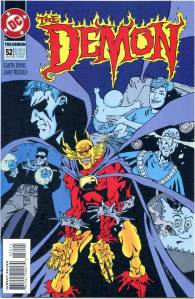
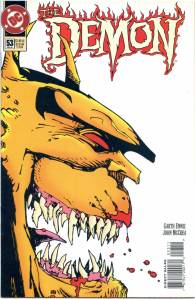
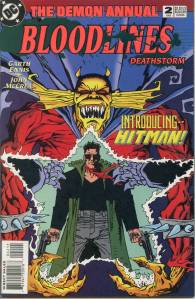
The 1990 series lasted 58 issues, two Annuals and one #0 issue. Garth Ennis took over the title beginning with issue #40. Ennis’ run included the first appearance of his character Hitman.