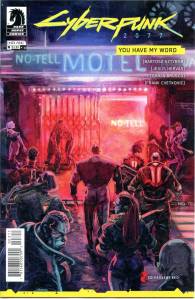
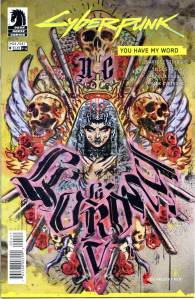
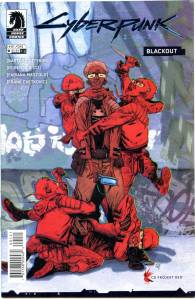
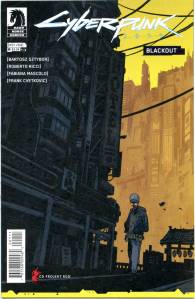
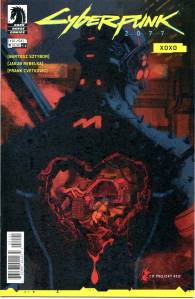
By September of the same year, Dark Horse Comics brought out the first issue of a comic book series called Cyberpunk 2077: Trauma Team with writer Cullen Bunn and illustrator Miguel Valderrama. Several other comics set in the world of Cyberpunk 2077 have also been released by the same publisher, including Cyberpunk 2077: Big City Dreams, which won the Hugo Award for Best Graphic Story or Comic in 2023.
Cyberpunk 2077 You Have My Word #2 NM $14Cyberpunk 2077 You Have My Word #3 NM- $6Cyberpunk – You Have my Word #4 NM $9Cyberpunk 2077 Blackout #1 Cover B NM $12Cyberpunk 2077 Blackout #1 NM $12Cyberpunk 2077 Blackout #2 NM $9Cyberpunk 2077 – XOXO #1D NM $6
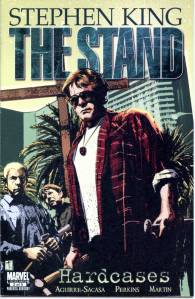
The Stand – Captain Trips #3 NM $4The Stand – Captain Trips #5 NM $4The Stand – American Nightmares #3 NM $4The Stand – American Nightmares #5 NM $4The Stand – Hardcases #1 NM $4The Stand – Hardcases #2 NM $4
In conjunction with the expanded Mars Attacks trading card set released in 1994, Topps issued a six-issue limited comic book series written by Keith Giffen and drawn by Charles Adlard. The series featured a “flip-cover” format, with 22 pages of the book following the story of the card set and six pages detailing previous encounters leading up to the invasion. The limited series was successful and led Topps to continue it as a regular series.
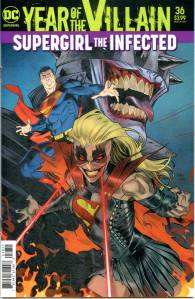
The 2016 DC Comics title relaunch Rebirth incorporates several elements (such as the costume, the setting and some characters) from the Supergirl television series. The DC Rebirth initiative undid the New 52’s modern recreations, bringing DC’s heroes back to their more classic iterations. Supergirl’s new series (Volume 7) was titled Supergirl: Rebirth, written by Steven Orlando. The first arc was pencilled by Brian Ching, who also redesigned Supergirl’s costume in reference to a more classic look.
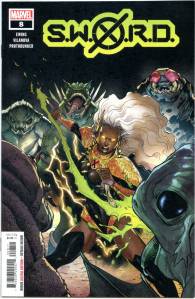
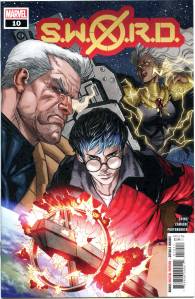
S.W.O.R.D. (Sentient World Observation and Response Directorate) was restored when Abigail Brand resigned from Alpha Flight after the Alliance-Cotati conflict feeling that the space program wasn’t properly utilized and when the mutant nation repowered the abandoned Peak space station. In cooperation with the Quiet Council of Krakoa, it became the mutant nation’s representative to the outer universe.
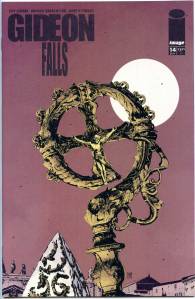
Jeff Lemire set out to create an intelligent horror story, not one driven by gore, but by exploring the nature of evil. Sorrentino described the central character, Norton Sinclair, as inheriting the worst from himself and Lemire—nihilism from Sorrentino and obsession from Lemire. Norton is based off a character Lemire originally created in 1996 for a short film during film school in Toronto. The Black Barn from the series was somewhat inspired by the Black Lodge from Twin Peaks, though Lemire assures readers he’s going somewhere very different with the concept. The story came from two separate stories that weren’t working on their own, but finally clicked when Lemire put them together.
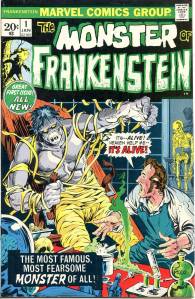
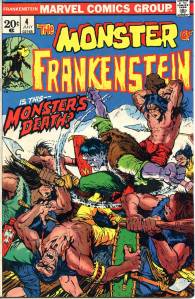
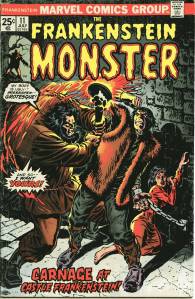
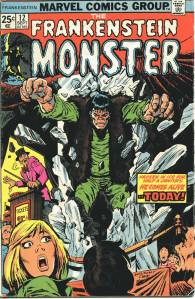
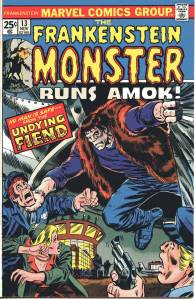
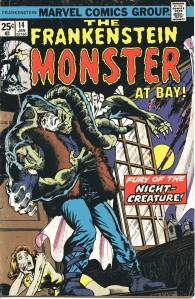
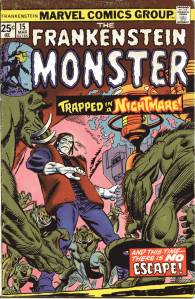
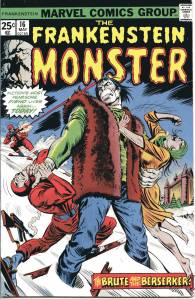
The character received an ongoing series, titled Frankenstein in the postal indicia and initially The Monster of Frankenstein (issues #1-5) and later The Frankenstein Monster as the cover logo, that ran 18 issues (Jan. 1973 – Sept. 1975).This series began with a four-issue retelling of the original novel, by writer Gary Friedrich and artist Mike Ploog. Several more issues continued his story into the 1890s, until he was placed in suspended animation and revived in modern times.
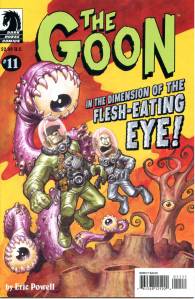
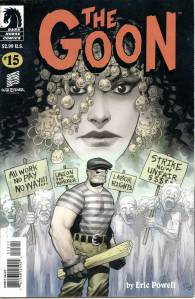
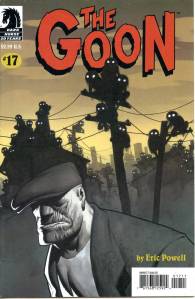
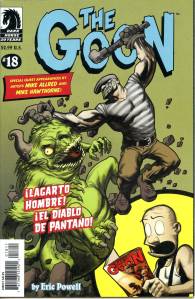
The Goon is written and drawn by Eric Powell. The series mixes both a comical and violent atmosphere with a supernatural slant, which pit the titular character against undead creatures/zombies, ghosts, ghouls, mutants, skunk-apes with an unnatural hunger for pies, giant squids, mob/gang leaders, extra-dimensional aliens, mad scientists and robots.
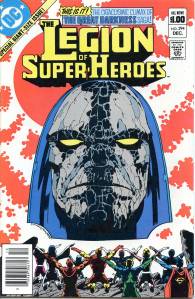
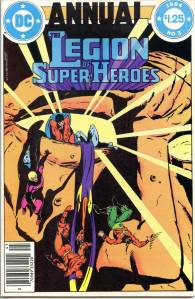
Paul Levitz returned to write the series with #284. Pat Broderick and Bruce Patterson illustrated the title for a short time before Keith Giffen began on pencils, with Patterson, and then Larry Mahlstedt, on inks. The creative team received enhanced popularity following “The Great Darkness Saga“, which ran from #287; #290–294; and Annual #3, featuring a full assault on the United Planets by Darkseid. Comics historian Les Daniels observed that “Working with artist Keith Giffen, Levitz completed the transformation of Legion into a science-fiction saga of considerable scope and depth.”
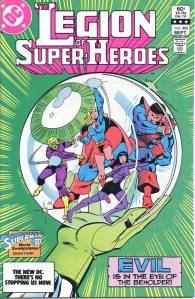
The Legion celebrated issue #300 (June 1983) by revisiting the “Adult Legion” storyline through a series of parallel world short stories illustrated by a number of popular Legion artists from previous years. The story served to free up Legion continuity from following the “Adult Legion” edict of previous issues.
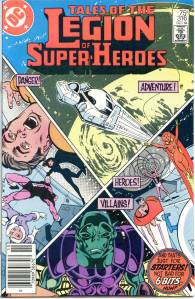
Legion of Super-Heroes #294 NM- $8Legion of Super-Heroes #303 NM- $3Legion of Super Heros Annual #3 VF-NM $3Tales of the Legion of Super-Heroes #316 VF $3
Eightball is an alternative comic book series written and drawn by Daniel Clowes. The first issue was published by Fantagraphics Books in 1989, soon after the end of Clowes’s previous comic series, Lloyd Llewellyn. It has consistently been among the best-selling independently authored comics.