The Stand – Captain Trips #3 NM $4The Stand – Captain Trips #5 NM $4The Stand – American Nightmares #3 NM $4The Stand – American Nightmares #5 NM $4The Stand – Hardcases #1 NM $4The Stand – Hardcases #2 NM $4
In conjunction with the expanded Mars Attacks trading card set released in 1994, Topps issued a six-issue limited comic book series written by Keith Giffen and drawn by Charles Adlard. The series featured a “flip-cover” format, with 22 pages of the book following the story of the card set and six pages detailing previous encounters leading up to the invasion. The limited series was successful and led Topps to continue it as a regular series.
The 2016 DC Comics title relaunch Rebirth incorporates several elements (such as the costume, the setting and some characters) from the Supergirl television series. The DC Rebirth initiative undid the New 52’s modern recreations, bringing DC’s heroes back to their more classic iterations. Supergirl’s new series (Volume 7) was titled Supergirl: Rebirth, written by Steven Orlando. The first arc was pencilled by Brian Ching, who also redesigned Supergirl’s costume in reference to a more classic look.
S.W.O.R.D. (Sentient World Observation and Response Directorate) was restored when Abigail Brand resigned from Alpha Flight after the Alliance-Cotati conflict feeling that the space program wasn’t properly utilized and when the mutant nation repowered the abandoned Peak space station. In cooperation with the Quiet Council of Krakoa, it became the mutant nation’s representative to the outer universe.
Jeff Lemire set out to create an intelligent horror story, not one driven by gore, but by exploring the nature of evil. Sorrentino described the central character, Norton Sinclair, as inheriting the worst from himself and Lemire—nihilism from Sorrentino and obsession from Lemire. Norton is based off a character Lemire originally created in 1996 for a short film during film school in Toronto. The Black Barn from the series was somewhat inspired by the Black Lodge from Twin Peaks, though Lemire assures readers he’s going somewhere very different with the concept. The story came from two separate stories that weren’t working on their own, but finally clicked when Lemire put them together.
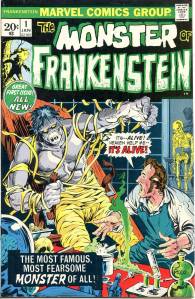
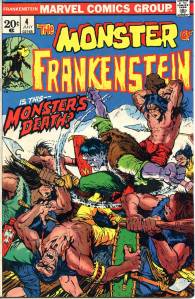
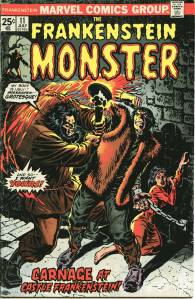
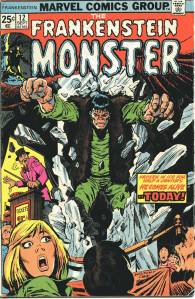
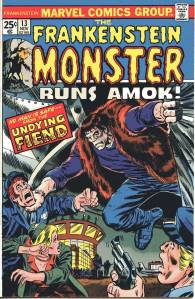
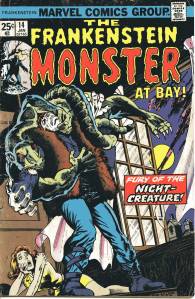
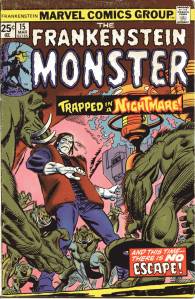
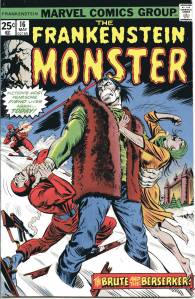
The character received an ongoing series, titled Frankenstein in the postal indicia and initially The Monster of Frankenstein (issues #1-5) and later The Frankenstein Monster as the cover logo, that ran 18 issues (Jan. 1973 – Sept. 1975).This series began with a four-issue retelling of the original novel, by writer Gary Friedrich and artist Mike Ploog. Several more issues continued his story into the 1890s, until he was placed in suspended animation and revived in modern times.
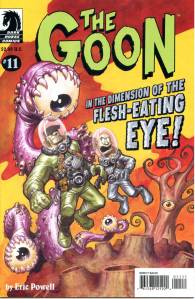
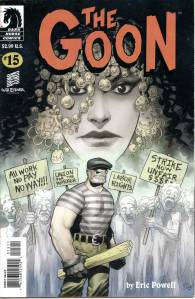
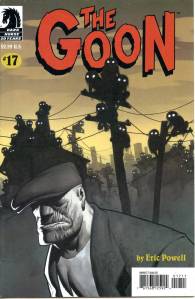
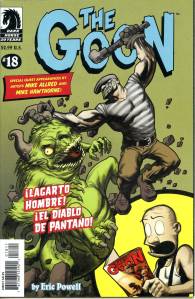
The Goon is written and drawn by Eric Powell. The series mixes both a comical and violent atmosphere with a supernatural slant, which pit the titular character against undead creatures/zombies, ghosts, ghouls, mutants, skunk-apes with an unnatural hunger for pies, giant squids, mob/gang leaders, extra-dimensional aliens, mad scientists and robots.
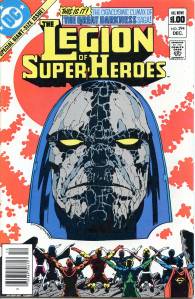
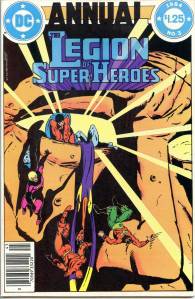
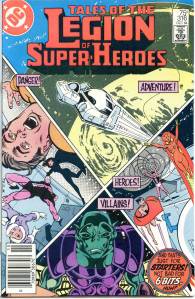
Paul Levitz returned to write the series with #284. Pat Broderick and Bruce Patterson illustrated the title for a short time before Keith Giffen began on pencils, with Patterson, and then Larry Mahlstedt, on inks. The creative team received enhanced popularity following “The Great Darkness Saga“, which ran from #287; #290–294; and Annual #3, featuring a full assault on the United Planets by Darkseid. Comics historian Les Daniels observed that “Working with artist Keith Giffen, Levitz completed the transformation of Legion into a science-fiction saga of considerable scope and depth.”
The Legion celebrated issue #300 (June 1983) by revisiting the “Adult Legion” storyline through a series of parallel world short stories illustrated by a number of popular Legion artists from previous years. The story served to free up Legion continuity from following the “Adult Legion” edict of previous issues.
Legion of Super-Heroes #294 NM- $8Legion of Super-Heroes #303 NM- $3Legion of Super Heros Annual #3 VF-NM $3Tales of the Legion of Super-Heroes #316 VF $3
Eightball is an alternative comic book series written and drawn by Daniel Clowes. The first issue was published by Fantagraphics Books in 1989, soon after the end of Clowes’s previous comic series, Lloyd Llewellyn. It has consistently been among the best-selling independently authored comics.
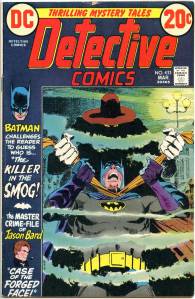
Writer Dennis O’Neil and artist Neal Adams had their first collaboration on Batman on the story “The Secret of the Waiting Graves” in issue #395 (Jan. 1970). The duo, under the direction of Schwartz, would revitalize the character with a series of noteworthy stories reestablishing Batman’s dark, brooding nature and taking the books away from the campy look and feel of the 1966–68 ABCTV series. Comics historian Les Daniels observed that “O’Neil’s interpretation of Batman as a vengeful obsessive-compulsive, which he modestly describes as a return to the roots, was actually an act of creative imagination that has influenced every subsequent version of the Dark Knight.” Adams introduced the Man-Bat with writer Frank Robbins in Detective Comics #400 (June 1970). O’Neil and artist Bob Brown crafted Batman’s first encounter with the League of Assassins in Detective Comics #405 (Nov. 1970) and created Talia al Ghul in issue #411 (May 1971).
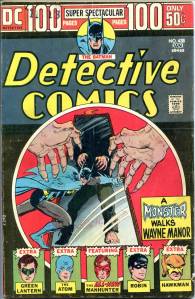
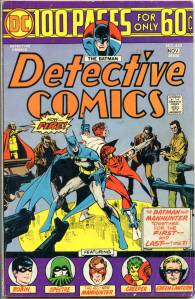
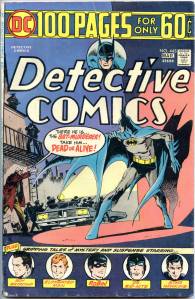
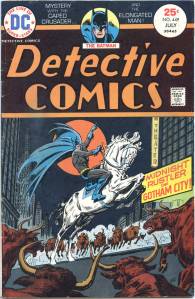
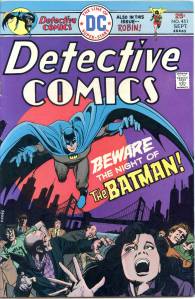
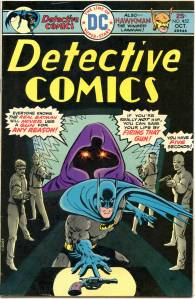
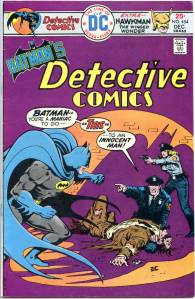
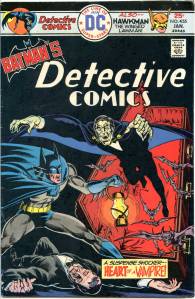
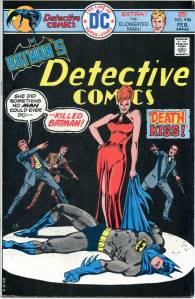
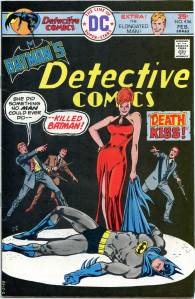
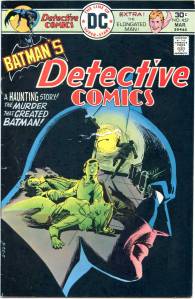
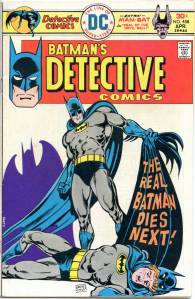
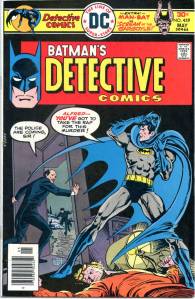
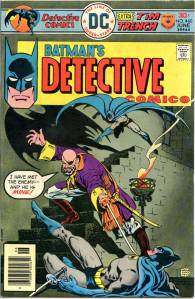
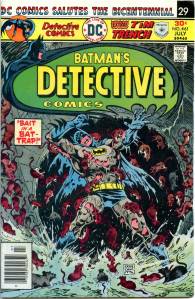
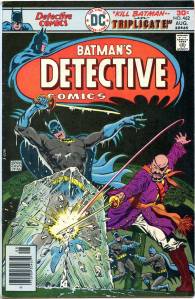
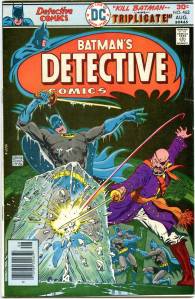
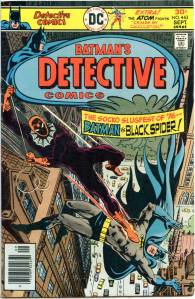
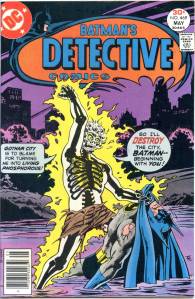
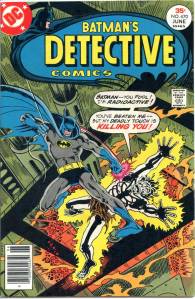
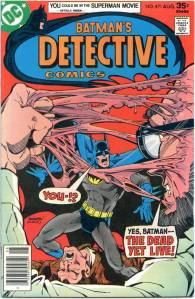
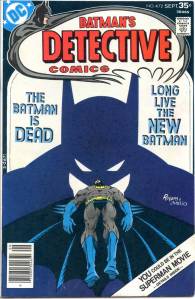
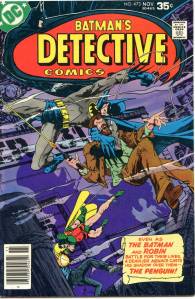
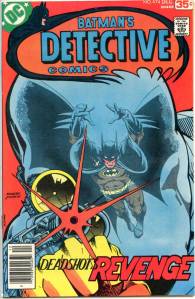
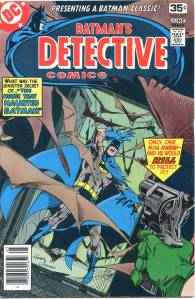
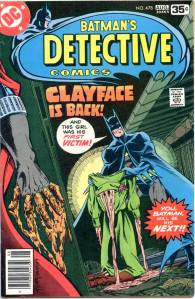
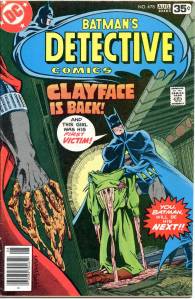
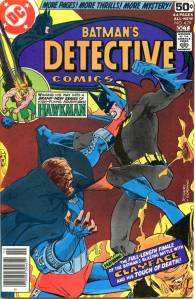
After publishing on a monthly schedule throughout its run, Detective Comics became a bi-monthly book from issues #435 (June–July 1973) to #445 (Feb.-March 1975). Issues #438 (Dec. 1973-Jan. 1974) to #445 (Feb.–March 1975) of the series were in the 100 Page Super Spectacular format. O’Neil and artist Dick Giordano created the Batman supporting character Leslie Thompkins in the story “There Is No Hope in Crime Alley” appearing in issue #457 (March 1976). Writer Steve Englehart and artist Marshall Rogers produced an acclaimed run of Batman stories in Detective Comics #471–476 (Aug. 1977 – April 1978), and provided one of the definitive interpretations that influenced the 1989 Batman movie and would be adapted for the 1990s animated series. The Englehart and Rogers pairing, was described in 2009 by comics writer and historian Robert Greenberger as “one of the greatest” creative teams to work on the Batman character. In their story “The Laughing Fish”, the Joker is brazen enough to disfigure fish with a rictus grin, then expects to be granted a federal trademark on them, only to start killing the bureaucrats who try to explain to him that obtaining such a claim on a natural resource is legally impossible. Writer Len Wein and Rogers co-created the third version of the supervillain Clayface in Detective Comics #478 (July–Aug. 1978). The original Katherine Kane also known as “Batwoman” was killed in the lead story in issue #485 (Aug.–Sept. 1979) by the League of Assassins.