Madame Xanadu (2008)

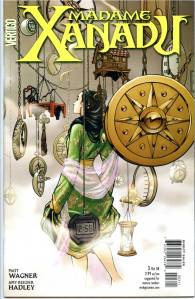
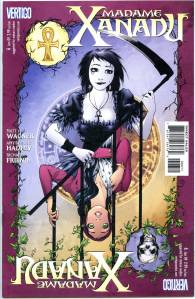
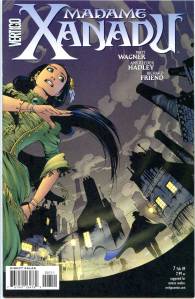
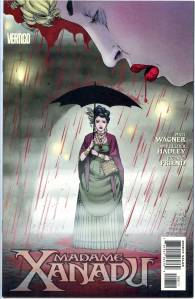
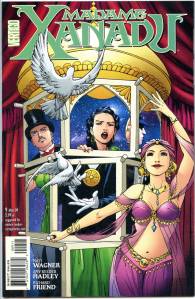
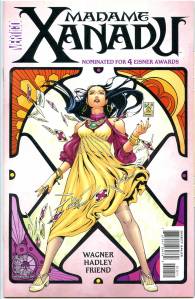
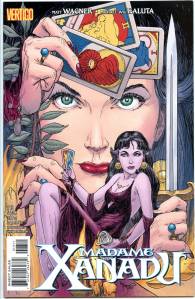
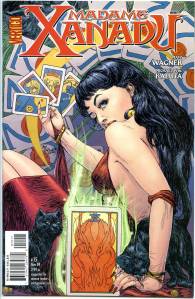
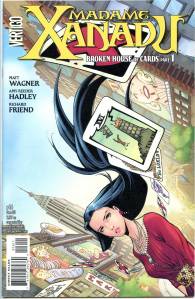
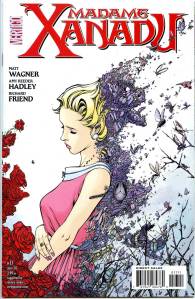
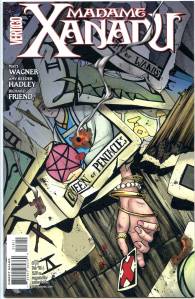
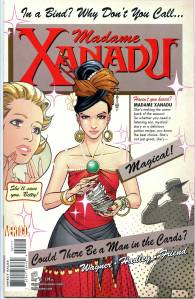
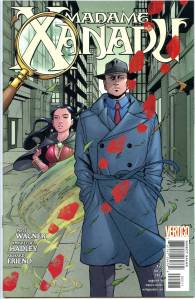
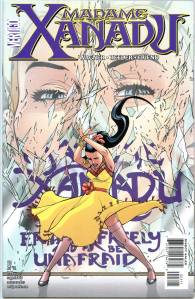
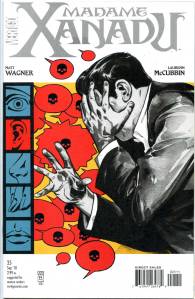
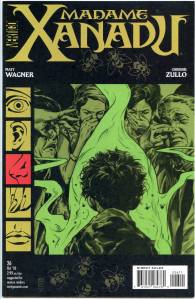
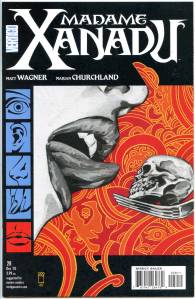
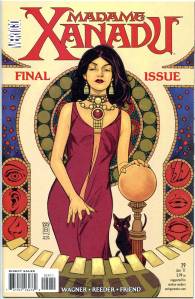
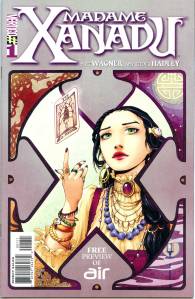
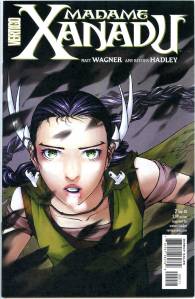
Madame Xanadu eventually got her own ongoing solo book when Matt Wagner and Amy Reeder Hadley teamed up for it in 2008, followed by more Wagner stories with artwork by many other equally amazing artists. The series went for 29 issues, exploring key moments in Xanadu’s very long life and centering in on the details of her magical powers more than any story had before. After the first couple arcs, most of the issues revolved around Xanadu’s actions at the margins of DC’s superhero community in the ‘40s, which makes the run a must-read for fans of DC’s Golden Age.

In her solo series, we discovered that Xanadu’s given name was Nimue Inwudu, and she was the third sibling after Morgan le Fay and the Lady of the Lake in Celtic mythology. They were descendants of the survivors of the destruction of Atlantis known as the homo magi, and thus all possessed inherent magical skills. After a particularly ill-fated affair with Merlin, she traveled the world and gained her immortality by besting Death in a card game.
Elektra – Root of Evil (1995)

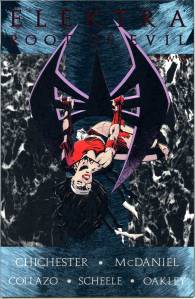
Created by Frank Miller, Elektra first appeared in Daredevil #168 (January 1981). Miller originally intended this issue, which was essentially a filler story, to be Elektra’s only appearance, but she instead became a frequently appearing villain in Daredevil until her death in issue #181 (April 1982). She was resurrected shortly after, but the story contained a narrative note which indicated that Daredevil would never encounter her again.

After over a decade’s absence, she reappeared in Daredevil #324-327 (January–April 1994), and went on to a brief stint as a supporting character in Wolverine (in #100-106). Daredevil writer D. G. Chichester recounted that he and editor Ralph Macchio had

bandied about the idea [of bringing back Elektra] in a casual fashion now and again, but neither of us wanted to do it as a gimmick. On the rare occasion I thought I had a legitimate angle to use her, Ralph was cool to the idea. But as we geared up for what would become Fall From Grace, Ralph out of the blue said, “What about bringing back Elektra?” — and it was really the missing piece that clicked together all the loose pieces of the story in my head, and became the nexus for everything tying together as well as it did. In my mind, it’s always been her to whom the title refers.

This upset Frank Miller, who claimed that Marvel had previously promised him that the character would not be used in any publication. She has since appeared in two eponymous ongoing series and several mini-series.

Bram Stoker’s Dracula (1993)

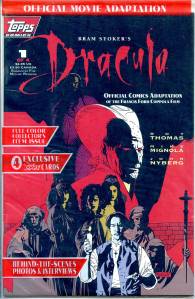
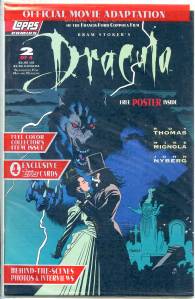
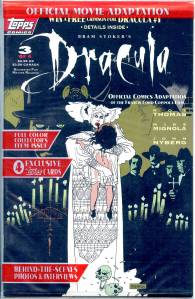
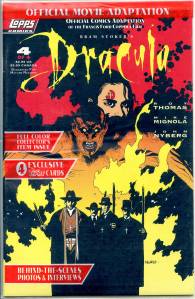
Bram Stoker’s Dracula, a four-issue Topps comic book adaptation of Columbia Pictures’ (Sony Pictures Entertainment) 1992 film directed by Francis Ford Coppola which starred a young Keanu Reeves as Jonathan Harker, Winona Ryder as Mina Murray, Anthony Hopkins as Professor Abraham Van Helsing and Gary Oldman as Dracula. Topps Comics released a 120-page adaptation in 1993, written by Roy Thomas and drawn by Mike Mignola, one of the last projects before launching Hellboy.


Green Lantern V3 (1990’s)

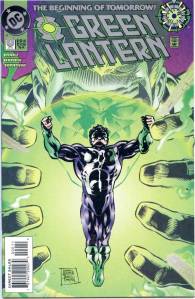
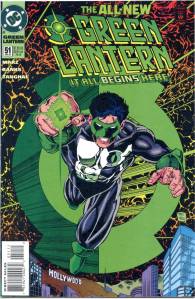
Green Lantern would know a number of revivals and cancellations. Its title would change to Green Lantern Corps at one point as the popularity rose and waned. During a time there were two regular titles, each with a Green Lantern, and a third member in the Justice League. A new character, Kyle Rayner, was created to become the feature while Hal Jordan first became the villain Parallax, then died and came back as the Spectre.

Stillwater (2020)

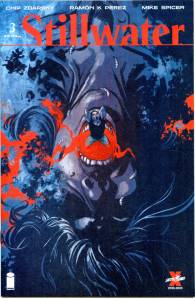
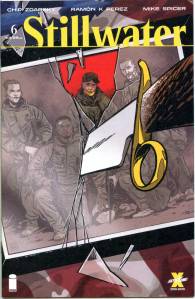
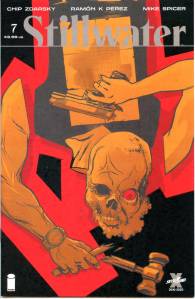
Nobody dies. In the town of Stillwater, that’s not just a promise. It’s a threat. Join superstar writer Chip Zdarsky and Ramon K Perez as they dive into a world of horror and intrigue in this Skybound series.
The Swamp Thing (2021)

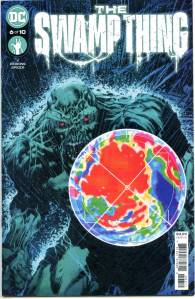
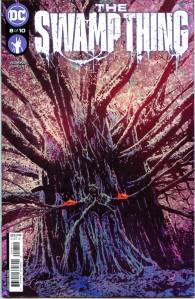
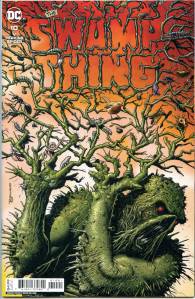
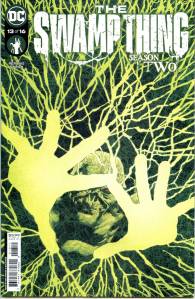
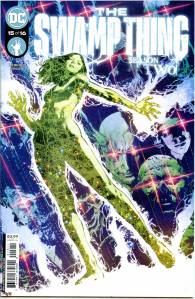
Swamp Thing returns in a new series that stars Levi Kamei as the next Guardian of the Green. Unable to control his transformation into the monstrous Swamp Thing, Levi is thrust into the harsh, unforgiving mystery of grisly murders committed by a supernatural desert legend. Levi must revisit past events in his homeland of India and face the deadly reality of a ravenous new villain in order to comprehend what he is truly, and horrifyingly, becoming.

Tomb of Dracula V4 (2004)

Every thousand years, Dracula enters a chrysalis state for four days, leaving him in a vulnerable state. During this time the most powerful vampires from around the world gather in Transylvania to protect him. Now they are about to be joined by an eclectic team of vampire slayers that have gathered to take down the legendary Vampire King – including the best and most dangerous slayer of them all – Blade!

Hard Boiled (1990)

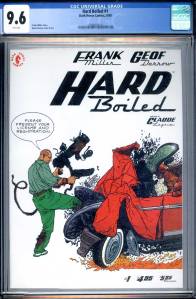
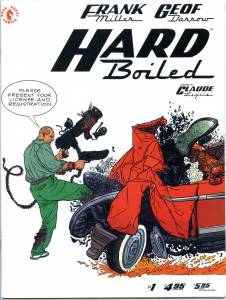
In a dystopian, near-future Los Angeles, city tax collector Nixon is badly injured during a violent encounter with one of his targets, and he undergoes extensive surgery to survive. Nixon then wakes up in a bedroom, believing his previous experience was a bad dream and that he is really Carl Seltz, an insurance investigator for the Benevolent Assurance Corporation, with a wife, two children, a dog, and a normal life. However, when his persistent dreams disturb his sleep, his wife distracts him with sex while his children inject him with a sleep-inducing drug, indicating not all is as it seems.

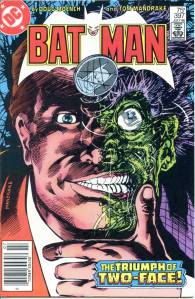
Batman (1980’s)

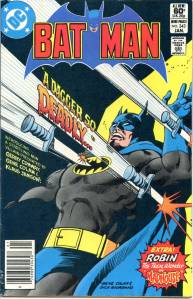
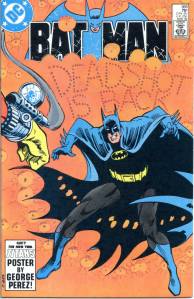
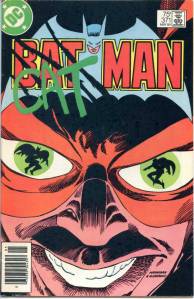
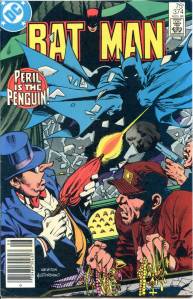
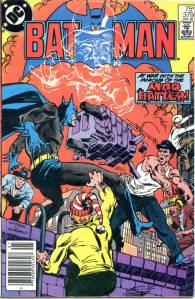
Frank Miller‘s limited series The Dark Knight Returns (February–June 1986), which tells the story of a 55-year old Batman coming out of retirement in a possible future, reinvigorated the character. The Dark Knight Returns was a financial success and has since become one of the medium’s most noted touchstones. The series also sparked a major resurgence in the character’s popularity.

That year Dennis O’Neil took over as editor of the Batman titles and set the template for the portrayal of Batman following DC’s status quo-altering miniseries Crisis on Infinite Earths. O’Neil operated under the assumption that he was hired to revamp the character and as a result tried to instill a different tone in the books than had gone before. One outcome of this new approach was the “Year One” storyline in Batman #404–407 (February–May 1987), in which Frank Miller and artist David Mazzucchelli redefined the character’s origins. Writer Alan Moore and artist Brian Bolland continued this dark trend with 1988’s 48-page one-shot Batman: The Killing Joke, in which the Joker, attempting to drive Commissioner Gordon insane, cripples Gordon’s daughter Barbara, and then kidnaps and tortures the commissioner, physically and psychologically.

The Batman comics garnered major attention in 1988 when DC Comics created a 900 number for readers to call to vote on whether Jason Todd, the second Robin, lived or died. Voters decided in favor of Jason’s death by a narrow margin of 28 votes (see Batman: A Death in the Family). The following year saw the release of Tim Burton‘s Batman feature film, which firmly brought the character back to the public’s attention, grossing millions of dollars at the box office, and millions more in merchandising.

Blade Runner (1982)

Blade Runner is a comic book adaptation of the film Blade Runner, published by Marvel Comics in 1982. It was written by Archie Goodwin with art by Al Williamson, Carlos Garzon with Dan Green and Ralph Reese.

This film adaptation includes one possible explanation of the title’s significance in story context: the narrative line, “Blade runner. You’re always movin’ on the edge.”

This was a reprint of issue 22 of the Marvel Comics Super Special series of titles, which by this time only printed Marvel’s movie adaptations, but without the feature content contained in the special.