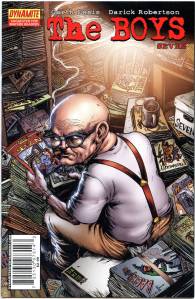
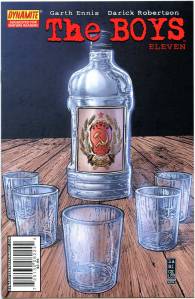
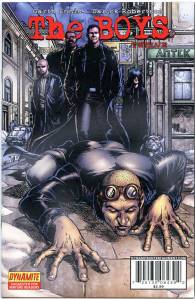
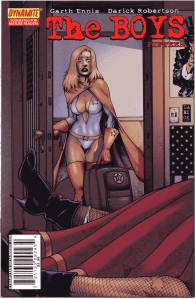
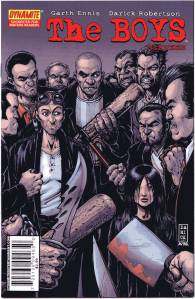
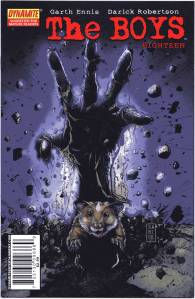
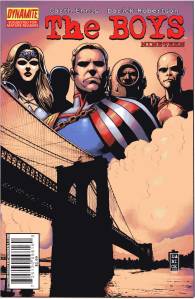
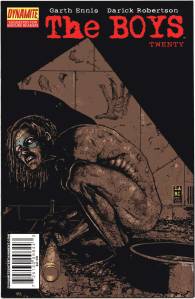
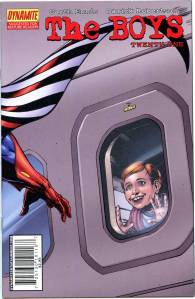
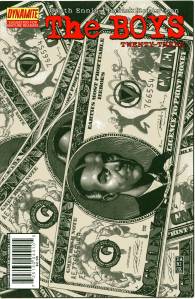
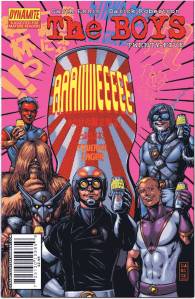
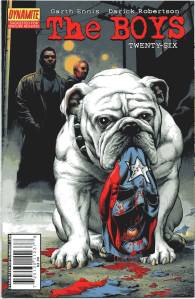
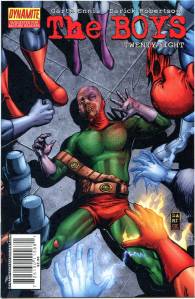
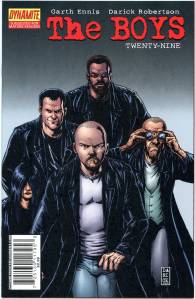
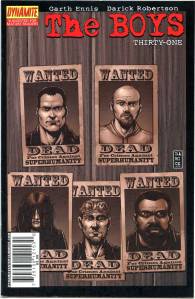
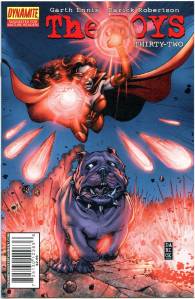
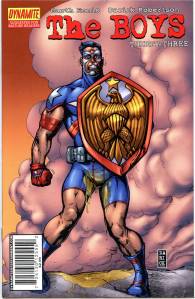
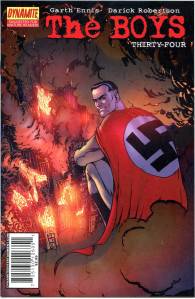
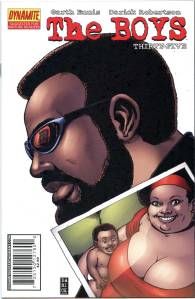
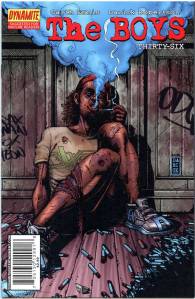
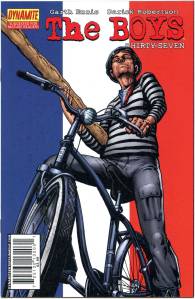
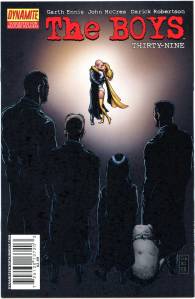
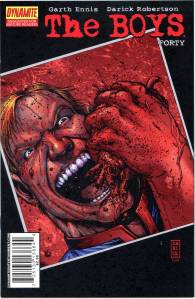
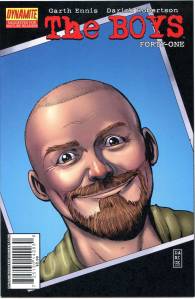
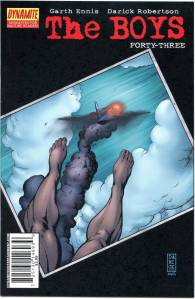
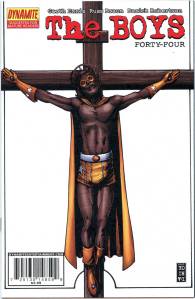
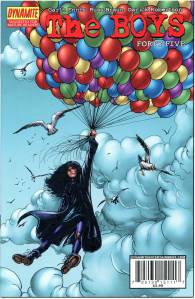
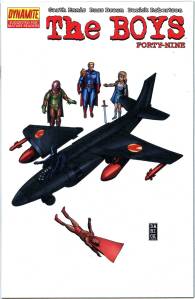
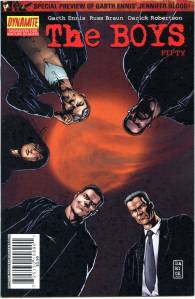
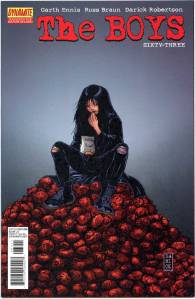
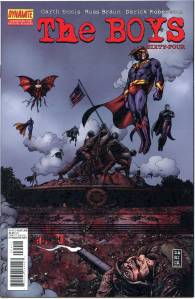
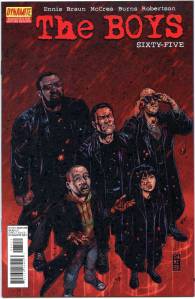
The series is set between 2006–2008 in a world where superheroes exist. However, most of the superheroes in the series’ universe are corrupted by their celebrity status and often engage in reckless behavior, compromising the safety of the world. For this reason, a superpowered CIA squad, known informally as “The Boys”, is charged with monitoring the superhero community; the name is Butcher’s contribution, a reference from his neighborhood that those in power would send “the boys” to handle anyone causing trouble.
Ennis has said that the series would “out-PreacherPreacher“, presumably referring to the extreme violence and sexuality that were that series’ hallmark, and that the series would end with its seventy-second issue.
The Boys #7 VF $9The Boys #11 VF+ $6The Boys #12 VF+ $6The Boys #15 VF-NM $4The Boys #16 VF- $2The Boys #17 VF- $2The Boys #18 NM $4The Boys #19 NM $6The Boys #20 VF- $2The Boys #21 VF+ $4The Boys #22 NM $6The Boys #23 NM $7The Boys #24 NM $24The Boys #25 NM $6The Boys #26 NM $7The Boys #27 NM $6The Boys #28 NM- $4The Boys #29 NM $6The Boys #30 NM $6The Boys #31 VF+ $6The Boys #32 VF-NM $4The Boys #33 VF+ $4The Boys #34 NM $6The Boys #35 NM $4The Boys #36 NM $6The Boys #37 NM $4The Boys #39 NM $4The Boys #40 NM $4The Boys #41 NM $6The Boys #42 NM $6The Boys #43 NM $6The Boys #44 NM $6The Boys #45 NM $6The Boys #46 NM $6The Boys #47 NM $6The Boys #49 NM $6The Boys #50 NM $9The Boys #63 NM $6The Boys #64 NM $6The Boys #65 NM $20The Boys #72 NM- $12
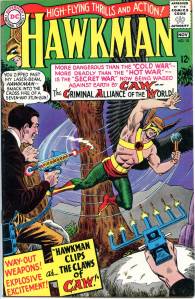
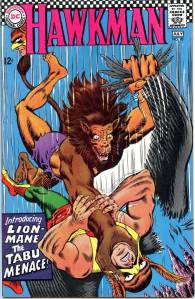
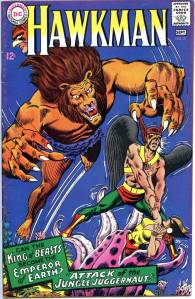
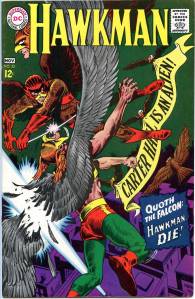
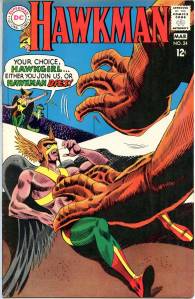
Several incarnations of Hawkman have appeared in DC Comics, all of them characterized by the use of archaic weaponry and by large, artificial wings, attached to a harness made from the special Nth metal that allows flight. Most incarnations of Hawkman work closely with a partner/romantic interest named Hawkgirl or Hawkwoman.
Since DC’s continuity was rewritten in the 1985 series Crisis on Infinite Earths, Hawkman’s history has become muddled with several new versions of the character appearing throughout the years, some associated with ancient Egypt and some with the fictional planet Thanagar. These versions of the character have starred in several series of various durations.
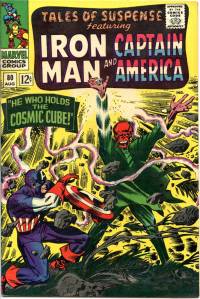
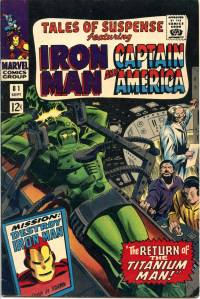
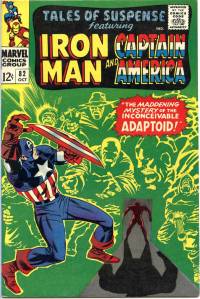
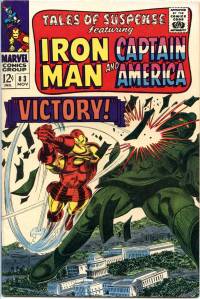
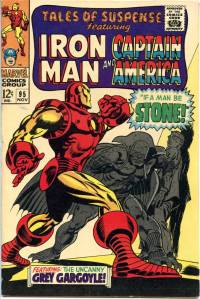
Tales of Suspense, Issue #39 (March 1963) introduced the superhero Iron Man, created by editor and plotter Lee, scripter Lieber, and artists Heck and Jack Kirby. He starred in generally 13-page but occasionally 18-page adventures, with the rest of Tales of Suspense devoted to the anthological science fiction and fantasy stories the comic normally ran.
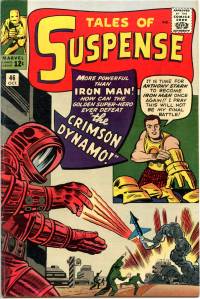
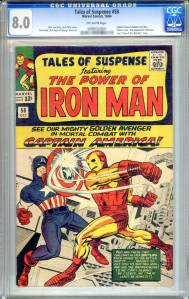
After debuting with bulky gray armor, Iron Man was redesigned with similar but golden armor in his second story (issue #40, April 1963). The first iteration of the modern, sleek red-and-golden armor appeared in #48 (Dec. 1963), drawn by Ditko (though whether he or Kirby, singly or in collaboration, designed it, is uncertain). From #53-58 (May-Oct. 1964), the cover logo was “Tales of Suspense featuring The Power of Iron Man”. Two months before the debut of the sorcerer-hero Doctor Strange, Lee, Kirby and scripter Robert Bernstein, under the pseudonym “R. Berns”, introduced a same-name criminal scientist and Ph.D., Carl Strange. Making his sole appearance in the Iron Man story “The Stronghold of Dr. Strange” in Tales of Suspense #41 (May 1963), the character gained mental powers in a freak lightning strike. The Mandarin debuted in issue #50 (Feb. 1964) and would become one of Iron Man’s major enemies. The Black Widow first appeared in #52 (April 1964) and Hawkeye followed five issues later.
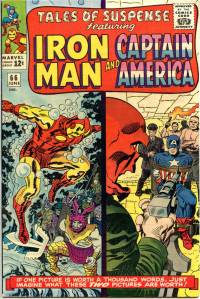
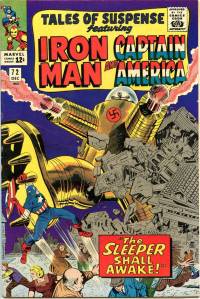
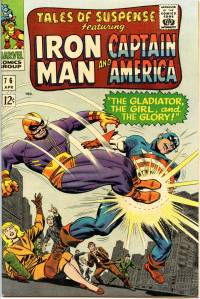
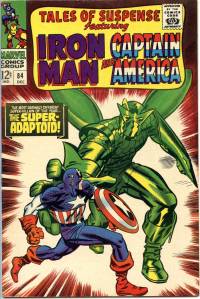
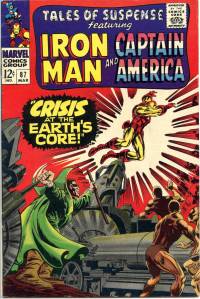
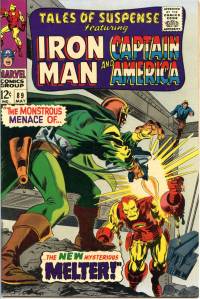
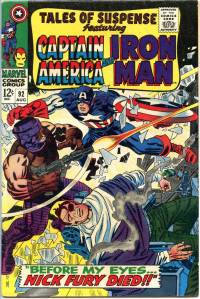
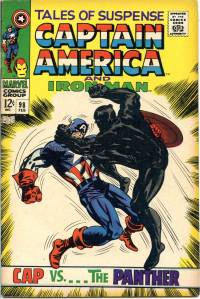
Tales of Suspense #28 FN+ $125Tales of Suspense #46 FN- $349Tales of Suspense #58 CGC 8.0 Off-White Pages $695Tales of Suspense #66 FN+ $65Tales of Suspense #72 VF- $40Tales of Suspense #74 CGC 8.5 Off-White Pages $149Tales of Suspense #76 FN+ $30Tales of Suspense #80 VF $169Tales of Suspense #81 FN+ $25Tales of Suspense #82 VF+ $70Tales of Suspense #83 FN+ $30Tales of Suspense #84 FN+ $25Tales of Suspense #87 VF- $40Tales of Suspense #89 VF $40Tales of Suspense #92 FN+ $25Tales of Suspense #95 FN- $18Tales of Suspense #97 VF- $50Tales of Suspense #98 FN $69
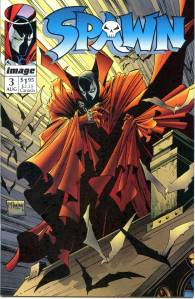
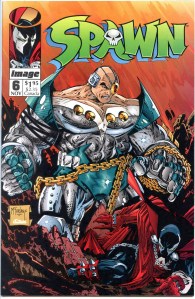
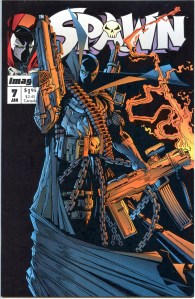
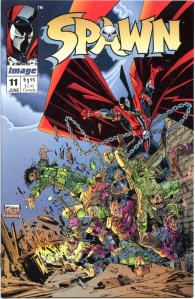
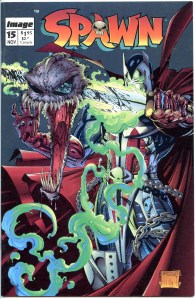
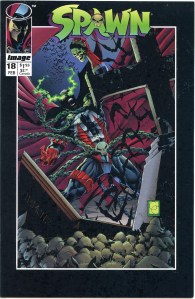
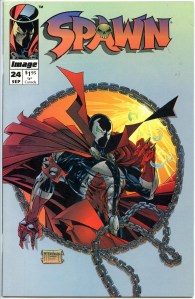
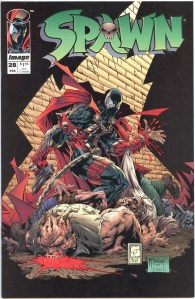
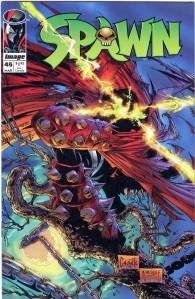
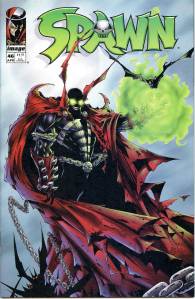
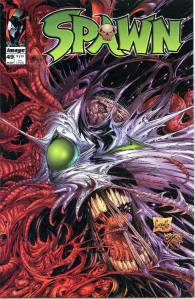
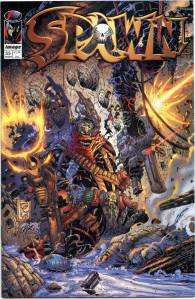
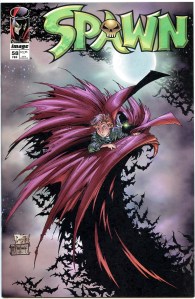
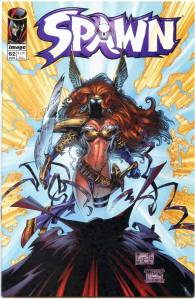
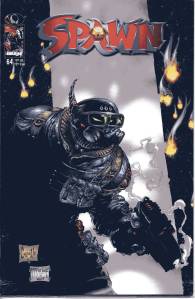
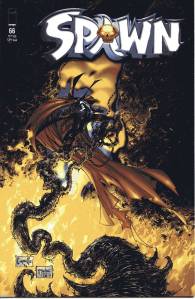
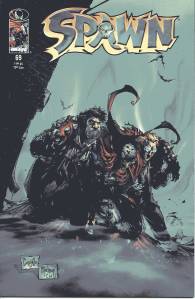
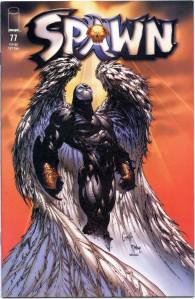
Spawn enjoyed considerable popularity upon its initial release in the 1990s. Comic book collecting was enjoying a marked upswing at the time, fueled by the speculator boom looking for the next hot book that would jump in value after its release. McFarlane had enjoyed superstar status among comic fans with his work on Spider-Man, which had featured McFarlane’s name prominently as both writer and artist. McFarlane’s subsequent break with Marvel and the formation of Image Comics was seen by many as a sea-change event, changing the very way in which comics were produced. Wizard, on May 2008, rated “The Launch of Image Comics” as No.1 in the list of events that rocked the Comic Industry from 1991 to 2008.
The first issue of Spawn was very popular with sales of 1.7 million copies. During Spawn’s second year of publication, Wizard noted that “The top dog at Image is undoubtedly Todd McFarlane’s Spawn, which, without the added marketing push of fancy covers, polybagged issues, or card inserts has become the best-selling comic on a consistent basis that is currently being published. Sales slumped around the time of Spawn #25, but by Spawn #45 it was again a consistently strong seller.
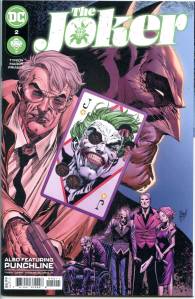
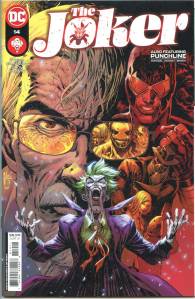
Following the events of Infinite Frontier #1, The Joker is the most wanted man in the world! But the Clown Prince of Crime is several steps ahead of law enforcement—and he’s on the run overseas. James Gordon, facing retirement, realizes this is the manhunt of his life and the last piece of a storied career…but what mysterious and deadly forces are also in pursuit of The Joker? And in the backup story, following the events of Punchline #1, DCs most controversial new villain navigates the infrastructure of Blackgate Penitentiary—while on the outside, Harper Row takes up the mantle of Bluebird to stop her brother from falling under Punchlines influence.
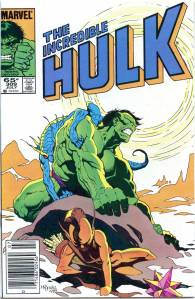
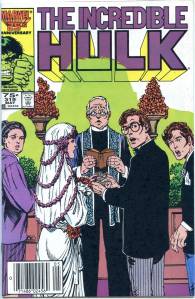
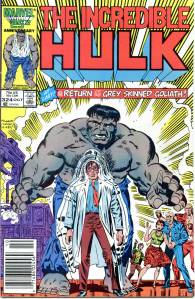
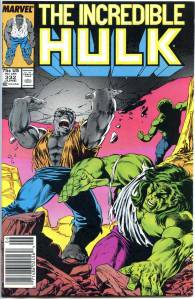
In the 1980s, Banner once again gained control over the Hulk, and gained amnesty for his past rampages; however, due to the manipulations of supernatural character Nightmare, Banner eventually lost control over the Hulk. It was also established that Banner had serious mental problems even before he became the Hulk, having suffered childhood traumas that engendered Bruce’s repressed rage. Banner comes to terms with his issues for a time, and the Hulk and Banner were physically separated by Doc Samson. Banner is recruited by the U.S. government to create the Hulkbusters, a government team dedicated to catching the Hulk. Banner finally married Betty in The Incredible Hulk #319 (May 1986) following Talbot’s death in 1981. Banner and the Hulk were reunited in The Incredible Hulk #323 (Sep. 1986) and with issue #324, returned the Hulk to his grey coloration, with his transformations once again occurring at night, regardless of Banner’s emotional state. In issue #347 the grey Hulk persona “Joe Fixit” was introduced, a morally ambiguous Las Vegas enforcer and tough guy. Banner remained repressed in the Hulk’s mind for months, but slowly began to reappear.
Incredible Hulk #252 F+ $3Incredible Hulk #253 VF $5Incredible Hulk #257 VF $6Incredible Hulk #262 VF $5Incredible Hulk #263 VF- $3Incredible Hulk #264 VF+ $5Incredible Hulk #280 NM- $6Incredible Hulk #281 VF- $3Incredible Hulk #282 Newstand F-VF $45Incredible Hulk #286 F+ $2Incredible Hulk #287 F-VF $3Incredible Hulk #290 VF+ $5Incredible Hulk #291 VF-NM $5Incredible Hulk #292 VF $4Incredible Hulk #296 VF- $3Incredible Hulk #298 VF+ $5Incredible Hulk #299 VF $4Incredible Hulk #301 F+ $2Incredible Hulk #306 NM $6Incredible Hulk #308 Newsstand VF $5Incredible Hulk #309 Newsstand VF $5Incredible Hulk #310 VF+ $5Incredible Hulk #313 VF- $4Incredible Hulk #314 VF-NM $5Incredible Hulk #319 Newsstand VF- $5Incredible Hulk #322 NM- $5Incredible Hulk #323 VF $4Incredible Hulk #324 VF- $15Incredible Hulk #327 VF- $4Incredible Hulk #328 NM- $5Incredible Hulk V1 #330 Newstand VF+ $16Incredible Hulk V1 #332 F+ $4Incredible Hulk #333 NM $14Incredible Hulk #341 Newstand VF+ $5Incredible Hulk #342 Newstand VF+ $5Incredible Hulk #342 VF+ $4Incredible Hulk #343 Newstand VF+ $5Incredible Hulk #346 NM- $6Incredible Hulk #352 NM $5Incredible Hulk #354 Newsstand NM- $9Incredible Hulk #364 NM $4Incredible Hulk Annual #11 FN- $4Incredible Hulk Annual #14 VF $4Incredible Hulk Annual #15 VF- $3
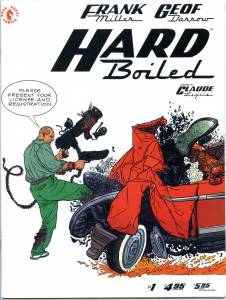
In a dystopian, near-future Los Angeles, city tax collector Nixon is badly injured during a violent encounter with one of his targets, and he undergoes extensive surgery to survive. Nixon then wakes up in a bedroom, believing his previous experience was a bad dream and that he is really Carl Seltz, an insurance investigator for the Benevolent Assurance Corporation, with a wife, two children, a dog, and a normal life. However, when his persistent dreams disturb his sleep, his wife distracts him with sex while his children inject him with a sleep-inducing drug, indicating not all is as it seems.
Hard Boiled #1 CGC 9.6 White Pages $75Hard Boiled #1 FN-VFN $9
The JSA remained inactive for some time after the events of “Zero Hour“, but the surviving members (the Flash, Wildcat, and Alan Scott, (now going by the name Sentinel) have remained active throughout the DC Universe, having been placed as reserve JLI members, as evidenced in Justice League Europe #50.
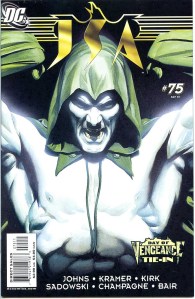
The Justice Society was revived as a monthly series called JSA in 1999 which mixed the few remaining original members with younger counterparts. This incarnation of the team focused on the theme of generational legacy and of carrying on the heroic example established by their predecessors. The series was launched by James Robinson and David S. Goyer. Goyer later co-wrote the series with Geoff Johns, who continued to write the series solo after Goyer’s departure. The series featured the art of Stephen Sadowski, Leonard Kirk, and Don Kramer, among others. It featured a story by Pulitzer Prize winner Michael Chabon.
During the events of Infinite Crisis, some of the surviving Golden Age characters, such as Wildcat and the Flash, are transported to the new “Earth-Two”, as created by Alexander Luthor, and seem to recall the existence of the original one, albeit vaguely.
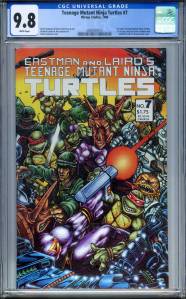
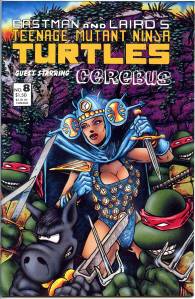
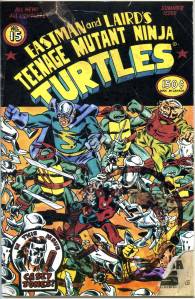
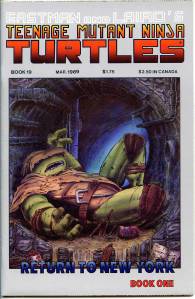
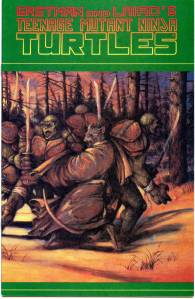
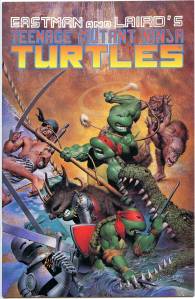
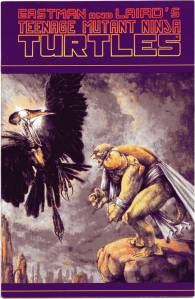
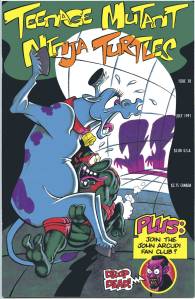
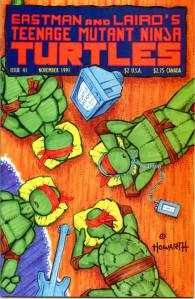
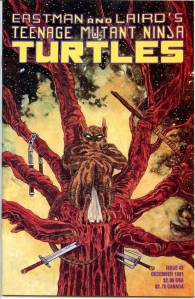
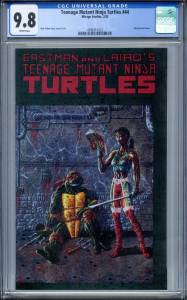
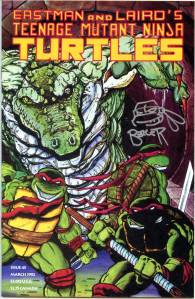
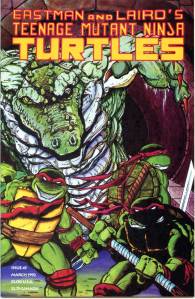
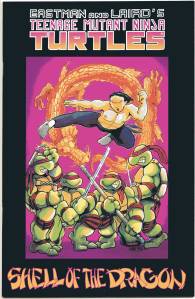
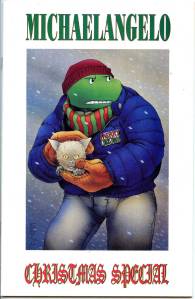
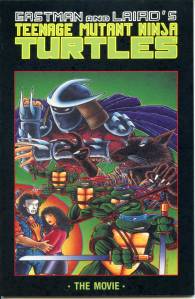
The Teenage Mutant Ninja Turtles was first published by Mirage Studios in 1984 in Dover, New Hampshire. The concept arose from a humorous drawing sketched out by Kevin Eastman during a casual evening of brainstorming and bad television with Peter Laird. Using money from a tax refund, together with a loan from Eastman’s uncle, the young artists self-published a single-issue comic intended to parody four of the most popular comics of the early 1980s: Marvel Comics’ Daredevil and New Mutants, Dave Sim’s Cerebus, and Frank Miller’s Ronin. The TMNTcomic series has been published in various incarnations by various comic book companies since 1984.
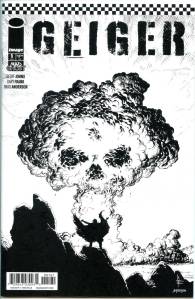
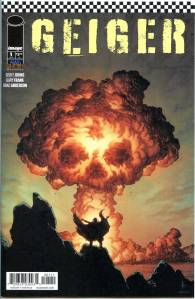
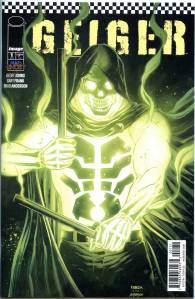
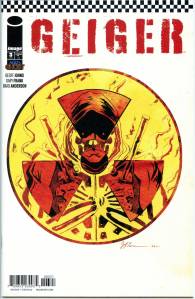
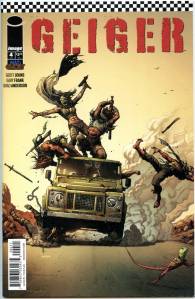
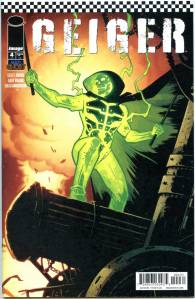
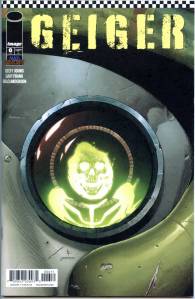
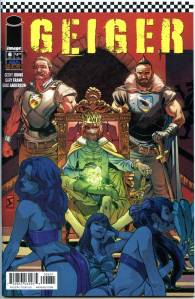
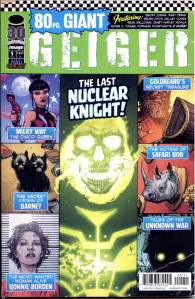
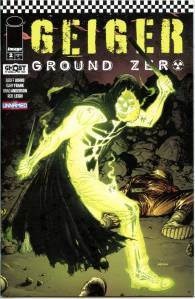
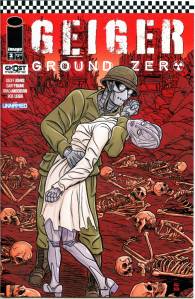
The critically acclaimed team of writer GEOFF JOHNS and artist GARY FRANK unites with superstar colorist BRAD ANDERSON to bring their first creator-owned hero to Image Comics!Set in the years after a nuclear war ravaged the planet, desperate outlaws battle for survival in a world of radioactive chaos. Out past the poisoned wasteland lives a man even the Nightcrawlers and Organ People fear. Some name him Joe Glow, others call him the Meltdown Man. But his name…is Geiger.
Geiger #1 Retailer Thank You Variant NM $59Geiger #1A NM $16Geiger #1C NM $12Geiger #3B NM $6Geiger #4 Cover A NM $6Geiger #4 Cover C NM $7Geiger #6 NM $6Geiger #6 Cover C NM $7Geiger 80pg Giant NM $49Geiger – Ground Zero #2 NM $24Geiger – Ground Zero #2 Cover B NM $22