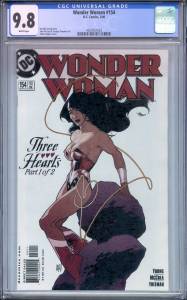
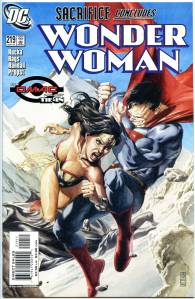
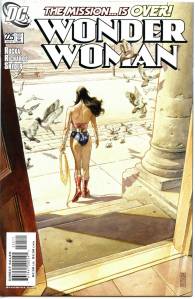
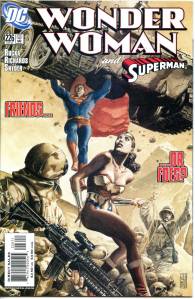
One of the events that led to Infinite Crisis was of Wonder Woman killing the villain Maxwell Lord in Wonder Woman Vol 2 #219. Maxwell Lord was mind-controlling Superman, who as a result was near to killing Batman. Wonder Woman tried to stop Superman, Lord (who was unable to mind control her) made Superman see her as his enemy Doomsday trying to kill Lois Lane. Superman then attacked Wonder Woman, and a vicious battle ensued. Buying herself time by slicing Superman’s throat with her tiara, Wonder Woman caught Lord in her Lasso of Truth and demanded to know how to stop his control over Superman. As the lasso forced the wearer to speak only the truth, Lord told her that the only way to stop him was to kill him. Left with no choice, Wonder Woman snapped Lord’s neck and ended his control over Superman. Unknown to her, the entire scene was broadcast live around every channel in the world by Brother Eye. The viewers were not aware of the entire situation, and saw only Wonder Woman murdering a Justice League associate. Wonder Woman’s actions put her at odds with Batman and Superman, as they saw Wonder Woman as a cold-blooded killer, despite the fact that she saved their lives.
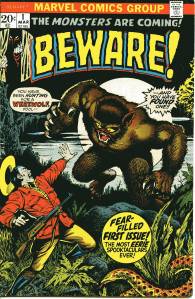
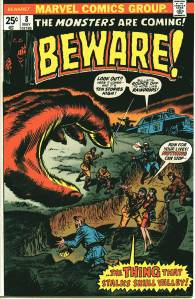
Beware was an 8 issues series that ran from March, 1973 to May, 1974. The series contained reprints of Atlas comics with new covers by Bill Everet, John Romita & Gil Kane The title continued as Tomb of Darkness with issue #9 in July of 1974.
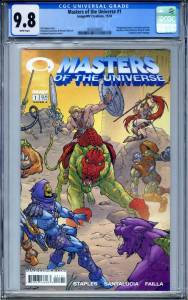
From 2002 to 2005 Image Comics and MVCreations published several series of comics and one-shots that mirrored tales of the 2002 Mike Young Productions show; the comic series elaborated and added to the mythos by introducing characters that never made it in after the 39 episodes of the television series. The first issues were seen in the summer of 2002 in the form of special promotional/preview issues, with three mini-series continuing on after; ‘The Shards of Darkness’ in fall 2002, followed by ‘Dark Reflections’ and ‘Rise of the Snake Men’ in 2003. After delving into the back-stories of Skeletor’s henchmen Beast-Man, Mer-Man, Trap-Jaw and Tri-Klops in a four issue ‘Icons of Evil’ series, a short-lived ongoing series, solely produced by MVC, continued on for eight issues in 2004. Along with these, a handful of special or ‘pack-in’ one-shots and trade paperback collected volumes were also produced.
Masters of the Universe #1 CGC 9.8 White Pages $95
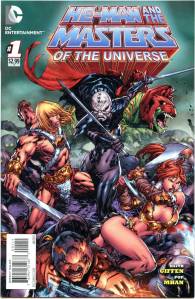
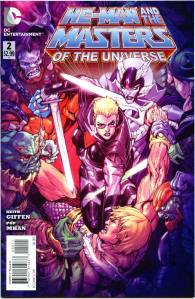
On April 24, 2013, the second volume, an ongoing series, started with the aftermath of the first volume. 19 issues were released, consisting of 3 story arcs of 6 issues and one prelude to the next ongoing series. At the start of the first arc, a celebration of the Sorceress’ life is interrupted by an invasion of the Horde, the army of Hordak himself. Leading the charge is a human woman called Despara. He-Man’s friend Teela soon recognized Despara as her forgotten childhood friend Adora, who is destined to become She-Ra, the Princess of Power.[2] The second arc, entitled “What Lies Within” (issue 7-12) sees King Randor lead He-Man, Teela, Stratos and Moss Man into Subternia to attempt to bring the Sorceress back to life. Along the way they face the reborn Snake Men. The third arc, “The Blood of Grayskull” (issues 13 to 18) explains the origin of She-Ra. The final issue, #19, features a flashback to the youth of Prince Adam and serves as a prelude to the Eternity War.
He-Man and the Masters of the Universe #1 NM $14He-Man and the Masters of the Universe #2 NM $8
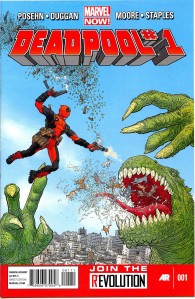
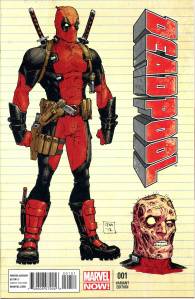
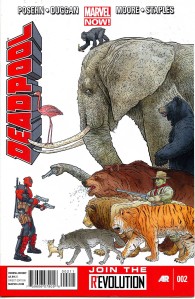
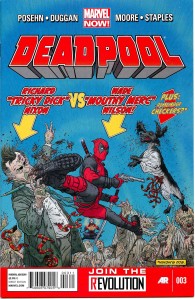
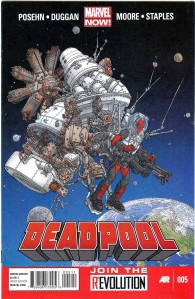
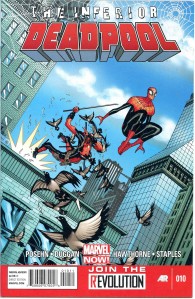
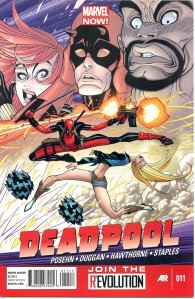
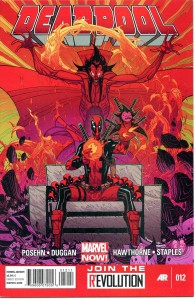
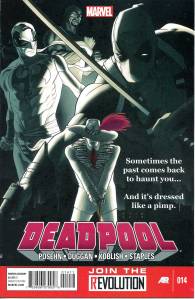
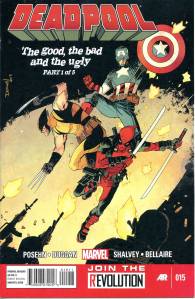
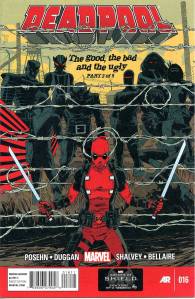
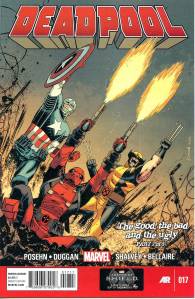
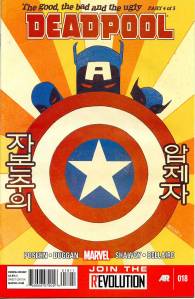
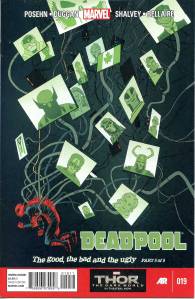
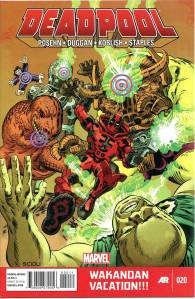
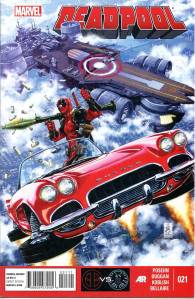
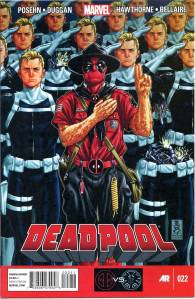
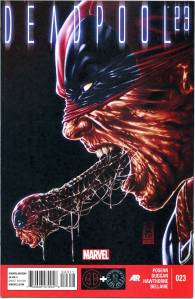
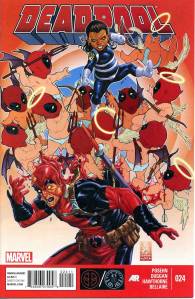
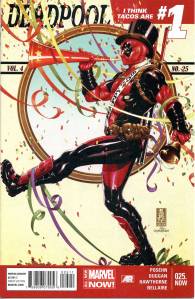
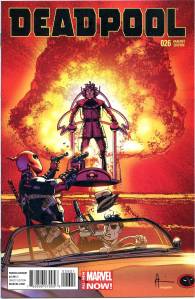
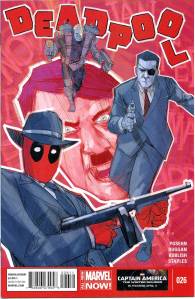
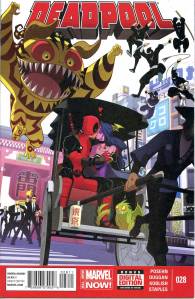
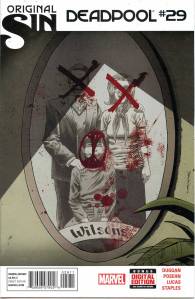
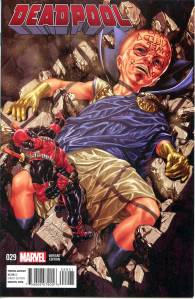
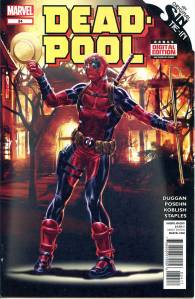
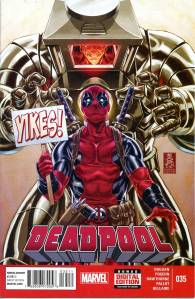
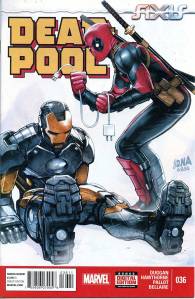
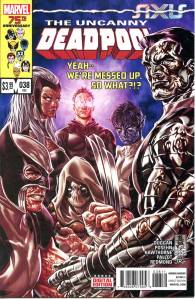
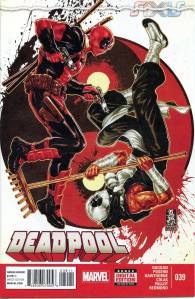
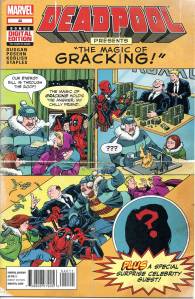
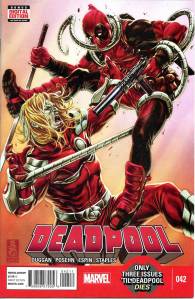
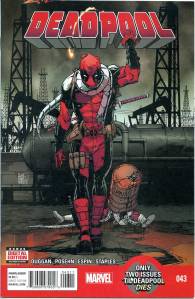
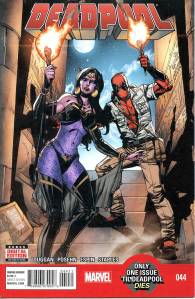
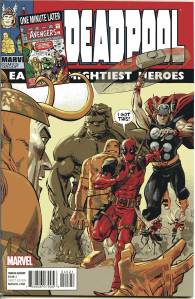
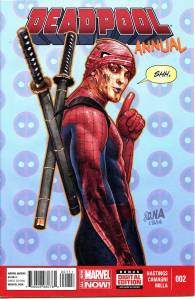
As part of Marvel’s Marvel NOW! initiative a new Deadpool ongoing series was launched. He is also a member of the Thunderbolts. In the 27th issue of his new series, as part of “All-New Marvel NOW!”, Deadpool was married for the third time. Initially a secret, his bride was revealed in the web comic Deadpool: The Gauntlet to be Shiklah, Queen of the Undead. Deadpool also discovers that he has a daughter by the name of Eleanor from a former flame of Deadpool named Carmelita.
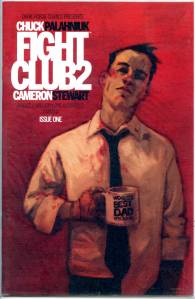
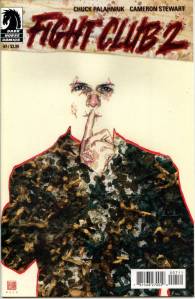
Set ten years after the ending of Fight Club, the sequel is told from the restrained perspective of Tyler Durden as he sits in the subconscious of Sebastian (the name the narrator of the original Fight Club currently uses). Sebastian continues his dysfunctional relationship with Marla and has fallen into the mundane routine of society until Tyler re-emerges to cause chaos.
Fight Club 3 is a twelve-issue comic booklimited series written by Chuck Palahniuk as the second sequel to his 1996 novel Fight Club, following the 2015 limited series Fight Club 2. The series, which is illustrated by Cameron Stewart, consists of twelve issues with the first issue being released on January 30, 2019.
Fight Club 2 #1 Variant Polybagged NM $9Fight Club 2 #6B NM $4Fight Club 2 #7A NM $4Fight Club 2 #7B NM $4Fight Club 2 #8A NM $4Fight Club 2 #9A NM $4Fight Club 2 #10A NM $4Fight Club 2 #10B NM $4Fight Club 3 #2 NM $4
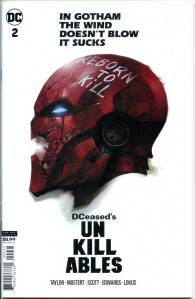
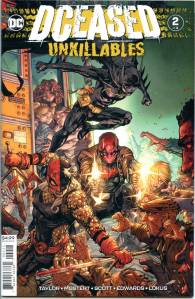
The Unkillables were a group of villains trying to survive the Anti-Living and were first led by Vandal Savage until his death. They later escaped to Bludhaven where the heroes led by Jim Gordon joined them.
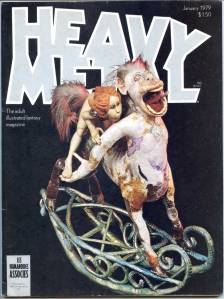
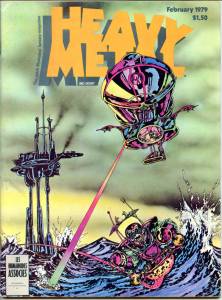
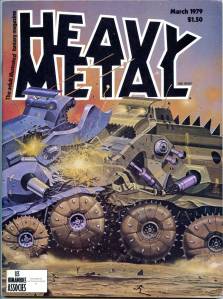
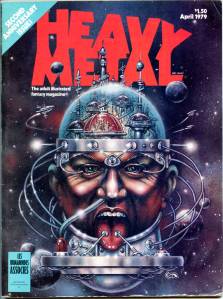
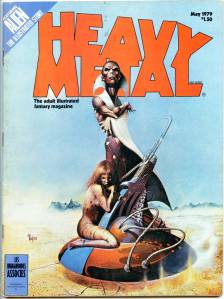
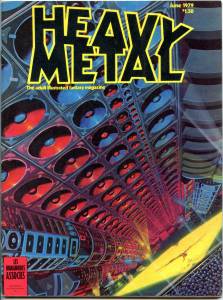
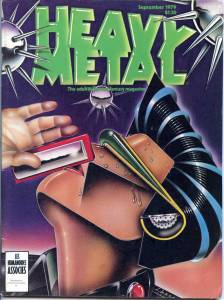
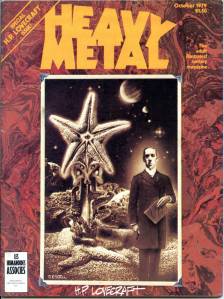
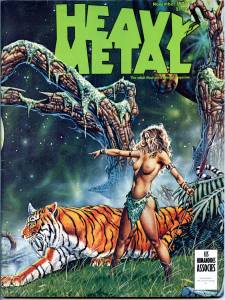
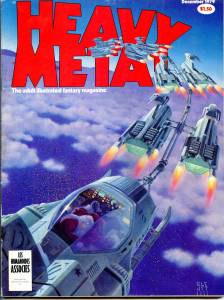
Heavy Metal is an American science fiction and fantasy comics magazine, published beginning in 1977. The magazine is known primarily for its blend of dark fantasy/science fiction and erotica and steampunk comics.
As cartoonist/publisher Kevin Eastman saw it, Heavy Metal published European art which had not been previously seen in the United States, as well as demonstrating an underground comix sensibility that nonetheless “wasn’t as harsh or extreme as some of the underground comix – but . . . definitely intended for an older readership.
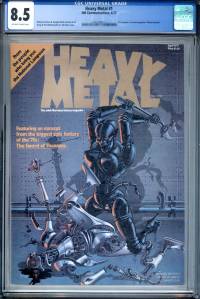
Heavy Metal #1 (April, 1977) CGC 8.5 Off-White to White Pages $179Heavy Metal January 1979 VF- $19Heavy Metal February 1979 FN-VF $16Heavy Metal March 1979 VF $19Heavy Metal April 1979 FN $12Heavy Metal May 1979 FN $24Heavy Metal June 1979 FN-VF $29Heavy Metal September 1979 VF- $19Heavy Metal October 1979 FN-VF $34Heavy Metal November 1979 FN+ $15Heavy Metal December 1979 VG-FN $8
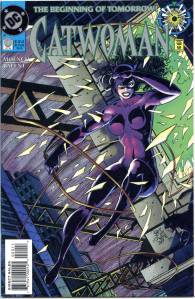
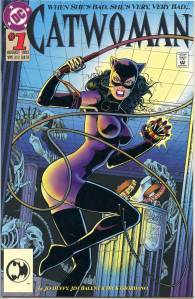
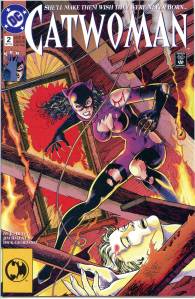
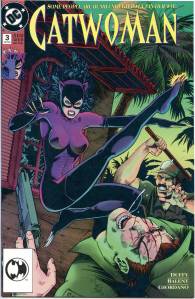
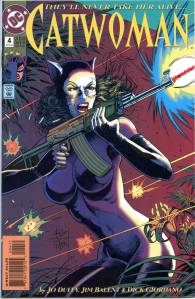
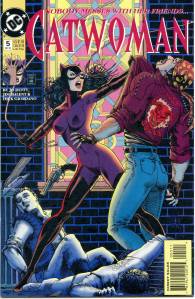
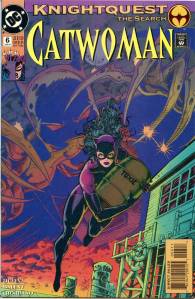
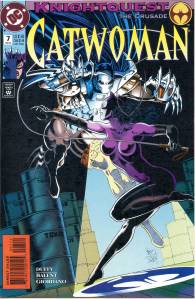
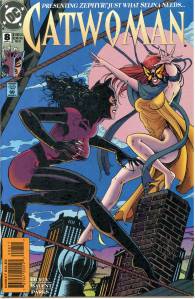
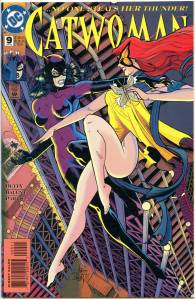
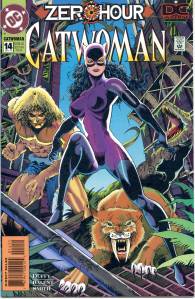
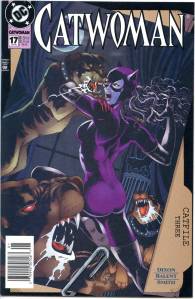
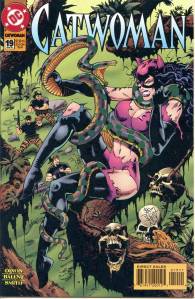
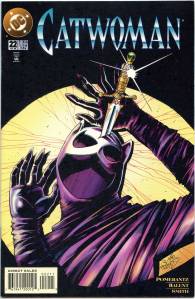
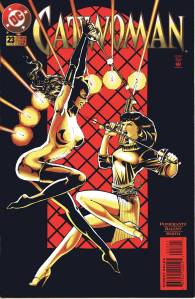
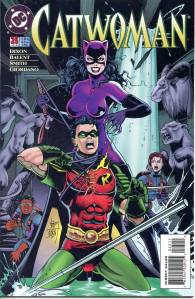
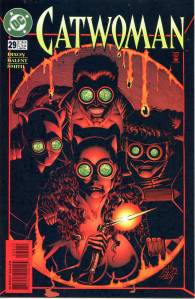
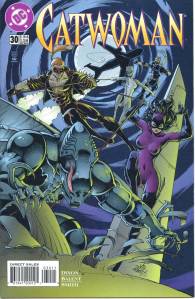
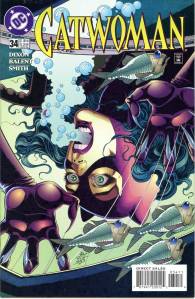
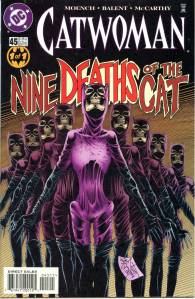
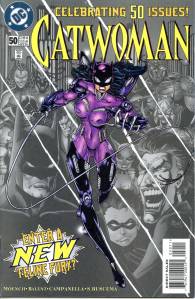
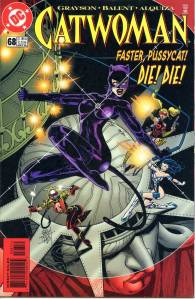
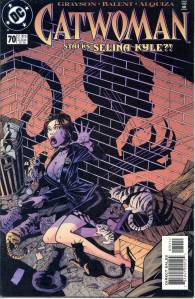
In 1993, Catwoman was given her first ongoing comic book series. This series, written by an assortment of writers, but primarily penciled by Jim Balent, generally depicted the character as an international thief (and occasional bounty hunter) with an ambiguous moral code.
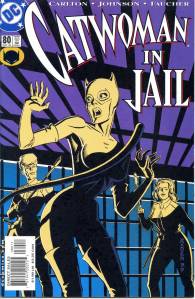
Story-lines include her adoption of teenage runaway, and erstwhile sidekick, Arizona; aiding Bane, whom she later betrays to Azrael; and a stint as a reluctant government operative. The series also fleshes out more of her origin, revealing her beginnings as a young thief, her difficult period in juvenile incarceration, and her training with Ted “Wildcat” Grant.
Moving to New York, Selina becomes corporate vice president then CEO of Randolf Industries, a mafia-influenced company, through blackmail. She plans to use this position to run for Mayor of New York City, but her hopes are dashed when the Trickster inadvertently connects her to her criminal alter ego.
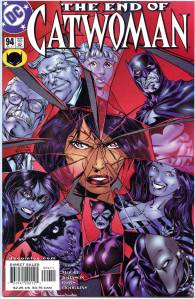
Selina then returns to Gotham City, which at this time is in the midst of the No Man’s Land storyline. As Catwoman, she assists Batman against Lex Luthor in the reconstruction of the city. After being arrested by Commissioner Gordon, she escapes from prison. Later that year, during the “Officer Down” storyline in the Batman titles, Catwoman is initially the chief suspect. Although later cleared, she displays increasingly erratic behavior throughout the story. Soon afterward, she disappears and is believed to have been killed by the assassin Deathstroke the Terminator, ending her series at issue #94.